Quick answer
Water and flood damage repair in southern Stevens County is handled from our Spokane Valley shop, answered 24/7. Rural calls tend to involve well systems, septic backups, frozen lines in crawl spaces and manufactured homes, and spring snowmelt that floods low ground and washes out roads.
What water damage looks like in Stevens County
Stevens County counted 46,445 people at the 2020 census, spread across a large, mostly rural county whose largest city is Colville, and proportionately more of its residents are 65 or older than in Washington as a whole. Out here, the first hour of a water job is often about access: the shutoff may be at a well house rather than a meter, and the nearest neighbor may be some distance away.
Spring is the risky season. In 2017 snowmelt and heavy rain washed out roads across northeastern Washington, a section of Highway 395 near Kettle Falls collapsed, and emergency managers called it the worst flooding in decades. When the ground is that wet, crawl spaces and basements on low ground take water too.
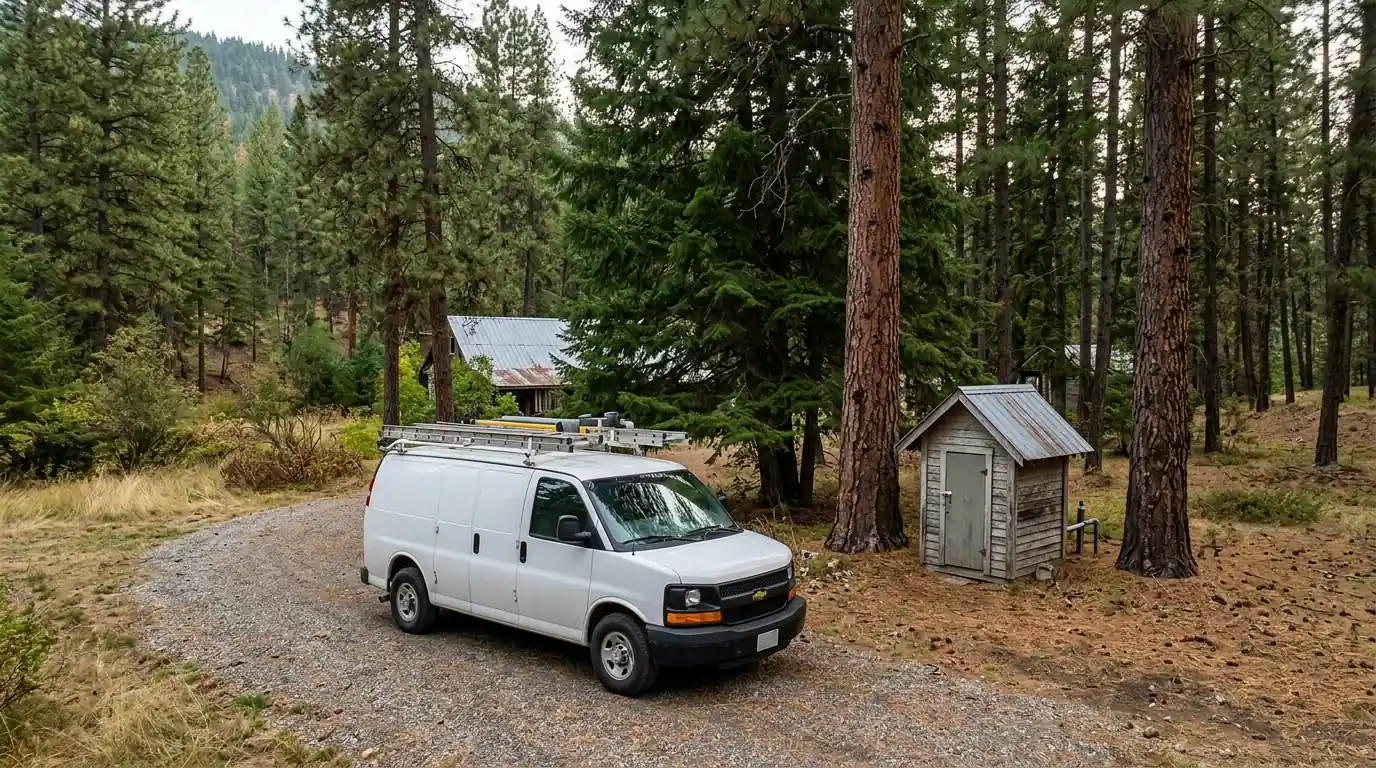
Where we work in Stevens County
We concentrate on the southern part of the county, within reasonable reach of Spokane Valley: Nine Mile Falls, Suncrest, Clayton, Loon Lake, Deer Lake and the rural roads between them. For homes farther north, call and ask; we will tell you honestly whether we can reach you in time to help.
Before we get there on a rural call
- 1
Shut off the source
On a well system, switch off the well pump at its breaker; on a city line, close the main shutoff.
- 2
Stop using the drains
If the septic system is backing up, stop using water in the house until it is checked.
- 3
Tell us the access
Gravel roads, gates and steep driveways change what equipment we can bring, so describe the route when you call.