Quick answer
Storm tarping and board-up in Spokane Valley closes a damaged house to the weather until permanent repairs can be made: heavy tarps fastened over roof openings and battened down against wind, and plywood over broken windows and doors. We then dry the attic, ceilings and rooms the rain or snow reached, and photograph everything for the insurance claim.
Why temporary protection comes first
A storm opening keeps letting water in until it is closed. A roof hole from a falling limb, a skylight cracked by hail or a window blown in by wind turns one night of damage into a week of it if nothing goes over it.
Insurance policies generally expect homeowners to prevent further damage after a loss, and temporary protection is how that is done. The cost of tarping and board-up is usually part of the claim when the storm damage is covered.
Once the house is closed, the job becomes a water job: wet insulation, ceilings and walls dried the same way we handle any roof leak. Permanent roof and window repairs go to the roofer and glazier.
How a storm visit runs
- 1
Safety check
Downed lines, structural damage and roof conditions checked first.
- 2
Clear and cover
Debris cleared and openings tarped or boarded.
- 3
Inside check
Attic, ceilings and rooms checked for water.
- 4
Start drying
Wet materials removed and drying equipment set.
- 5
Document
Photos of every opening and room for the claim.
Emergency roof tarping
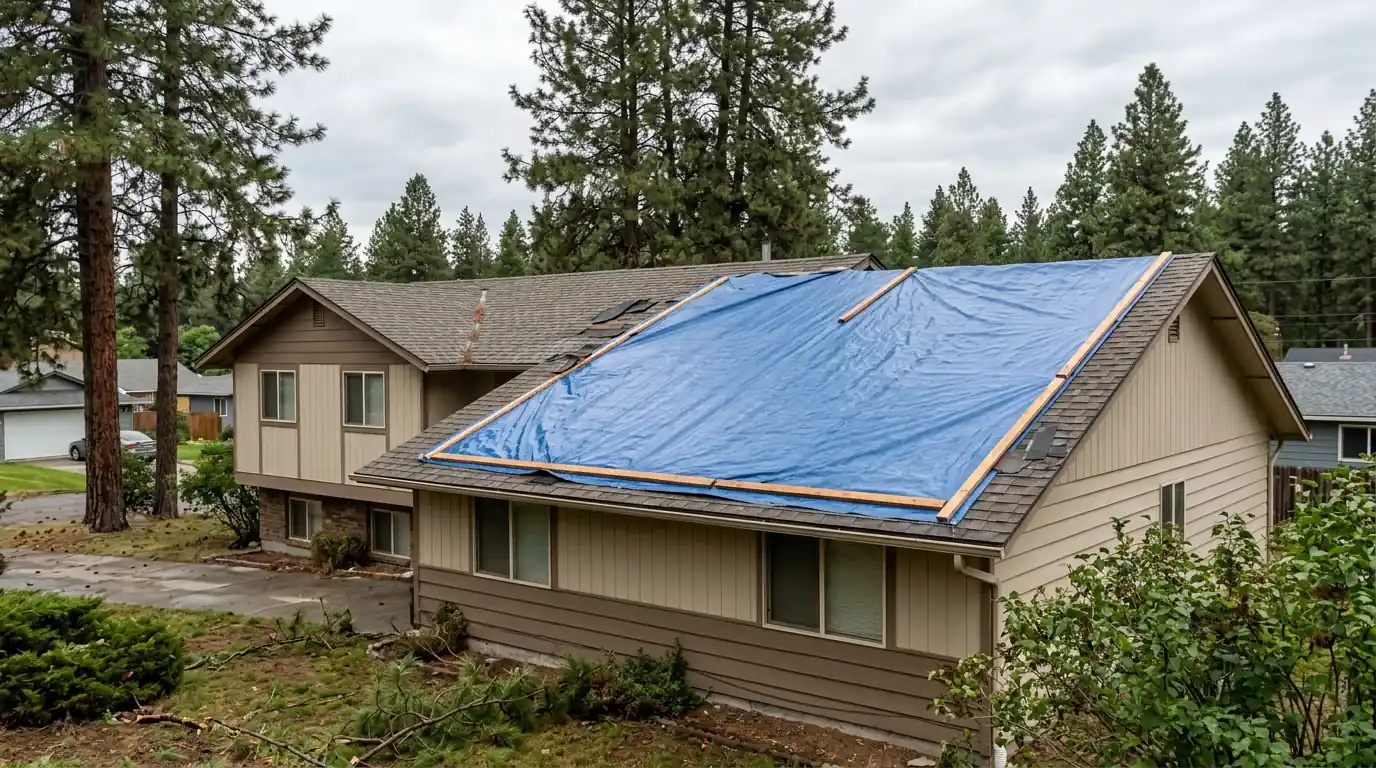
A proper tarp goes over the ridge where possible, extends well past the damaged area, and is fastened with battens rather than loose nails so wind cannot get under it. A tarp nailed only at the edges tears off in the next gust.
We tarp only when it is safe to be on the roof. In ice, high wind or darkness, we may protect the inside first and tarp when conditions allow.
Window and door board-up
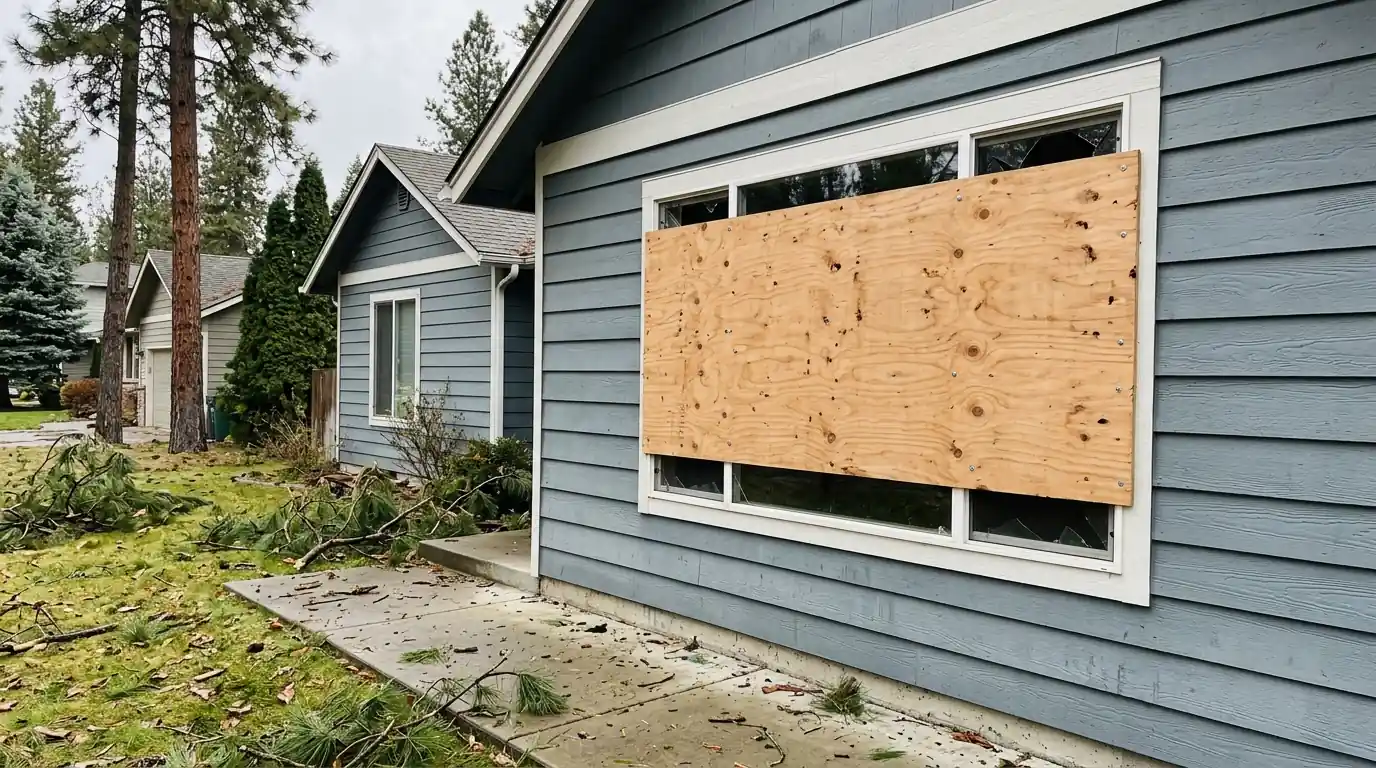
Broken windows and doors are covered with plywood cut to the opening and fastened to the frame, which keeps out weather and keeps the house secure while the glass is ordered.
Glass is cleaned up inside and out before we leave, and we photograph each opening for the claim.
Tree-through-roof openings
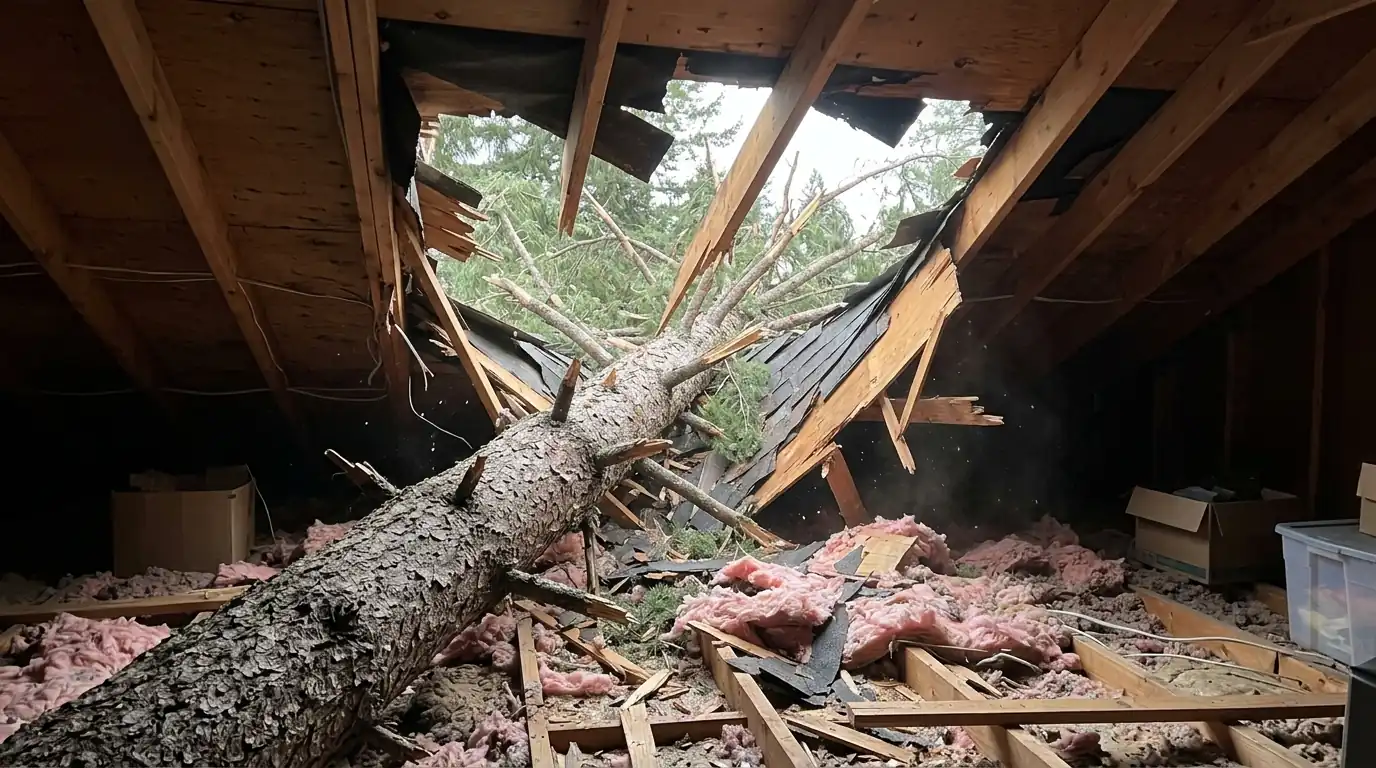
When a tree or large limb comes through the roof, it has to be removed by a tree crew before the opening can be tarped. We coordinate with them, then cover the opening and check the attic, rafters and ceiling below for water and structural damage.
Damaged rafters may need temporary shoring until the roofer and framer arrive.
Windstorms and heavy snow around Spokane
The November 17, 2015 windstorm brought a 71 mph gust at Spokane and cut power to about 180,000 Avista customers, and a local nonprofit was handing out tarps for roofs across Spokane and Spokane Valley in the days after. Snow can open roofs too: in December 2008, Spokane's snowiest month on record at 61.5 inches, dozens of roofs collapsed. Either way, the first visit is about closing the house before the next weather arrives.
What to do yourself after a storm, and what not to
Safe to do yourself
- Stay away from downed power lines and call the utility
- Move belongings away from leaks and put buckets under drips
- Photograph damage from the ground and from inside
- Call your insurer to open a claim
Better left to us
- Climbing onto a damaged or icy roof
- Covering a hole where a tree is still in the roof
- Boarding up upper-floor windows
- Drying wet insulation and ceilings
Never go up on a storm-damaged roof in wind, ice or darkness. A wet ceiling can wait an hour; a fall cannot be undone.
What a storm visit includes
- Safety check of the roof and openings
- Heavy tarps with battens over roof damage
- Plywood board-up of windows and doors
- Broken glass cleanup
- Attic and ceiling moisture check
- Removal of soaked insulation and ceiling sections
- Drying equipment where needed
- Photos for the insurance claim
What decides the cost of tarping and board-up
We have not found a reliable published range for emergency tarping and board-up, because roof size, pitch and access vary so much. These are the things that move the price.
- Size of the openingA small puncture needs one tarp; a roof section needs several.
- Roof pitch and heightSteep or tall roofs take more time and safety equipment.
- Number of openingsEach window or door board-up is priced on its size.
- Tree removalA tree crew must clear limbs before the roof can be covered.
- Interior dryingWet attic insulation and ceilings add a water job to the visit.