Quick answer
Ice dam water damage in Spokane Valley happens when heat escaping from the house melts roof snow, the water refreezes at the cold eave, and backed-up meltwater runs under the shingles into the attic and walls. We dry the wet insulation, drywall and framing below the eaves, replace what cannot be dried, and point out the heat loss or ventilation problem behind the dam.
Signs an ice dam is leaking into your house
Thick ice along the eaves
A ridge of ice at the roof edge with icicles hanging from it is a dam forming.
Stains at the top of outside walls
Brown lines where the ceiling meets an exterior wall.
Water at window heads
Drips or stains above windows on the top floor in winter.
Peeling paint below the eaves
Water inside the wall can blister exterior and interior paint.
Damp attic insulation
Matted or wet insulation near the outside walls of the attic.
Drips on sunny afternoons
Leaks that start when the sun hits the roof and stop at night.
How ice dams push water into a house
Snow on a roof melts from below when warm air from the house reaches the roof deck. The water runs down to the eave, which sits over the cold overhang, and freezes again. Each thaw builds the ridge of ice higher, and the meltwater behind it pools and finds its way under the shingles.
Inside, the water soaks the attic insulation near the outside walls, runs down into the wall cavities and shows up as stains along the top of exterior walls, around windows and at ceiling corners. It often keeps coming for days, every time the sun hits the roof.
Clearing the dam itself is roof work. Our job is everything inside, and we coordinate with a roofer when the shingles or flashing were damaged. Ordinary roof leaks from storms or worn flashing are a separate page.
How an ice dam water job runs
- 1
Stop the inflow
We coordinate removal of the dam with a roofer when water is still coming in.
- 2
Attic and ceiling check
Moisture readings from the attic and the room below.
- 3
Remove wet insulation
Saturated material comes out so the deck and plates can dry.
- 4
Dry walls and ceilings
Equipment and directed air until readings match dry areas.
- 5
Repair
New insulation, drywall and paint once everything reads dry.
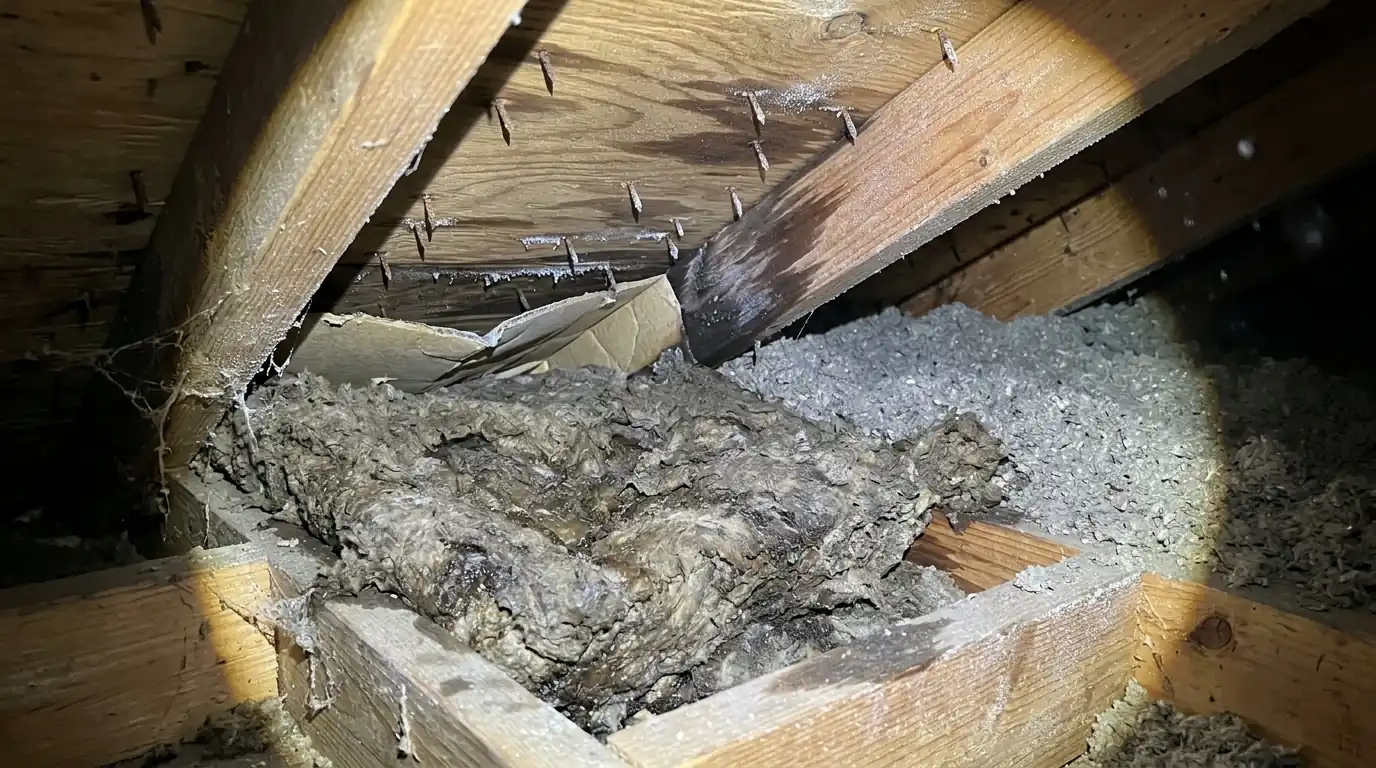
Wet attic insulation
Insulation under an ice dam soaks up meltwater and loses most of its value while it is wet. Blown-in cellulose mats down and holds water against the ceiling drywall; fiberglass dries better but is often stained and compressed.
We remove the wet section, dry the deck and top plates, and replace the insulation once the readings are good. Larger jobs follow our insulation removal and replacement process.
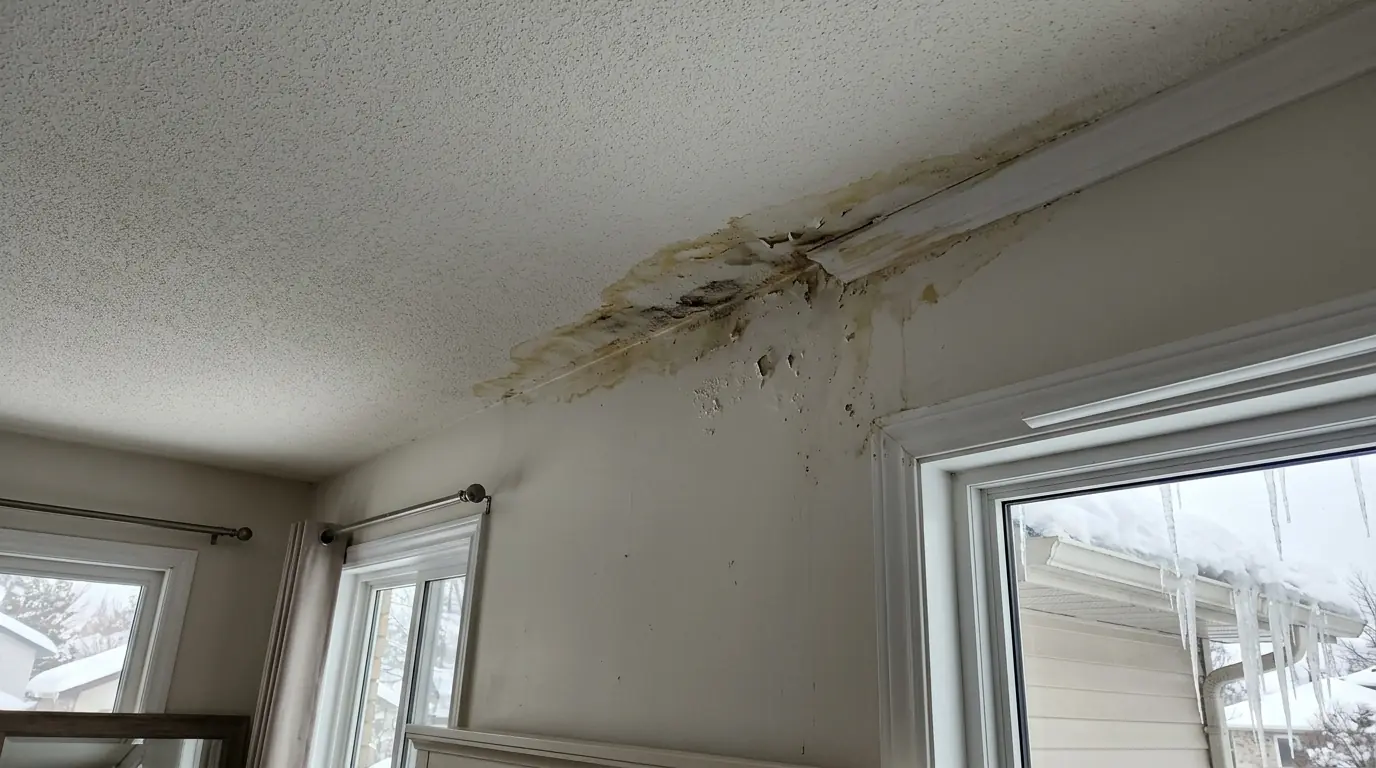
Ceiling stains under the eaves
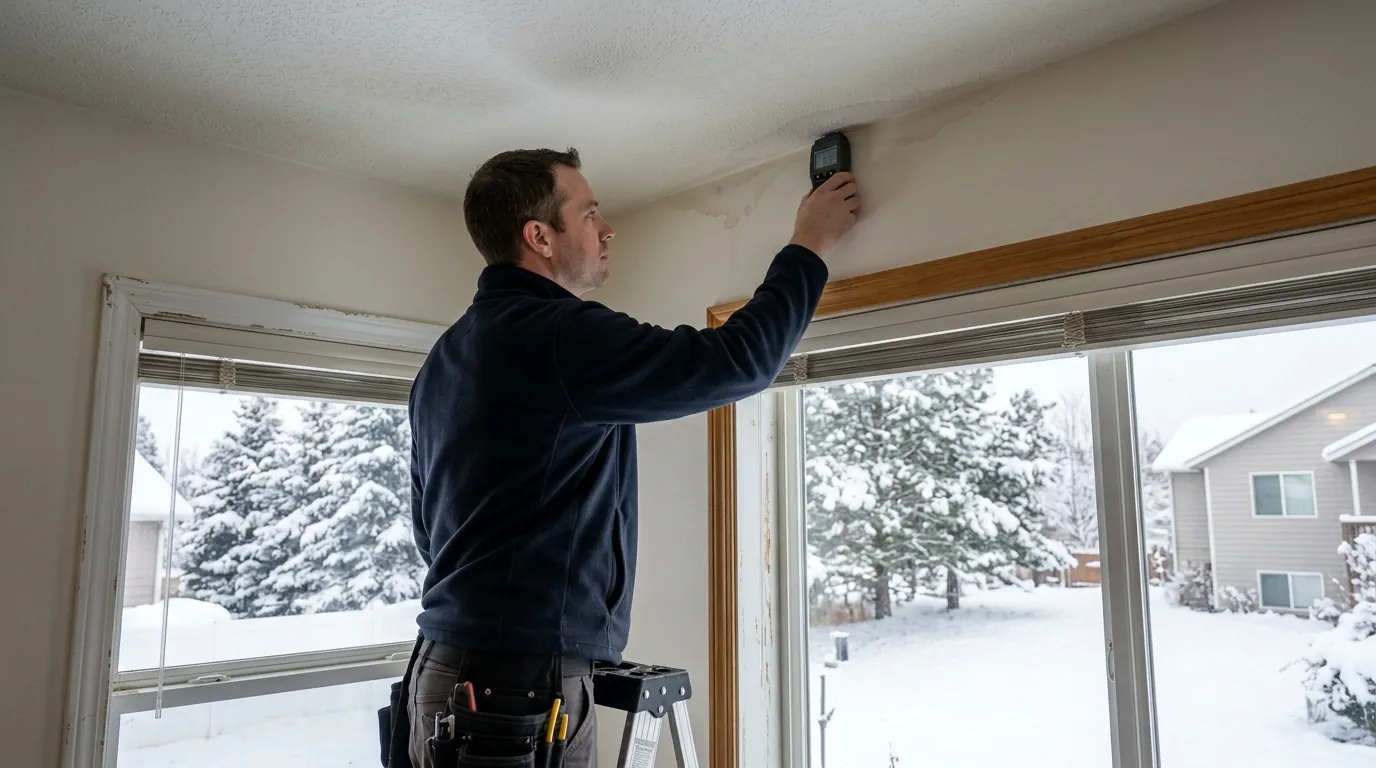
Stains along the outside edge of a ceiling, especially in corners and above windows, are the classic ice dam sign. The drywall may only look stained, but the back side and the insulation above it are usually wetter than the front suggests.
We read the ceiling with a meter, dry it from the attic side where we can, and cut out sections that have sagged or softened.
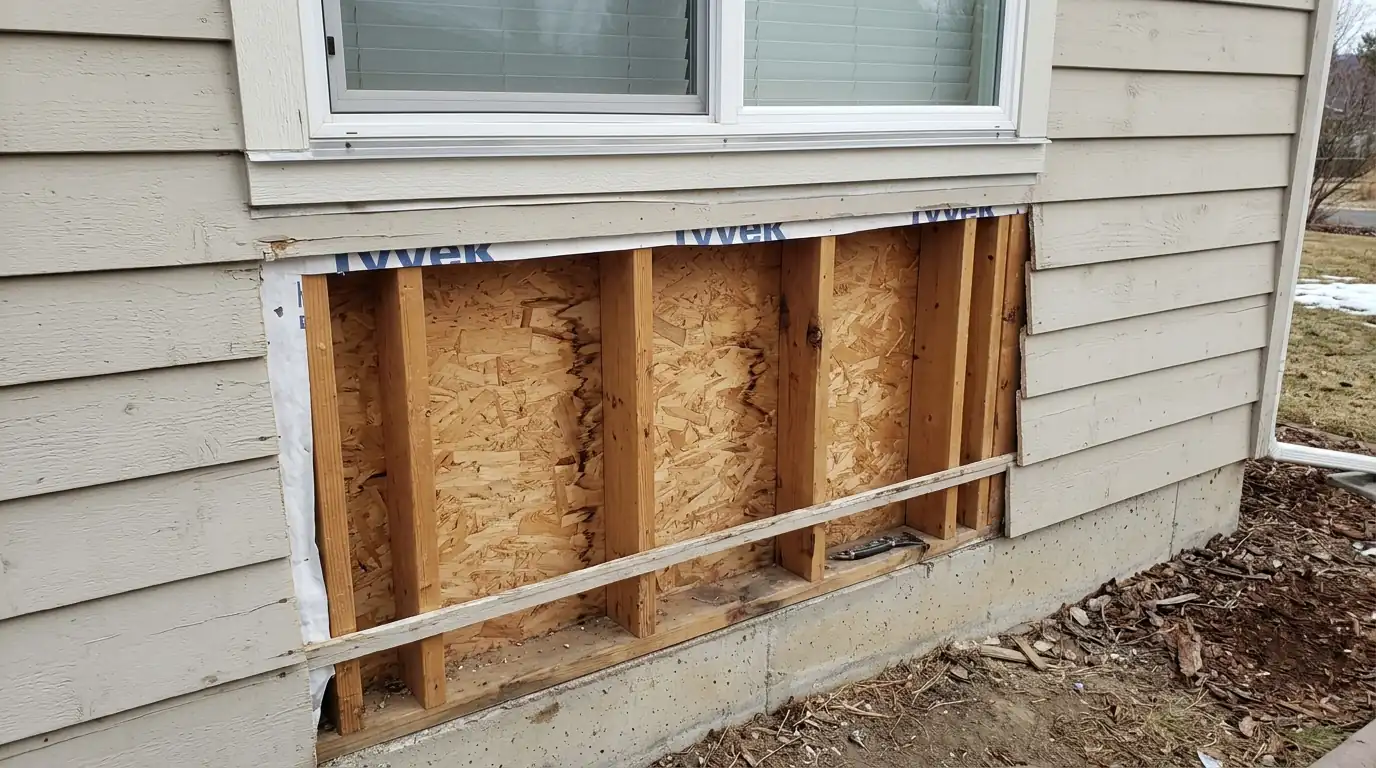
Exterior wall cavity leaks
Meltwater that gets past the top plate runs down inside the exterior wall, wetting insulation and the back of the drywall, and sometimes showing up at the bottom of a window or the baseboard below.
We open the wall where readings stay high, dry the cavity and check the window framing, because a wall that looks dry from inside can stay wet for weeks.
Snow loads and ice dams in Spokane
Spokane's average winter brings under 50 inches of snow, but the big years go far past that: December 2008 alone set a monthly record of 61.5 inches, and the 2008-09 winter reached 93.6 inches at the airport, with dozens of roofs collapsing. During that stretch the National Weather Service put snow loads around 25 pounds per square foot, and ice over storm drains kept meltwater from draining. Heavy snow followed by a thaw is exactly when ice dam calls start.
What you can do about an ice dam yourself
Safe to do yourself
- Rake snow off the lower few feet of roof from the ground with a roof rake
- Keep gutters and downspouts clear before winter
- Put towels and buckets under active drips and move belongings
- Photograph stains and drips for your insurer
Better left to us
- Water inside walls or ceilings
- Wet attic insulation
- Sagging or soft drywall
- Drying records for a claim
Do not climb onto an icy roof or chip at the dam with a hammer or shovel; that damages shingles and puts you at real risk. Ice removal from the roof is a roofer's job.
Planning costs for ice dam water damage
Ice dam meltwater is clean water, so drying costs sit in the clean-water range when the work starts early. Drywall is often part of the repair.
- How many thaws it leaked throughRepeated wetting reaches deeper into walls and insulation.
- Attic insulationWet blown-in insulation is removed and replaced in the affected area.
- Ceilings and wallsSagging drywall and wet wall cavities add removal and rebuild.
- Windows and trimWater at window heads can damage trim and framing.
- Roof repairShingle or flashing damage is a roofing cost, separate from the interior work.