Quick answer
Cabinet water damage repair in Spokane Valley starts with drying what is behind and under the cabinets, because water pools under the toe kick where no one can see it. Solid wood boxes usually dry and stay; particleboard and MDF that swelled are replaced. When cabinets come out, counters are lifted and reset so they can go back on the same boxes or new ones.
Why cabinets need more than a towel and a fan
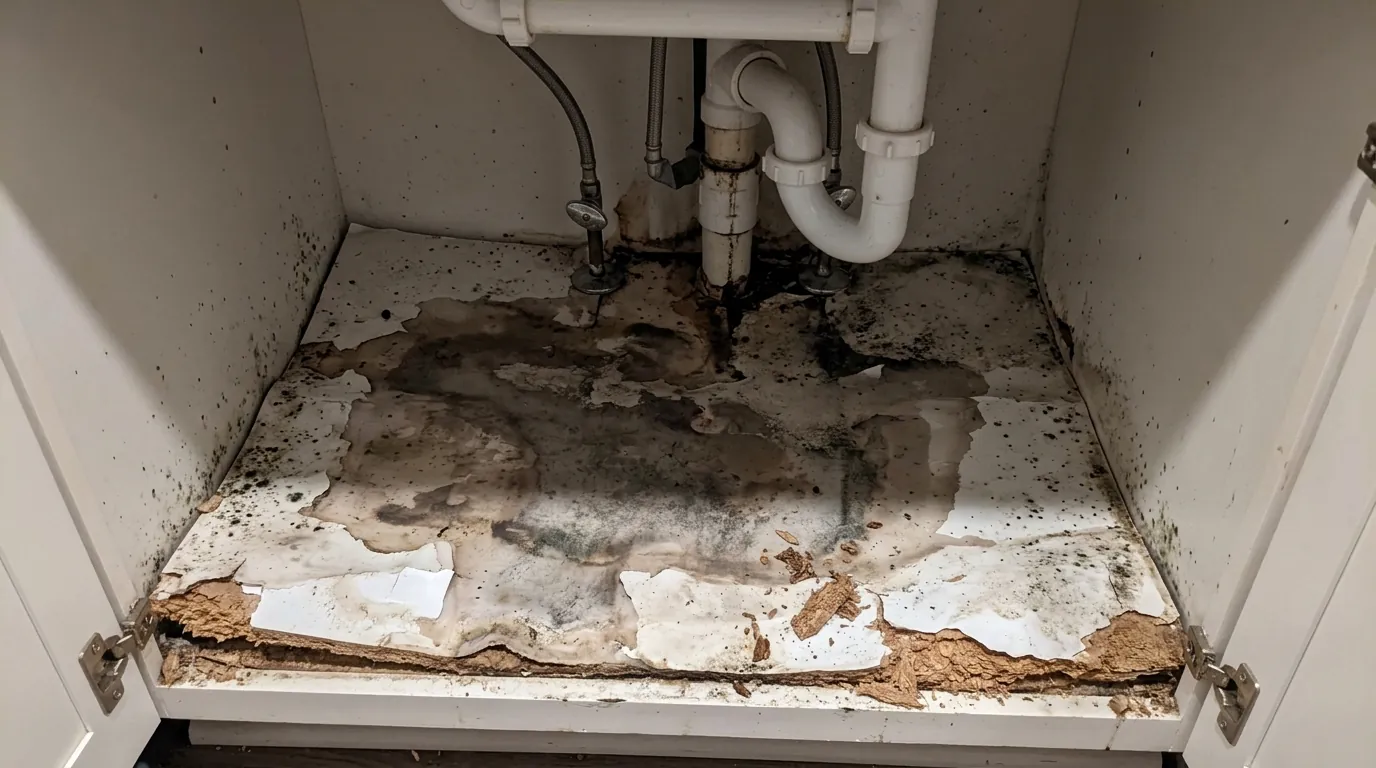
Water from a sink, a dishwasher or a refrigerator line runs under the cabinets and sits on the floor beneath them, hidden by the toe kick. The cabinet floor soaks it up from below, and the wall behind the sink base stays wet long after the room looks dry.
What happens next depends on the material. Solid wood and plywood boxes usually dry with little damage. Particleboard and MDF swell, crumble at the edges and never go back to their original shape, which is why a cabinet that looks fine at first can be bowed a week later.
We dry first and decide second. If the leak came from an appliance, the source side is covered on our appliance leak page; cabinets are where the damage often ends up.
What decides the cost of cabinet repair
We have not found a reliable published range for cabinet repair after water damage, because it swings between a new toe kick and a whole new kitchen. These are the things that set the price.
- Cabinet materialSolid wood and plywood usually dry; particleboard and MDF are often replaced.
- How many boxesOne sink base costs far less than a run of base cabinets.
- Countertop typeStone tops need careful removal and sometimes a fabricator.
- MatchingFinding matching doors and finishes for older cabinets can add time and cost.
- Hidden damageWet subfloor or wall behind the cabinets adds drying and repair.
Repair or replace water-damaged cabinets?
The material and how long it sat wet usually make the decision.
| Cabinet condition | Usual repair | Why |
|---|---|---|
| Solid wood or plywood, dried quickly | Dry, clean and keep | These materials recover well |
| Swollen particleboard floor only | Replace the cabinet floor | The box and face frame are still sound |
| Swelling in sides and back | Replace the box | Swollen particleboard does not recover |
| Mold inside the box | Replace and treat the wall behind | Particleboard cannot be reliably cleaned |
Sink base cabinets
The sink base takes the most water and has the thinnest floor, often a single sheet of particleboard. We pull the toe kick, remove the cabinet floor if it has swollen, and dry the subfloor and the wall behind it with air directed into the space.
A new cabinet floor can often be fitted without replacing the whole box, which keeps the face frame, doors and countertop untouched.
Swollen particleboard toe kicks
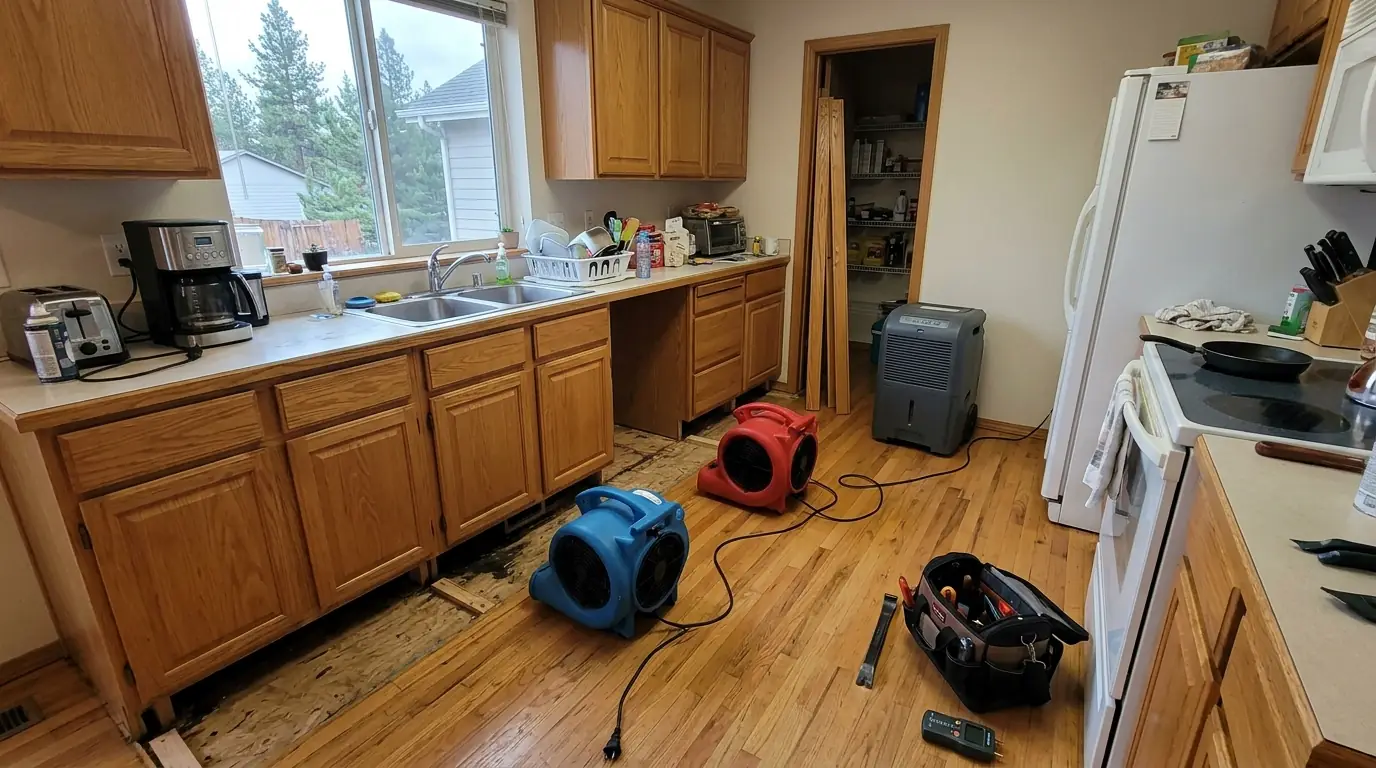
Toe kicks are the first thing to show water: the bottom edge swells, the veneer lifts, and the kick starts to pull away from the box. They are usually replaceable on their own once the floor behind them is dry.
If the swelling has climbed into the cabinet sides, the box has taken on water too, and replacement becomes the better repair.
Countertop removal and reset
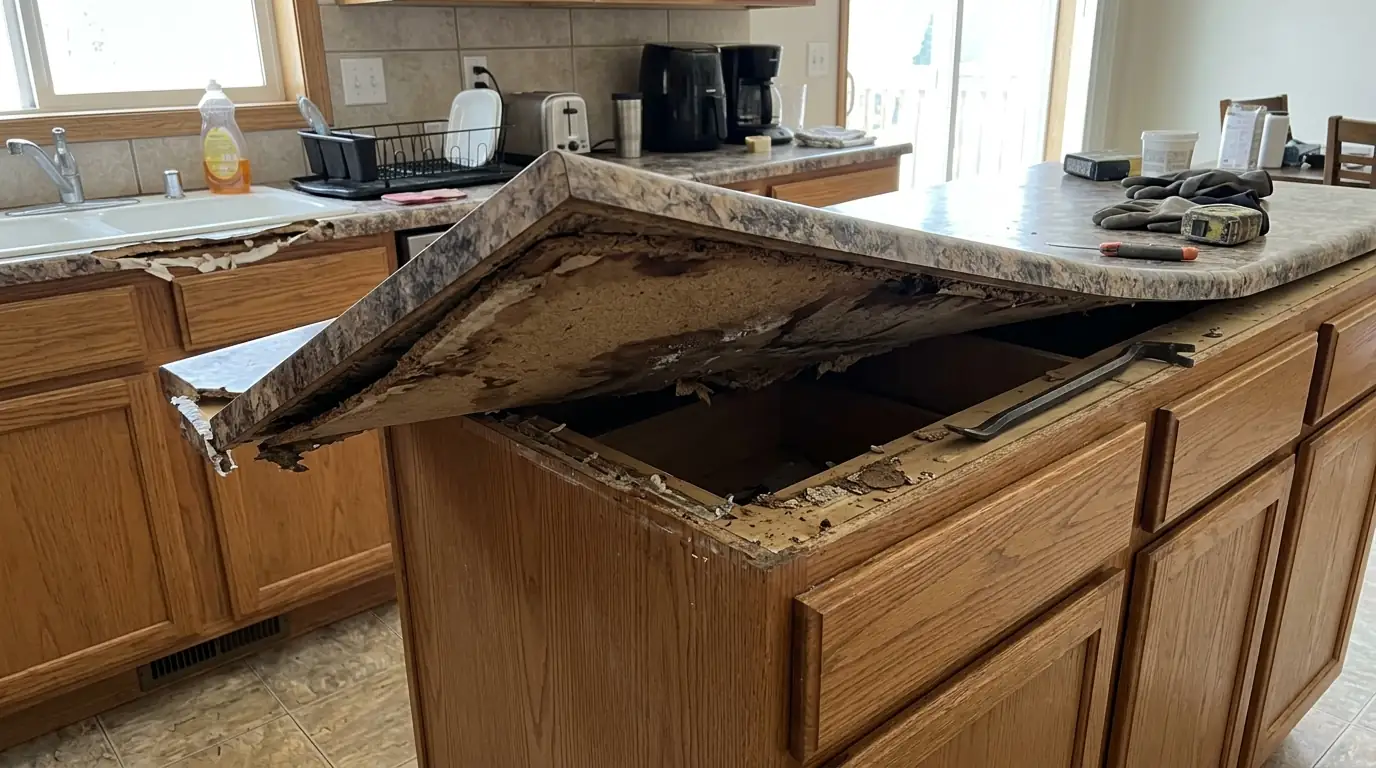
When base cabinets come out, the countertop has to come off first. Laminate and butcher block lift off fairly easily; stone tops need careful handling and sometimes a fabricator to remove and reset.
We remove and store tops during drying and reset them on repaired or new boxes, with the plumbing reconnected by your plumber where needed. Full kitchen rebuilds are part of our water damage reconstruction work.
What a cabinet repair includes
- Moisture readings under and behind every affected box
- Photos of each cabinet before removal
- Toe kicks and cabinet floors removed as needed
- Drying of subfloor and wall behind
- Countertop lift, storage and reset
- Repair or replacement of damaged boxes
- Door and drawer adjustment
- Final readings and a walk-through
Frozen sink lines and Spokane kitchens
When a January 2024 subzero stretch hit Spokane, one plumbing company's calls rose from about 20 a day to about 100, almost all frozen or burst pipes, and kitchen sink lines on exterior walls were among the most common failures. A split under the sink soaks the sink base first, so after a cold snap we pull the toe kick on every kitchen we dry, even when the cabinet doors look dry.
How a cabinet repair job runs
- 1
Stop the source and assess
Readings under and behind the cabinets, photos of every box.
- 2
Open up
Toe kicks off; cabinet floors removed where swollen.
- 3
Dry the space
Air directed under and behind the cabinets with daily readings.
- 4
Repair or replace
New floors, kicks or boxes; tops lifted and reset as needed.
- 5
Finish and reconnect
Doors adjusted, trim back on, plumbing reconnected by the plumber.