Quick answer
A mold inspection in Spokane Valley starts with a moisture search, not a lab kit: meters and a thermal camera show where materials are wet, and sampling follows only where results will change what gets removed. You get the moisture map, lab results for any samples taken, and a plain explanation of what needs remediation and what does not.
What a useful mold inspection answers
Visible mold is easy to find. The useful questions are why it is there, whether it is still growing, and how far it goes behind the surface. A stain under a window can be a one-time condensation spot or the edge of a wall cavity that has been wet for months; moisture readings tell those apart.
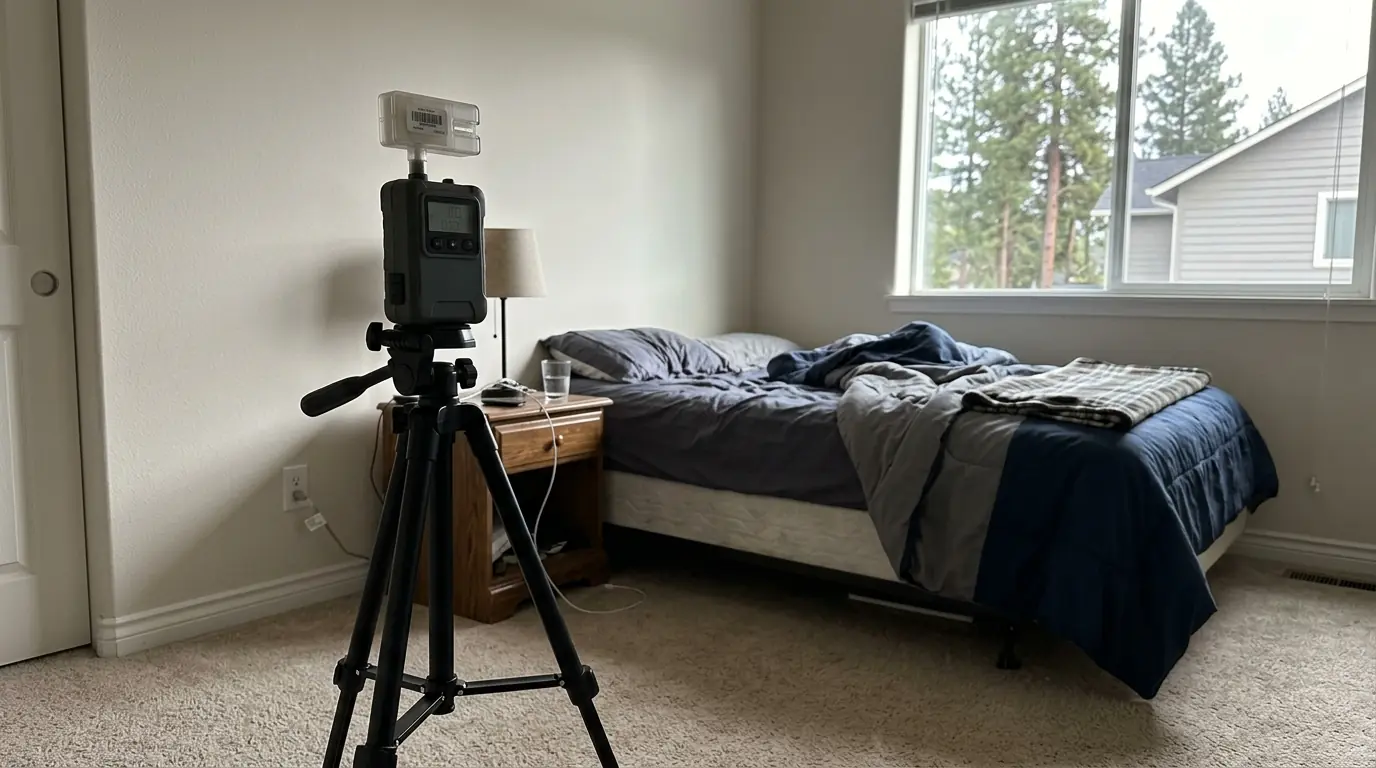
Testing has limits, and we will say so. Air samples compare indoor spore counts to an outdoor sample taken the same day, which helps when you smell mold but cannot see it. Surface samples identify what is growing on one material. Neither tells you how big a hidden problem is; the moisture map, and sometimes a small inspection hole, does that.
If we find growth that needs removal, the written scope explains the area and the containment it needs, and it is yours to hand to any company, including us for mold remediation. If we find moisture and no growth yet, fixing the source and drying the area is usually the whole job.
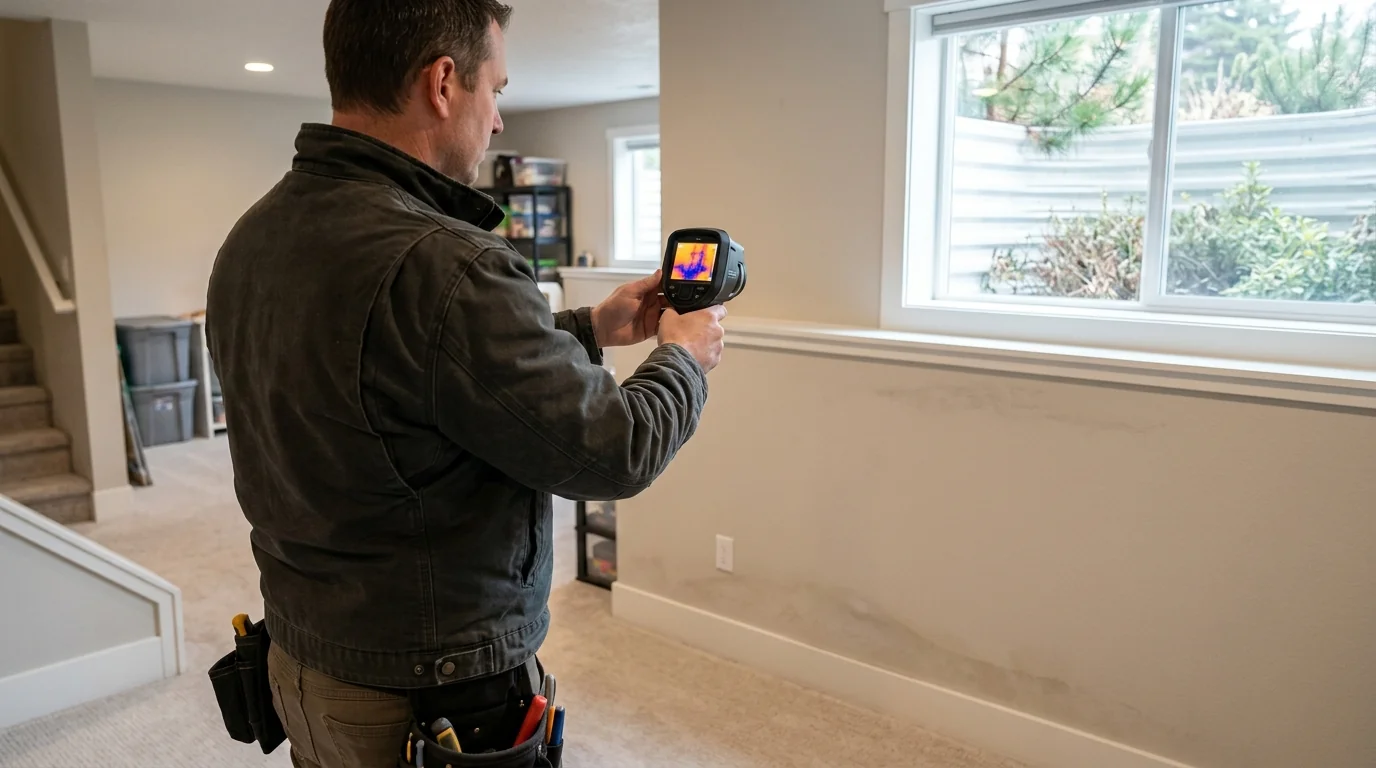
What every inspection includes
- Questions about leaks, odors and the history of the house
- Moisture readings room by room
- Thermal imaging of walls, ceilings and floors
- Attic and crawl space checks where accessible
- An outdoor control sample whenever air is sampled
- Lab submission with chain of custody
- A moisture map with photos
- A written scope if remediation is needed
Air sampling
A calibrated pump draws air through a spore trap cassette in the room of concern and outdoors as a control. The lab reports spore types and counts per cubic meter. What matters is the comparison: indoor counts far above outdoor ones, or indoor types that are rare outside, point to an indoor source.
We take air samples when there is odor without visible growth, or when you want data rather than guesses before deciding what to open up.
Surface and tape lift samples
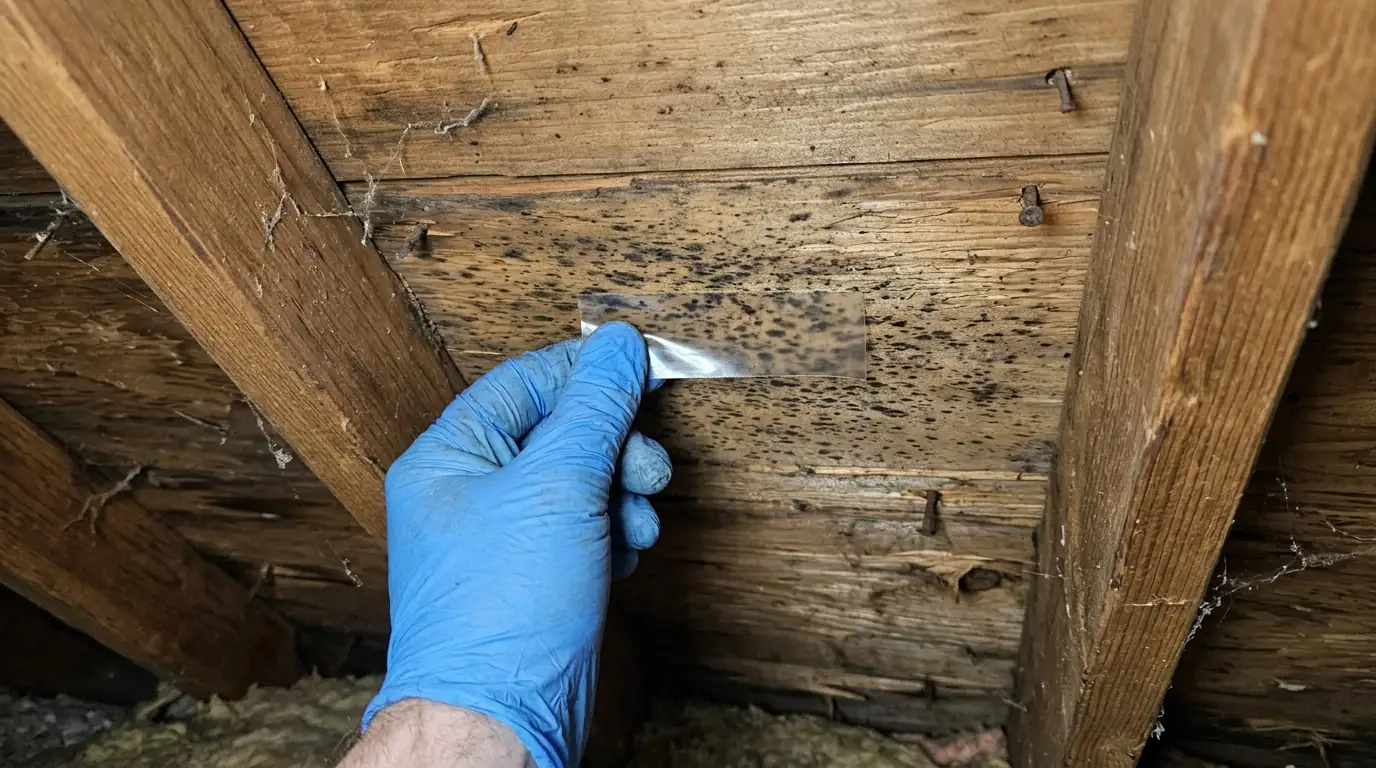
A tape lift or swab identifies what is growing on a specific surface, such as dark spotting on attic sheathing or a stain behind a washer. It also settles whether a stain is mold at all; plenty of dark marks are dirt, soot or wood tannin.
We sample a surface only when the answer changes what you do. Obvious growth on wet drywall does not need a lab to tell you it comes out.
Post-remediation clearance checks
After remediation, a clearance check confirms the work: the area reads dry, is visibly clean, and air samples inside the former containment compare normally with the rest of the house and outdoors. Some insurers and buyers ask for it.
If we did the remediation, consider having a third party run the clearance so the check is independent. We will tell you that up front.
Where hidden mold shows up in Spokane-area basements
Spokane Valley's median house dates to 1979, and across the river in Spokane, county officials have pointed to groundwater fed by rain and snowmelt as the cause of repeat basement flooding on some streets. When a finished basement sits against a foundation wall that takes on water in spring, the drywall and carpet pad can stay damp for weeks without showing it. That is the most common hidden mold we find, and it is why we read the bottom foot of every basement wall.
How an inspection visit goes
- 1
History and questions
Leaks, odors, past repairs and who in the house notices what.
- 2
Moisture and thermal scan
Room by room readings, plus attic and crawl space where they can be reached.
- 3
Sampling where it matters
Air, surface or both, with an outdoor control for air samples.
- 4
Lab results
Samples go to an accredited lab under chain of custody.
- 5
Plain-language report
A moisture map, photos, results and a scope if anything needs removal.
What changes the cost of an inspection
Inspection pricing depends on the house and the number of samples, so we quote it on the phone once we know what you are seeing. These are the parts that move it.
- Number of samplesEach air or surface sample has a lab fee; many inspections need two or three, some need none.
- Size of the house and areas checkedA single room complaint is shorter than a whole-house or pre-purchase inspection.
- AccessAttics, crawl spaces and finished basements take time to reach and read properly.
- Inspection holesA small opening to look inside a wall cavity is sometimes the only way to confirm a suspicion.
- Clearance testingTesting after remediation is a separate visit with its own samples.
Which mold test answers which question
Each test answers one question well and others poorly. This is how we decide what to use.
| Test | What it tells you | When we use it |
|---|---|---|
| Moisture mapping | Where materials are wet, and how far it spreads | Every inspection |
| Air sample | Whether there is more airborne mold indoors than outside | Odor with no visible growth |
| Surface or tape lift | What is growing on one spot, or whether it is mold at all | A stain you are unsure about |
| Clearance check | Whether remediation worked | After removal, before rebuild |