Quick answer
Apartment and condo water damage in Spokane Valley usually involves more than one unit: water from a failed supply line, water heater or overflow upstairs travels through ceilings and wall cavities to the units below. We locate the source, dry each affected unit and common area, and document them separately so owners, tenants, associations and their insurers can each see their part.
Why apartment water jobs are different
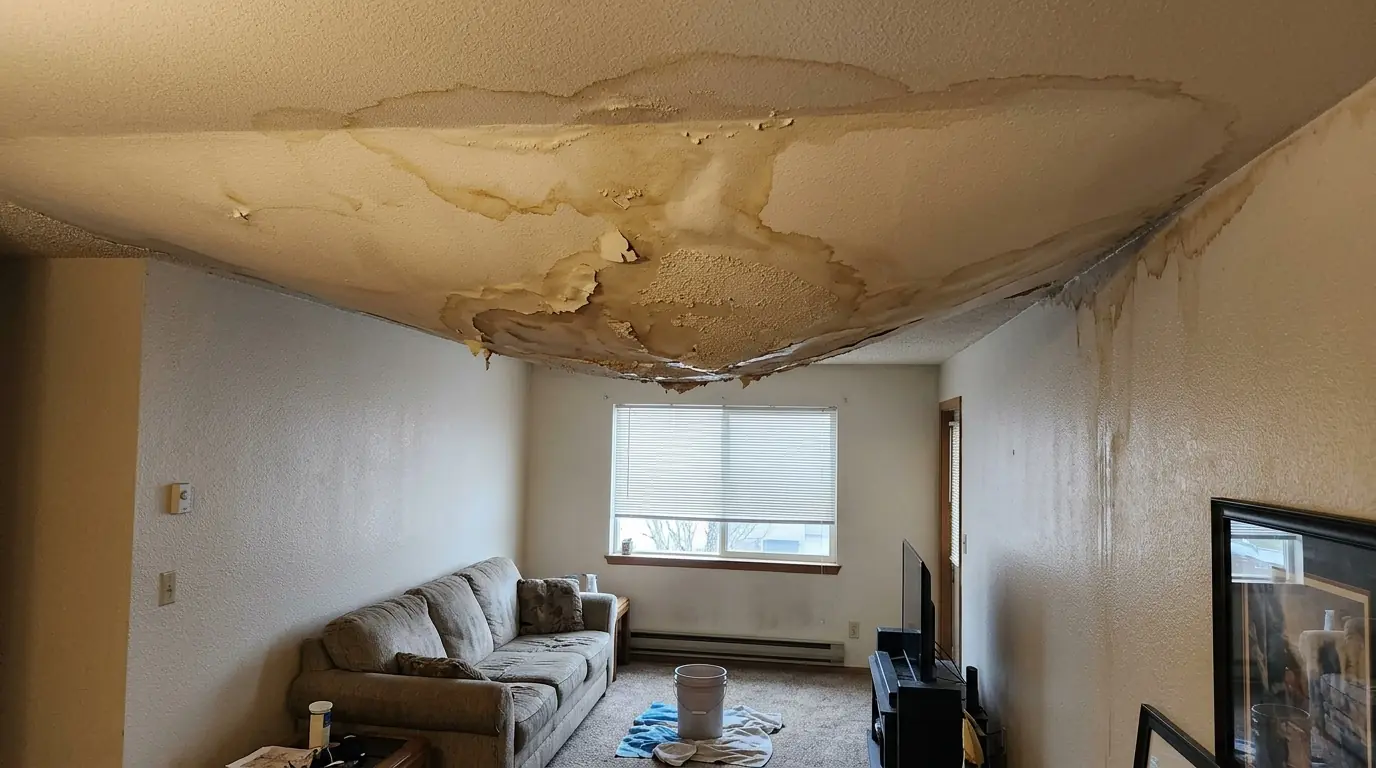
Shared walls, floors and plumbing mean water travels. A dishwasher hose that fails on the third floor can show up as a ceiling stain on the first, and the unit where it started may look almost dry.
The other difference is people. Owners, tenants, a property manager and sometimes an association all need to know what is happening in their space, and each may have a different insurer. Good records keep that from turning into an argument.
The drying itself is the same work we do in houses, from extraction to daily readings. What changes is access, scheduling and the paperwork.
How we handle a multi-unit water job
- 1
Find and stop the source
Trace the water upward and shut it off at the source unit.
- 2
Check every neighbor
Readings in units below and beside the source.
- 3
Extract and dry
Unit by unit, plus common areas, with daily readings.
- 4
Separate records
Photos, maps and logs for each unit and each party.
- 5
Repairs
Ceilings, walls and floors restored once each unit reads dry.
Unit-to-unit leaks
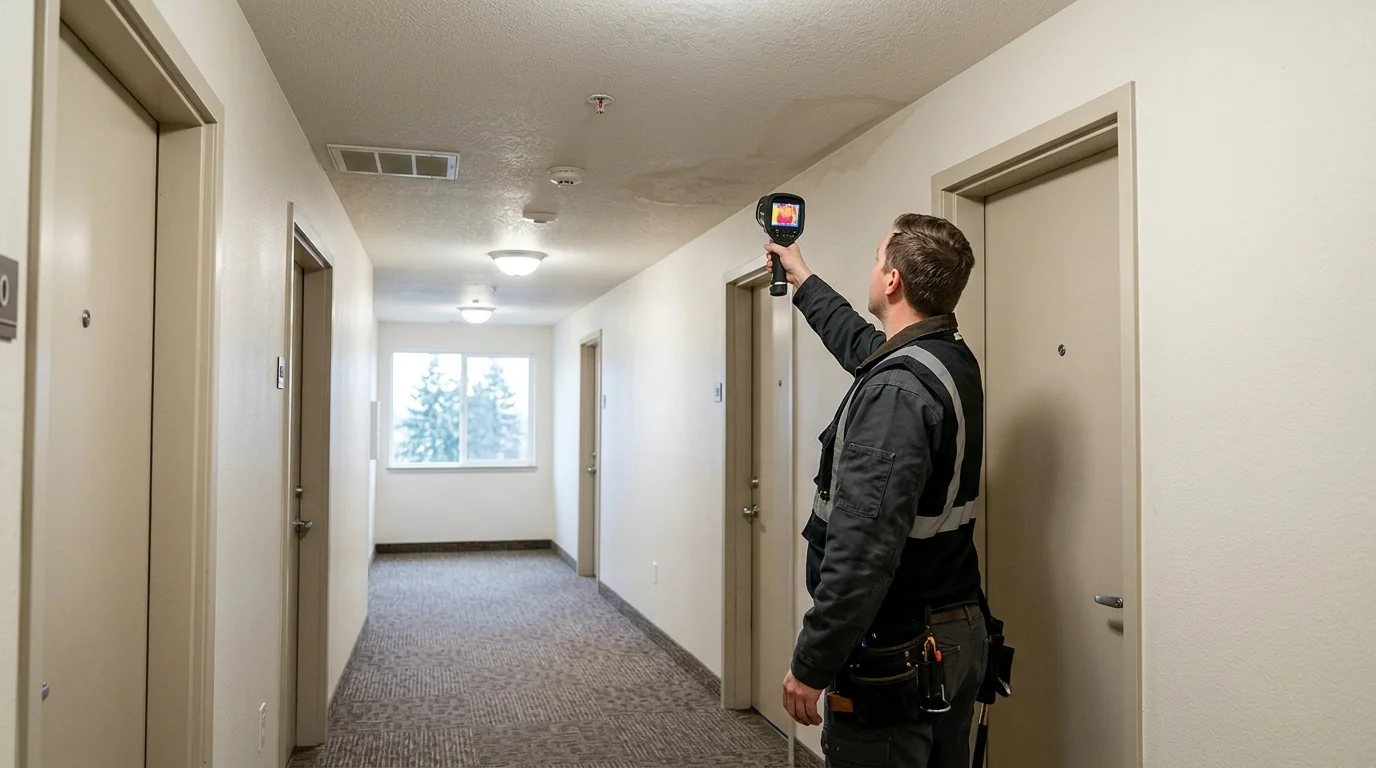
We trace the water upward with moisture readings and a thermal camera until we find the source unit, then get the water shut off there. Each affected unit gets its own moisture map and photos.
Ceilings in lower units are often opened to dry the joist bay between floors, which is the part of the building nobody can see.
Common area flooding
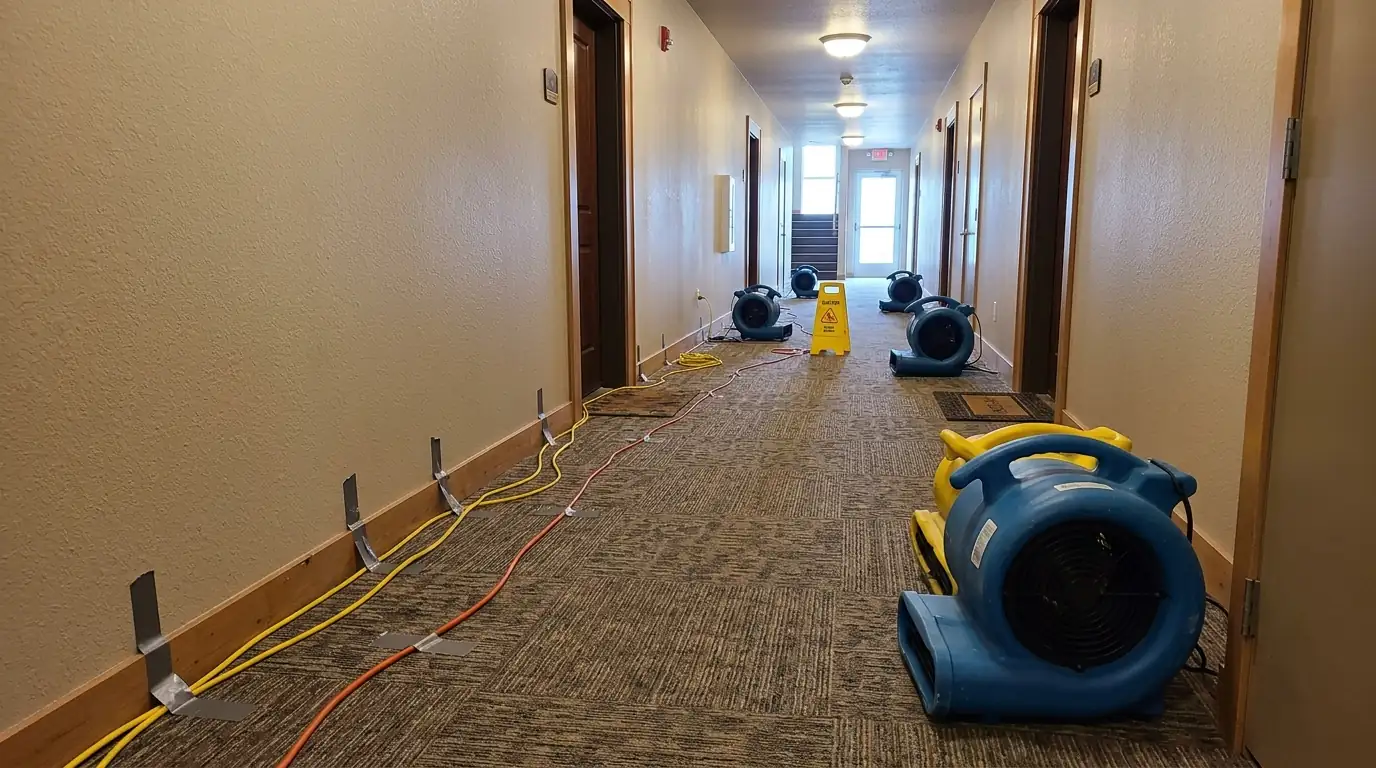
Hallways, stairwells, laundry rooms and lobbies carry foot traffic during drying, so equipment placement and cord routing matter. We keep exits clear and post signs, and work around the building's busy hours where we can.
Carpeted corridors are extracted and dried in place when the water was clean and the response was quick.
Owner and tenant coordination
Tenants want to know when they can use their space; owners want to know cost and responsibility. We give each a plain update after daily readings and keep access logs for every unit we enter.
Who pays depends on the cause, the lease, the association rules and the policies involved. We do not decide that, but our records are what everyone uses to work it out.
How long apartment drying takes
Most units dry in three to five days once the water is out, longer when water sat between floors. In most cases tenants can stay in their units while equipment runs; we tell you plainly when a room is better left empty.
Apartments and condos in Spokane Valley
Detached single-family homes make up about 59.7% of Spokane Valley's roughly 45,467 housing units, which leaves around 40% in apartments, condos, townhomes and other attached or multi-unit buildings. In those buildings a leak almost never stays in one unit, so on every multi-unit call we check the floor below and the units on either side before we decide how far the drying has to reach.
What tenants and owners can do right away
Right away, in your unit
- Tell your property manager or association and the neighbor above
- Move electronics and valuables away from the drip
- Put a bucket under an active drip and photograph the ceiling
- Turn off any light fixture that has water near it
What to leave for us
- Finding the source in another unit
- Opening a wet or sagging ceiling
- Drying wall cavities shared with a neighbor
- Records for owners, tenants and insurers
Planning costs for multi-unit water damage
Each unit is its own drying job. The national range below is for a typical single water job; buildings add a line for every unit and common area involved.
- Number of units affectedEvery unit adds extraction, equipment and records.
- Floors involvedWater between floors means opening ceilings below.
- Common areasHallways and stairwells need drying around foot traffic.
- Water categoryA toilet or sewer source changes what must be removed in every unit.
- Access and schedulingCoordinating entry to occupied units can shape the timeline.