Quick answer
Burst pipe water damage in Spokane Valley usually starts running on the warm-up after a freeze, not on the coldest night, so the first job is closing the main shutoff. We then extract standing water, open or vent wet wall cavities, and set drying equipment that we check every day until framing and subfloor read dry.
Signs a pipe has frozen or split
A faucet with no flow
A trickle or nothing at one tap in a cold snap usually means an ice plug in that line.
Frost on an exposed pipe
Visible frost in a crawl space or garage ceiling means the line is at risk.
Hissing inside a wall
A steady hiss with every faucet closed is water escaping somewhere.
Wet drywall under a sink
A damp patch low on an outside wall, below a sink, is the most common split we see.
A meter that keeps moving
If the meter spins with everything off, water is leaving the pipes.
A soft or cold spot in the floor
A floor that suddenly feels soft over a crawl space can mean a break underneath.
Why frozen pipes leak on the thaw
When water freezes in a supply line it expands and splits the pipe, but the ice plug holds the water back. The leak only shows when the house warms and the plug melts. That is why burst pipe calls bunch up on the first mild day after a cold stretch, and why the water has often been running inside a wall before anyone sees it.
The pipes that freeze are predictable: lines in exterior walls behind kitchen sinks, runs through an unheated crawl space or garage ceiling, and outdoor faucets where the inside shutoff was never closed.
Our part is everything from the shutoff to a dry house. The pipe repair itself is plumbing work, and we coordinate with your plumber so the wall is not closed before the cavity is dry.
From the shutoff to a dry wall
- 1
Shutoff and safety
Close the main, then shut off power to any room where water is near outlets, if the panel is in a dry spot.
- 2
Extraction
Standing water comes out of carpet, pad and hard floors.
- 3
Moisture mapping
Meters and a thermal camera show how far the water traveled inside walls and floors.
- 4
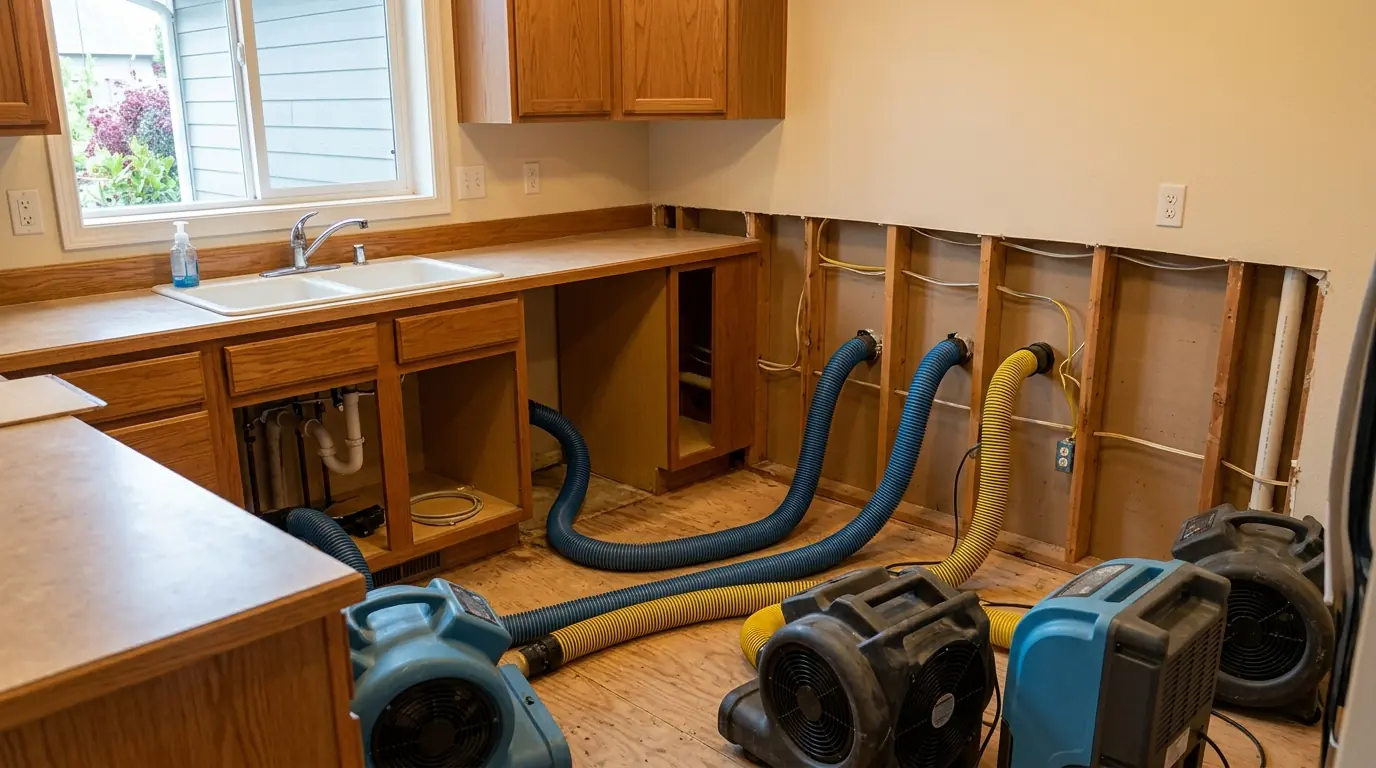
Drying with daily readings
Air movers and dehumidifiers run until the readings match dry materials elsewhere in the house.
- 5
Hand-off to rebuild
Once dry, the opened areas are rebuilt; see drywall and ceiling repair.
Frozen pipe splits in exterior walls
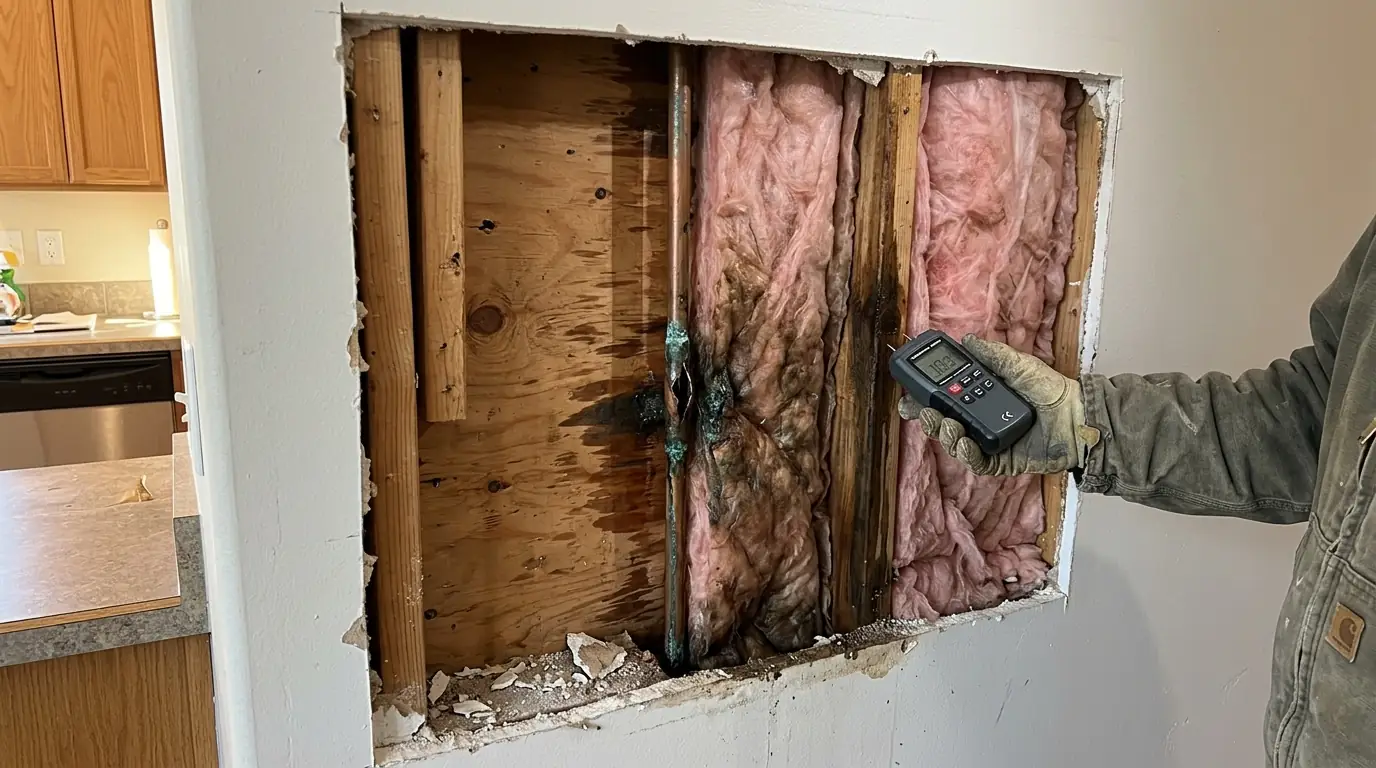
The classic case is the kitchen sink line on an outside wall. Water runs down inside the cavity, soaks the insulation and the bottom of the drywall, and spreads under the sink base into the floor.
We check the wall with a moisture meter and a thermal camera, make a flood cut only where the readings call for it, pull wet insulation and dry the cavity with air directed into it. The sink base usually needs its toe kick off so the floor underneath can dry, which is where cabinet repair sometimes comes in.
Crawl space supply line breaks
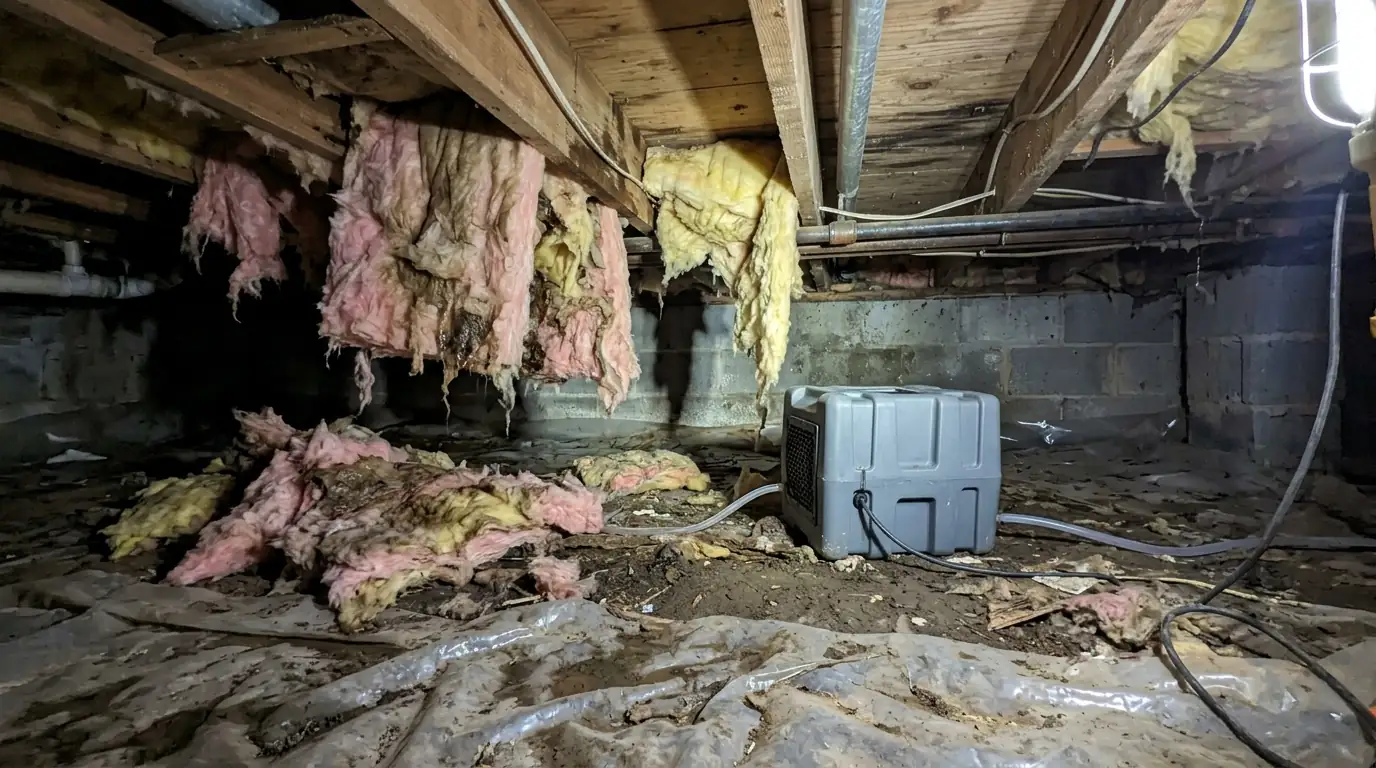
Under the house a split line can run for hours before anyone notices. Water pools on the vapor barrier, soaks the insulation and wicks into the subfloor.
We pump and extract the standing water, pull wet insulation and damaged barrier, and run dehumidifiers in the crawl space itself, because fans alone just move damp air around a closed space. The full approach is on our crawl space water damage page.
Hose bib and outdoor faucet bursts
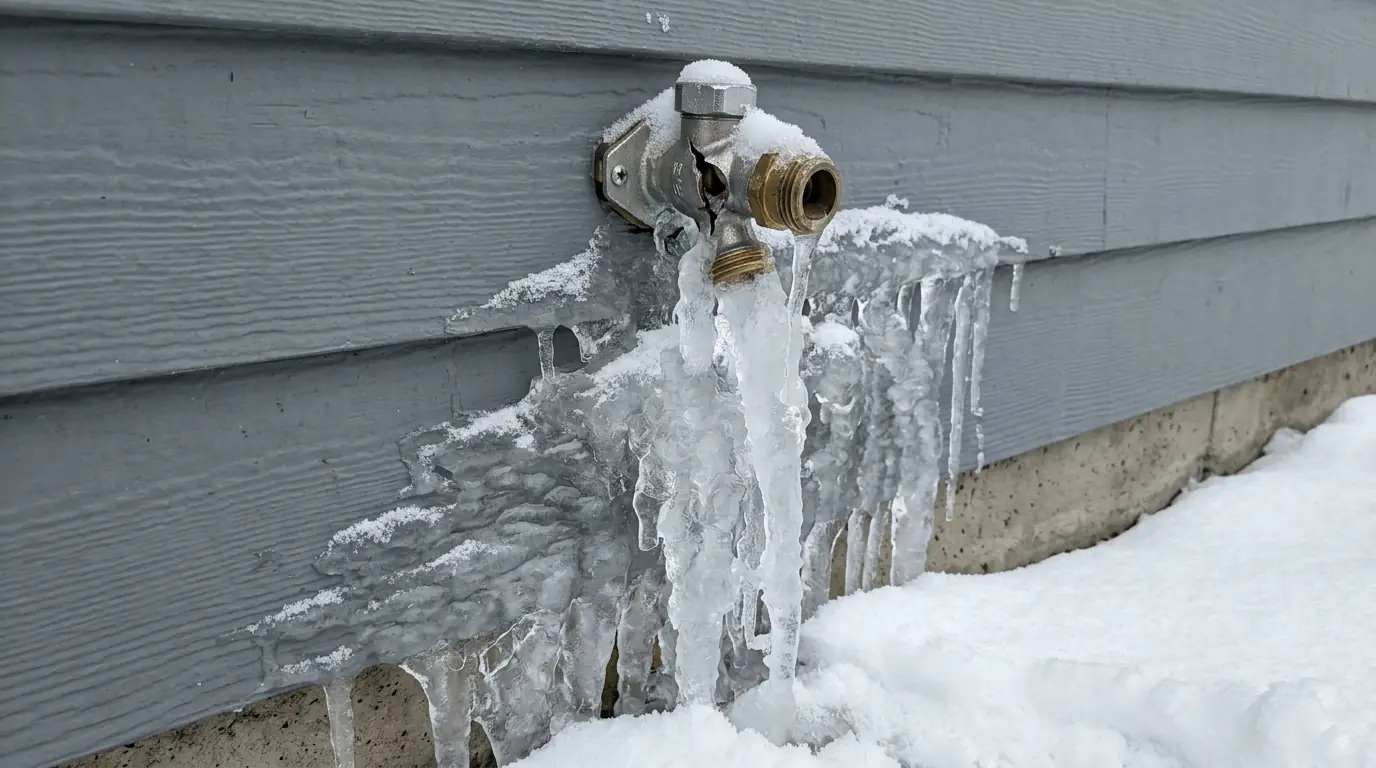
A frost-free hose bib can still burst if a hose was left on it, because the trapped water cannot drain back out. The split sits inside the wall, so the first sign is often water in the basement or a wet rim joist below the faucet.
We open the area, dry the rim joist and sill plate, and check the finishes the water ran across.
How long burst pipe drying takes
Most homes dry in three to five days once the water is out; hardwood, plaster and a soaked crawl space take longer. Water service usually returns within hours of the plumber's repair, and in most homes you can stay put while the equipment runs.
Cold snaps and shutoffs in Spokane Valley
In January 2024 the Spokane Valley Fire Department answered 179 alarm calls set off by frozen or burst pipes, which shows how fast a long cold stretch finds the weak spots here. In Spokane the water meter sits in a pit out in the parking strip, and in winter that lid is often under snow or frozen shut, so learn where your inside main shutoff is before the cold arrives. Most of the splits we dry out start running on the warm-up, not the coldest night.
Planning costs for a burst pipe cleanup
Supply-line water starts out clean, which keeps the per-foot cost lower than contaminated water if drying starts quickly. The published national figures below are a planning range only; your number comes from the walk-through.
- How long the water ranA few minutes on tile is a small job; hours inside a wall reaches framing, insulation and the floor below.
- Wall cavities and ceilingsOpened walls and ceilings add removal now and rebuild later.
- FlooringHardwood takes longer to dry than vinyl or tile, and carpet pad usually comes out.
- Finished basement or crawl spaceWater that reached a finished basement or a crawl space adds area and drying days.
- RebuildDrywall, insulation, trim and paint are priced once the structure is dry.