Quick answer
Emergency water damage restoration in Spokane Valley means three things in the first visit: stopping the source, extracting standing water, and setting dehumidifiers and air movers based on moisture readings. Most homes then dry in three to five days of daily monitoring, and removal of materials that cannot be dried happens on the first visit, not after the weekend.
What happens on an emergency water call
Every water emergency starts with the same question: is the water still coming? If it is, everything else waits. We walk you to the main shutoff on the phone while the crew loads equipment, and if the shutoff is stuck, we deal with it when we arrive.
Then speed matters in a specific way. Clean water left for a day or two starts to be treated as gray water, carpet pad and drywall wick it higher, and mold can begin on wet materials within a few days. Fast extraction and correctly placed drying equipment are what keep a job small.
We also start the paperwork on the first visit: photos of every room, the source, and the readings, because insurers ask for the condition before anything was removed.
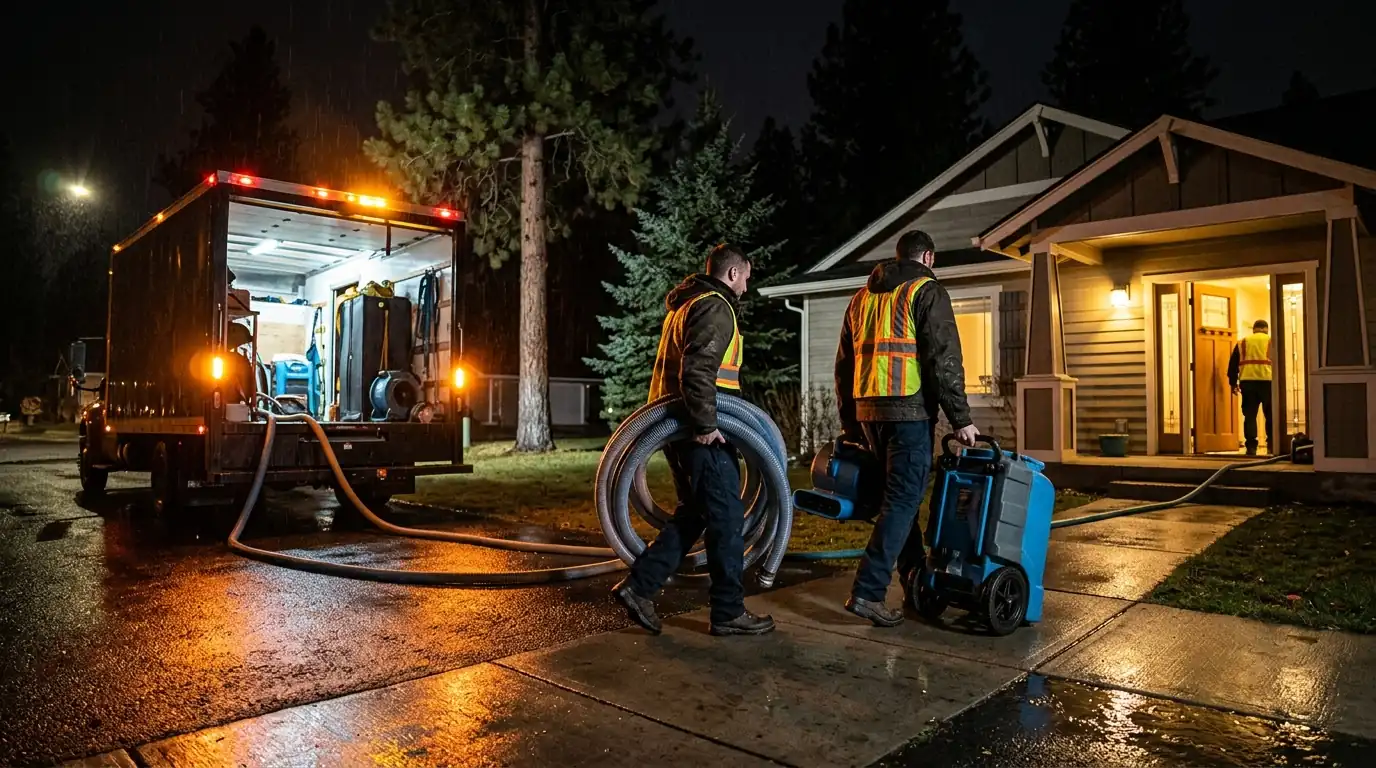
The first visit, step by step
- 1
Phone guidance
Shutoff, power and what to move while we are on the way.
- 2
Source and safety
Source stopped, power off in wet rooms, hazards checked.
- 3
Extraction
Standing water removed from every surface we can reach.
- 4
Moisture mapping
Readings and thermal imaging show where water traveled.
- 5
Drying set and documented
Equipment placed, photos taken, daily checks scheduled.
Stopping the source
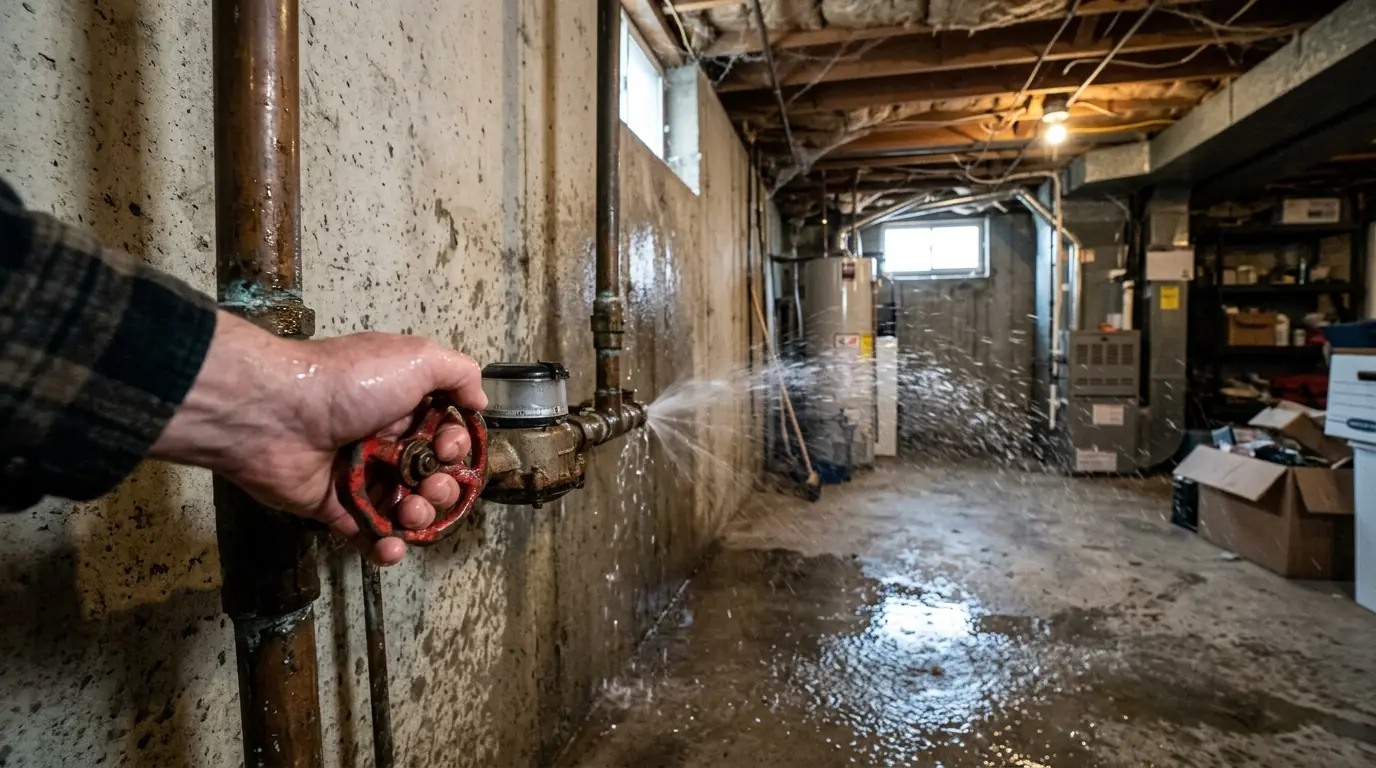
Most water emergencies come from a supply line, a water heater, an appliance hose or a frozen pipe, and all of them stop at a valve. We help you find the main shutoff or the fixture valve, and if water is coming from the roof or the outside, we tarp or divert it.
Power to wet rooms is turned off at the panel before anyone walks through standing water.
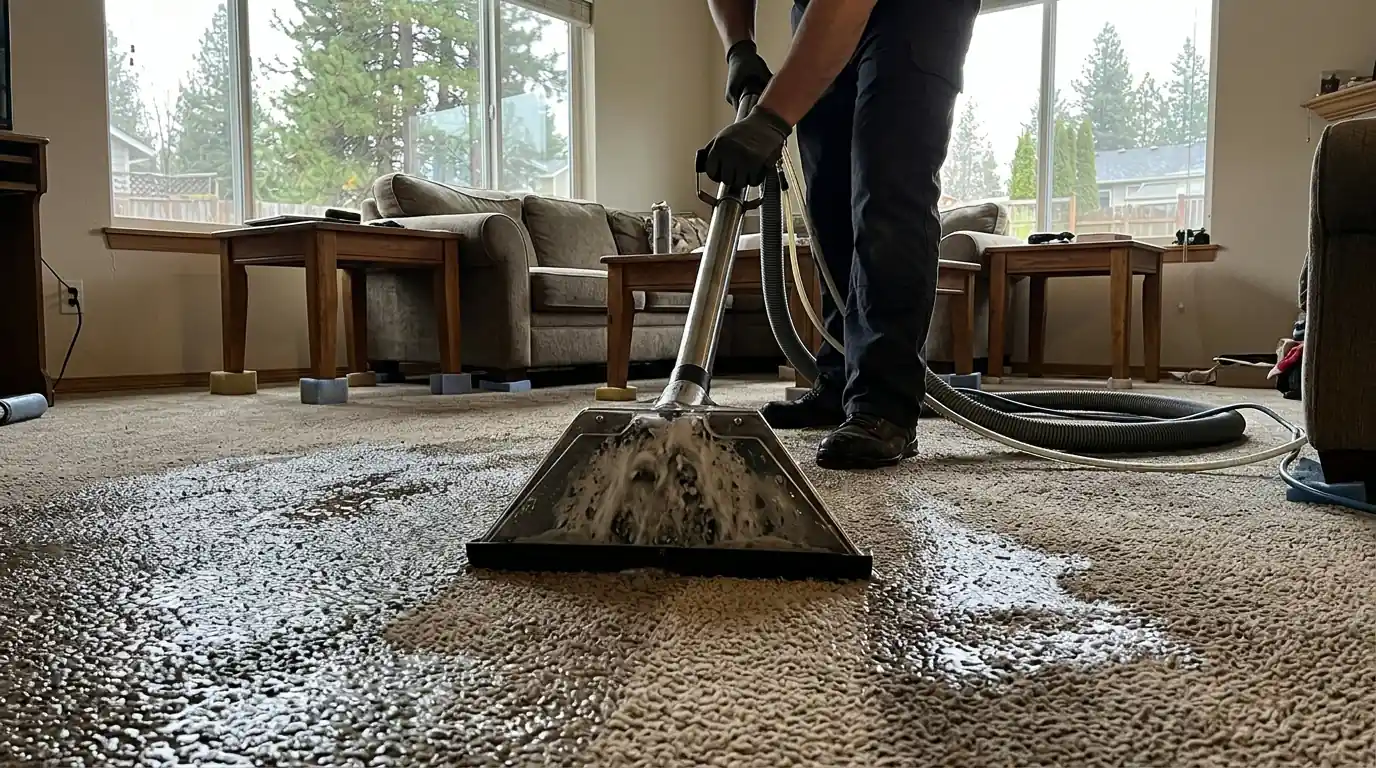
First-hour extraction
Standing water comes out first, with extraction wands on carpet and squeegees and pumps on hard floors and basements. The more water removed mechanically, the less the dehumidifiers have to pull out of the air later.
Wet carpet pad, soaked insulation and swollen baseboard usually come out the same day.
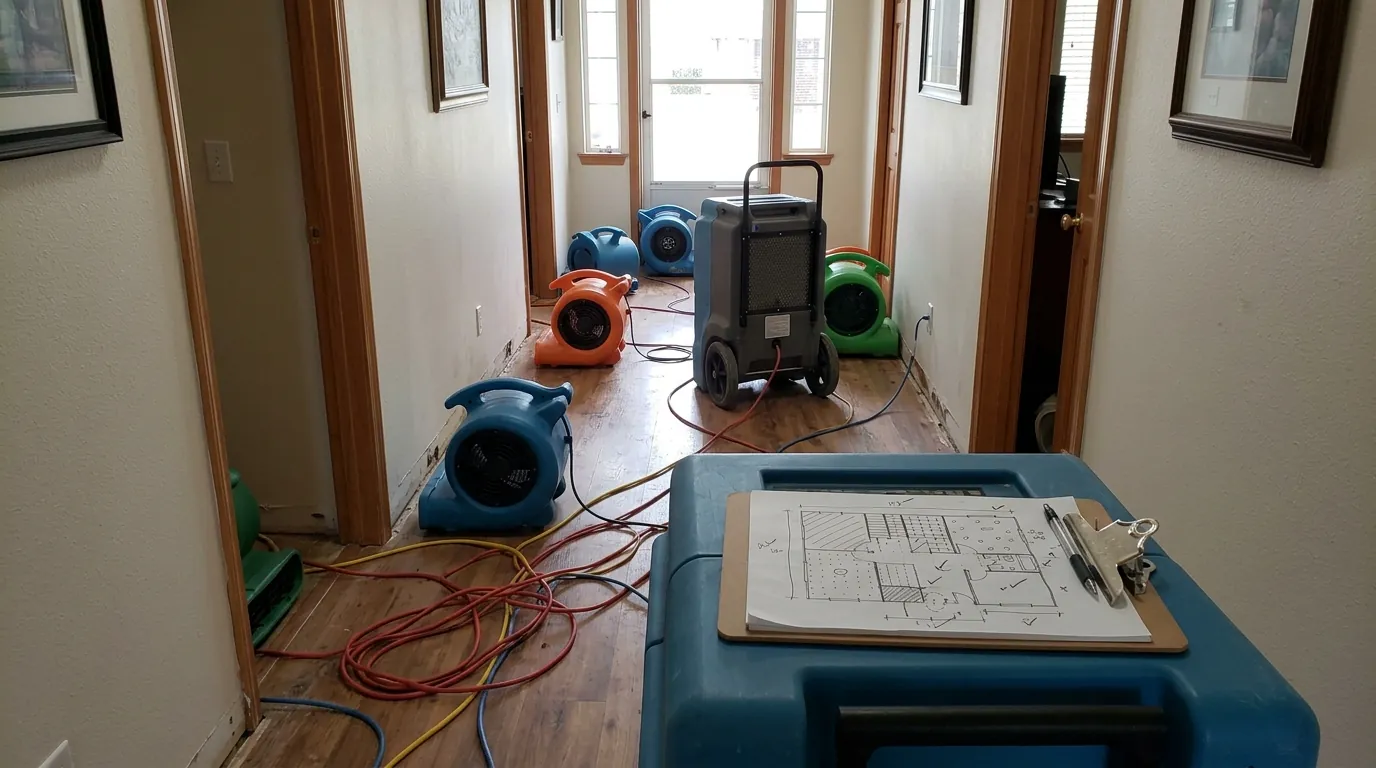
Drying setup and daily checks
Equipment placement follows the moisture map, not guesswork: air movers to push air across wet surfaces, dehumidifiers sized to the space, and air directed into wall cavities where they are wet.
We come back every day, read the same points, and move or pull equipment as areas dry. The full method is on our structural drying page.
How long emergency drying takes
The first visit usually takes a few hours, depending on how much water there is. Drying then runs about three to five days with daily checks; repairs follow once readings show the structure is dry.
Emergency calls in Spokane Valley cold snaps
In January 2024 the Spokane Valley Fire Department answered 179 alarm calls tied to frozen or burst pipes, which is the clearest picture of how many water emergencies one cold stretch can produce here. Once the water is out, typical residential drying in the Spokane area runs about three to five days, followed by one to two weeks of repairs, and that is the timeline we plan most emergency jobs around.
What to do before we arrive
Do now, if it is safe
- Close the main water shutoff or the fixture valve
- Turn off power to wet rooms at the panel, from a dry spot
- Move rugs, electronics and valuables off wet floors
- Take photos of the water and the source
Leave for us
- Walking through standing water near outlets or cords
- Pulling up carpet, pad or drywall
- Running household fans on contaminated water
- Opening a sagging ceiling
Planning costs for emergency water damage
Emergency jobs are priced on the same basis as any water job: how much got wet and what kind of water it was. Published national ranges are below as a planning guide.
- Water categoryClean, gray or black water changes what must be removed.
- Area affectedRooms and square footage drive equipment and labor.
- Time to extractionWater that sits longer soaks deeper and costs more to dry.
- Materials removedPad, drywall and insulation removal add to the first visit.
- RebuildRepairs are scoped once the house reads dry.