Quick answer
Wildfire smoke and ash cleanup in Spokane Valley starts with dry ash removal before any water touches a surface, because wet ash smears into paint and grout. After that come washable surfaces, soft goods such as carpet and drapes, and the furnace filter and return grilles, so the system stops pushing the smell back into the rooms.
What smoke from a nearby fire does to a house
Smoke from a wildfire does two kinds of damage. The ash is the visible part: a gray film on window sills, deck boards and anything near a door that opened. The odor is the part that lasts, because smoke particles are fine enough to pass weatherstripping and settle into carpet pad, upholstery, closets and the return side of the furnace.
Our work follows a fixed order. Dry ash comes off first with HEPA vacuums and dry chemical sponges. Washable surfaces come next, then soft goods, then the filter and return grilles. Doing it in a different order usually means cleaning the same room twice.
We also tell you what does not need us. A light film on a deck usually comes off with a broom, then a hose. Ash inside the house is a different job.
How a smoke and ash cleanup runs
- 1
Walk-through and photos
We photograph every room and the attic before anything is touched, which matters if you file a claim.
- 2
Dry ash removal
HEPA vacuums and dry sponges take loose ash off sills, floors, walls and ceilings.
- 3
Washable surfaces
Walls, cabinets and hard floors get wet cleaning only after the dry pass.
- 4
Soft goods and contents
Items are laundered, cleaned in place or packed out with an inventory.
- 5
Filter, returns and an odor check
We change the filter, clean the returns and walk the house with you for any remaining smell.
Ash on decks, sills and attics
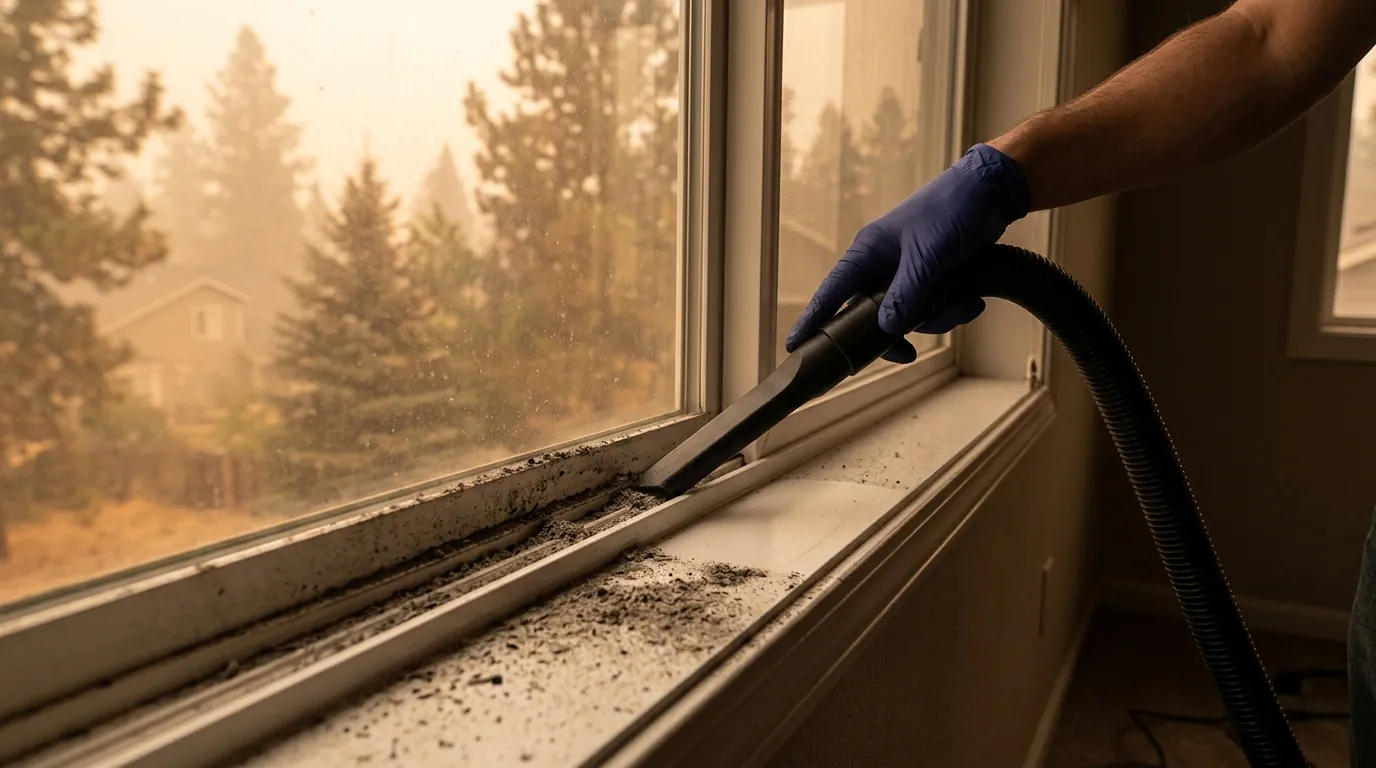
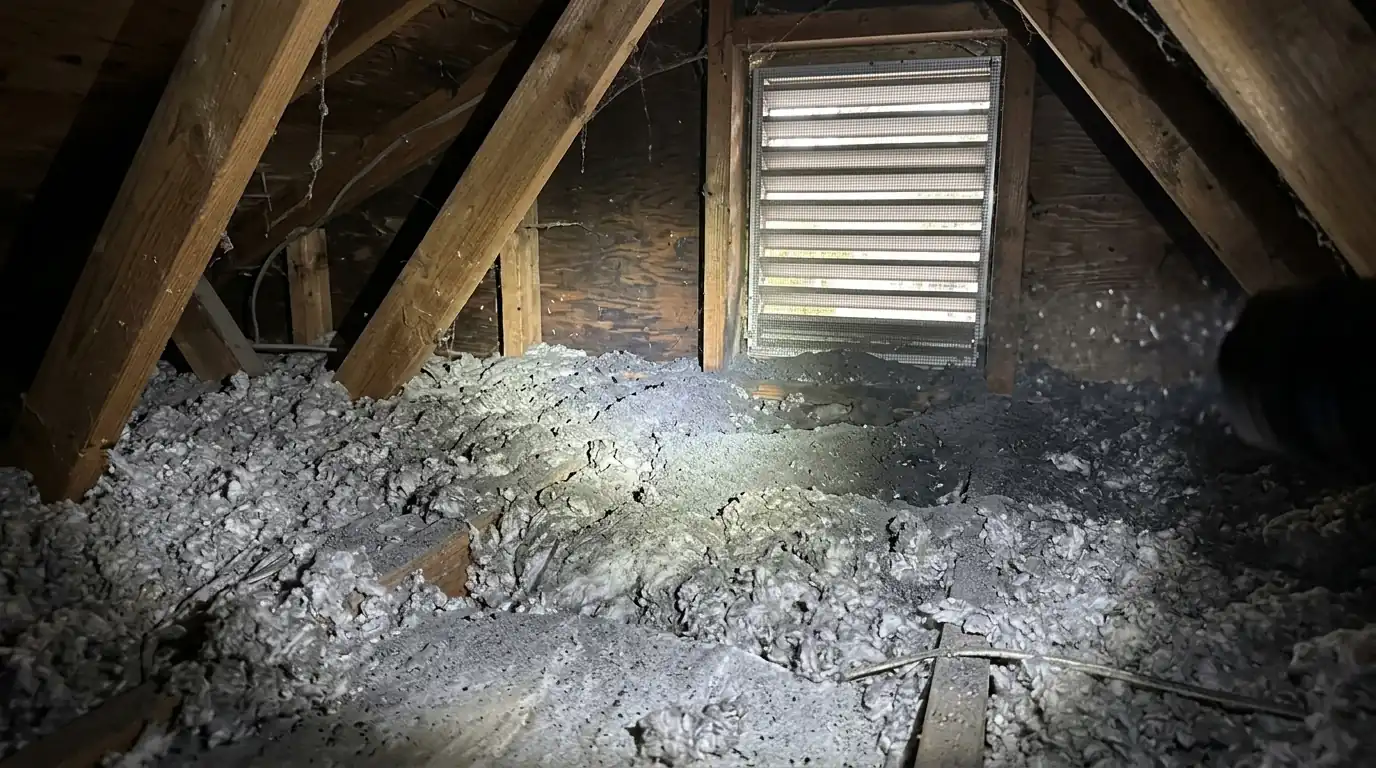
The problem spots are the ones that lead inside: window tracks, the sill under a window that was cracked open, the gap under an exterior door, and attic vents on the side the wind came from. In the attic, ash sits on top of blown insulation where any foot traffic stirs it up.
We HEPA-vacuum tracks and sills, check the attic around gable and soffit vents, and replace insulation only when the ash layer is heavy or the material has taken on odor. A wet wipe goes on only after the dry pass.
Smoke odor in soft goods
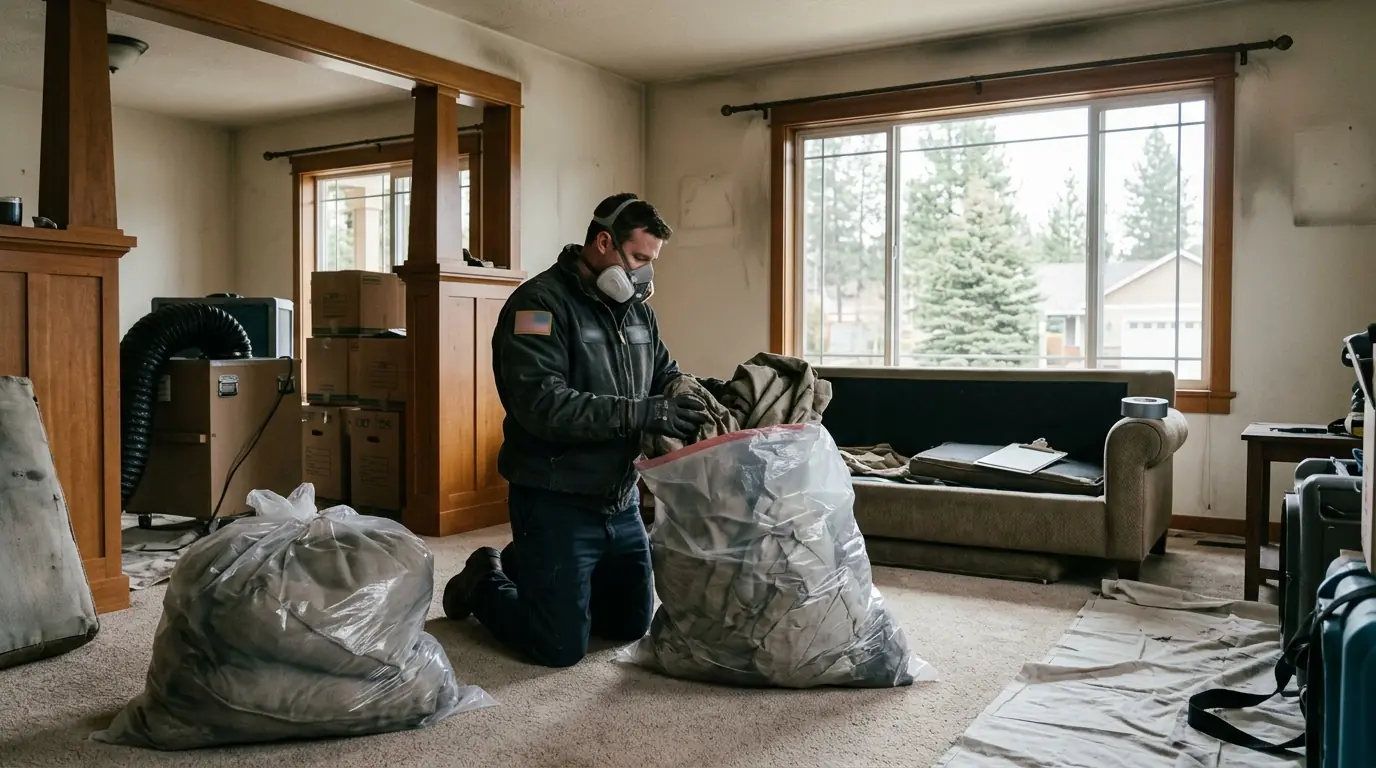
Carpet, drapes, upholstery, bedding and clothing hold smoke odor long after hard surfaces look clean. Washable items usually come back with laundering, sometimes twice. Drapes and upholstered pieces are cleaned in place or sent out, depending on the fabric.
Carpet is the judgment call. The fibers often deodorize well, but a pad that absorbed odor is usually cheaper to replace than to treat. Items that need off-site cleaning go out through our contents pack-out process with an inventory, so nothing goes missing.
Return vents and filter residue
A forced-air furnace pulls house air back through return grilles and a filter. During a smoke event that filter catches a lot, and once it is loaded the system starts recirculating the smell. We change the filter, clean the return grilles and filter slot, and wipe the accessible surfaces of the blower compartment.
If odor keeps coming from the supply registers after that, the ductwork itself needs a specialist cleaning. We will say so plainly rather than fog over it.
What the 2023 fires left behind on the West Plains
The Gray Fire started near Medical Lake on August 18, 2023 and destroyed an estimated 259 structures, while the Oregon Road Fire near Elk took 126 homes. During the Gray Fire, ash and fine particulates fell across Medical Lake, Cheney and Four Lakes, and the regional clean air agency told residents to limit their exposure. The homes we see most after a fire season are the ones on the edge of a burn zone: still standing, with ash in the attic and smoke in every closet.
Ash you can clean up yourself, and when to call
Safe to do yourself
- Dry-sweep or blow ash off decks and walks before you hose them
- Put a new filter in the furnace once the smoke clears
- Launder washable bedding and clothing
- Wear gloves and an N95 mask when handling ash
Better left to us
- Ash inside the house, especially on carpet and upholstery
- Attic insulation with visible ash on it
- Odor that survives laundering and a week of airing out
- Anything you plan to claim on insurance, where photos and an inventory matter
The usual mistake is reaching for a wet rag first. Wet ash smears, and on flat paint it can leave a stain that needs repainting.
What a whole-house smoke cleanup includes
- Photo record of every room before cleaning
- HEPA vacuuming of sills, tracks and floors
- Dry sponge pass on walls and ceilings
- Wet cleaning of washable surfaces after the dry pass
- Attic check at gable and soffit vents
- Furnace filter change and return grille cleaning
- Soft goods sorted: launder, clean in place or pack out
- Final odor walk-through with you
What decides the price of smoke and ash cleanup
We have not found a reliable published range for smoke-only cleanup after a wildfire, so we price it from a walk-through rather than quote a number that would not fit your house. These are the things that move it.
- How much ash came insideA dusting on sills is a short job; ash tracked across carpet and furniture is a long one.
- Soft goods and room countEvery room with carpet, drapes and upholstery adds cleaning or pack-out time.
- The atticAsh on insulation near vents may mean removal and new insulation in that area.
- Furnace filter and returnsUsually a modest part of the job, unless the ductwork needs a specialist.
- Contents that go outClothing, drapes and fabric furniture sent for cleaning are priced by volume.