Quick answer
Water-damaged drywall and ceiling repair in Spokane Valley happens only after the framing behind it reads dry: new drywall is hung, taped and finished, the existing texture is matched, stain-blocking primer goes over any water marks that remain, and the room is painted. Closing a wall before the cavity is dry is the most common reason mold shows up a few months later.
What a good drywall repair after water damage looks like
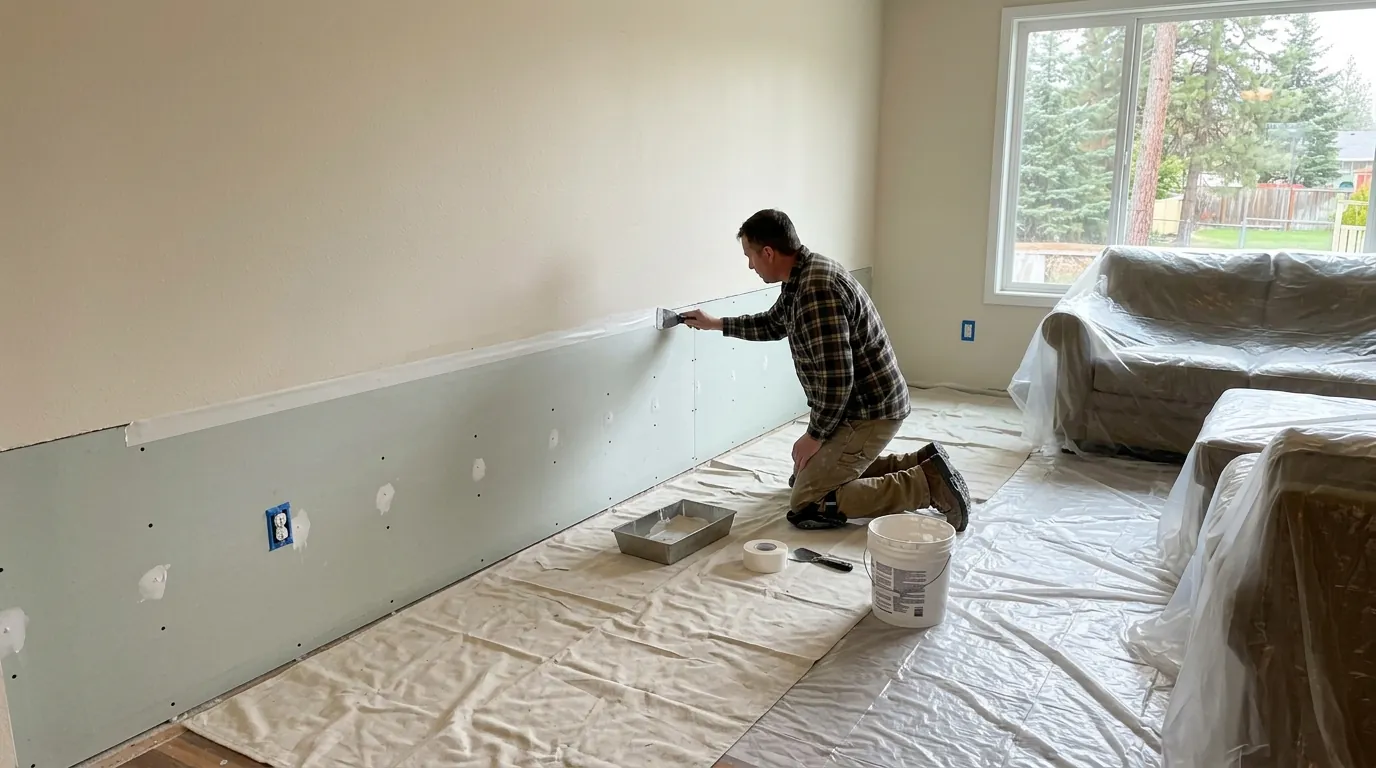
Most water jobs end with drywall work. Walls get a flood cut a couple of feet up so the cavity can dry, ceilings come down where they sagged, and small patches go where we opened up to look.
The repair is simple to describe and easy to get wrong. The new board has to sit flat with the old, the joints have to disappear under paint, and the texture has to match the rest of the room, whether it is smooth, orange peel, knockdown or the popcorn ceilings common in houses from the 1960s and 1970s.
We verify the framing is dry before closing anything. If the job started with us, the readings are already in the file from the drying phase.
Planning costs for drywall and ceiling repair
Drywall is one of the more predictable parts of a water job. Published national figures below give a planning range; texture and paint can add to it.
- Area replacedA flood cut along one wall costs less than a whole ceiling.
- TextureMatching popcorn or heavy knockdown takes more time than smooth walls.
- Ceilings versus wallsCeiling work is slower and needs more finishing.
- PaintMatching a wall often means painting the whole wall or room.
- TestingOlder textures may need an asbestos test before removal.
Patch, partial replace or full replace?
How much drywall comes out depends on how wet it got and what kind of water it was.
| Situation | Usual repair | Why |
|---|---|---|
| Clean water, caught fast, readings drop | Dry in place, stain-block, paint | The board is sound once dry |
| Wet insulation behind it | Flood cut and replace the lower section | The cavity has to open to dry |
| Gray or black water | Cut above the water line and replace | Porous board cannot be sanitized |
| Sagging or soft ceiling | Cut back to framing and replace | Wet ceiling board can fall |
Flood cuts and wall patching
A flood cut is a straight, level cut along a wall, usually a couple of feet up, made so wet insulation can come out and the cavity can dry. Repairing it means new insulation, a strip of drywall, taped joints, texture and paint, plus new baseboard where the old one swelled.
Because the cut is straight and level, the finished repair is usually invisible once the room is painted.
Sagging ceiling replacement
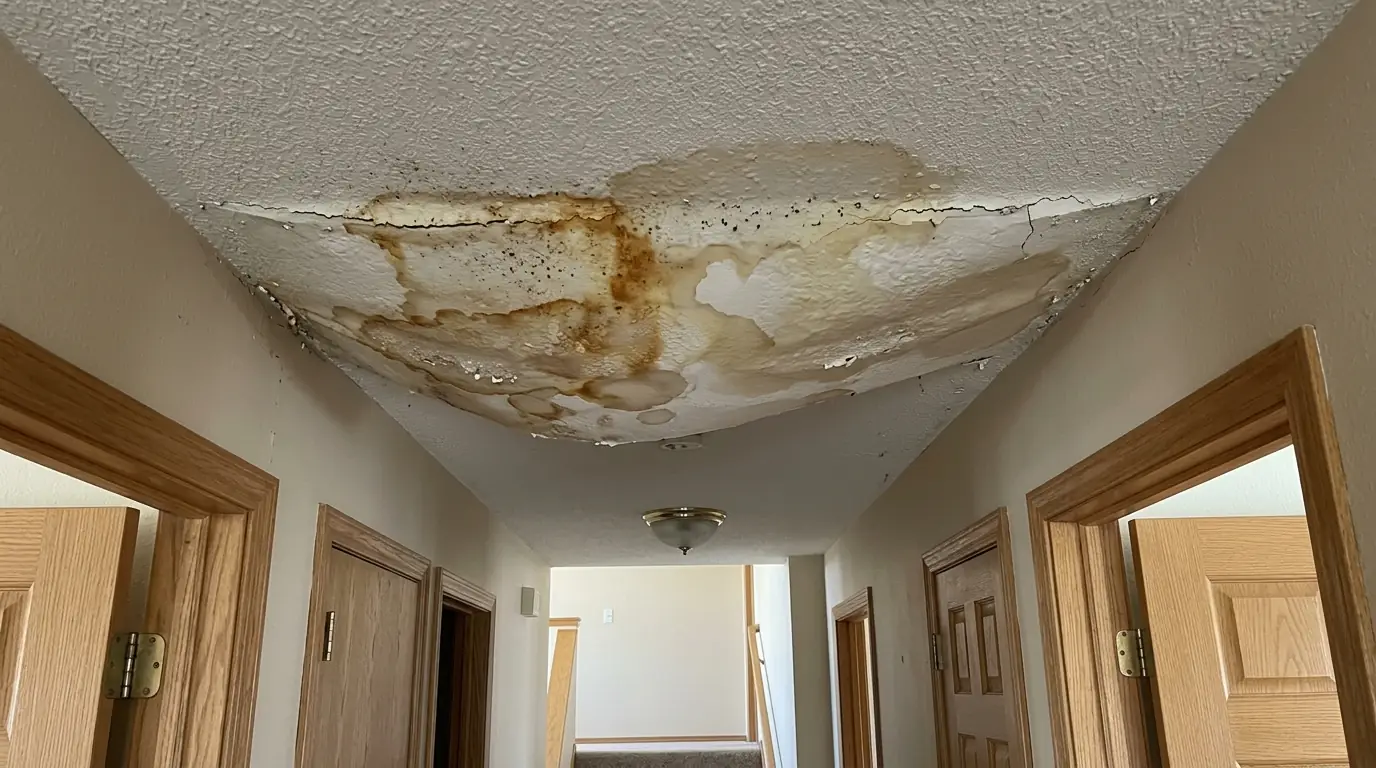
A ceiling that has held water sags between joists and can come down without warning. Wet sections are cut back to the nearest framing, the joists are dried, and new board is hung, taped and finished.
Ceilings are harder to finish than walls, because light rakes across them; we feather joints wider and check them with a work light before texturing.
Texture matching
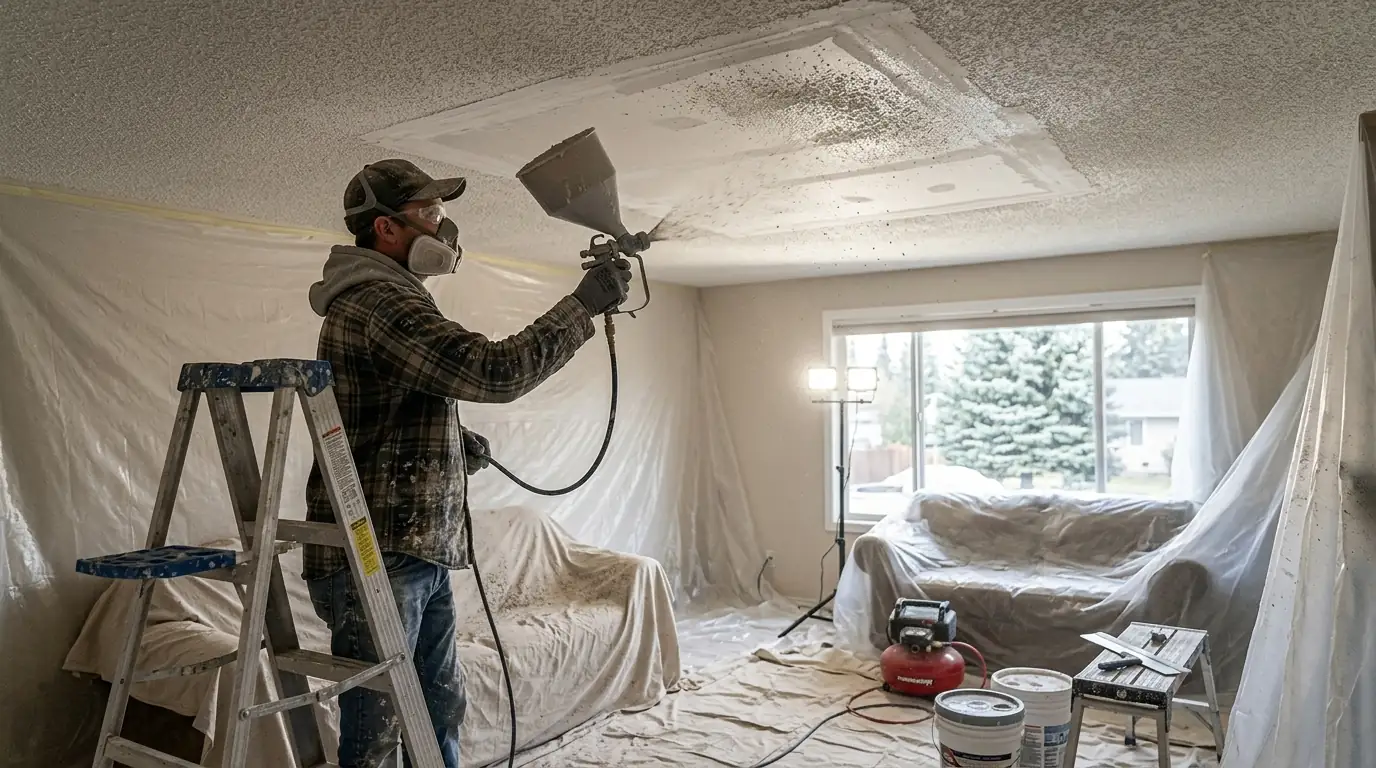
Smooth, orange peel, knockdown and popcorn each need their own technique, and a patch with the wrong texture shows from across the room. We sample the existing finish and spray or hand-apply to match, blending past the patch edges.
Popcorn ceilings from older homes can contain asbestos, so they are tested before they are disturbed, and that result decides how the repair is done.
What a drywall repair includes
- Moisture check of framing before closing
- New insulation where the old was removed
- Drywall hung, taped and finished
- Texture matched to the room
- Stain-blocking primer on water marks
- Paint to the nearest break line
- New baseboard where needed
- Cleanup and a final walk-through
Older walls and ceilings in Spokane-area homes
Nearly a quarter of the City of Spokane's homes were built in 1939 or earlier, and many of them still have plaster on wood lath, which is patched differently from drywall. In Spokane Valley the median home dates to 1979, the era of textured and popcorn ceilings. Knowing which you have before the repair starts decides the method, the dust control and whether a test comes first.
How we repair water-damaged drywall
- 1
Confirm dry
Moisture readings on framing before anything is closed.
- 2
Insulation and board
New insulation where needed, then drywall hung and fastened.
- 3
Tape and finish
Joints taped, mudded and sanded in coats.
- 4
Texture and prime
Texture matched; stain-blocking primer over remaining marks.
- 5
Paint and trim
Finish paint and new baseboard where the old one swelled.