Quick answer
Flood water cleanup in Spokane Valley treats overland and river water as contaminated, category 3 water: carpet, pad, insulation and drywall it touched are removed, hard surfaces are cleaned and sanitized, and the structure is dried and verified before repairs. Flood damage from outside water is usually covered only by separate flood insurance, so documentation from the first visit matters.
How outside flood water differs from a leak
When a pipe bursts, the water is clean. When a river, creek or runoff comes into a house, it brings whatever it crossed: soil, lawn chemicals, fuel from driveways and roads, and sometimes sewage from overwhelmed systems. That is why everything porous it touched is removed rather than dried.
Flood water also tends to come in at a level and stay, so walls are cut above the high-water mark and everything below is opened. Basement seepage from groundwater is a related but different job, covered on our basement flooding cleanup page.
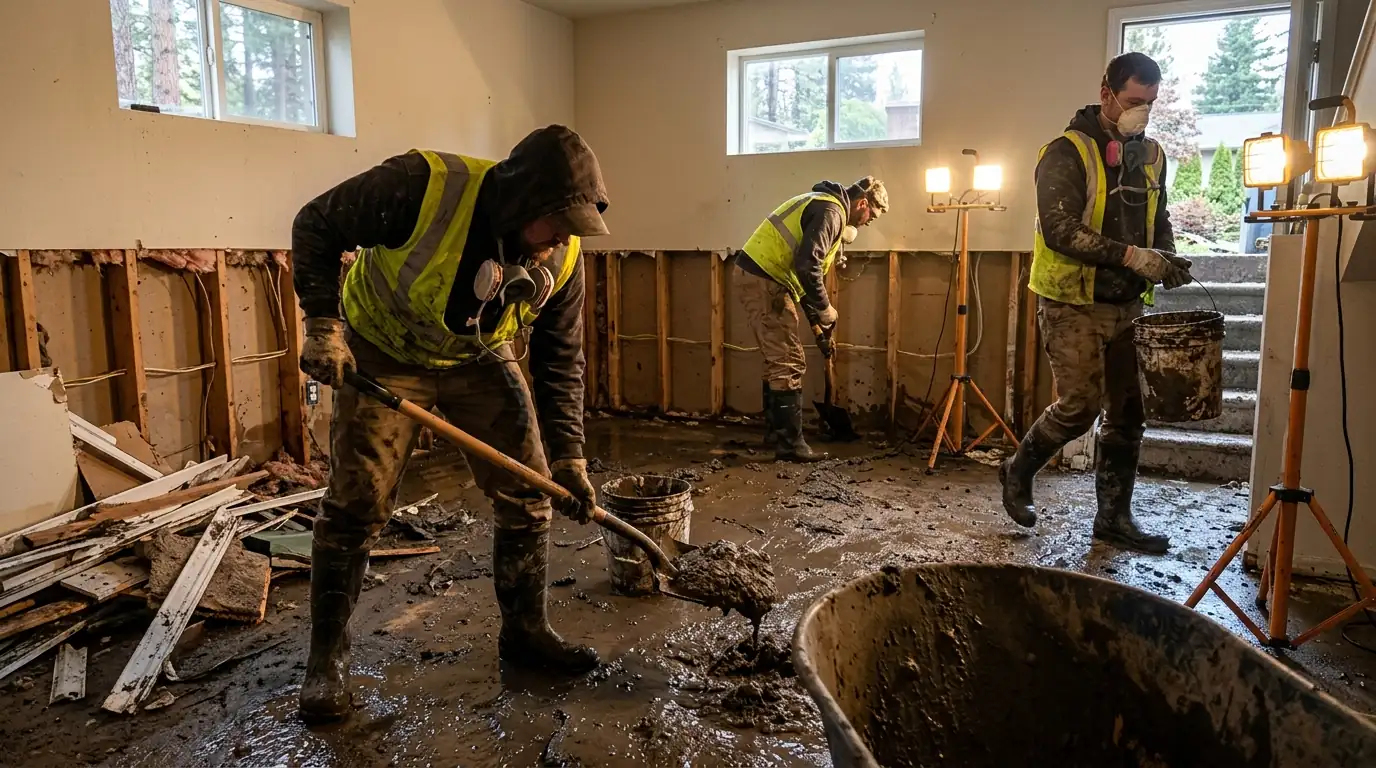
Safety comes first: power off before anyone enters standing water, and nobody walks through flood water without boots and gloves.
How a flood cleanup runs
- 1
Safety and power
Power off, hazards checked, protective equipment on.
- 2
Water and silt out
Pumping, extraction and mud removal.
- 3
Remove contaminated materials
Flood cuts above the water line; porous materials discarded.
- 4
Clean and sanitize
Framing, slab and hard surfaces cleaned and treated.
- 5
Dry and verify
Drying with daily readings until materials match dry areas.
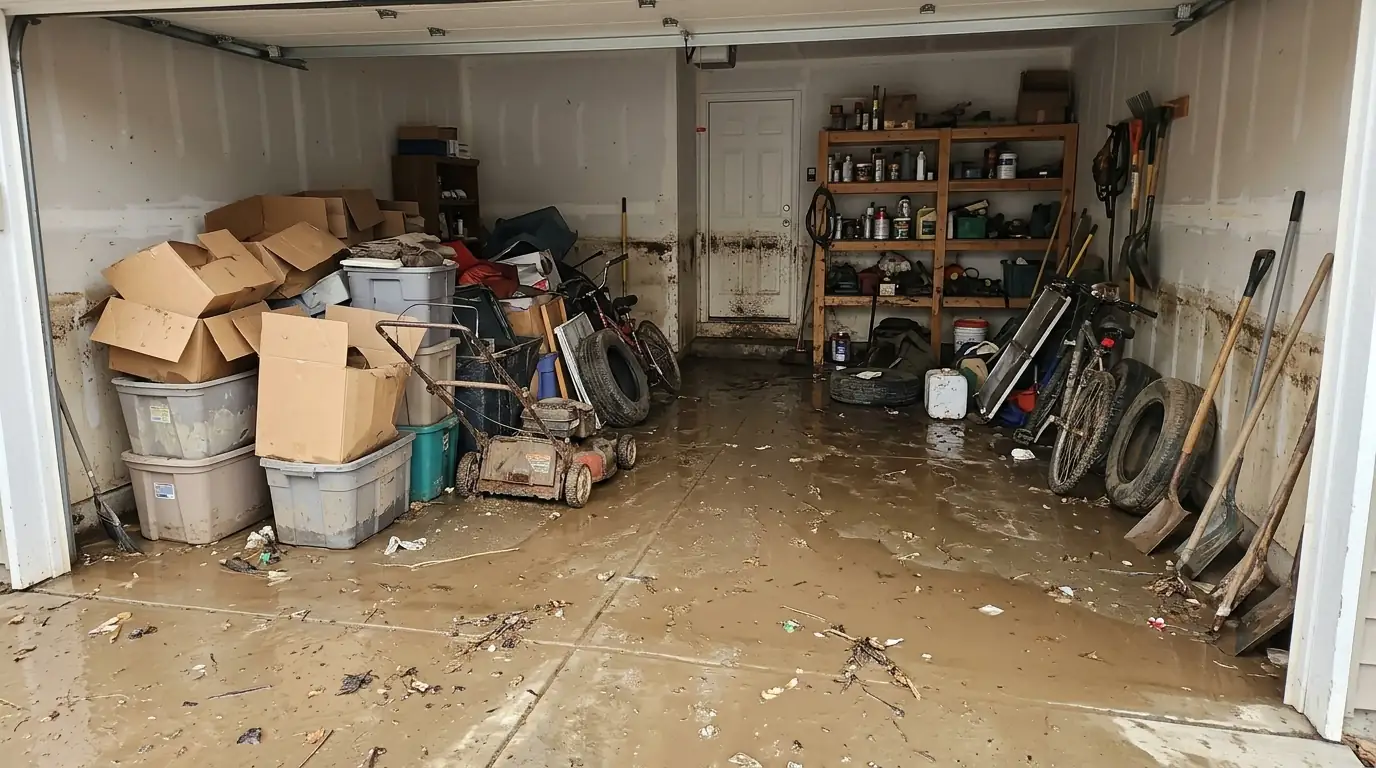
River and creek overflow
Homes and garages near rivers and creeks flood when banks overflow during spring melt or heavy rain. The water often sits for a day or more before it recedes, and it leaves silt behind.
We remove silt and debris first, then contaminated materials, then clean, sanitize and dry.
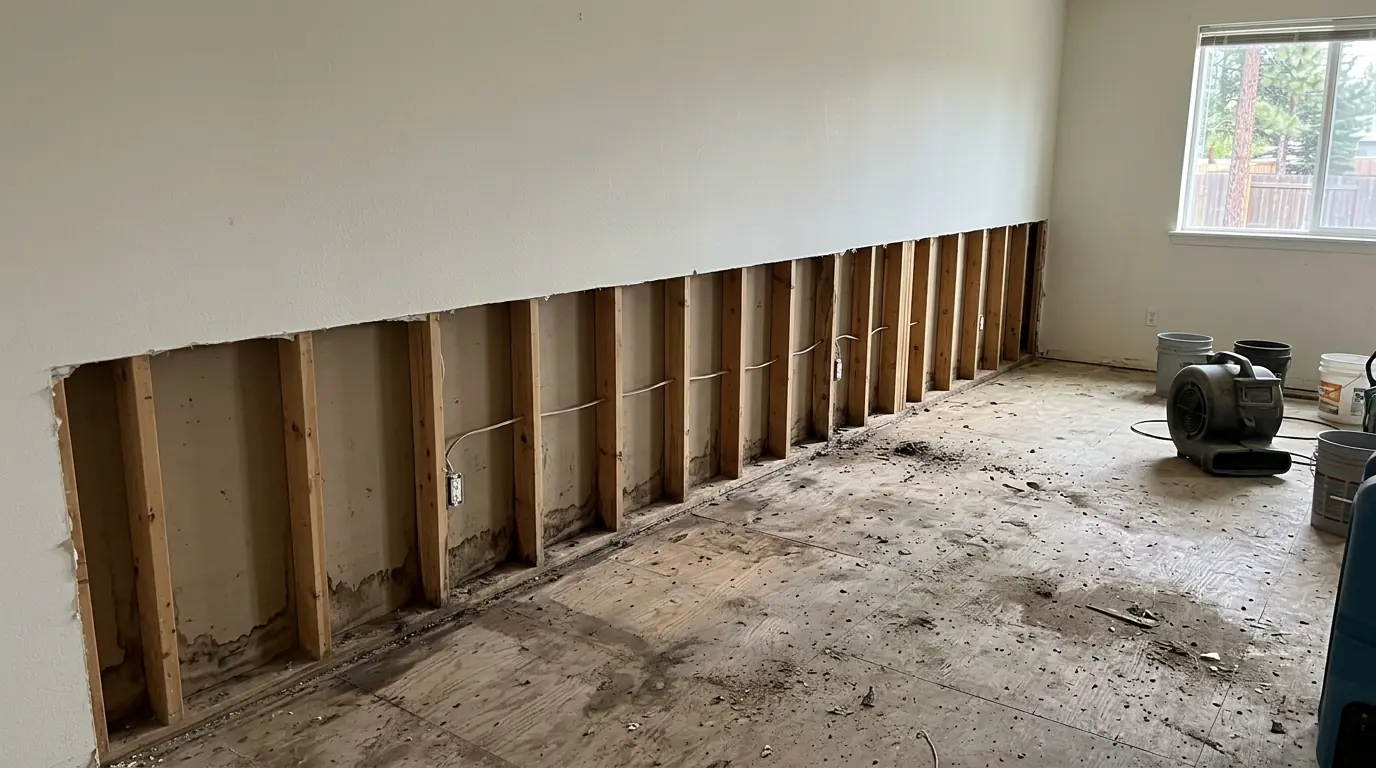
Overland runoff into the house
Runoff from a hillside, street or neighbor's yard can come in under doors and through window wells during a heavy thaw or downpour, even far from any river.
We clean up and dry, then point out where the water came in so you can address grading or drainage.
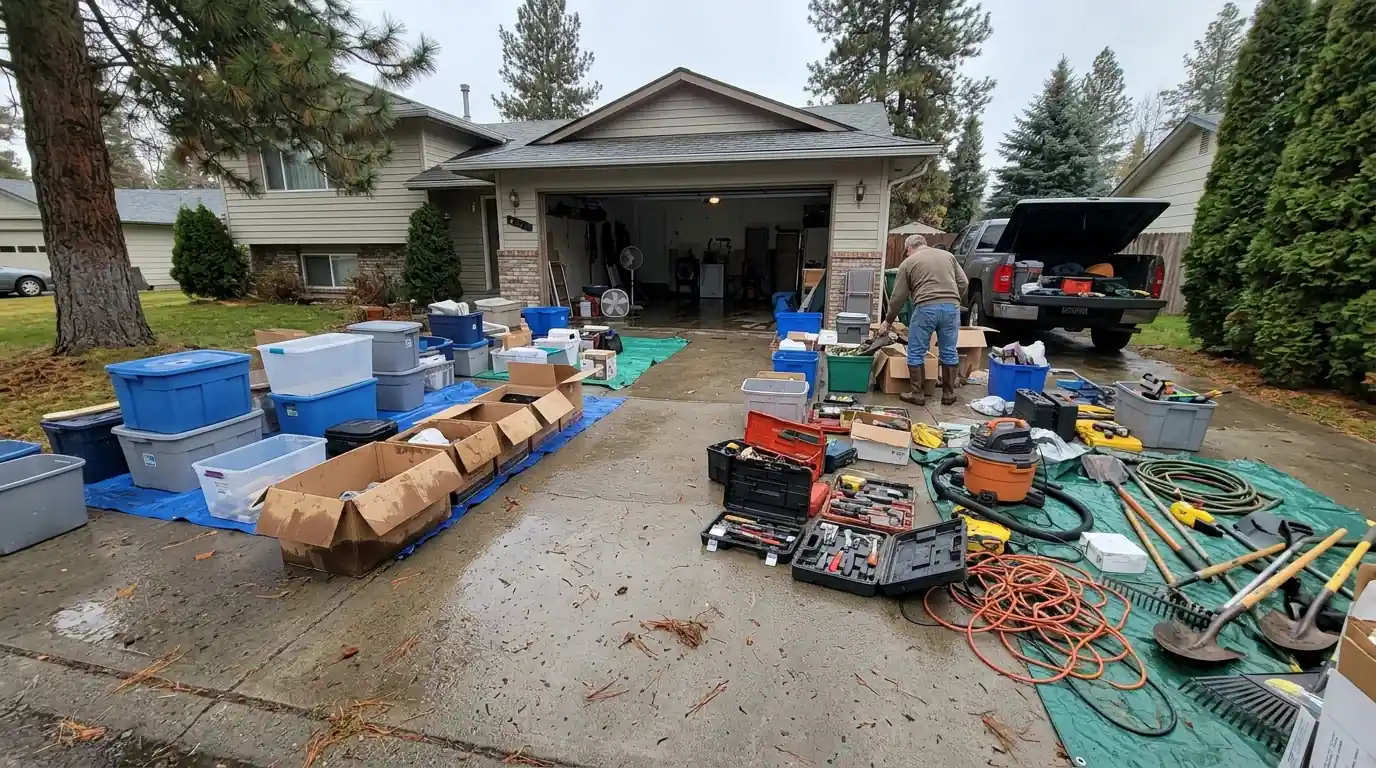
Flooded garages and shops
Garages and shops take on water first and often hold the most stored items, tools and equipment. Drywall on garage walls is cut above the water line, and stored contents are sorted into clean, salvage and discard.
Fuel and chemicals stored in a garage add to the contamination and are handled carefully.
How long flood cleanup takes
Removal and cleaning usually take a day or two once the water recedes, and drying runs about three to five days after that. Rebuild follows once the structure reads dry and any flood insurance adjuster has seen the damage.
River flooding in Spokane in 2017
In March 2017 the Spokane River rose above 27.5 feet for the first time since 2012, and it temporarily overflowed its banks onto Upriver Drive. The City of Spokane handed out sandbags in Peaceful Valley and along Upriver Drive during the flooding emergency, and the river was closed to users. Homes and garages near the water are the ones that take outside flood water directly, and that water is handled as contaminated from the first minute.
What a flood cleanup includes
- Power shut off to flooded areas
- Pumping and extraction of standing water
- Silt and debris removal
- Flood cuts above the high-water mark
- Removal of contaminated insulation, carpet and pad
- Cleaning and antimicrobial treatment
- Drying with daily readings
- Photo documentation for flood insurance
Planning costs for flood water cleanup
Outside flood water is priced as black water because of what has to be removed and sanitized. These are published national planning ranges.
- Water depthHigher water means higher flood cuts and more removal.
- Area affectedEvery room and garage bay adds removal and drying.
- Silt and debrisMud and debris removal adds labor.
- ContentsPorous belongings that touched flood water are usually discarded.
- RebuildDrywall, insulation and flooring are replaced once the structure is dry.