Quick answer
Fire sprinkler water damage cleanup in Spokane Valley starts once the system is shut down and the fire department or sprinkler contractor has cleared it. Sprinkler water sits in the pipes for years, so it is usually dirty and treated as gray water; we extract it, remove what cannot be dried, and dry every affected room or unit while the system is repaired.
Signs a sprinkler system is at risk of leaking
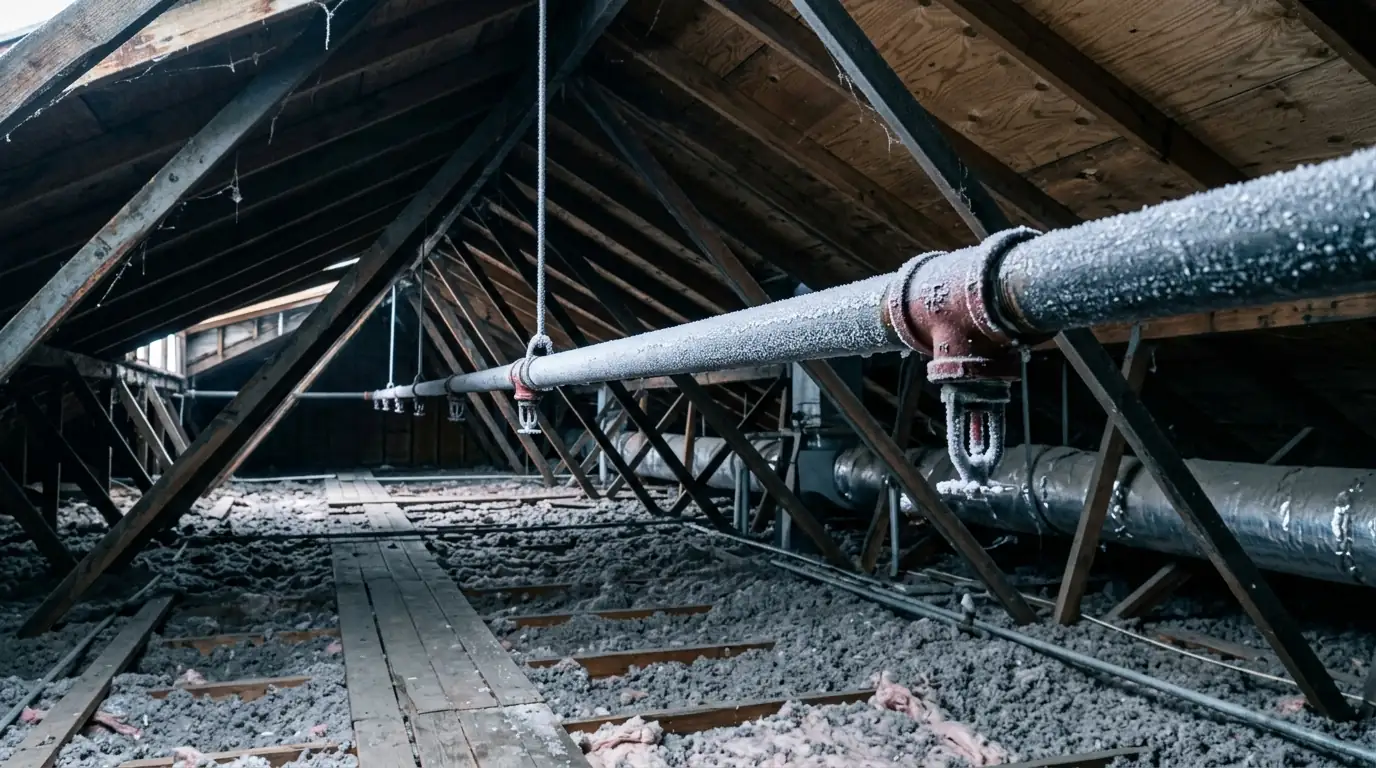
Frost on sprinkler pipes
Visible frost in an attic, soffit or loading area means the line is at risk.
Rust at fittings
Rust or green staining around fittings points to corrosion.
A dripping head
A head that weeps can fail; report it to the sprinkler contractor.
Ceiling stains near heads
Stains around a head or along a pipe run show an existing leak.
Damaged or painted heads
Heads that are bent or painted over need inspection.
Heat off in a cold area
Any wet-pipe line in a space that loses heat is a freeze risk.
Why sprinkler water is a messy kind of leak
Sprinkler systems are designed to deliver a lot of water fast, and they only stop when someone closes the control valve. A head knocked off by a ladder, a pipe split by frost or a fitting that fails can soak several rooms before that happens.
The water in a sprinkler line has often been sitting since the system was installed. It comes out dark and smells of rust and oil, which is why it is handled as contaminated water rather than clean water.
Most sprinkler jobs are in offices, shops and apartment buildings, where several tenants are affected at once. Our commercial water damage and apartment pages cover how we schedule around businesses and residents.
How a sprinkler water job runs
- 1
Confirm shutdown
The system is off and cleared by the fire department or sprinkler contractor.
- 2
Extract and protect
Water out, contents moved or covered, wet ceiling tiles removed.
- 3
Map every affected space
Readings room by room and unit by unit.
- 4
Dry with daily readings
Equipment placed to keep occupied areas usable where possible.
- 5
Records and repair
A report per unit or tenant, then repairs once dry.
Frozen sprinkler line breaks
Dry-pipe systems protect unheated spaces, but wet-pipe lines running through cold attics, soffits or loading areas can freeze in a hard cold snap. Like any frozen pipe, they usually let go on the thaw.
We dry the ceilings, walls and floors below the break and map the moisture between floors, because water from a sprinkler line in a ceiling often travels before it drips.
Accidental head activation
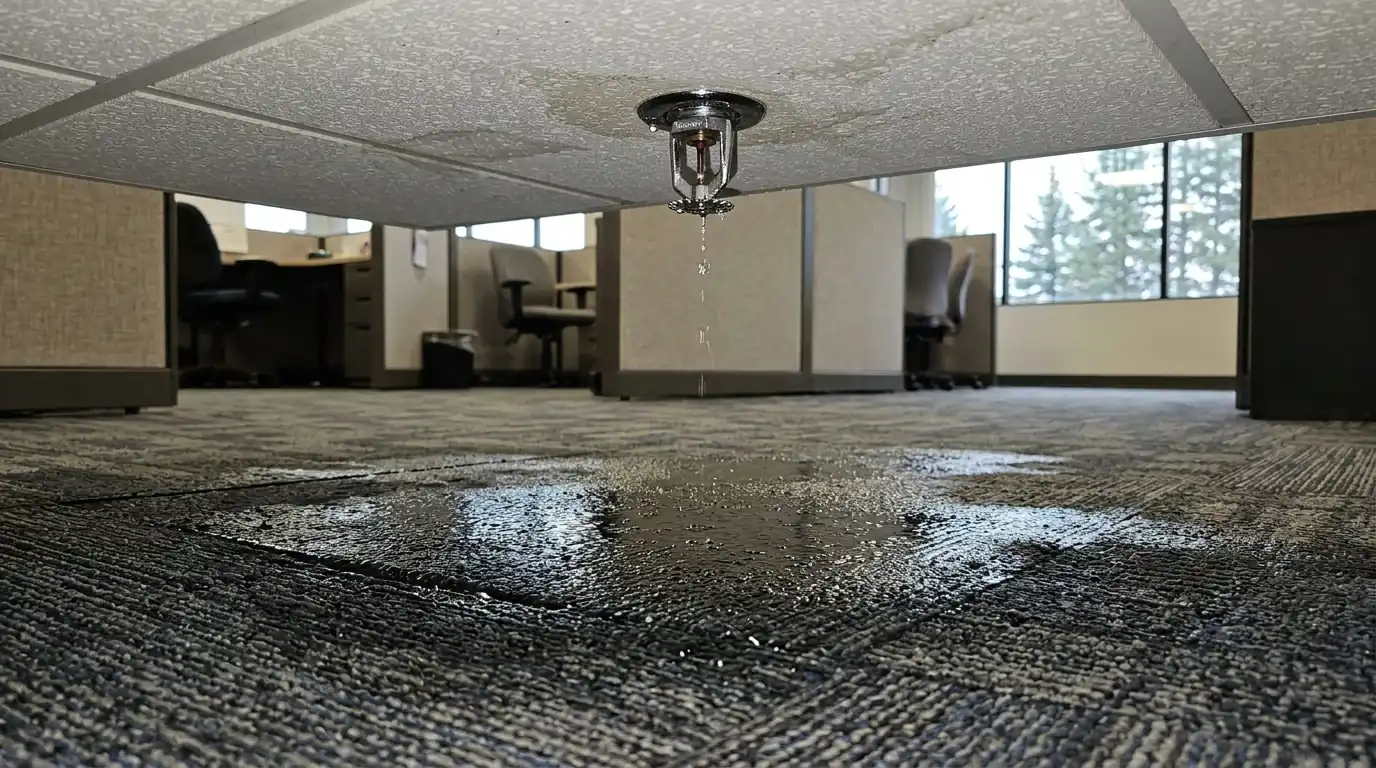
A head struck by equipment, a ladder or a forklift releases water immediately. In a warehouse or shop that means wet stock and pallets; in an office it means ceiling tiles, carpet tiles and furniture.
We extract, separate wet contents, and dry the space so operations can restart as soon as the readings allow.
Multi-unit spread
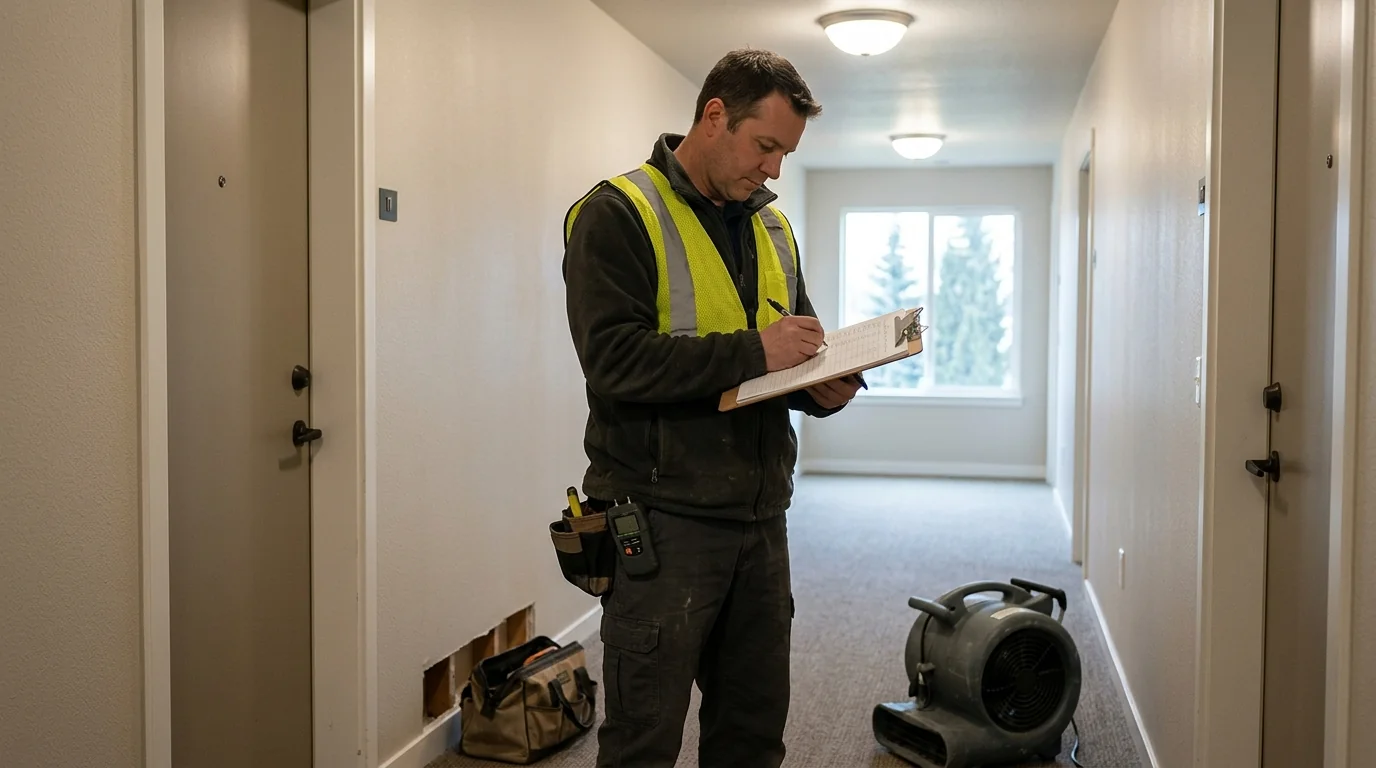
In apartments and condos, water from one unit's sprinkler can reach units below and beside it through ceilings and wall cavities. Each affected unit needs its own readings and records.
We document unit by unit, so building owners, tenants and their insurers can each see their part of the loss.
How long sprinkler water drying takes
Drying usually runs three to five days once the water is out, longer where it soaked through to a floor below. We plan equipment so offices and units can stay partly in use, and we give owners an updated timeline after each day's readings.
Cold snaps and sprinkler calls in Spokane Valley
In January 2024 the Spokane Valley Fire Department answered 179 alarm calls tied to frozen or burst pipes, and sprinkler flow alarms are one of the ways a break in a building announces itself. During the same subzero stretch, one Spokane plumbing company's calls rose from about 20 a day to about 100, almost all frozen or burst pipes, which gives a sense of how fast the region's crews get stretched in a cold week.
Planning costs for sprinkler water cleanup
Sprinkler water is usually priced as gray water because of what has been sitting in the pipes. The national ranges below are planning figures only.
- How long before shutdownEvery minute the head runs adds water and spread.
- Floors and units affectedWater that moves between floors or units multiplies the work.
- Ceiling and flooring typesCeiling tiles and carpet tiles are often replaced rather than dried.
- Contents and stockInventory and equipment add separate handling.
- After-hours schedulingWorking around tenants and businesses can shape the plan.