Quick answer
Crawl space mold remediation in Spokane Valley means fixing the moisture source, then removing mold growth from joists and subfloor by HEPA vacuuming, scrubbing or abrasive cleaning, and replacing wet insulation and a damaged vapor barrier. Skipping the moisture fix is the most common reason crawl space mold comes back.
Why crawl spaces grow mold
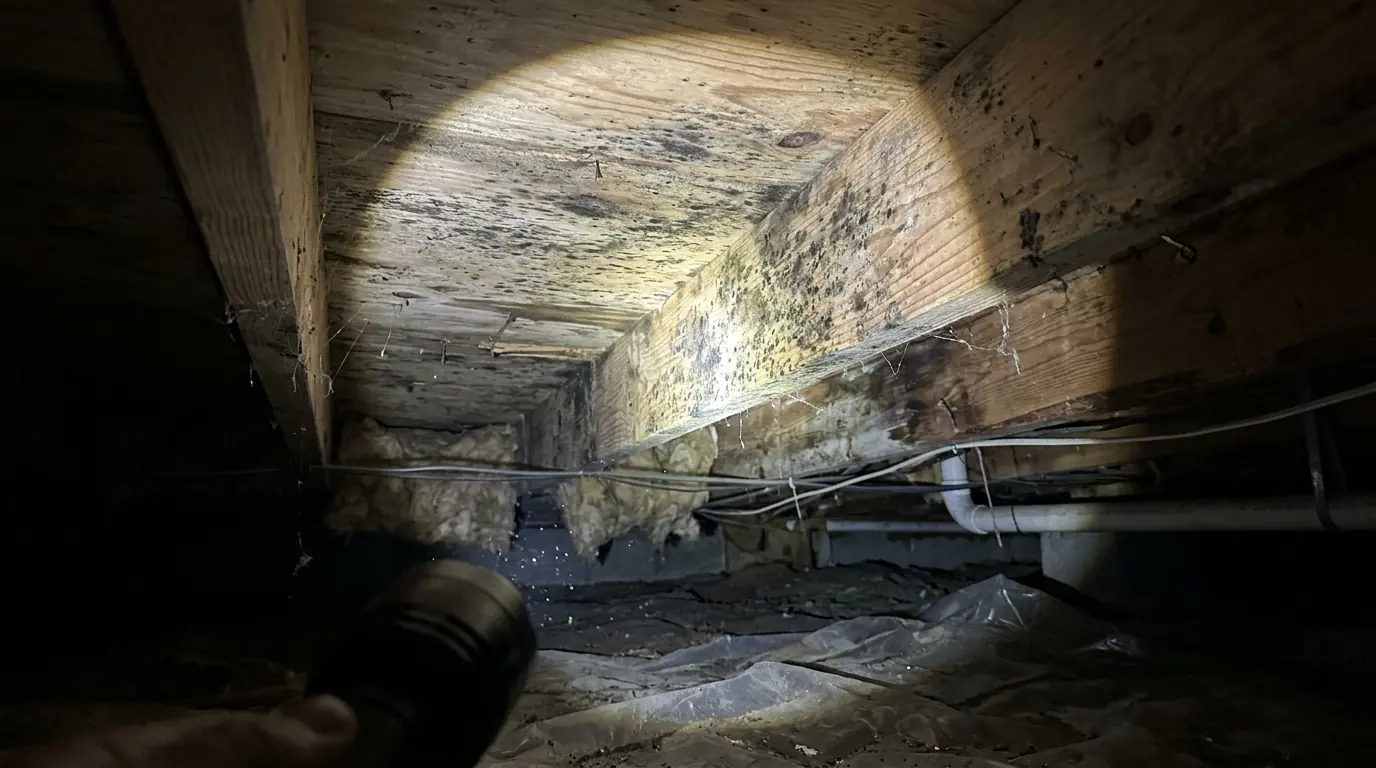
A crawl space is dark, rarely visited and often damp. Moisture comes from the ground through a torn or missing vapor barrier, from water running toward the foundation in spring, and from plumbing leaks that nobody sees for months.
Mold on the joists and subfloor does not usually threaten the structure on its own, but the conditions that feed it also rot wood and pull musty air up into the house. Many people first notice it as a smell in a bedroom or closet above.
We treat the job in two parts: the mold that is there now and the moisture that will grow it again. If you are not sure whether what you see is mold, a mold inspection answers that before any work is priced.
Planning costs for crawl space mold remediation
Crawl space jobs vary with access and how much of the framing is affected. The published range below covers remediation; a new barrier or encapsulation is an additional line.
- Area with growthA few joist bays cost less than the whole crawl space.
- Access and heightLow clearance and tight entries slow every step.
- Insulation and barrierWet insulation and a failed barrier are removed and replaced.
- Moisture sourceA plumbing leak or grading problem may need its own fix.
- EncapsulationSealing the space costs more than a standard barrier.
Vapor barrier or encapsulation?
Both reduce ground moisture. The right choice depends on how wet the crawl space is and how you use it.
| Option | What it involves | Best for |
|---|---|---|
| Vapor barrier | New ground sheeting with taped seams, run up the walls | Most crawl spaces with soil moisture |
| Encapsulation | Heavier liner sealed to walls and piers, vents sealed | Persistent humidity or storage use |
| Dehumidifier added | A crawl space unit draining to the outside or a pump | Spaces that stay humid even when sealed |
Joist and subfloor mold
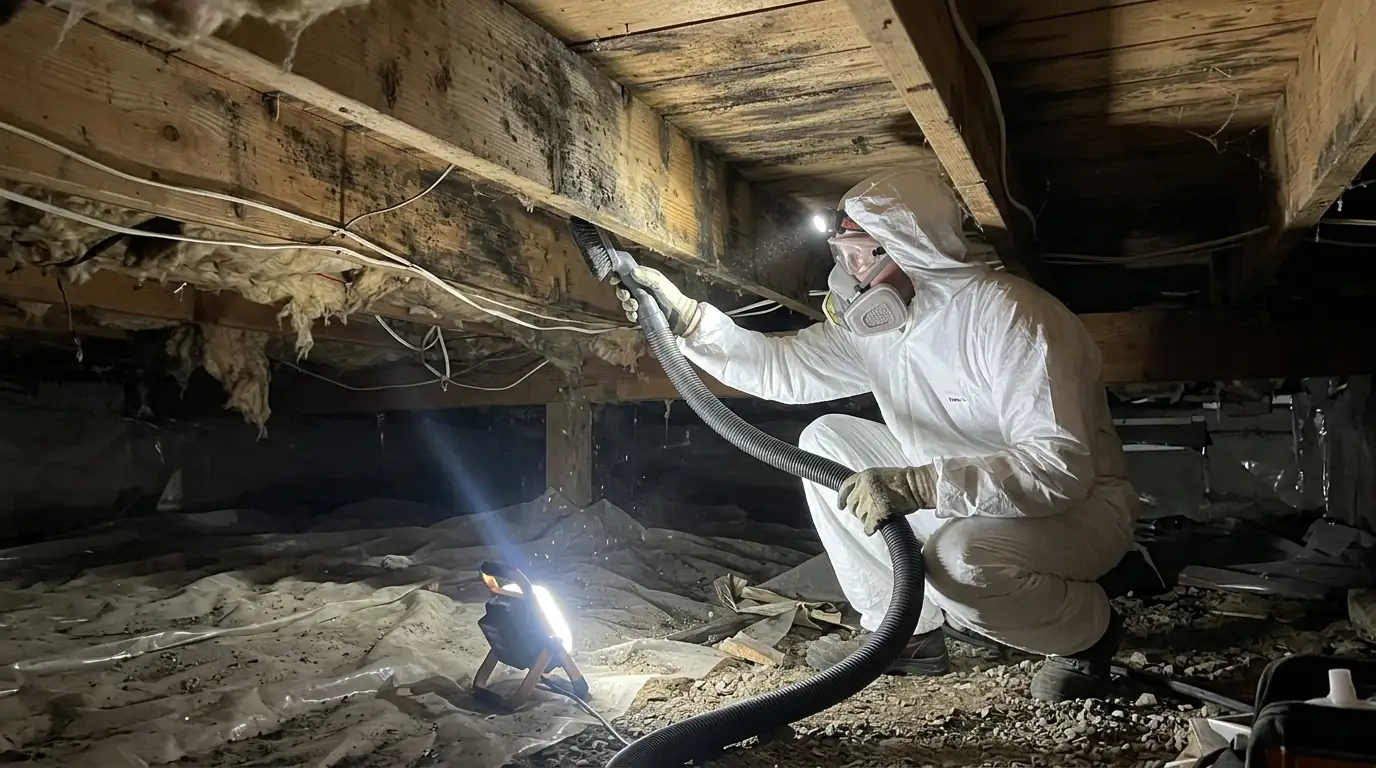
Surface growth on framing is cleaned rather than replaced: HEPA vacuuming, scrubbing with an appropriate cleaner, or abrasive cleaning on heavy growth. Wood that has softened from long-term moisture is a structural repair, handled through our subfloor and framing work.
After cleaning, the wood is dried and checked with a moisture meter before anything is closed up.
Vapor barrier replacement
A ground cover that is torn, missing or full of water lets soil moisture into the crawl space every day. We remove the old barrier, clean up debris, and lay new polyethylene sheeting with taped seams that runs up the foundation walls.
A barrier is the cheapest single fix for most crawl space moisture, which is why it is part of nearly every job we price.
Crawl space encapsulation
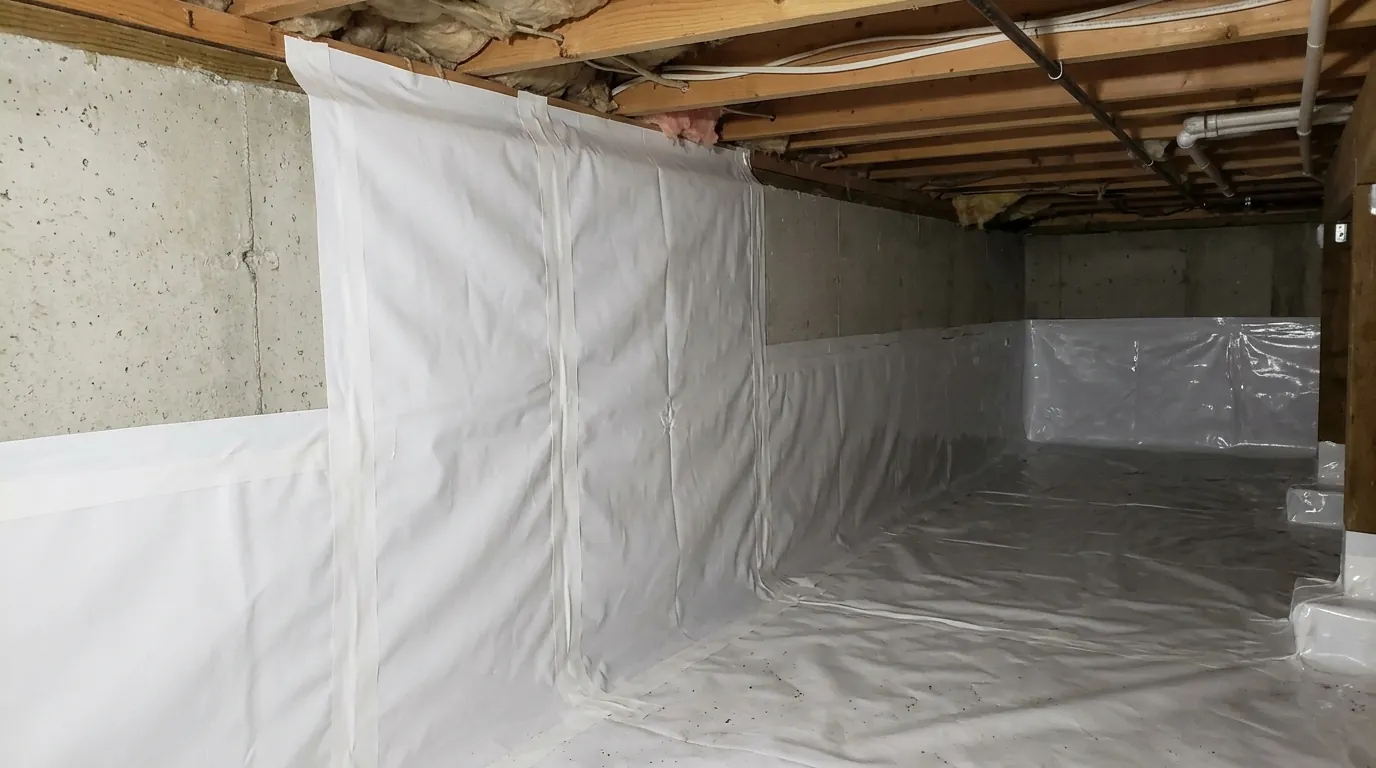
Encapsulation goes further: a heavier liner sealed to the walls and piers, sealed vents, and sometimes a dehumidifier. It suits crawl spaces with persistent humidity or homes where the space is used for storage.
It costs more than a barrier and is not always necessary; we explain which one your crawl space needs and why.
What a crawl space remediation includes
- Moisture readings and photos before work starts
- Containment and negative air
- HEPA vacuuming of joists and subfloor
- Cleaning or abrasive treatment of growth
- Removal of wet insulation
- Old vapor barrier removed and hauled away
- New barrier with taped seams
- Final moisture readings and photos
Spring water and older crawl spaces around Spokane
Spokane Valley's median home was built in 1979, and houses of that age commonly have an original ground cover that has torn or shifted. Across the river in Spokane, county officials have blamed groundwater fed by rain and snowmelt for repeat flooding on some streets. When spring water reaches a crawl space with a failed barrier, the soil stays wet for weeks, and that is when we start finding mold on the joists.
How we remediate a crawl space
- 1
Inspect and find the source
Moisture readings, photos, and a look at drainage, plumbing and the barrier.
- 2
Set containment and air
Negative air keeps disturbed spores out of the house above.
- 3
Clean the framing
HEPA vacuuming, scrubbing or abrasive cleaning, then HEPA again.
- 4
Replace barrier and insulation
New ground cover, and new insulation where the old was wet.
- 5
Verify dry
Readings and a final walk-through, with photos for your records.