Quick answer
Insulation removal and replacement in Spokane Valley means vacuuming out or bagging insulation that is wet, contaminated by sewage or smoke, or growing mold, then drying and cleaning the cavity before new insulation goes in. Wet insulation loses most of its value and holds moisture against framing, so it is replaced rather than left to dry.
When insulation has to come out
Insulation works by trapping air. Once it is soaked, compressed or matted, it stops working and starts holding moisture against the wood around it. Blown-in cellulose is the worst for this; fiberglass dries better but is often stained and compressed.
Water is only one reason. Smoke and wildfire ash make insulation smell for years, sewage contaminates it, and mold can grow in it once it has been damp.
Removal usually happens during a larger job: an ice dam leak, a crawl space flood, a fire. We replace the insulation once the space is dry and clean.
What decides the cost of insulation replacement
We have not found a reliable published range for removing and replacing insulation after water or fire damage, because area, depth and access vary so much. These are the drivers.
- Area and depthSquare footage and how deep the insulation is.
- Type of insulationBlown-in, batts or spray foam each come out differently.
- ContaminationSewage, ash or mold adds handling and disposal.
- AccessLow attics and tight crawl spaces take longer.
- Replacement materialWhat goes back in, and to what depth.
Dry it or replace it?
Some insulation can stay after a minor wetting; most cannot.
| Situation | Usually | Why |
|---|---|---|
| Fiberglass with a small damp edge | Cut back and dry the rest | Fiberglass dries if only lightly wetted |
| Soaked or matted blown-in | Remove and replace | It holds water and loses its value |
| Smoke or ash odor | Remove and replace | Odor stays in the fibers |
| Sewage or mold contamination | Remove and replace | It cannot be cleaned |
Attic blown-in insulation
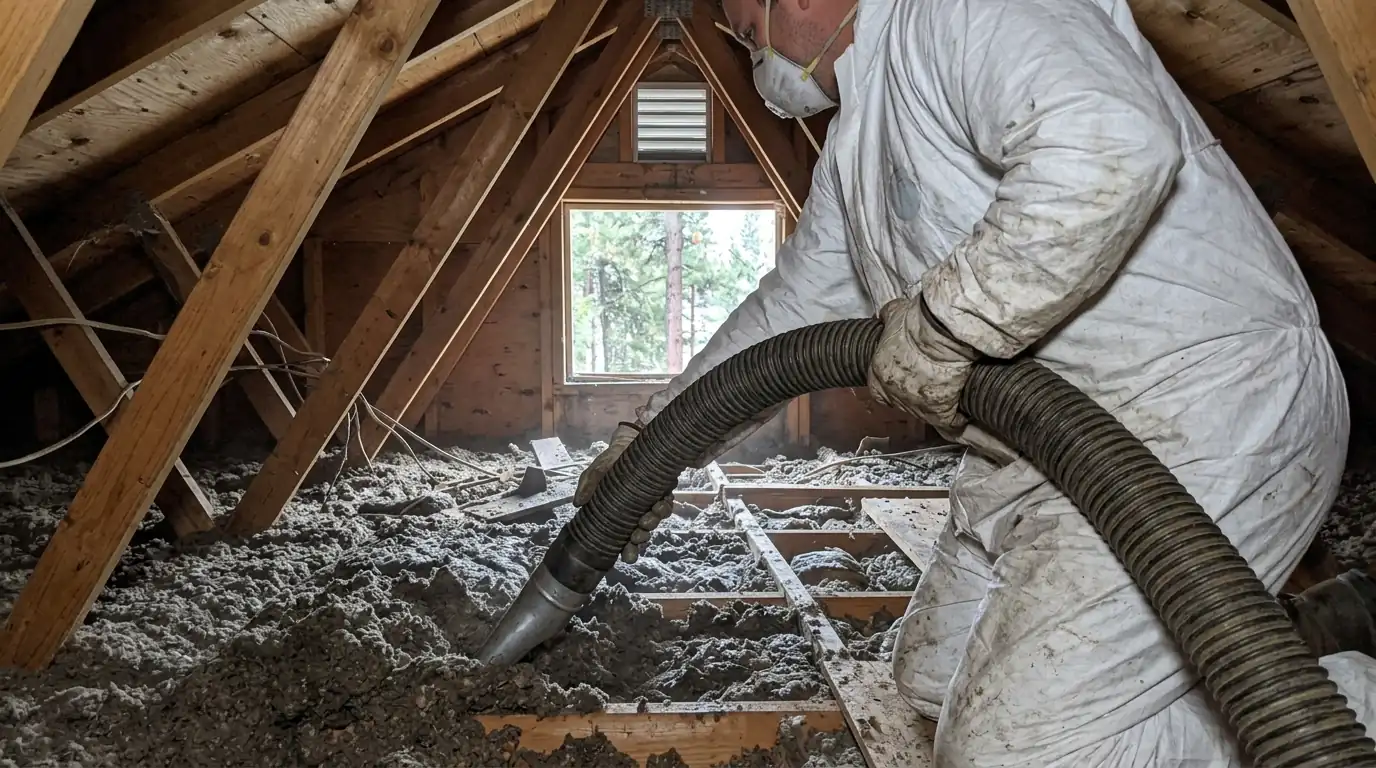
Wet or contaminated blown-in insulation is removed with a high-powered vacuum that bags it outside, which keeps the dust out of the house.
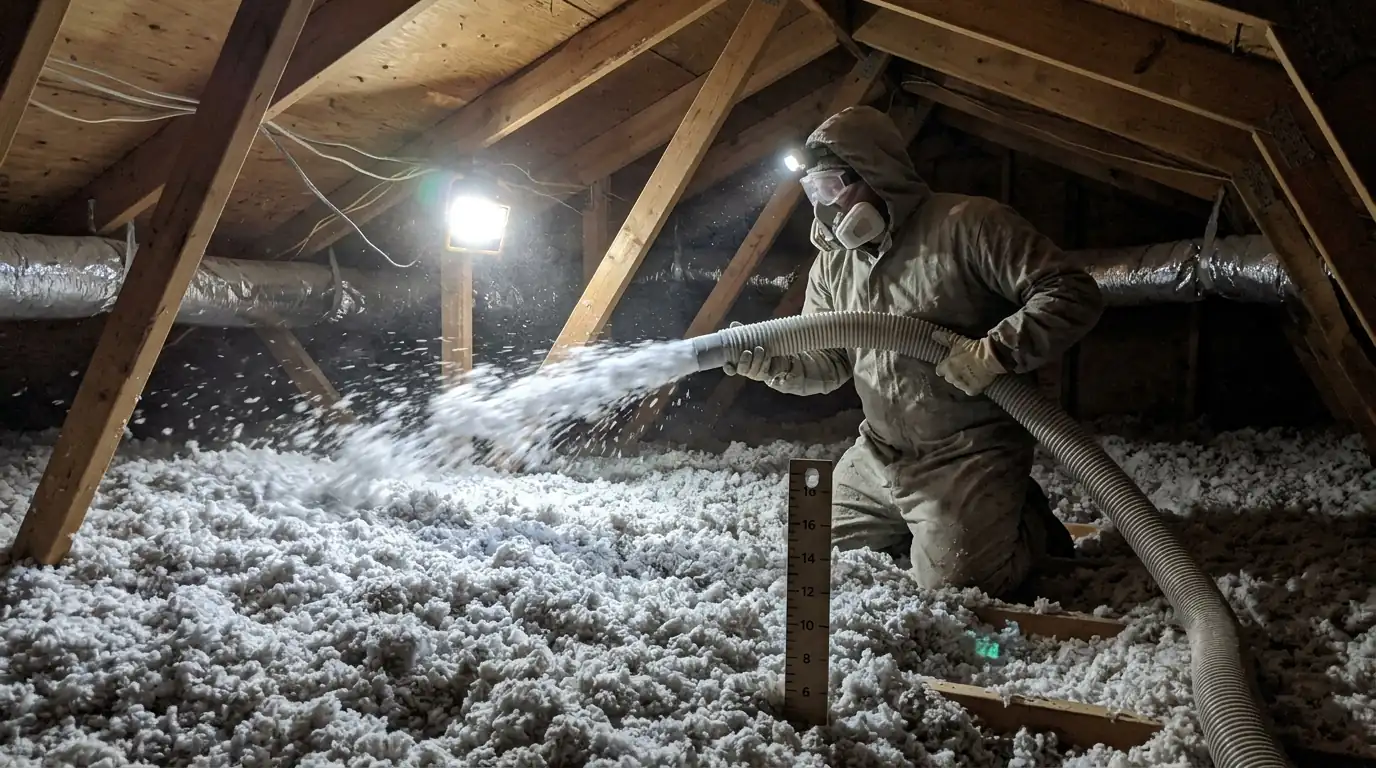
Once the attic deck and ceiling are dry, new insulation is blown back to the depth the space was designed for.
Wall batt insulation
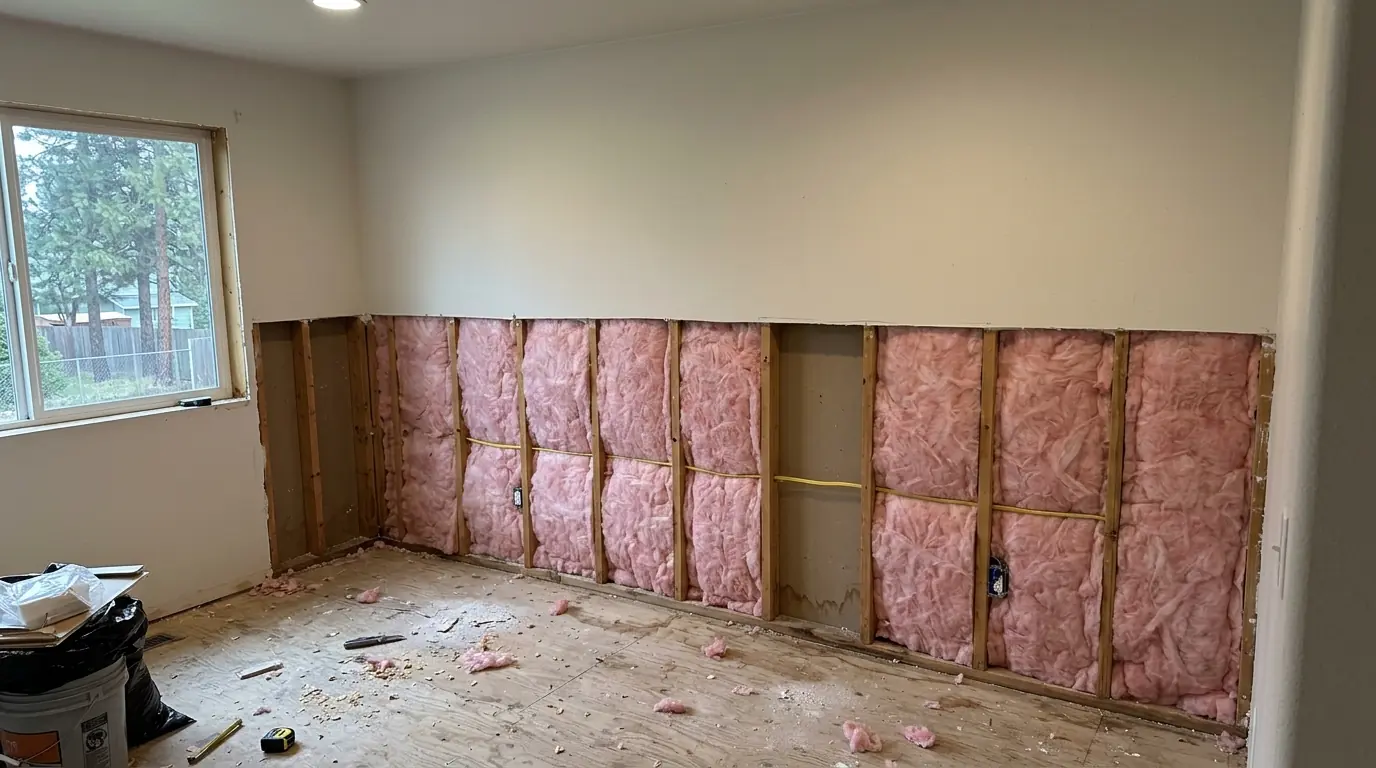
Batts behind a flood cut or a wet wall come out with the drywall. The cavity is dried, then new batts are fitted before the wall is closed.
Wall insulation that only got damp at the top or bottom edge is cut back to dry material rather than replaced whole.
Crawl space insulation
Batts between floor joists over a crawl space fall when they get wet. We bag and remove them, dry the joists, and install new batts with proper supports.
If the crawl space takes on water regularly, we discuss insulation and barrier options that handle moisture better.
What an insulation replacement includes
- Moisture readings and photos
- Dust protection for the rooms below
- Vacuum removal of blown-in insulation
- Bagging and removal of batts
- Drying and cleaning of framing
- Treatment where mold or odor was present
- New insulation to the planned depth
- Final check of vents and baffles
Ash in attic insulation after the 2023 fires
During the August 2023 Gray Fire, ash and airborne particulates fell across Medical Lake, Cheney and Four Lakes, and the regional clean air agency advised residents to limit exposure. Ash that blows through gable and soffit vents settles on top of attic insulation, where it holds the smoke smell; when the layer is heavy, removing and replacing that insulation is often what finally gets the odor out of the house.
How we remove and replace insulation
- 1
Assess
Readings and photos to define what is wet or contaminated.
- 2
Contain
Protect the house below from dust; seal the attic hatch.
- 3
Remove
Vacuum or bag the affected insulation.
- 4
Dry and clean
Deck, framing and cavities dried and cleaned.
- 5
Reinstall
New insulation to the right depth.