Quick answer
Crawl space water damage cleanup in Spokane Valley starts with stopping the source and pumping out standing water, then removing soaked insulation and damaged vapor barrier and drying the joists, subfloor and soil surface with dehumidifiers placed in the crawl space. Air movers alone push damp air around a closed space, so dehumidification does most of the work.
Signs of water in your crawl space
A musty smell in the house
Damp crawl space air rises into the rooms above.
Floors that feel soft or cold
Wet subfloor or fallen insulation below.
Higher water bills
A line may be leaking under the house.
Insulation hanging down
Wet batts sag out of the joist bays.
Condensation on ducts or pipes
High humidity in the crawl space.
Standing water after a thaw
Visible from the crawl space hatch.
Why crawl space water needs fast attention
A crawl space is a small, closed, dark space directly under your floors. Water there does not evaporate on its own; it raises the humidity until the joists, subfloor and insulation are all damp, and mold and rot follow.
Water reaches crawl spaces from supply lines that freeze or leak, drain lines that crack, groundwater after a thaw, and runoff that finds its way through foundation vents. Often nobody sees it until a floor goes soft or the house starts to smell.
We dry and repair; if mold is already established on the framing, the job continues as crawl space mold remediation, and structural damage is handled through subfloor and framing repair.
How a crawl space cleanup runs
- 1
Stop the source
Shutoff closed; plumber called if a line is broken.
- 2
Pump and extract
Standing water removed from the crawl space.
- 3
Remove wet materials
Soaked insulation and damaged barrier bagged and removed.
- 4
Dry
Dehumidifiers and directed air with daily readings from below.
- 5
Restore
New barrier and insulation once dry; mold or framing work if needed.
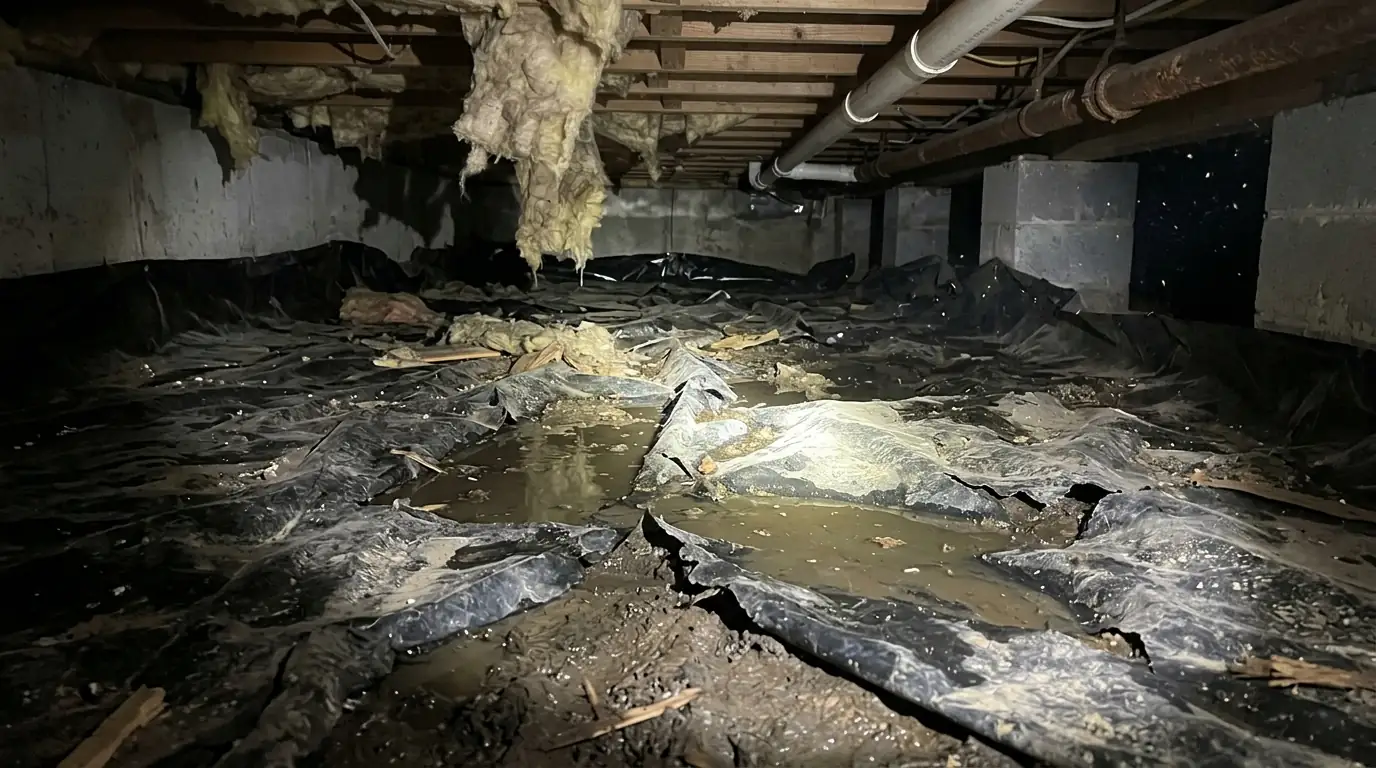
Standing water under the house
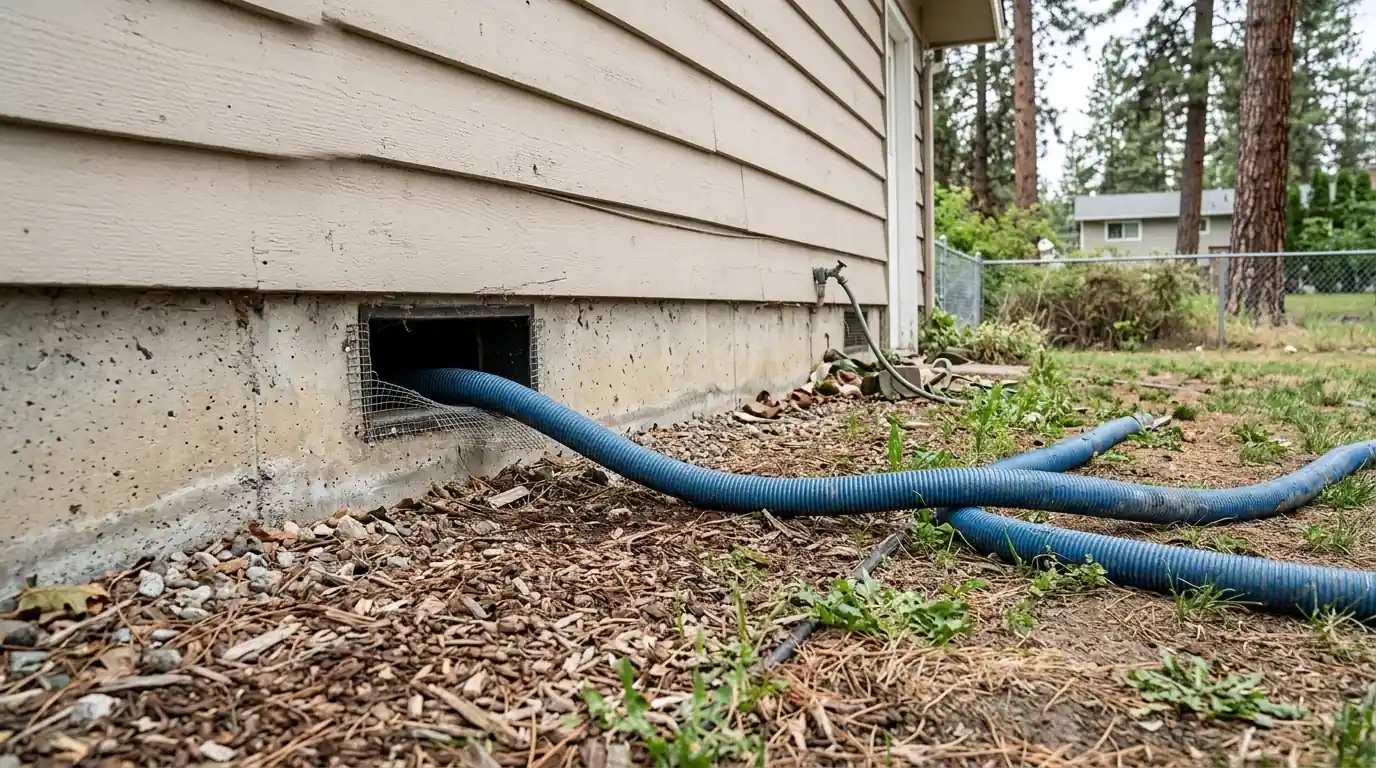
Standing water is pumped out first, from the lowest point, with hoses run outside. What the pump leaves is extracted from the vapor barrier.
If the water came from outside, we look at where it entered so you can address grading, gutters or a foundation vent.
Wet vapor barrier and insulation
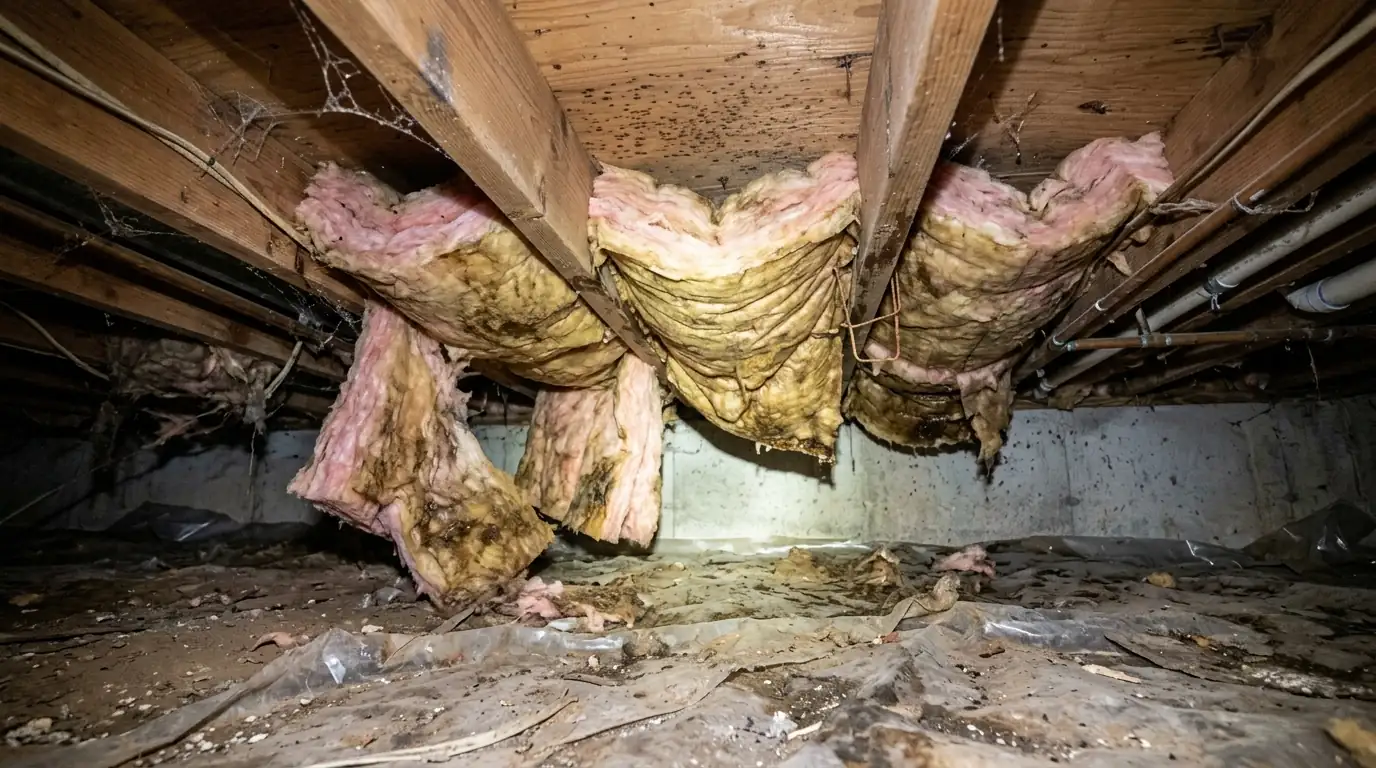
A vapor barrier with water on top of it holds that water against the soil and the air. Torn or flooded sections are removed. Fiberglass batts between joists that have soaked up water sag and fall; they are bagged and removed so the joists can dry.
New barrier and insulation go in only after the readings say dry.
Joist and subfloor drying
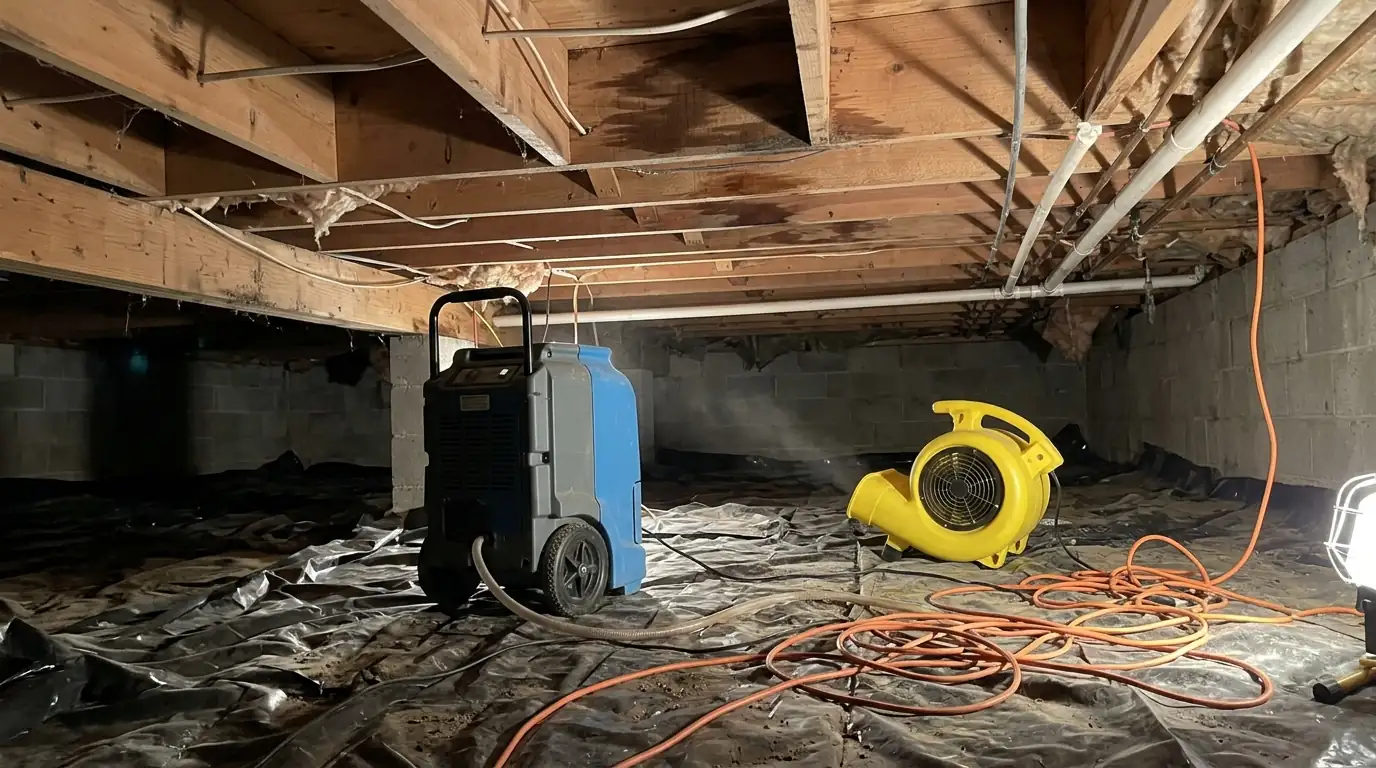
Dehumidifiers sized to the space run in the crawl space, with air movers directing air along the joist bays. We read the joists and subfloor from below every day.
Floors above often feel normal again within days, but the readings decide when we stop.
How long crawl space drying takes
Pumping and removal usually take a day. Drying runs several days to a week, depending on how wet the soil and framing were and the weather outside. New barrier and insulation go in after the final readings.
Thaw-day leaks under Spokane floors
Most supply line splits in Spokane start running on the warm-up after a freeze rather than on the coldest night, and lines that run through a cold crawl space are among the first to freeze. Because the water meter sits in a pit out in the parking strip that is often snowed in, a crawl space leak can run for a while before anyone reaches a shutoff, which is why we ask callers to find the inside valve first.
Planning costs for crawl space water damage
Crawl space jobs depend on how much water there was and what has to be replaced. These national ranges are a planning guide.
- Standing water depthMore water means more pumping and extraction.
- Insulation removalSoaked batts are removed and replaced.
- Vapor barrierDamaged barrier is replaced with new taped sheeting.
- Access and clearanceLow, tight crawl spaces slow every step.
- Water sourceGroundwater or drainage problems may need their own fix.