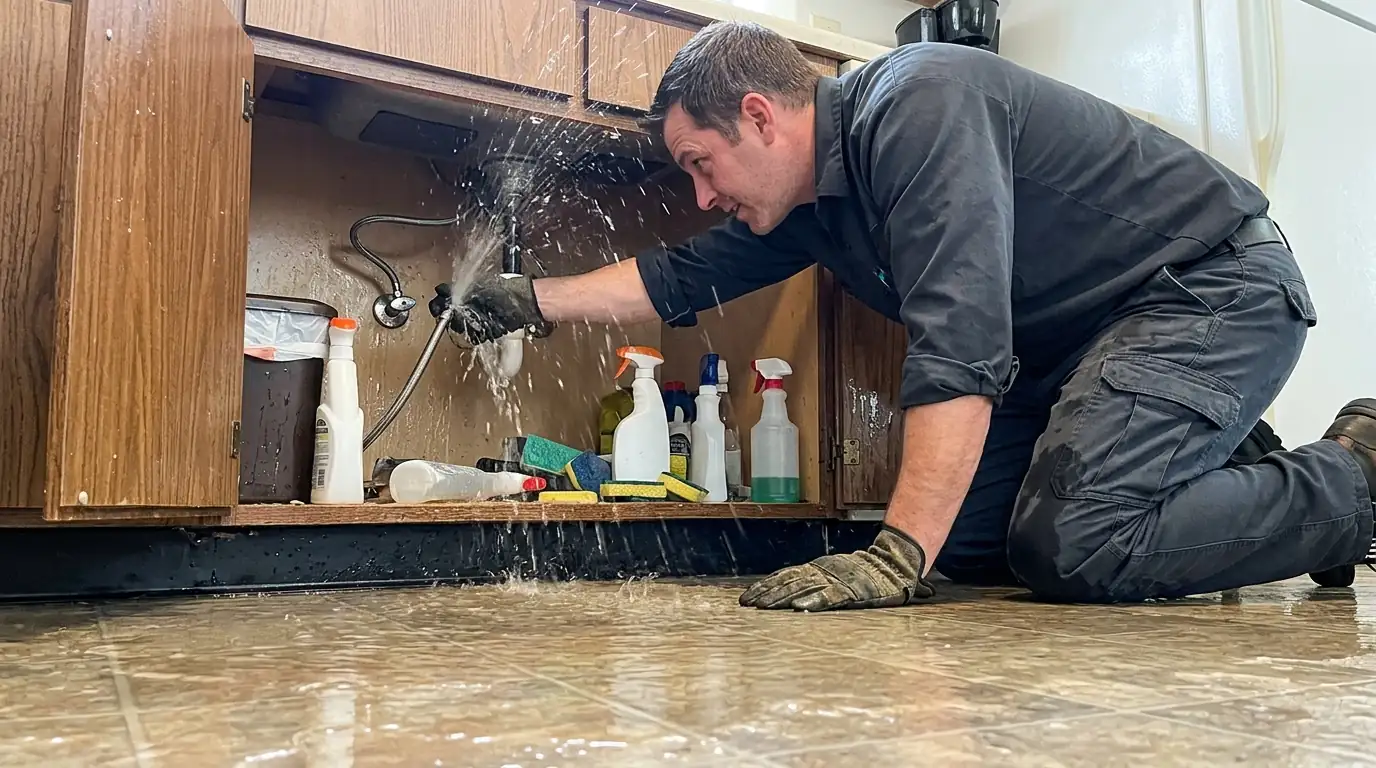
Emergency water
6 jobsLeaks, bursts and overflows that need water out of the house now.
Restoration work by type
Water line open 24/7 in Spokane Valley, WA
Most of our winter calls start with a pipe that split on a cold night and let go on the thaw. We find and stop the source, pull the water out, dry the house to a measured reading and rebuild what had to come out.
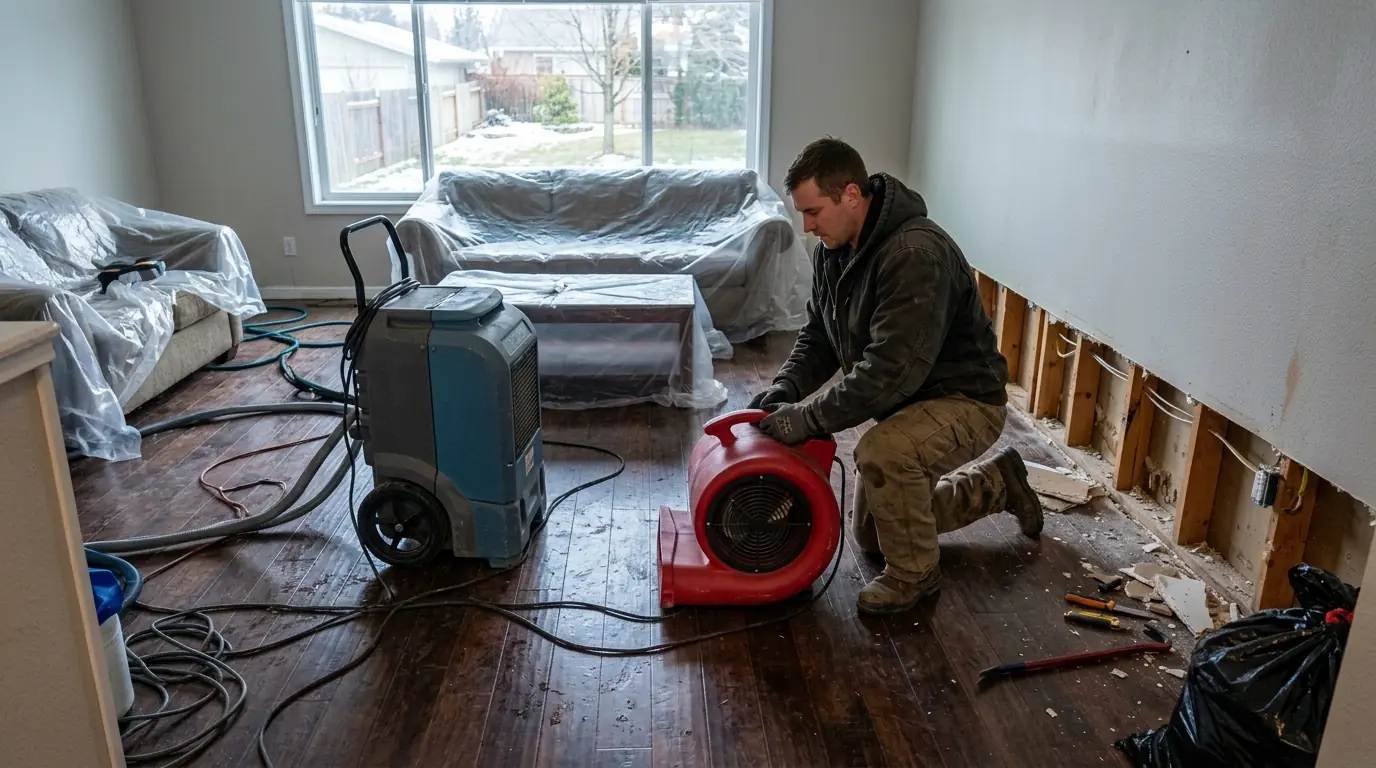
Answered 24/7, every day of the year
Start with what you are looking at
Pick the closest match. Each one opens the job page with what we do, the variants we see, and planning costs where a published range exists.
Quick answer
Water damage restoration in Spokane Valley usually takes three to five days of drying once the standing water is out, then repairs after the readings say dry. We answer around the clock, stop the source, extract the water and wet materials, and set air movers and dehumidifiers that we check every day until walls and floors reach a dry standard.
Local conditions
Most Spokane Valley homes went up in the 1970s, and the median house here dates to 1979. That era ran plenty of supply lines through exterior walls and crawl spaces, which is exactly where a long cold stretch finds them. In January 2024 the Spokane Valley Fire Department answered 179 alarm calls tied to frozen or burst pipes.
The water rarely shows up on the coldest night. A split stays plugged with ice until the house warms, then runs into the wall cavity or the crawl space before anyone sees it. Those same winters build ice dams along the eaves, and spring snowmelt pushes groundwater into basements and window wells.
Spring brings its own calls. In March 2017 the Spokane River climbed past 27.5 feet for the first time since 2012 and both cities closed it to users, while county officials blamed rising groundwater for flooded basements on streets nowhere near the river.
Restoration work
Thirty-eight jobs in six groups. Each has its own page with the process, the variants we see and typical planning costs. Browse the full list.
Leaks, bursts and overflows that need water out of the house now.
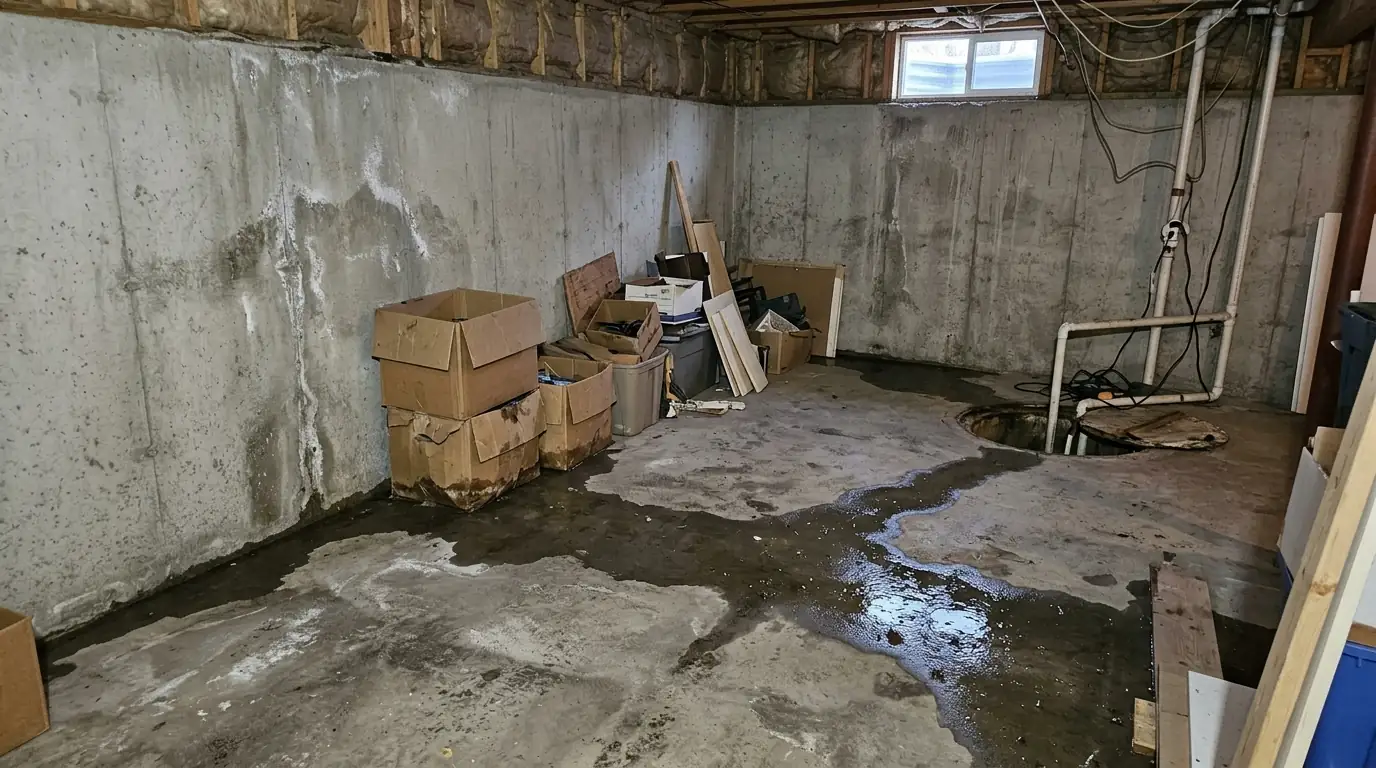
Ice dams, roof leaks, snowmelt seepage and storm openings.
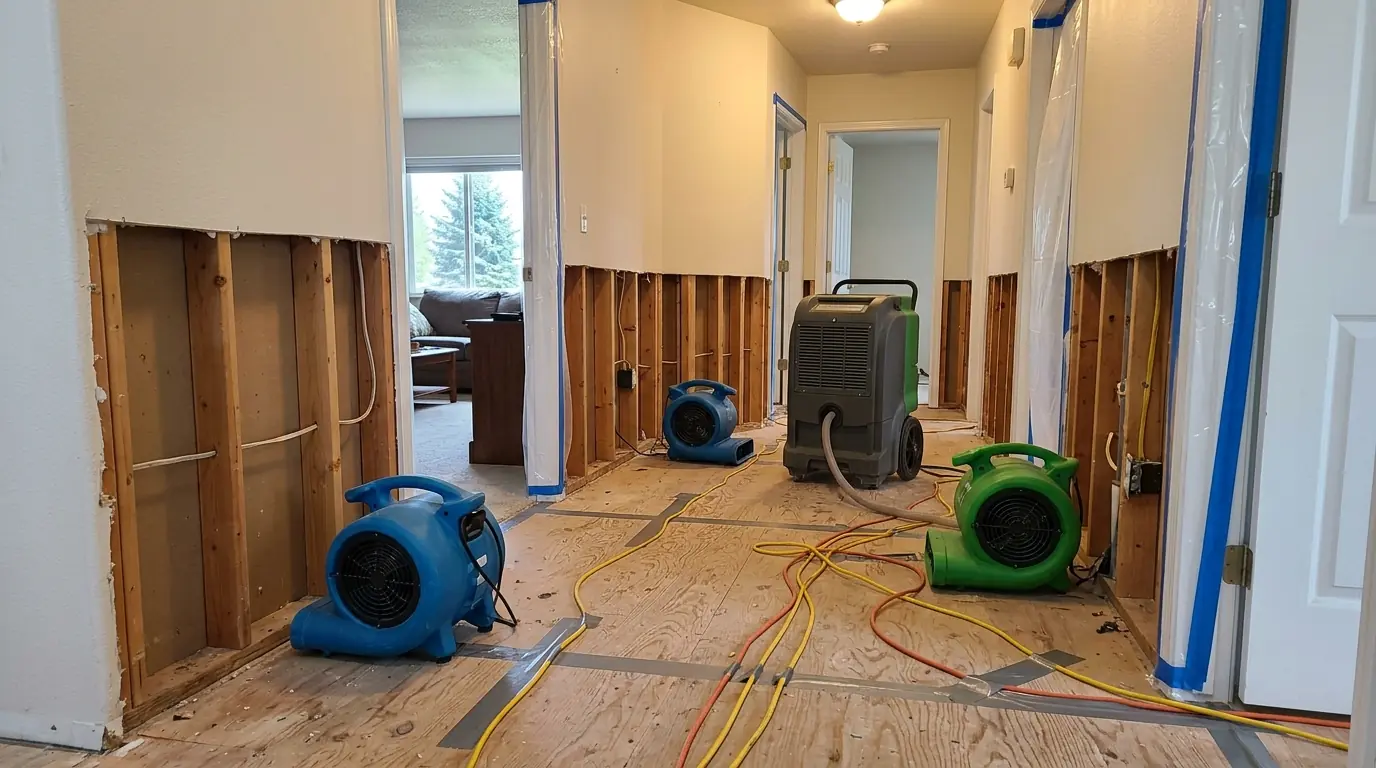
Getting walls, floors and crawl spaces back to a dry reading.
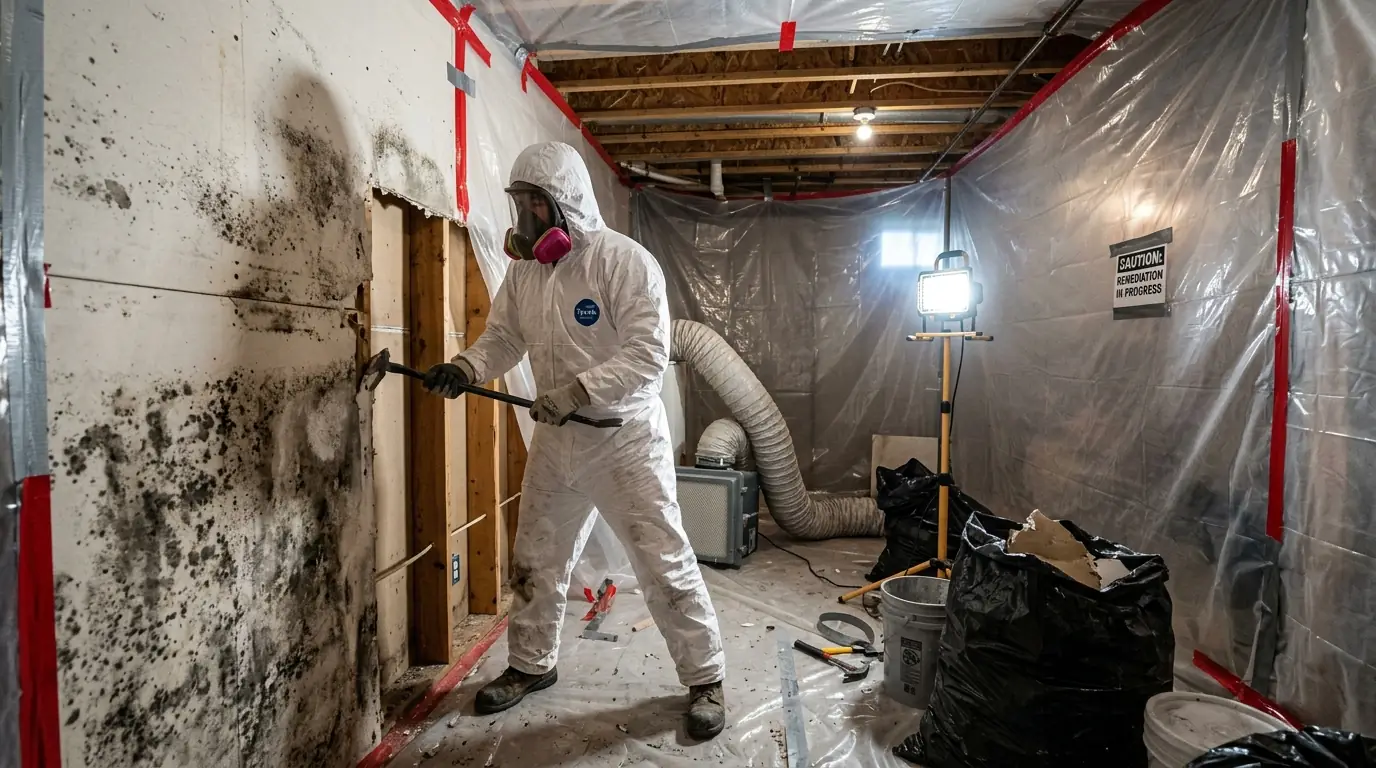
Contaminated water, mold growth and the smell that follows.
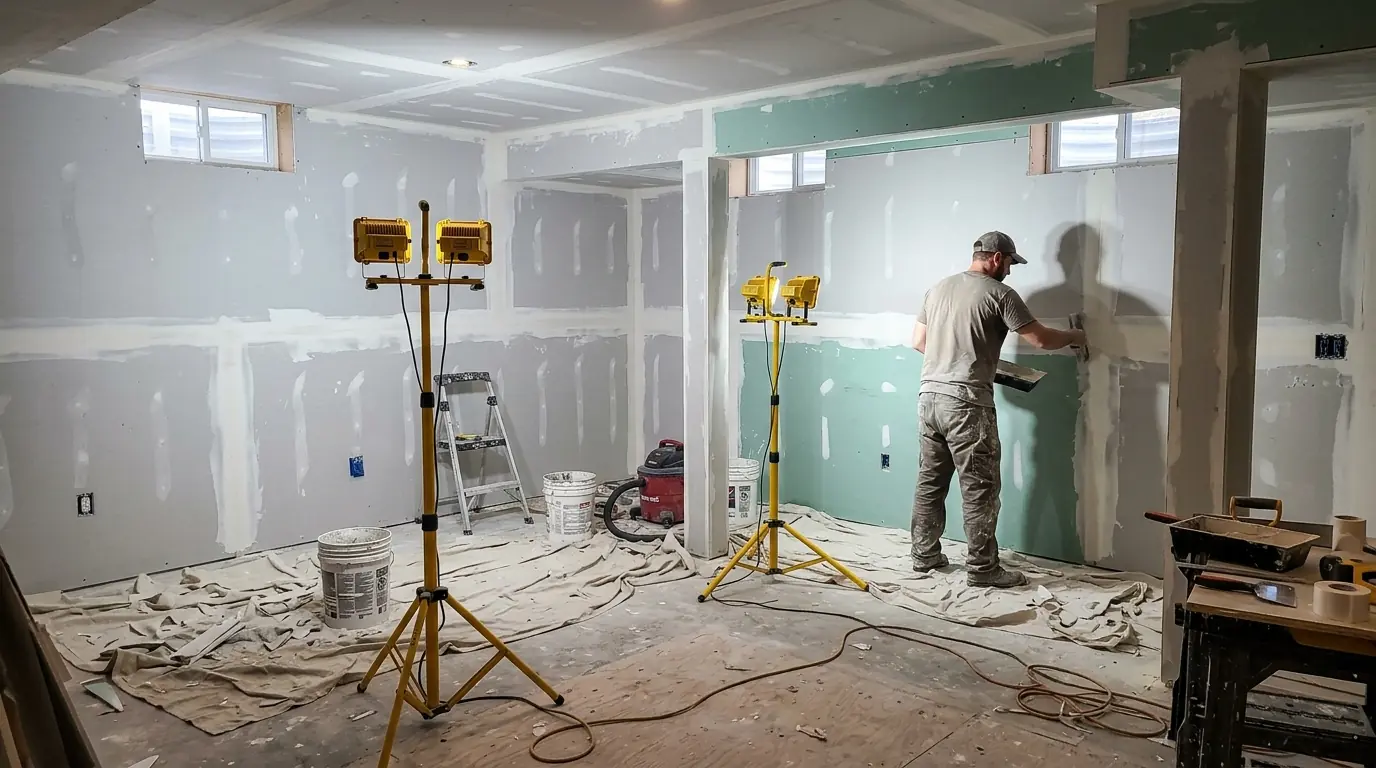
Putting back what had to come out to dry the house.
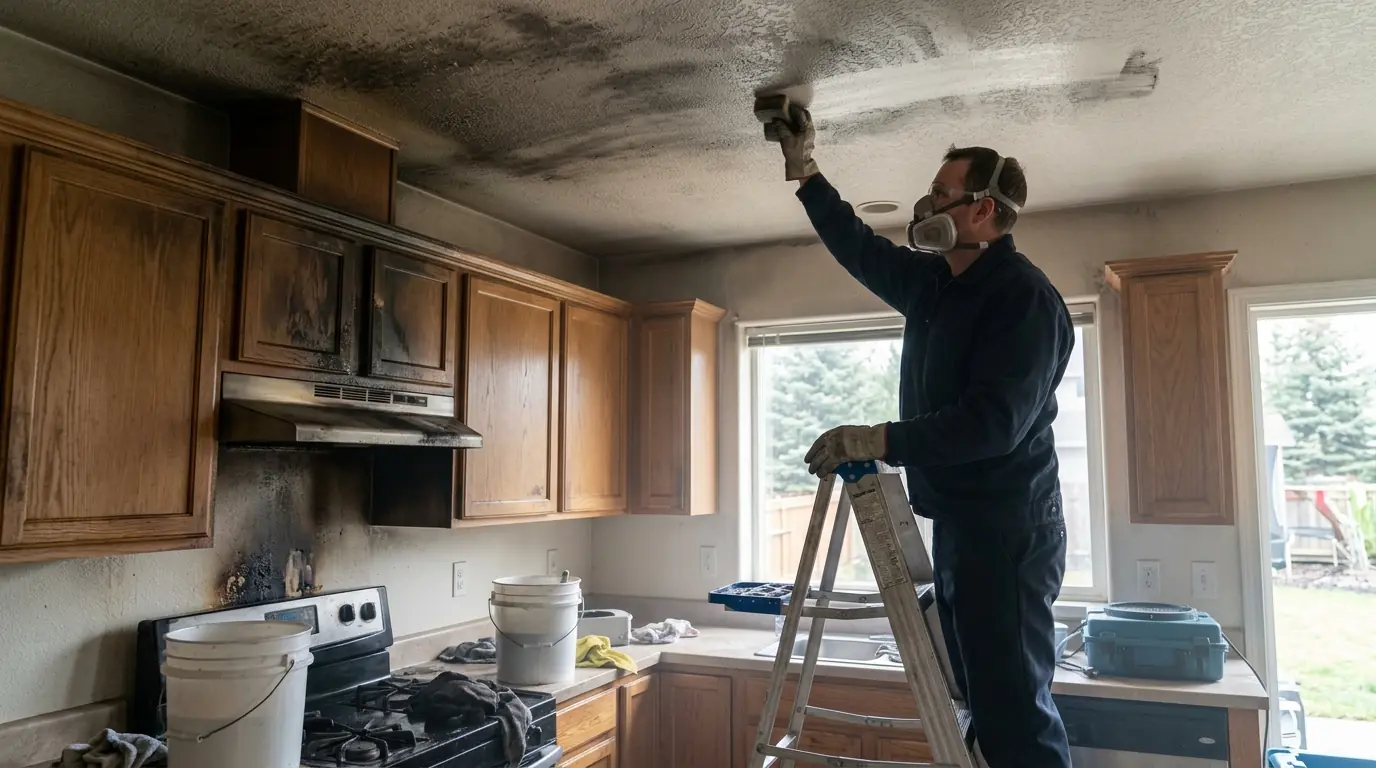
Fire and smoke cleanup, buildings with tenants, and the paperwork.
Brands we see leak most often. We clean up after these appliances and fixtures every season; the names are here so you know the failure is familiar, not because we sell them.
From the call to dry
Four phases, six steps. You see the moisture numbers at every visit, so you always know why a fan stays or goes.
1On the phone
A person picks up, any hour, and asks what is wet, where the water came from and whether it is still running.
We talk you through the shutoff and what to move while the truck is loaded.
2First visit
We cap the line, close the valve or tarp the opening so no new water comes in.
Extraction first, then meters and a thermal camera show where the water went.
3Every day after
Air movers and dehumidifiers run, and we log readings daily and move equipment as areas dry.
4Once dry
Drywall, flooring and trim go back only after the readings say dry, so nothing closes over a wet frame.
Dry standard: wet materials read the same as unaffected materials in the same house
Hidden water
Surface water is obvious. These are the quieter signs we look for on a follow-up visit, often days after the visible mess is gone.
Swollen MDF baseboard or a caulk line that cracks after a leak usually means the bottom plate behind it is still wet.
Blisters or a soft spot in drywall paint point to moisture behind the surface, often from a slow supply line drip.
Odor that comes back a day after airing out means something porous is still holding water, usually carpet pad or insulation.
Hardwood edges rising above the centers, or vinyl plank that gives underfoot, signals water sitting under the floor.
A ceiling ring that widens after each cold night or rain is an active leak, not an old one, and it is worth opening up.
A jump with no change in use can mean a line leaking inside a wall or in the crawl space, out of sight.
How a job runs
A water job is stressful mostly because nobody tells you what is going on. We do it differently, and it starts with these four habits.
We photograph every room, the source and the failed part before a single board is removed, because that record is the first thing an adjuster asks for.
Moisture readings go into a daily log and we walk you through them, so you know why a fan stays or goes.
Clean, gray or black water changes what has to be thrown out. We tell you which one you have and what it means for the job.
Drywall, flooring, cabinets and trim go back on our schedule once the readings say the frame is dry, so nothing waits on a second company.
Appliance failures are a big share of the work. We regularly dry out kitchens and laundry rooms after leaking Whirlpool and Samsung washers, Bosch dishwashers and refrigerator ice maker lines, and basements after a Rheem or Bradford White water heater lets go. We keep the failed part and photograph the label, because the make, model and age are what an insurer or a manufacturer will want to see.
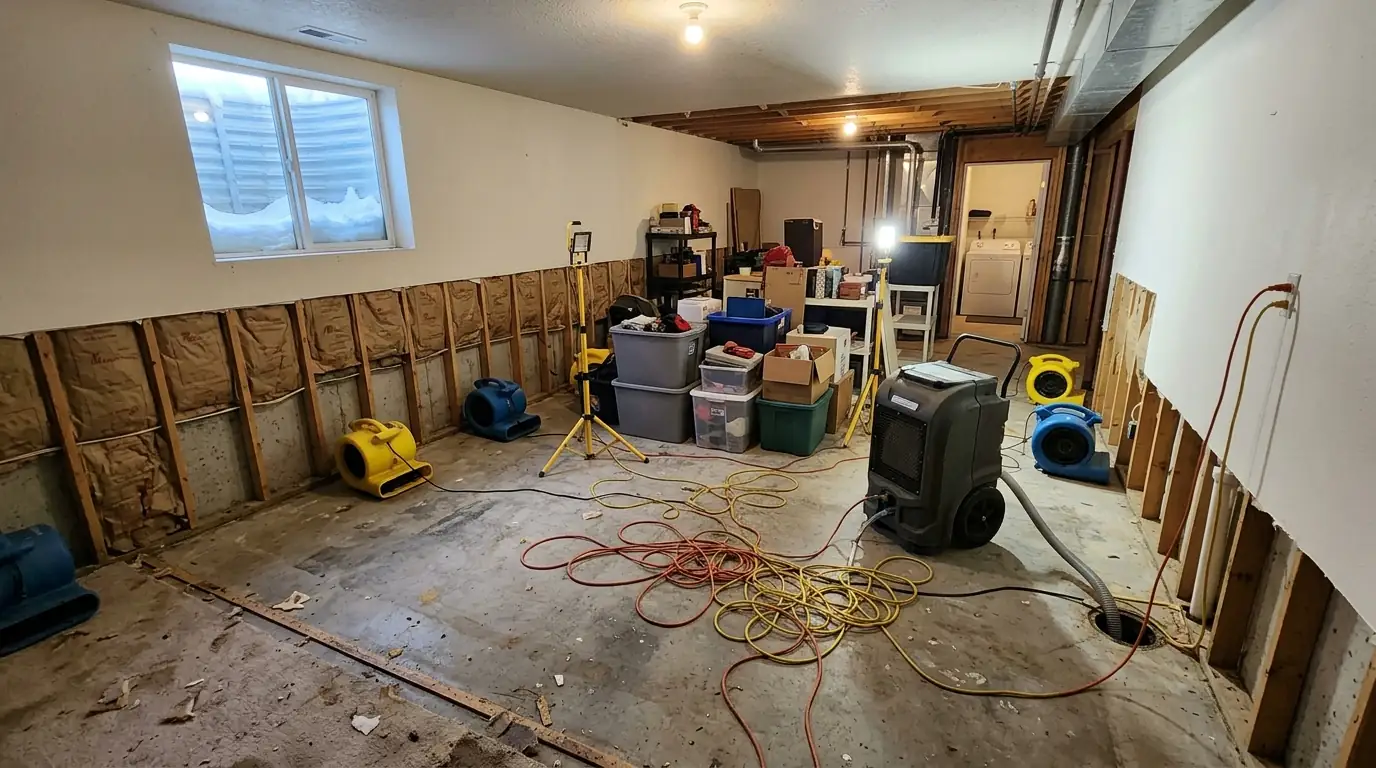
The main shutoff is usually where the line enters the house, in the basement, the crawl space or a utility closet. If you cannot find it or it will not turn, call and we will talk you through it while we get a crew moving.
Call (509) 253-8927Inland Northwest
Clean Home works out of a shop on E Montgomery Ave, north of I-90, which keeps the whole valley, Millwood, Spokane and Liberty Lake within a short drive and puts Post Falls and Coeur d'Alene just across the state line. Most of our jobs are houses from the 1960s through the 1990s with basements or crawl spaces, plus newer subdivisions in North Idaho where the problem is more often a supply line than an old pipe.
We also take jobs out on the West Plains and north toward Deer Park. After the August 2023 Gray Fire, ash fell across Medical Lake, Cheney and Four Lakes, and that kind of smoke and ash cleanup sits alongside the water work. Each area page covers what we see there and how the housing changes the job. Read the coverage overview.
Water damage tips
Plain guides for Spokane-area homeowners, written by Bonnie Kincaid, our water damage guides editor. See every guide.
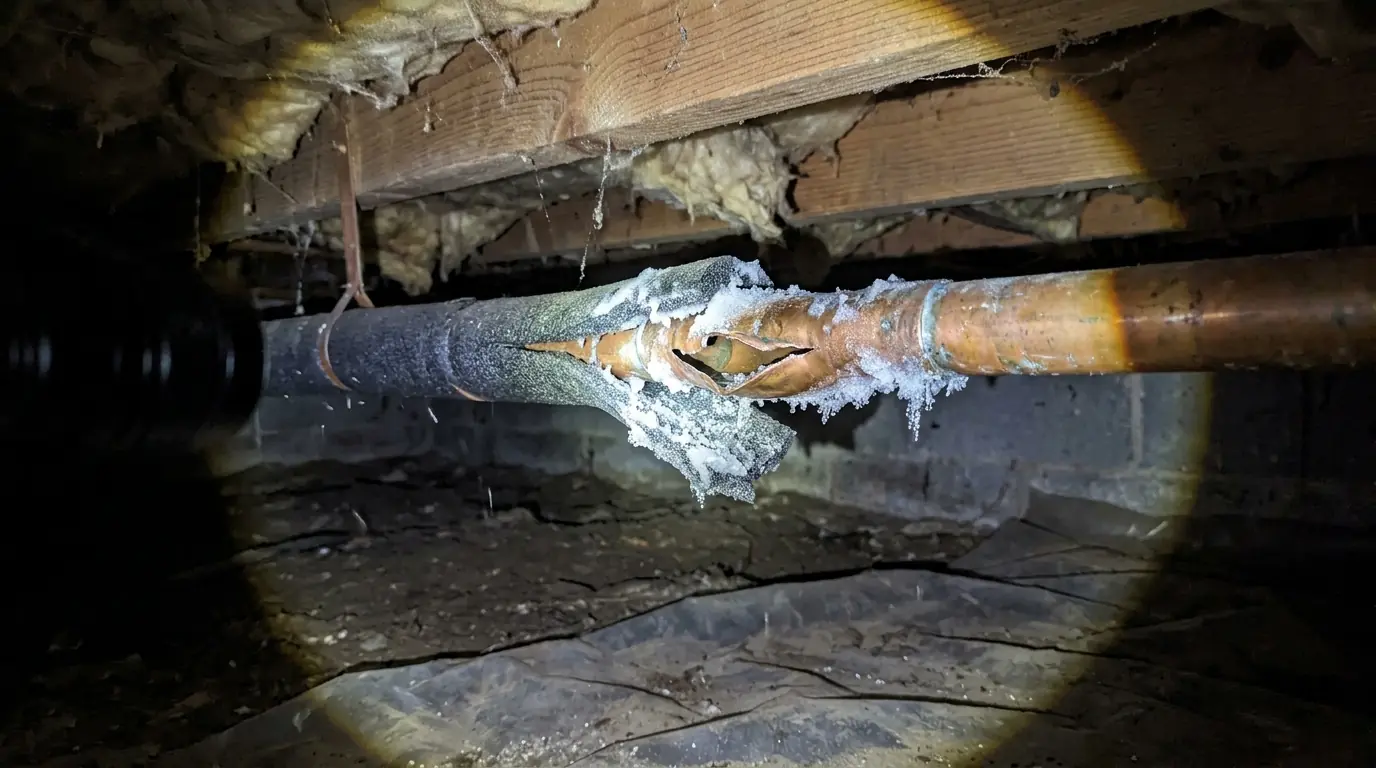 Burst Pipe in Spokane Valley: What to Do FirstThe first fifteen minutes after a pipe lets go, in the order that matters.
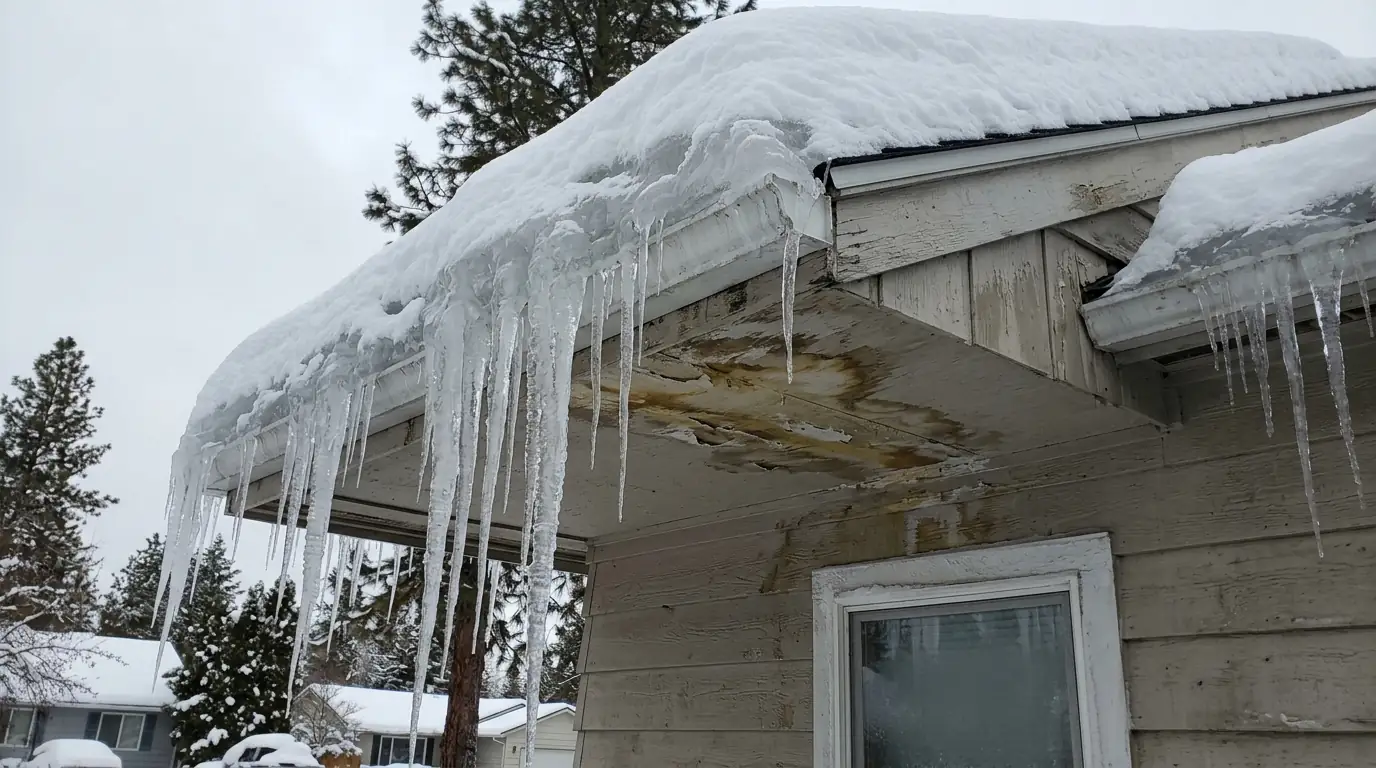 Ice Dams in Spokane: Why They LeakWhy water comes in under the eaves and what helps before spring.
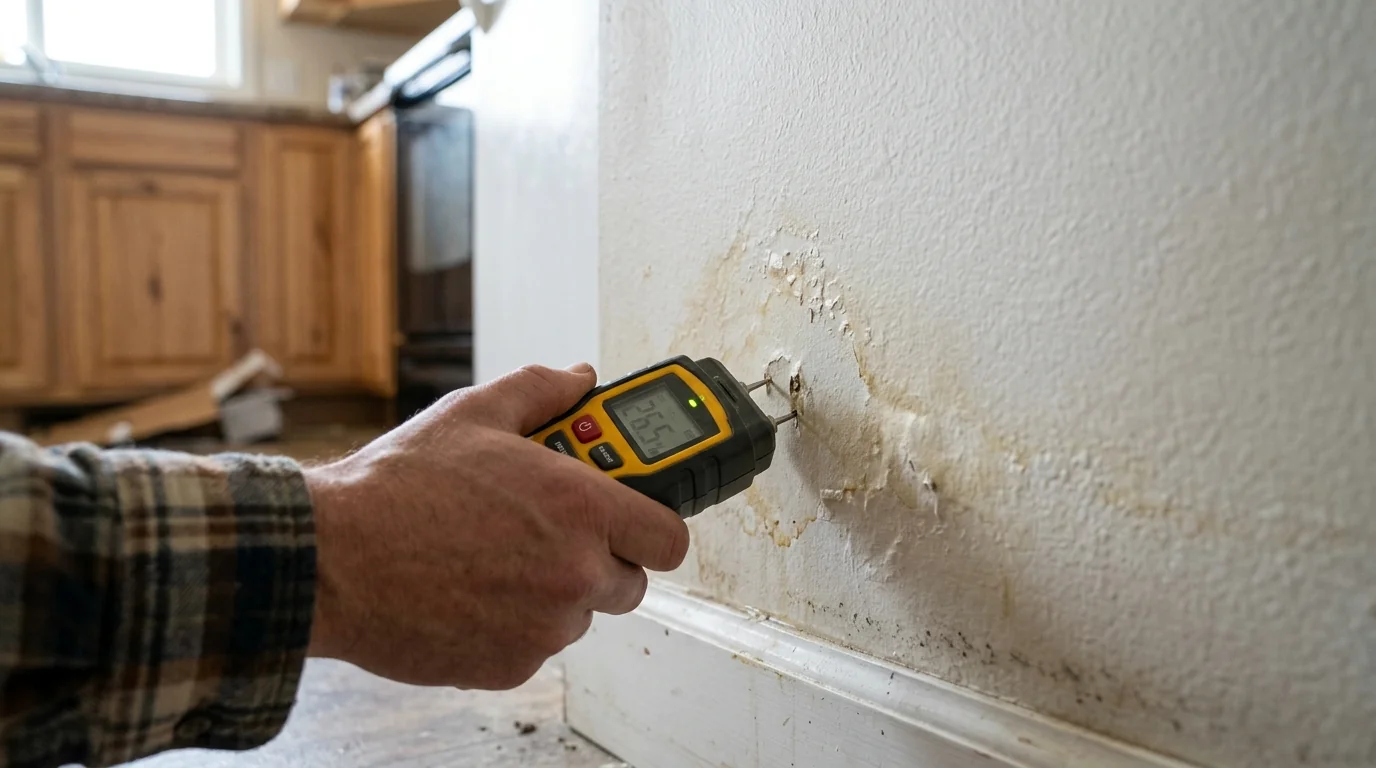 Water Damage Restoration Cost in Spokane ValleyWhat drives the bill, with published cost ranges and the factors behind them.
FAQ
Still unsure? The fastest answer is a phone call, day or night.
Call (509) 253-8927We answer the phone 24/7 and start moving as soon as we know what is wet and whether water is still running. Arrival depends on the hour, the roads and how many crews are already on jobs, so we give you an honest window on the call rather than a promise we cannot keep.
Yes. Close the main shutoff first. Turn off power to any room where water is near outlets or cords, but only if you can reach the breaker panel from a dry spot. Lift small rugs and furniture off wet floors if it is safe to do so.
Sudden and accidental water, like a burst pipe or a failed supply line, is commonly covered. Groundwater seepage and flooding usually need separate flood coverage, and sewer backups often need an endorsement. We document everything for your adjuster, and your policy decides.
Most homes dry in three to five days once the water is out. Hardwood, plaster and a soaked crawl space take longer. We take readings every day and pull equipment when the wet materials match dry reference points in the same house.
Not always. Clean-water leaks caught early can often be dried in place with the wall cavities vented. Gray or black water, swollen drywall or wet insulation behind it usually means a flood cut a couple of feet up the wall.
Published 2026 national figures put a typical job between about $1,270 and $5,376, or roughly $3.15 to $7.40 per square foot, and contaminated water costs more per square foot than clean water. Your number depends on how much got wet, the water category and what has to be rebuilt.
Yes. Mold remediation, sewage cleanup, smoke and soot cleaning and wildfire ash cleanup are all on our job list, along with the rebuild that follows.
Water line open now
Tell us what is wet and where it is coming from. We will tell you what to do in the next ten minutes and get the drying started.
Phone and shop
Clean Home, E Montgomery Ave, Spokane Valley