Quick answer
Wet carpet in Spokane Valley can usually be dried in place when the water was clean and the response was quick: we extract it, lift the carpet, replace the soaked pad and dry the subfloor before re-stretching. Carpet soaked by toilet overflow, sewage or water that sat for days is replaced, because the backing and pad hold contamination that cleaning does not remove.
When wet carpet can be saved
Three things decide whether carpet comes back: what kind of water it was, how long it sat, and how the carpet is built. Clean water from a supply line, caught within a day or so, usually leaves carpet that dries and cleans up well.
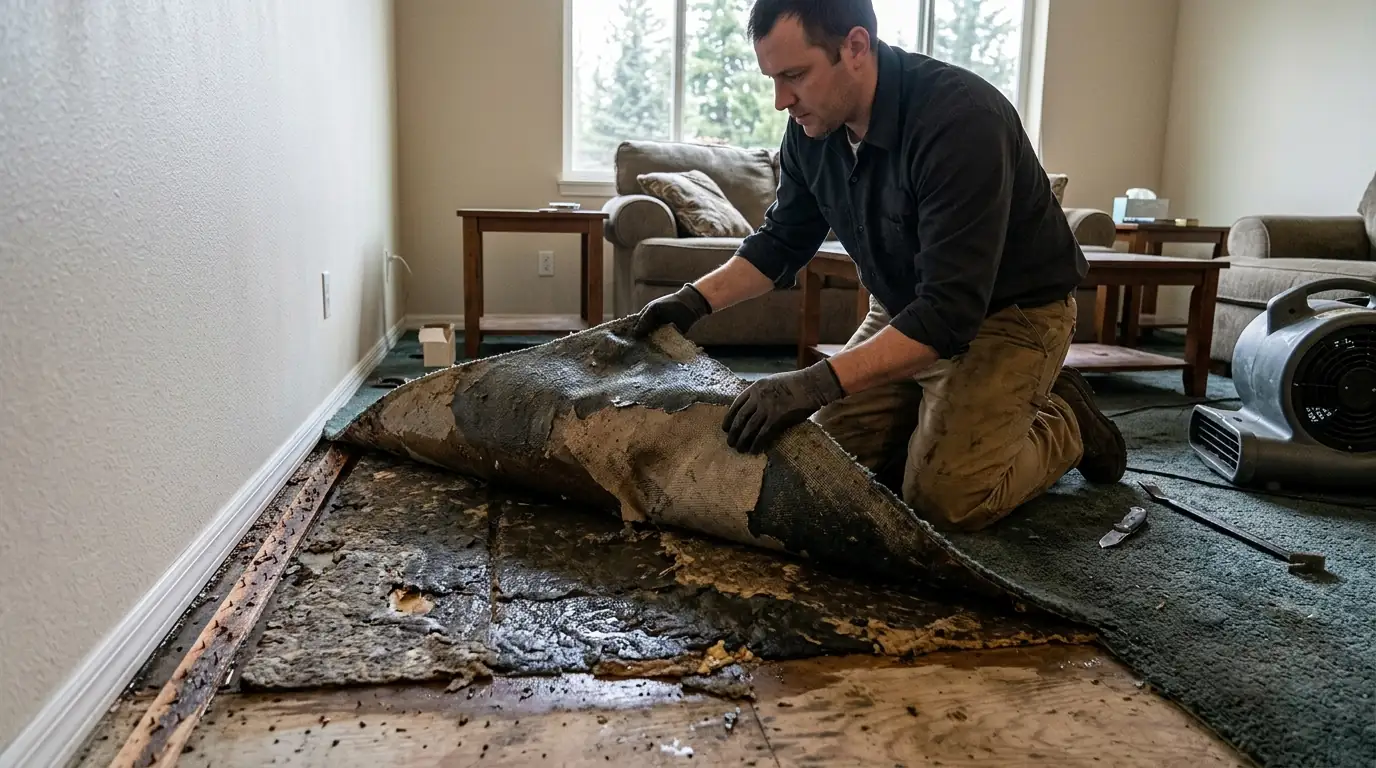
The pad is a different story. It soaks up water like a sponge, takes days to dry even under fans, and is cheap compared with the carpet. In most water jobs we pull the wet pad, dry the subfloor and the carpet, and lay new pad.
Carpet that had contaminated water in it, from a toilet overflow or a sewer backup, is removed and replaced. Carpet that delaminates, where the backing separates from the face, is replaced whatever the water source was.
How we dry or replace wet carpet
- 1
Extract
Weighted extraction pulls water out of carpet and pad.
- 2
Assess
Water category, time and backing condition decide dry or replace.
- 3
Lift and remove pad
Wet pad comes out; tack strip is checked.
- 4
Dry subfloor and carpet
Air movers and dehumidifiers with daily readings.
- 5
Reinstall or replace
New pad, re-stretch, or new carpet where needed.
Pad replacement
We roll back the carpet, cut out the wet pad, and check the tack strip, which often rusts or swells. The subfloor is dried and read before new pad goes down.
Replacing pad without replacing carpet is the most common outcome on a clean-water job, and it saves most of the cost of new flooring.
Carpet re-stretch and reinstall
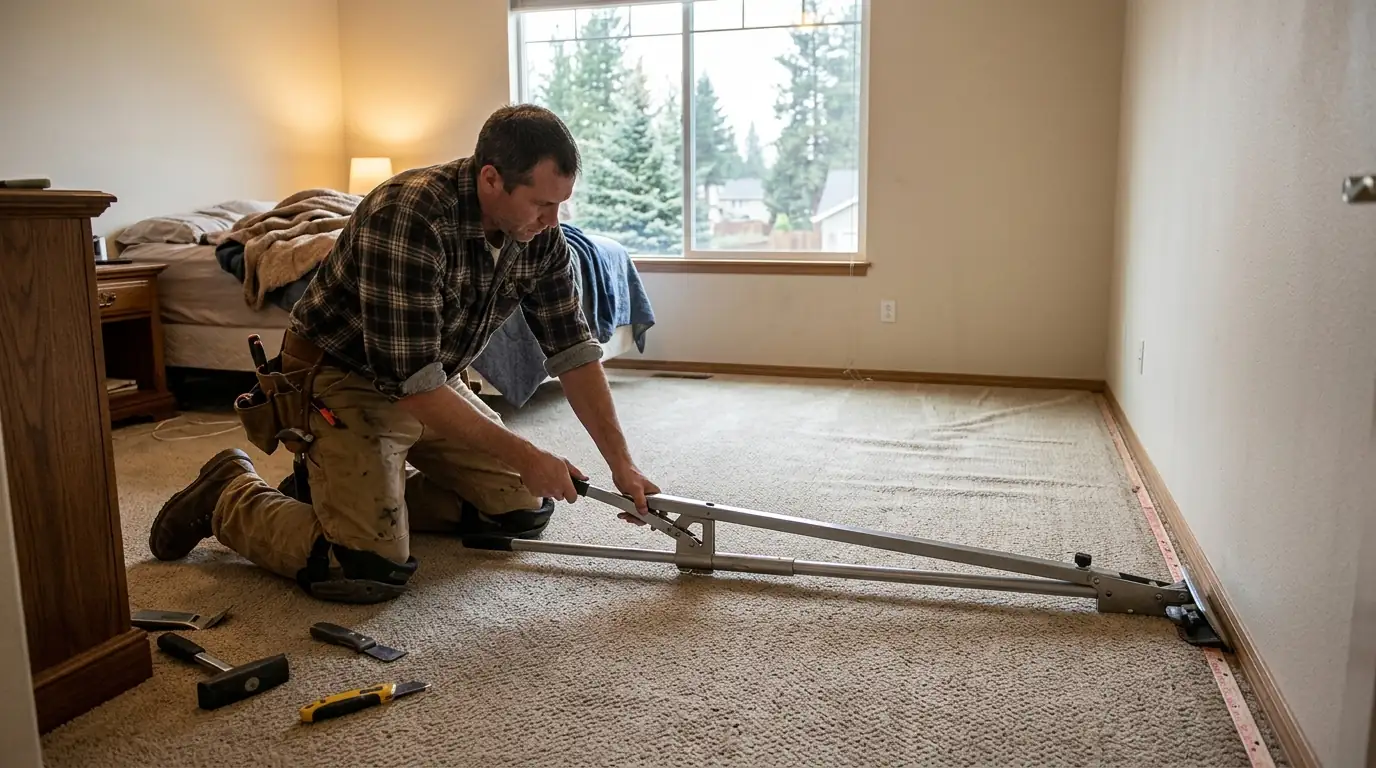
Carpet shrinks and loosens when it gets wet and dries. After drying, we re-stretch it with a power stretcher so it lies flat with no ripples, and reseat it on the tack strip.
Seams are checked and re-glued where the water loosened them.
Basement carpet over concrete
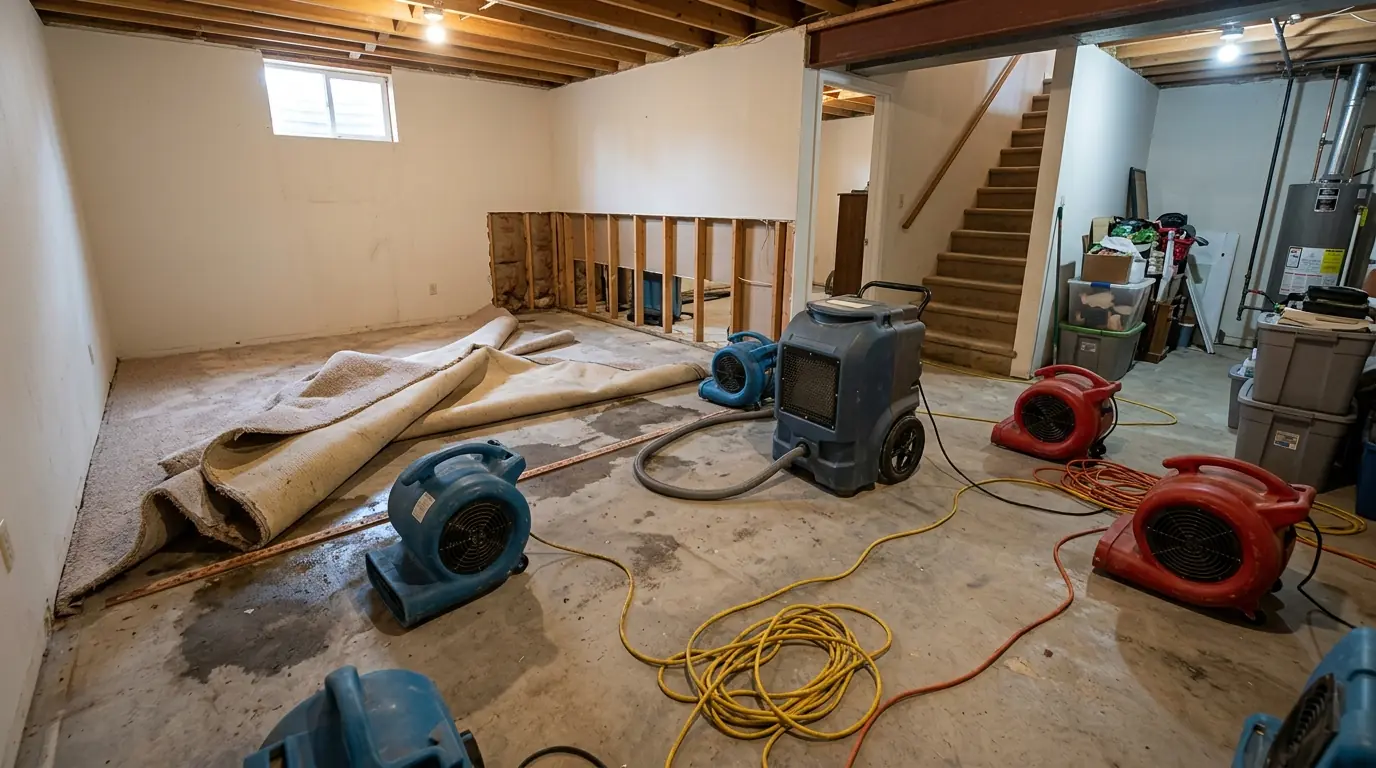
Carpet laid on a concrete basement slab sits on a surface that wicks moisture and dries slowly. Groundwater seepage keeps the pad wet from below even after the visible water is gone.
We pull the pad, dry the slab with dehumidifiers and read it before reinstalling. If the slab keeps taking on water each spring, the seepage needs addressing first; see basement flooding cleanup.
How long carpet drying takes
Carpet and subfloor usually dry in three to five days once the water is out; basement slabs can take longer. New pad and re-stretching take a few hours once the floor reads dry, so most rooms are back in use within a week.
Basement carpet and spring groundwater around Spokane
In Spokane, county officials have pointed to groundwater fed by rain and snowmelt as the cause of repeat basement flooding on some streets, with water coming up through slabs and walls rather than through a broken pipe. Carpet in a basement like that gets wet from underneath, so the pad can be soaked while the top looks only damp. That is why we lift the edge and read the slab on every basement carpet call.
Dry in place, new pad or new carpet?
Here is how the decision usually goes for each kind of water.
| Water source | Carpet | Pad |
|---|---|---|
| Clean supply line, caught within a day or so | Usually dried and cleaned | Usually replaced |
| Clean water that sat for several days | Depends on backing condition | Replaced |
| Toilet overflow or washer drain | Replaced | Replaced |
| Sewer backup or floodwater | Replaced | Replaced |
Planning costs for wet carpet
Drying and new pad usually cost far less than new carpet. These published national figures cover both ends.
- Water categoryContaminated water means replacement, not drying.
- Time before extractionCarpet that sat wet for days is more likely to delaminate.
- PadNew pad is a modest cost and the usual outcome.
- Room sizeSquare footage drives both drying and replacement cost.
- Stairs and seamsStairs and seamed rooms take more labor to re-stretch or replace.