Quick answer
Water heater leak cleanup in Spokane Valley starts with shutting off the cold supply and the gas or power to the heater, then extracting the water before it wicks into drywall, carpet and stored boxes. A full tank failure can release the whole tank, so we check wall bottoms, carpet pad and the subfloor next to the heater, not just the visible puddle.
Signs your water heater is about to leak
Rust at the base
Rust streaks or flakes under the tank mean the steel is corroding.
Water in the drain pan
Any water in the pan means a leak has already started.
Rumbling or popping
Sediment build-up makes noise and stresses the tank bottom.
Rusty hot water
Discolored hot water can come from a corroding tank.
A damp wall base nearby
The bottom of the nearest wall shows a slow leak first.
A tank past its expected life
Check the label for the manufacture date and plan ahead.
What a water heater failure does to a basement
Water heaters fail in two ways. Most leak slowly for weeks: a drip from the drain valve or a fitting, or seepage from a tank that is starting to rust through. Others fail all at once when the tank splits, and the floor floods in minutes.
Either way the water heads for the lowest point and anything porous on the way. In a finished basement that means carpet pad, the bottom of the drywall and the boxes people store next to the furnace and heater.
The heater itself is plumber work, and we coordinate with yours. Our part is the water: extraction, removal of what cannot be dried, drying with daily readings and, where needed, the drywall repair afterwards. We keep the failed tank's label photos because the age and model matter to insurers and manufacturers.
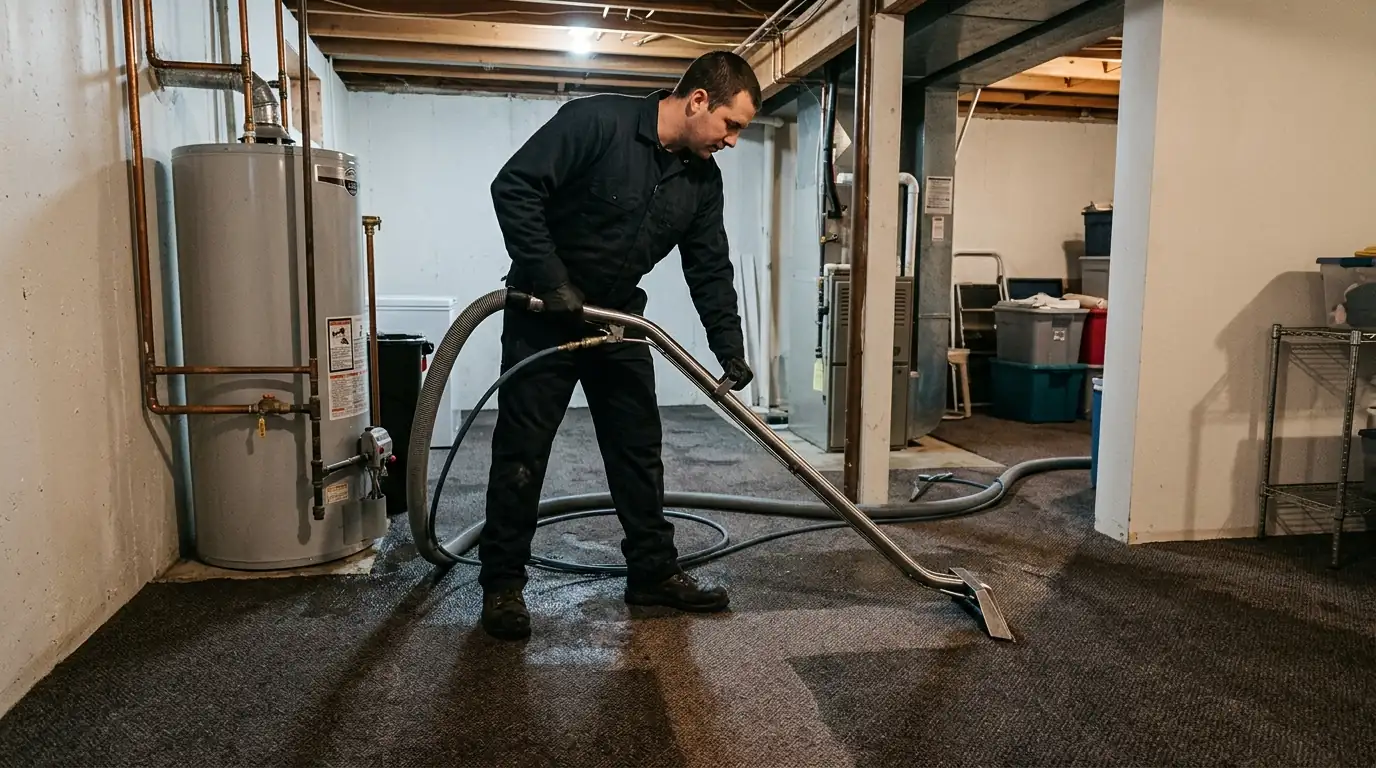
How a water heater cleanup runs
- 1
Shut off water and fuel
Close the cold supply valve and turn off the gas valve or the breaker.
- 2
Extract and remove
Standing water out; soaked pad and wet drywall removed where needed.
- 3
Map the moisture
Readings outward from the heater show how far the water went.
- 4
Dry and monitor
Equipment runs with daily readings until dry.
- 5
Repair
Drywall and flooring go back once the plumber has replaced the heater.
Tank failure flooding
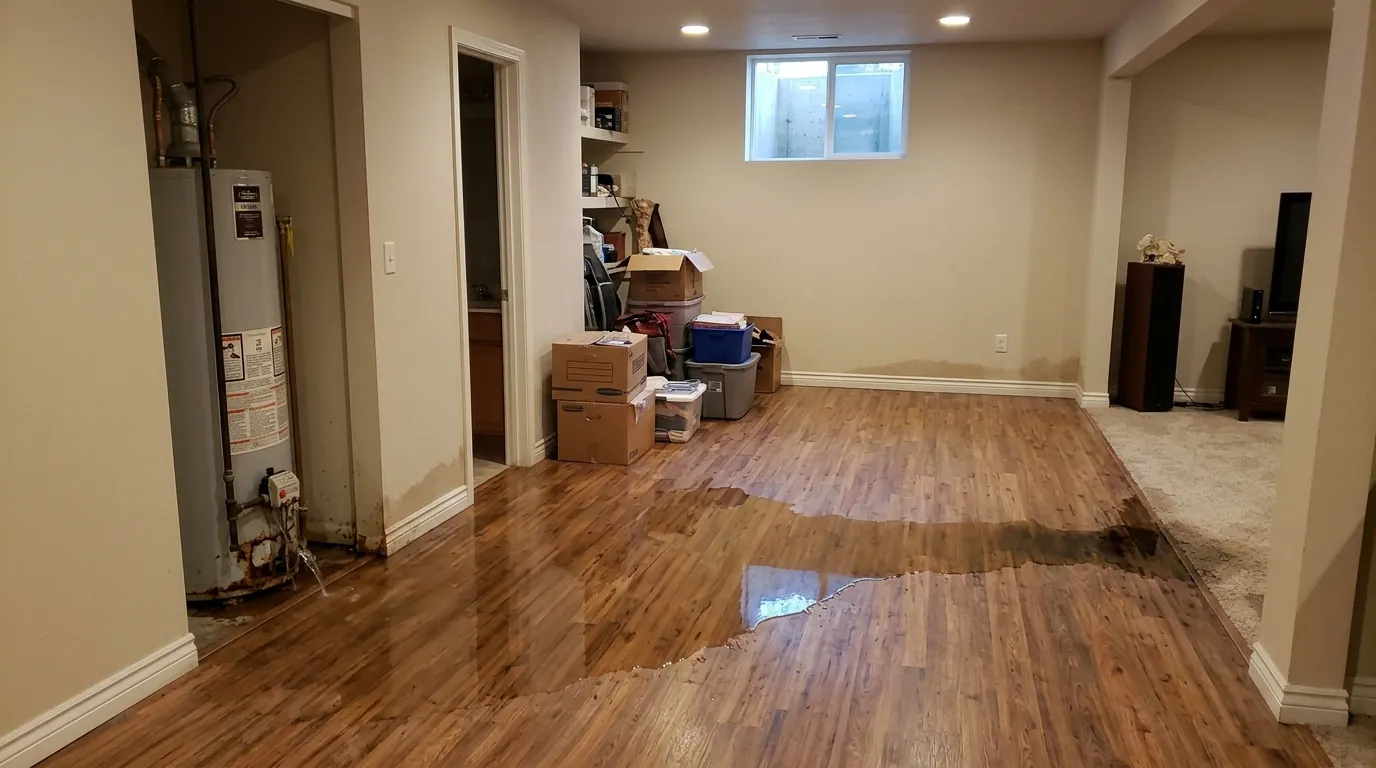
When a tank splits, the water keeps coming from the cold supply until someone closes the valve on top of the heater. The first job is shutting that off, then turning off the gas valve or the breaker.
We extract standing water, pull up carpet and pad that sat in it, and cut wet drywall where readings call for it. Most tank failures are clean water, so a fast response usually keeps the job in the cheaper drying category described on our water extraction page.
Slow drip around the base
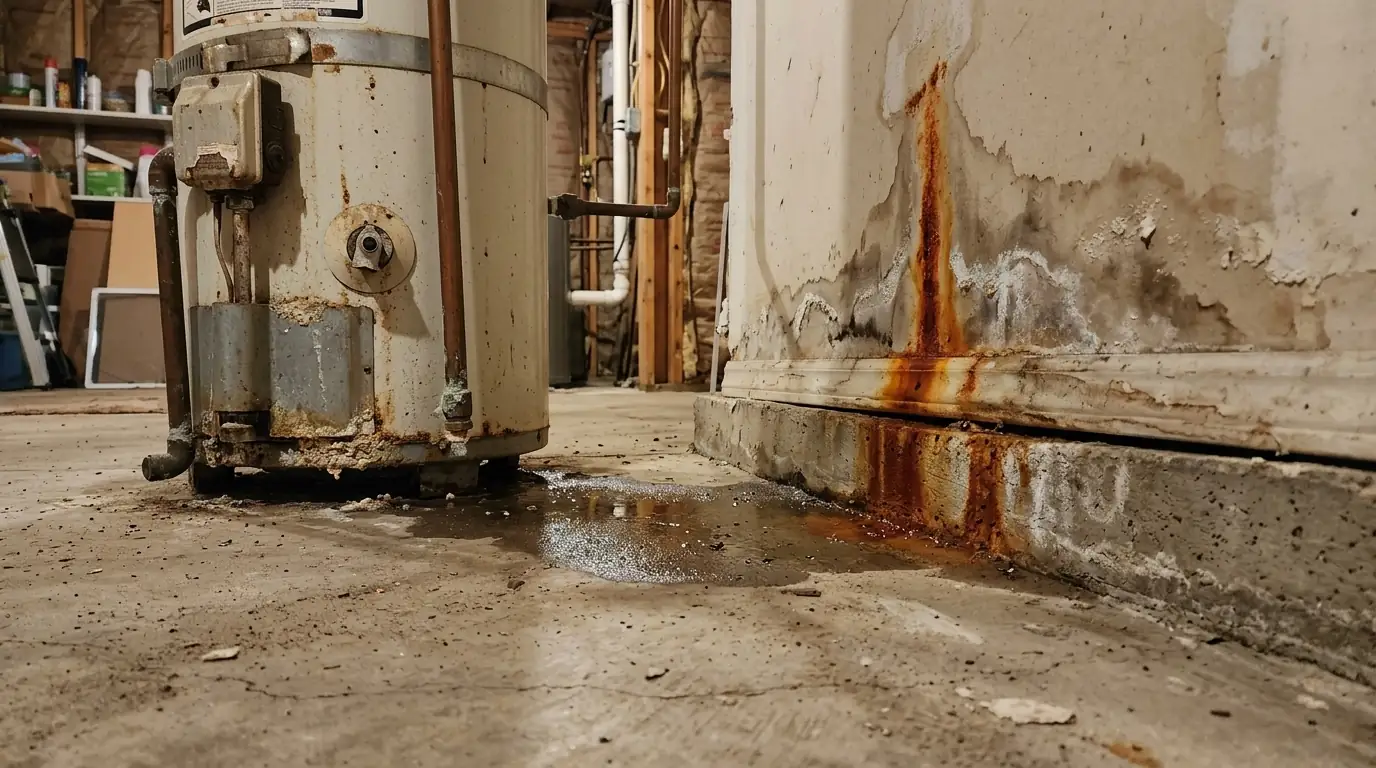
A slow leak does its damage quietly. The floor around the heater stays damp, the bottom plate of the nearest wall soaks up water, and mold can start on the back of drywall before anything shows on the front.
We map moisture outward from the heater, open the wall base where readings stay high, and dry the framing. If mold has started, that section becomes a small remediation job.
Relief valve discharge
The temperature and pressure relief valve opens when the tank gets too hot or the pressure climbs. If its discharge pipe is missing or ends above the floor, every opening sends hot water across the basement.
Repeated discharge is a warning about the heater and needs a plumber. We dry what the water reached and note the valve in the job photos.
Water heaters and houses in Spokane Valley
Most of Spokane Valley's housing is detached single-family homes, about 59.7% of roughly 45,467 units, so a failed water heater is usually your own tank and your own cleanup rather than a building manager's. In the valley's apartments and condos the picture changes, because a tank in an upstairs unit can send water into the unit below, and the cleanup has to be coordinated between two owners.
What to do in the first ten minutes
Safe to do yourself
- Close the cold water valve on top of the heater
- Turn the gas valve to off, or switch off the heater's breaker
- Move boxes and rugs off the wet floor
- Take a photo of the heater's label for your plumber and insurer
Better left to us
- Water that reached carpet, drywall or another room
- A leak that has been running for days or weeks
- Any musty smell near the heater
- Drying and moisture readings for an insurance claim
Do not drain the tank yourself if the water is still hot; let it cool or leave it for the plumber.
Planning costs for water heater leak cleanup
Tank water is clean water when it leaves the heater, which keeps cleanup at the lower per-foot rate if drying starts quickly. These national ranges are planning figures only.
- How long the leak ranA slow leak for weeks reaches framing; a fresh split usually has not.
- Finished or unfinished spaceCarpet, pad and drywall in a finished basement add removal and rebuild.
- Stored itemsBoxes and furniture beside the heater may need cleaning or replacement.
- MoldA long slow leak sometimes adds a small remediation scope.
- RebuildDrywall, baseboard and flooring are priced once the area is dry.