Quick answer
Fire damage restoration in Spokane Valley starts once the fire department releases the house: we board up openings, extract the water left by firefighting before it soaks the structure, then remove charred material, clean smoke and soot from what stays, deodorize, and rebuild. The order matters, because drying has to start within the first day or two to keep mold out of soaked framing.
What a fire restoration job actually involves
A house fire leaves three problems at once. There is the burned area itself, the smoke and soot that traveled through every room, and the water from hoses and sprinklers that soaked floors, walls and the floor below.
We handle them in that order of urgency: secure the house, remove the water, then the burned material, then cleaning. Smoke-only work in the rest of the house follows the methods on our smoke damage cleanup page, and we document every room for your insurer before anything is thrown out.
Rebuild comes last and runs on the same file, with the same photos and readings, so nothing gets missed between the cleanup and the repair.
How a fire restoration job runs
- 1
Secure the house
Board up windows and doors, tarp roof openings, shut off utilities as needed.
- 2
Water removal
Extract firefighting water and set drying before anything else.
- 3
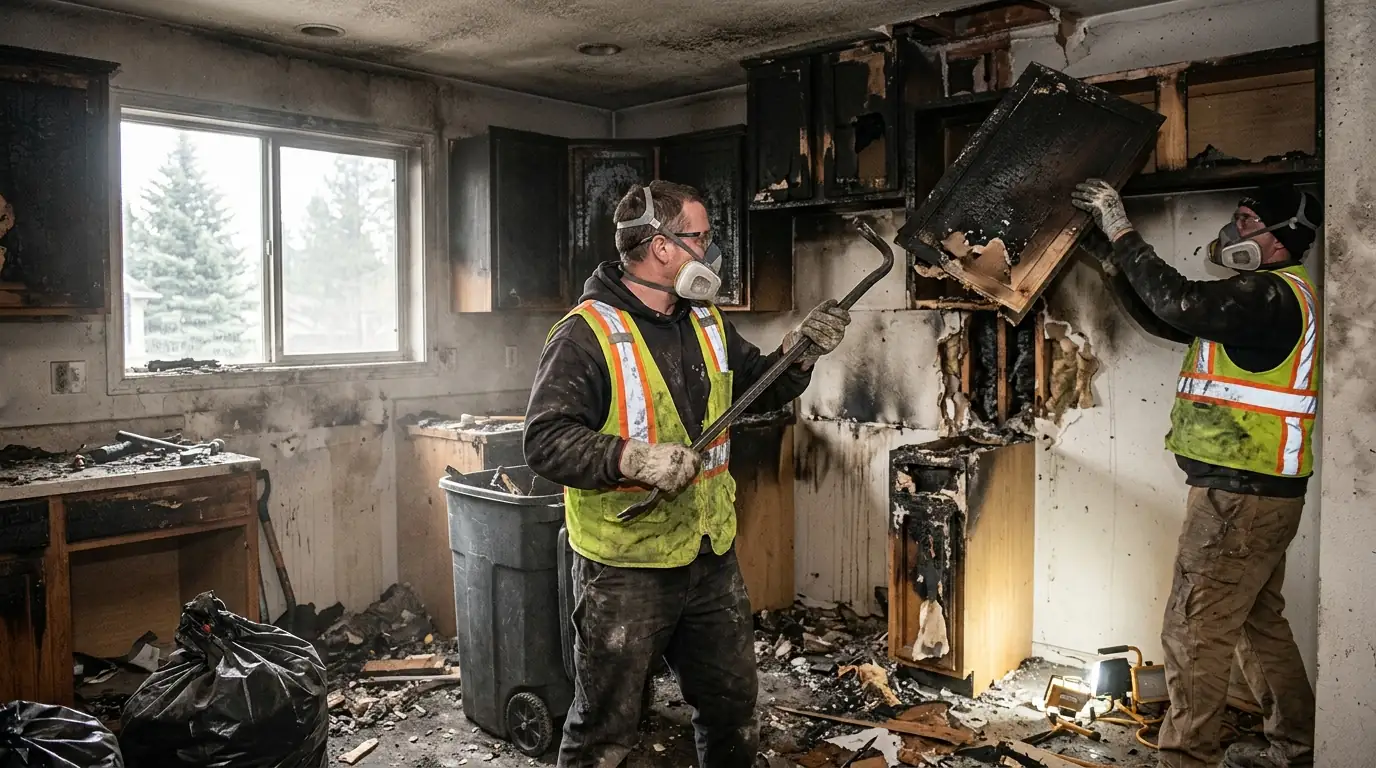
Demolition and debris
Remove charred material and anything that cannot be cleaned.
- 4
Cleaning and deodorizing
Soot cleaned from every affected surface; odor treated at the source.
- 5
Rebuild
Framing, insulation, drywall, finishes and a final walk-through.
Kitchen fire cleanup
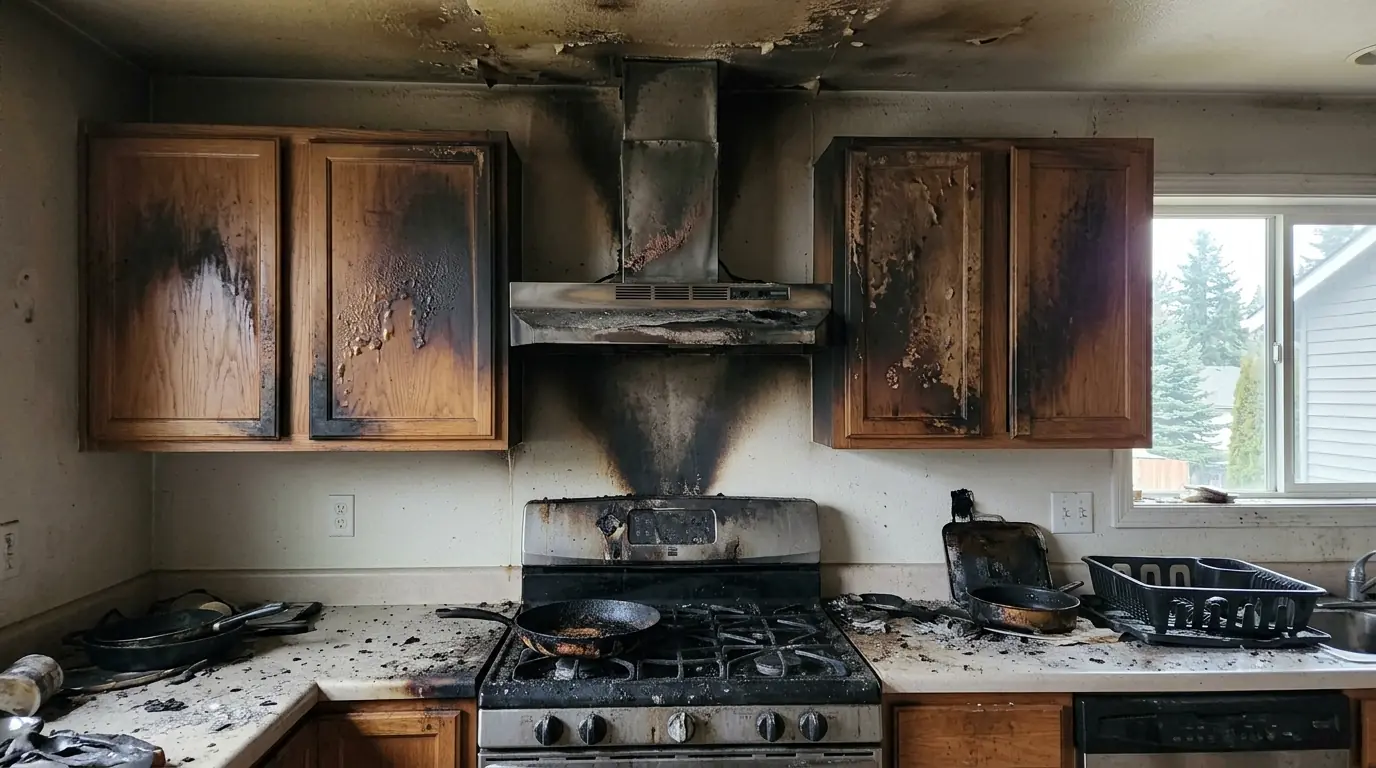
Most house fires we see start in the kitchen. The damage is usually concentrated around the stove, the upper cabinets and the range hood, with a protein smoke residue that spreads through the rest of the house and smells far worse than it looks.
Burned cabinets and drywall come out; the rest of the kitchen is cleaned with methods matched to the residue, and the house is deodorized after the source is gone.
Water left by firefighting
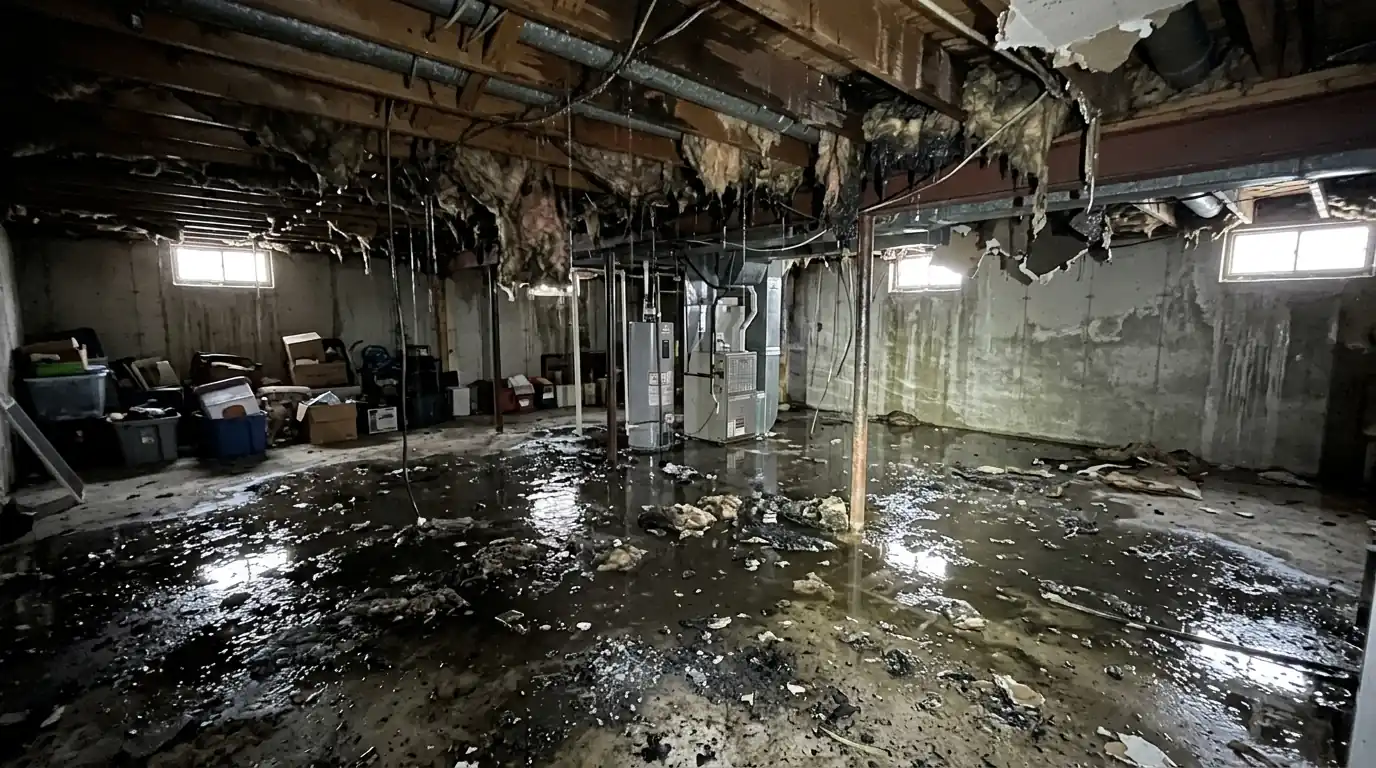
Fire hoses put a lot of water into a house in a short time. It runs down through floors and into the basement, and it is dirty water once it has passed through soot and burned material.
We extract it first, open wet ceilings and walls, and set drying the same way we would after any flood. Without that step, a house that survived the fire can lose its framing to mold; the details are on our structural drying page.
Structural cleaning and rebuild
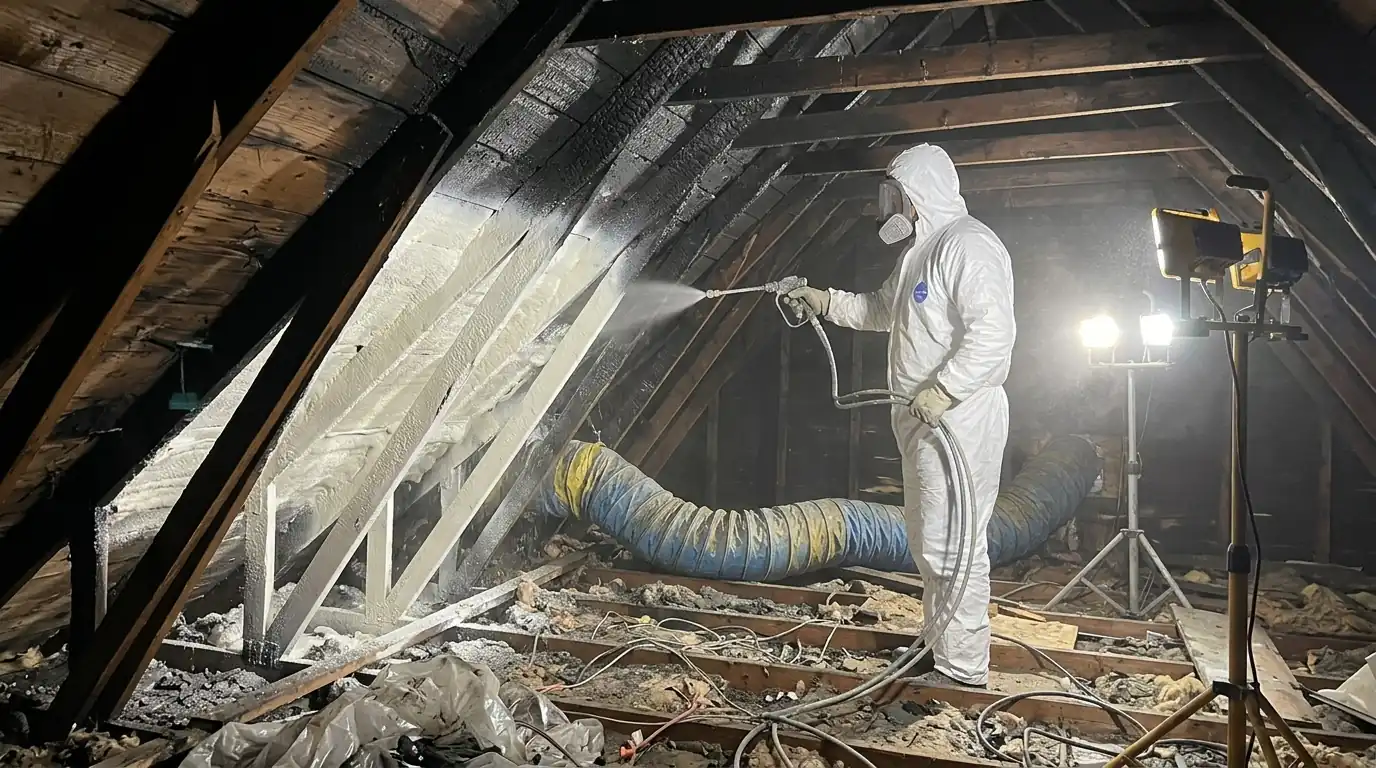
Framing that is charred but sound can often be cleaned, by scraping or abrasive blasting, and sealed against odor rather than replaced. Framing that has lost strength is replaced, which is a judgment made with the adjuster and, where needed, an engineer.
Once the structure is clean and dry, the rebuild covers insulation, drywall, cabinets, flooring and paint.
How long fire restoration takes
Board-up and water removal usually happen in the first day or two. Cleaning a smoke-only area can take days; a rebuild after structural damage takes weeks to months, depending mostly on the scope your insurer approves and on materials. We give you a schedule once the scope is settled.
Fires near the edges of the 2023 burns
The August 2023 Gray Fire near Medical Lake destroyed an estimated 259 structures, and the Oregon Road Fire near Elk destroyed 126 homes and 258 outbuildings. Homes at the edge of a burn are often damaged rather than lost: heat-cracked windows, scorched siding, smoke through every room and water from the firefighting. Most homes in Spokane Valley heat with natural gas, so after any fire the furnace and its filter are part of the cleanup list.
What a fire restoration job includes
- Board-up and roof tarping
- Extraction of firefighting water
- Photo inventory of every room
- Removal of charred materials
- Soot and smoke cleaning
- Odor treatment after cleaning
- Contents pack-out when needed
- Rebuild through final paint
Planning costs for fire damage restoration
Fire jobs vary more than any other restoration work. Published national ranges give a sense of scale; your number comes from the walk-through and the adjuster's scope.
- Size of the burned areaOne room is a different job from a fire that reached the attic.
- Water from firefightingHow much water went in, and where it ran, adds drying work.
- Smoke spreadCleaning every room and closet costs more than one floor.
- Structural repairsReplacing framing, roof decking or subfloor is the largest line on big losses.
- ContentsPack-out, cleaning and storage are priced separately.