Quick answer
Smoke damage cleanup in Spokane Valley starts by identifying the residue, because dry soot from a fast fire, sticky protein film from a kitchen fire and oily soot from a furnace each need a different cleaning method. Washing walls with the wrong product sets the stain; the right order is dry removal, then a matched cleaner, then odor treatment.
Signs smoke damage reached more than one room
Gray shadows on ceilings
Faint gray lines along ceiling joists or corners show where smoke settled.
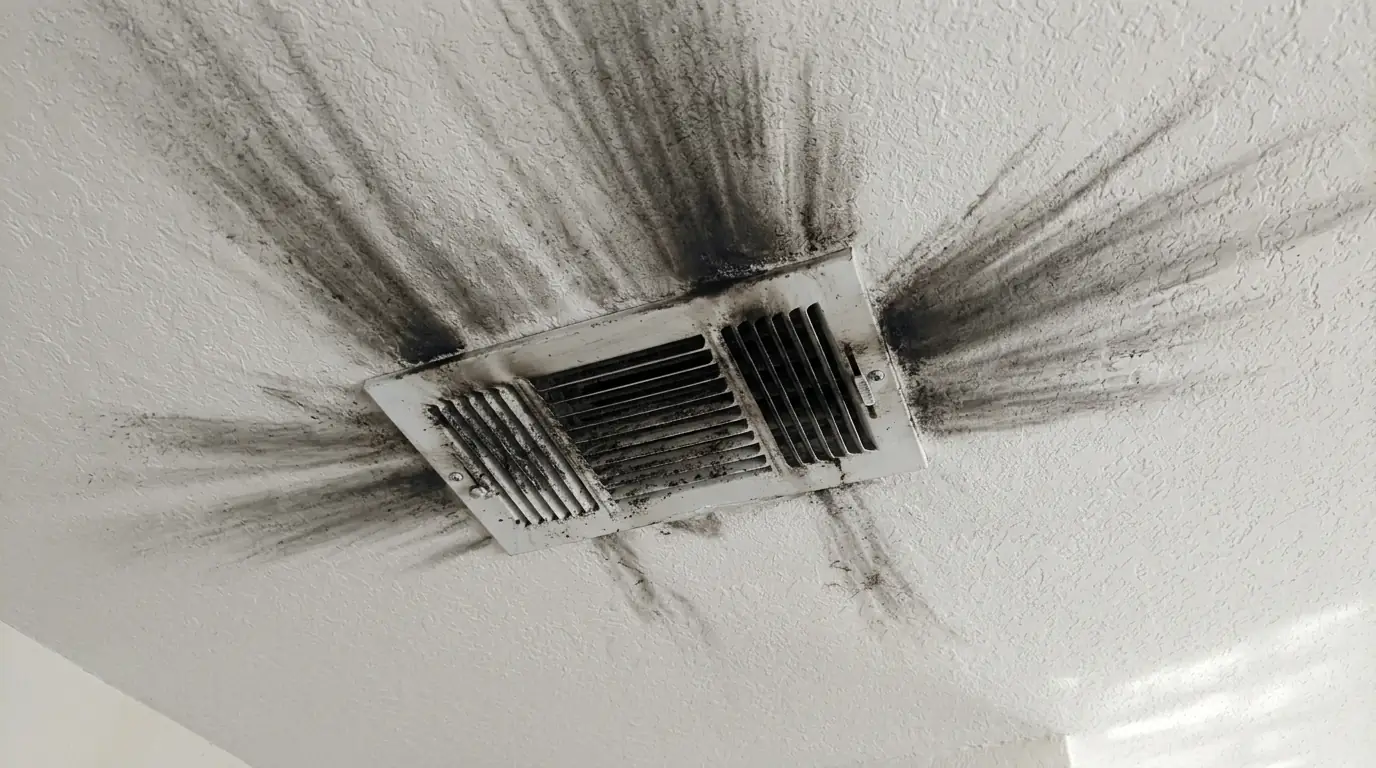
Dark streaks at vents
Soot around supply registers means the furnace moved smoke through the house.
A sticky film on cabinets
Kitchen fires leave a protein residue you can feel before you see it.
Smell inside closets
Closed closets and drawers trap odor long after the room airs out.
Yellowed light fixtures
Discoloration on fixtures and switch plates is residue, not age.
A smell when the heat comes on
If the odor returns with the furnace, the filter and returns need cleaning.
Why smoke residue needs the right method
A small fire can leave a whole house smelling of smoke. Heat pushes smoke up and out, so ceilings, upper walls, closets and the insides of cabinets often carry more residue than the room where the fire started.
Residue comes in a few types. A fast, hot fire leaves dry, powdery soot that wipes off with dry chemical sponges. A pot left on the stove leaves an almost invisible protein film with a strong smell. A smoldering or fuel-related fire leaves oily, smeary soot that spreads if you wipe it with water.
We test a patch in each room before cleaning, then work top down. Odor treatment comes last, after the residue that causes it is gone. If the fire itself damaged framing or drywall, that part of the job moves to fire damage restoration.
How a smoke cleanup is done
- 1
Walk-through and test patches
We identify the residue type in each affected room.
- 2
Dry soot removal
HEPA vacuuming and dry sponges, top down.
- 3
Wet cleaning
Walls, ceilings, cabinets and trim washed with a matched cleaner.
- 4
Contents
Cleaned in place, laundered, or packed out with an inventory.
- 5
Odor treatment and final check
Deodorizing after cleaning, then a walk-through with you.
Soot on walls and ceilings
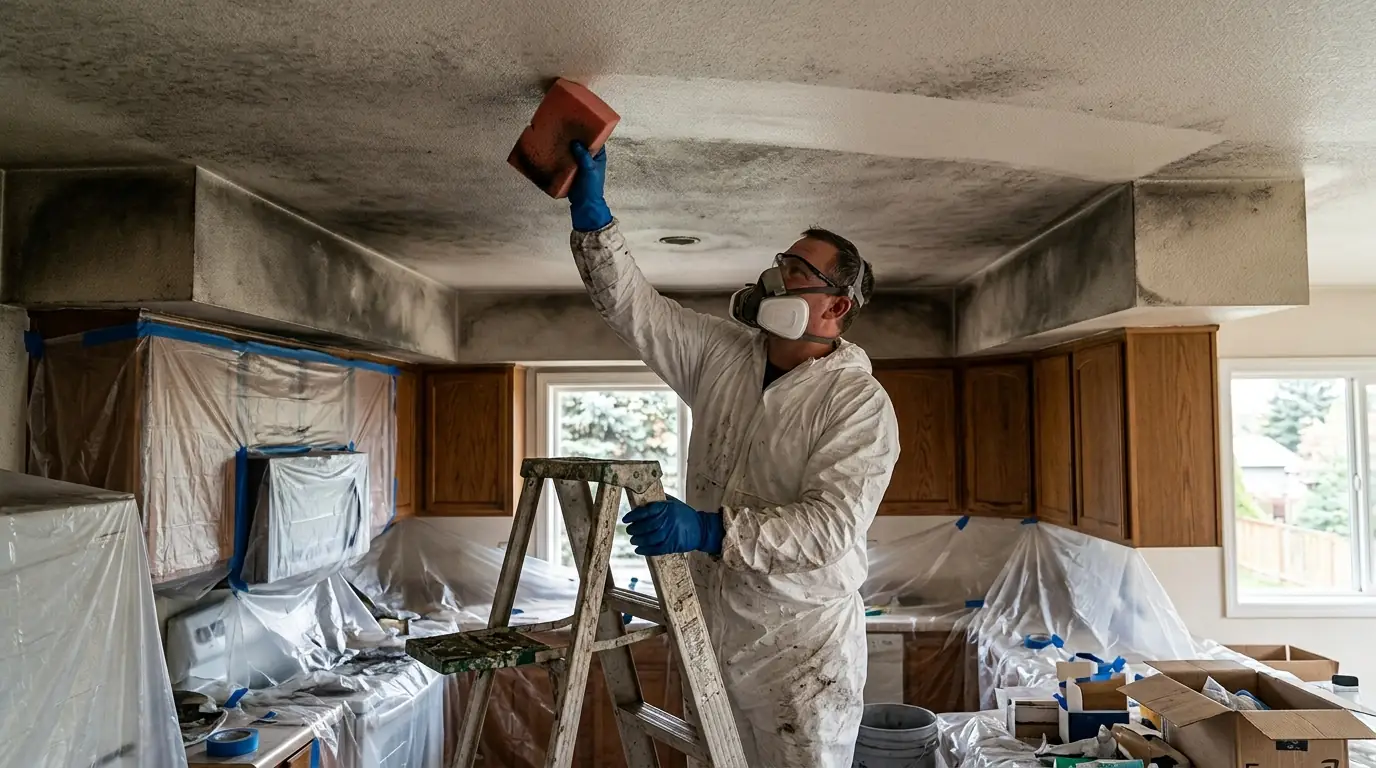
Dry soot comes off first with HEPA vacuums and dry sponges, before any liquid touches the surface. Then we wash with a cleaner matched to the residue and the paint. Flat ceiling paint is the hardest surface; it often cleans well enough to accept a stain-blocking primer and a fresh coat rather than needing replacement.
Textured ceilings trap soot in every bump, and some are better sealed and repainted than scrubbed.
Furnace puff-back
A puff-back happens when a furnace misfires and blows soot out through the vents. It shows up as dark streaks at every supply register and fine black film on walls, curtains and furniture across the house, often far from the furnace itself.
The furnace needs a heating technician before it runs again. We clean the rooms, the registers and the return grilles, and replace the filter so the system does not spread the residue a second time.
Smoke residue on contents
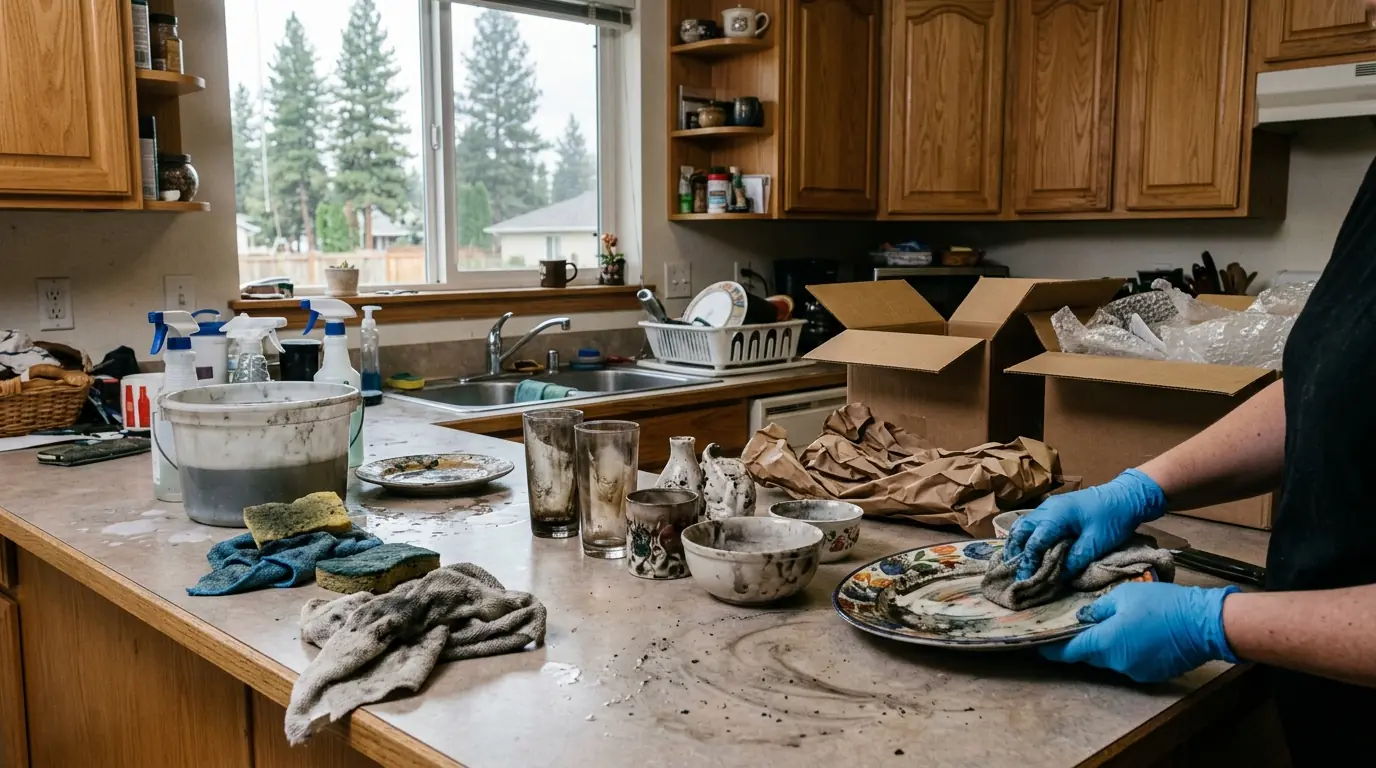
Hard items such as dishes, decor and most furniture clean in place. Clothing, bedding and drapes usually come back with laundering or dry cleaning. Electronics should not be powered on until they are checked, because soot is acidic and can damage circuit boards.
For larger jobs we pack contents out, clean them off site and inventory every box, through our contents pack-out service.
Smoke work around Spokane Valley and the West Plains
Natural gas is the most common heating fuel in Spokane Valley and in Spokane, and in a house with a gas forced-air furnace the blower keeps pulling air through the returns during and after a fire. That is why soot from a kitchen fire so often ends up in the filter and on the wall above every return grille. Homes near the 2023 Gray Fire around Medical Lake, where an estimated 259 structures were destroyed, took smoke from outside as well.
Clean, seal or replace: what happens to smoke-damaged surfaces
Most surfaces can be cleaned. Some are cheaper to seal and repaint, and a few need replacing.
| Surface | Usually | When it changes |
|---|---|---|
| Painted walls | Clean, then repaint if staining remains | Heat-blistered paint needs scraping and repainting |
| Textured ceilings | Seal and repaint | Water-damaged texture from firefighting comes down |
| Kitchen cabinets | Clean inside and out | Warped or heat-damaged boxes are replaced |
| Carpet | Clean and deodorize | Pad that holds odor is replaced |
Planning costs for smoke and soot cleanup
Smoke cleanup is usually part of a minor fire restoration estimate. The published national range below is a planning figure; a smoke-only job with no structural damage often sits at the lower end.
- Residue typeProtein and oily soot take more labor and more product than dry soot.
- How far the smoke traveledOne kitchen is a different job from every room and closet in the house.
- Ceilings and texturesPopcorn and knockdown ceilings may need sealing and repainting instead of cleaning.
- ContentsPacking out soft goods and electronics adds a separate line.
- Odor treatmentPersistent odor may need deodorizing after cleaning, and sometimes sealing.