Quick answer
A water damage inspection in Spokane Valley maps hidden moisture with pin and pinless meters and a thermal camera, compares readings with dry reference materials in the same house, and documents the results with photos. It answers three questions: where the water went, whether it is still wet, and what needs drying or repair.
What a moisture inspection tells you
Water moves sideways and down inside a house, along studs, under flooring and across ceilings. A small visible stain can sit on top of a much larger wet area, and a dry-looking floor can hide a wet subfloor.
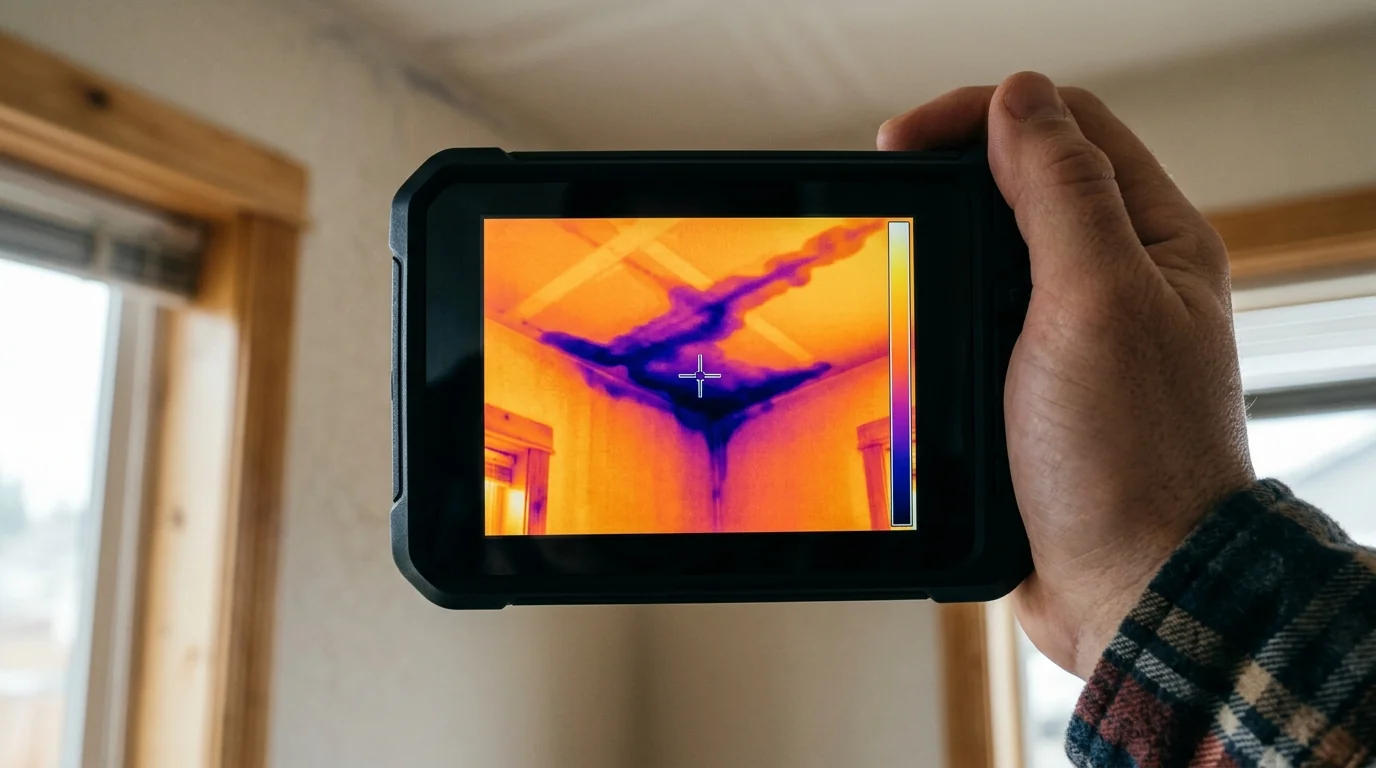
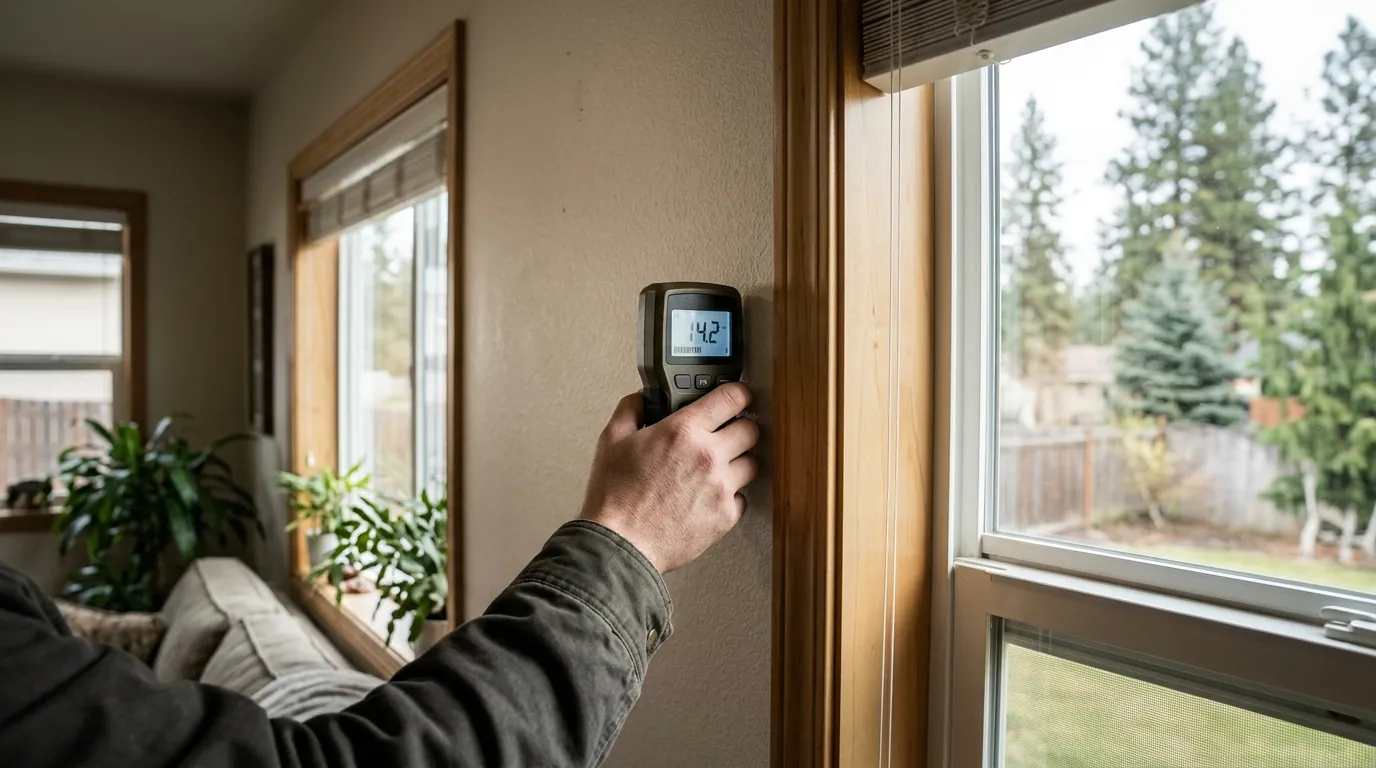
Moisture meters read the water content of wood, drywall and concrete. A thermal camera shows temperature differences, which often reveal wet areas because evaporating water cools a surface. Neither is perfect alone; together, and checked against dry materials elsewhere, they give a reliable map.
If the inspection finds active water, the next step is usually drying. If you suspect mold, a mold inspection adds sampling.
What an inspection includes
- Questions about the leak and its history
- Thermal imaging of affected rooms
- Pin and pinless meter readings
- Dry reference readings for each material
- Attic, crawl space and basement checks where relevant
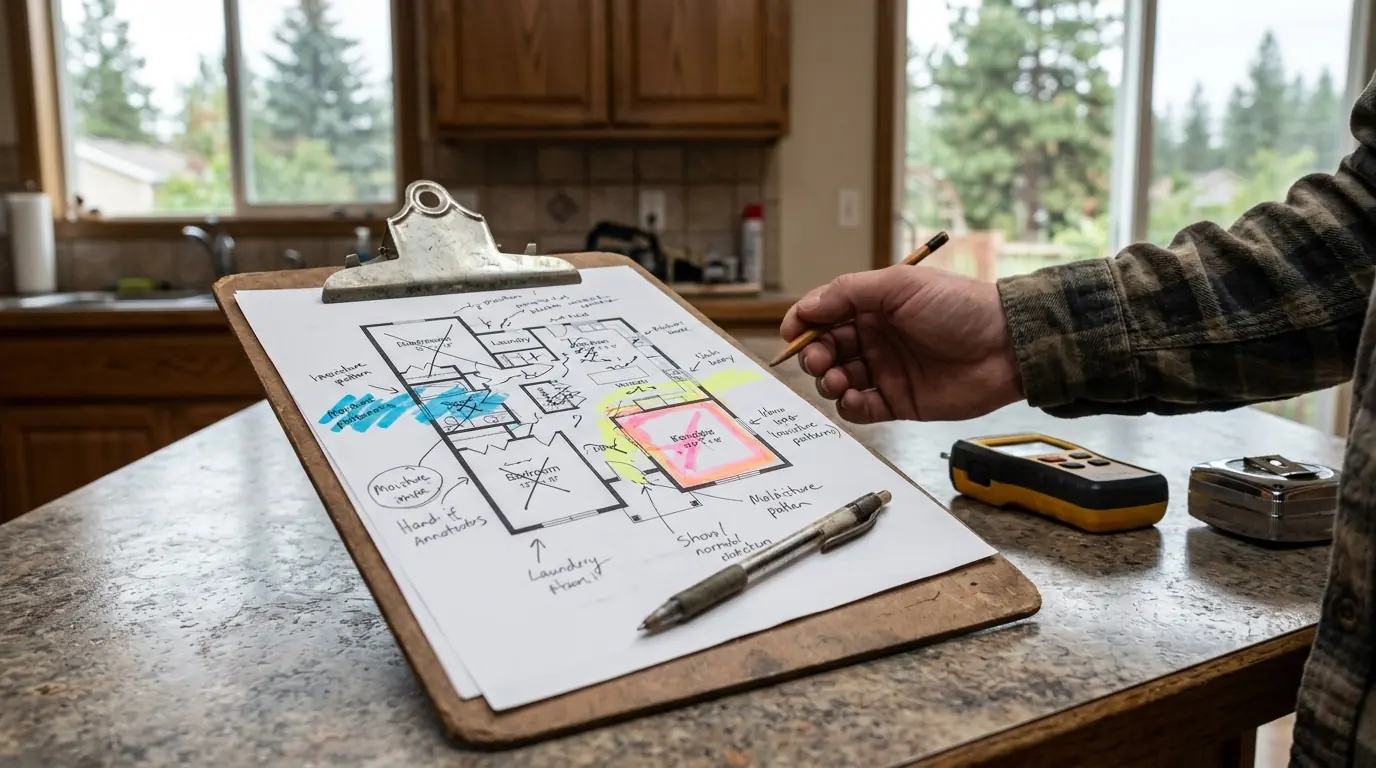
- A moisture map on a floor plan
- Photos of every finding
- Plain recommendations for next steps
Moisture mapping
We read walls, floors and ceilings in a grid around the affected area until we reach dry readings on every side, and mark the boundary on a floor plan with photos.
The map shows exactly what is wet, so removal and drying are limited to what needs it.
Thermal imaging for hidden leaks
A thermal camera scans walls and ceilings for cool patterns that suggest moisture. Every suspect area is then confirmed with a meter, because temperature differences can also come from drafts or insulation gaps.
This is often how slow leaks in walls and ceilings are found without opening anything.
Pre-purchase and post-repair moisture checks
Buyers use an inspection to find out whether old stains are dry and whether a past leak was dried properly. Owners use it after a repair to confirm the problem is gone before closing a wall or laying new flooring.
The report is written for whoever ordered it.
Buying in fast-growing towns and checking old leaks
Post Falls and Rathdrum each grew about 10% from 2020 to 2021, and Kootenai County reached an estimated 183,578 people in July 2022, so a lot of homes have changed hands quickly. Standard homeowners policies commonly treat long-running leaks as maintenance rather than covered damage, which is one reason buyers ask us to check old stains and soft spots before closing rather than after.
How an inspection visit goes
- 1
History
What happened, when and what was done.
- 2
Thermal scan
Walls, ceilings and floors scanned for cool patterns.
- 3
Meter readings
Suspect areas confirmed and dry references taken.
- 4
Map
Wet areas marked on a floor plan with photos.
- 5
Report
What is wet, what is dry and what to do next.
What decides the cost of an inspection
Inspection pricing depends on the size of the area and the report you need, so we quote it on the phone.
- Area to checkOne room or a whole house.
- AccessAttics, crawl spaces and finished basements take longer.
- ReportA written report with a moisture map and photos.
- Follow-up checksRepeat readings after drying or repair.
- Mold samplingLab samples, if needed, are a separate line.
Which inspection do you need?
The scope changes with why you are asking.
| Situation | Inspection | What you get |
|---|---|---|
| Leak just happened | Moisture mapping of the affected area | What is wet and how far it spread |
| Stain or smell, no known leak | Thermal scan plus meter confirmation | Whether there is an active leak and where |
| Buying a home | Pre-purchase moisture check | Whether past water damage is dry and repaired |
| After a repair | Post-repair verification | Confirmation before walls or floors are closed |