Quick answer
Toilet overflow cleanup in Spokane Valley is handled as contaminated water: carpet pad, baseboard and any drywall the water wicked into are removed rather than dried, and hard surfaces are cleaned and sanitized before drying starts. If the overflow went through the floor, the ceiling below is opened and dried the same way.
Signs an old overflow left damage behind
A brown ring on the ceiling below
Staining under a bathroom means water got through the floor at some point.
A toilet that rocks
Movement at the base often means the subfloor around the flange is soft.
A spongy floor at the base
Soft vinyl or flexing tile near the toilet points to wet subfloor.
Odor that returns after cleaning
Something under the floor or behind the baseboard is still holding water.
Water at a light fixture below
Never use the fixture until the power is off and it has been checked.
Cracked or loose tile at the toilet
Movement in the floor shows up in the grout first.
Why an overflow is handled differently from a clean leak
Restoration work sorts water by contamination. Clean water from a supply line can often be dried in place. Water from a toilet bowl, with or without visible waste, is handled as contaminated because of what it can carry, and that classification decides what stays and what goes.
A supply line that bursts behind the toilet is a different case. That water is clean when it starts, and we treat it like any other bathroom leak if we reach it quickly.
The overflows that cause real damage are usually upstairs ones, because the water does not stay where it landed. It follows the toilet flange and the seams in the subfloor down into the ceiling below.
How an overflow cleanup runs
- 1
Stop the flow and isolate
We close the supply valve, shut power to wet fixtures and keep the area closed off.
- 2
Remove contaminated materials
Pad, baseboard, wet drywall and anything too absorbent to sanitize comes out.
- 3
Clean and sanitize
Floors, framing and fixtures are cleaned and treated.
- 4
Dry and verify
Equipment runs until readings match unaffected areas.
- 5
Rebuild
Ceiling, trim and flooring go back, and the toilet is reset on a dry floor.
Overflow through the ceiling below
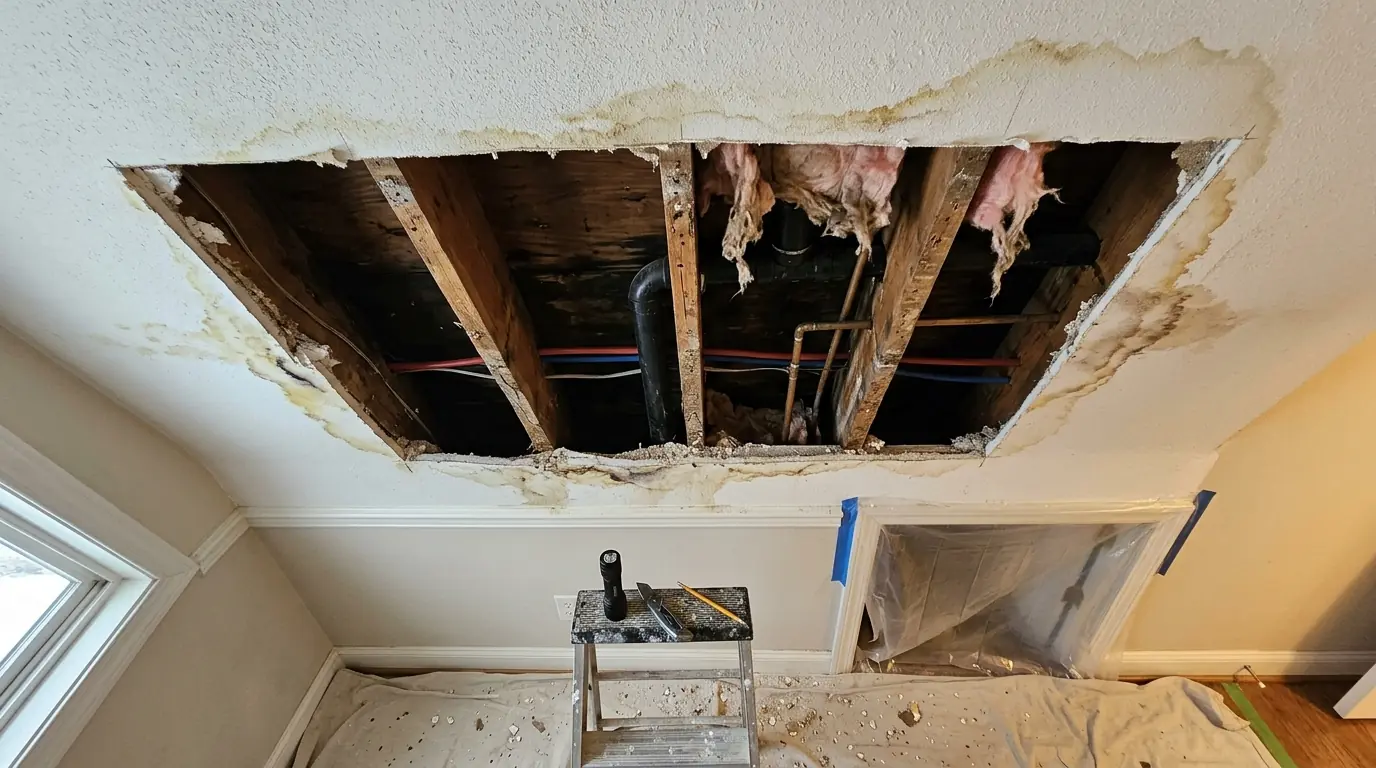
Upstairs, the water finds the gaps around the flange and between subfloor sheets, soaks the top of the ceiling below, and often shows up as a stain around a light fixture. Because it is contaminated, a stained ceiling section is cut out rather than dried.
We kill power to any fixture involved, open the ceiling, dry the joist bay and subfloor from below, and clean the framing before anything is closed up again with new drywall.
Overflow onto carpet
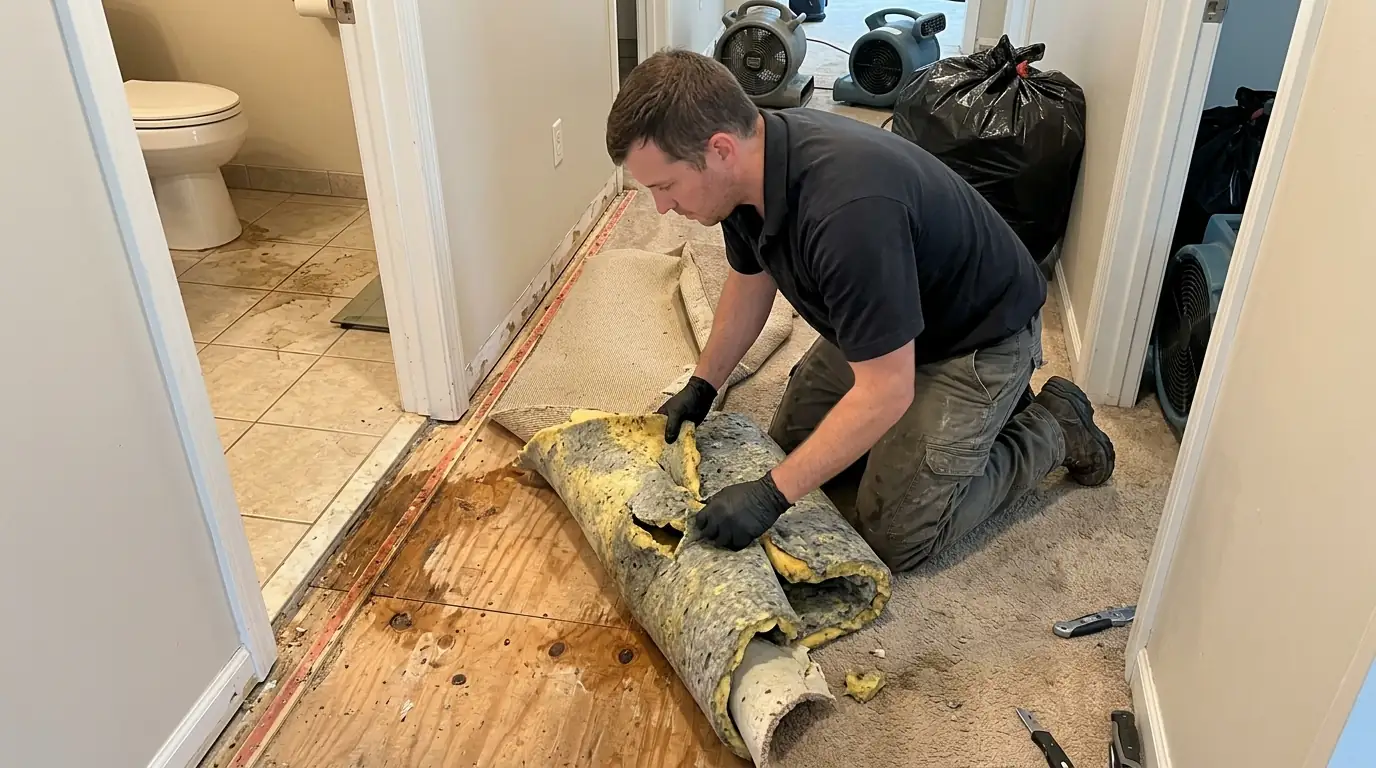
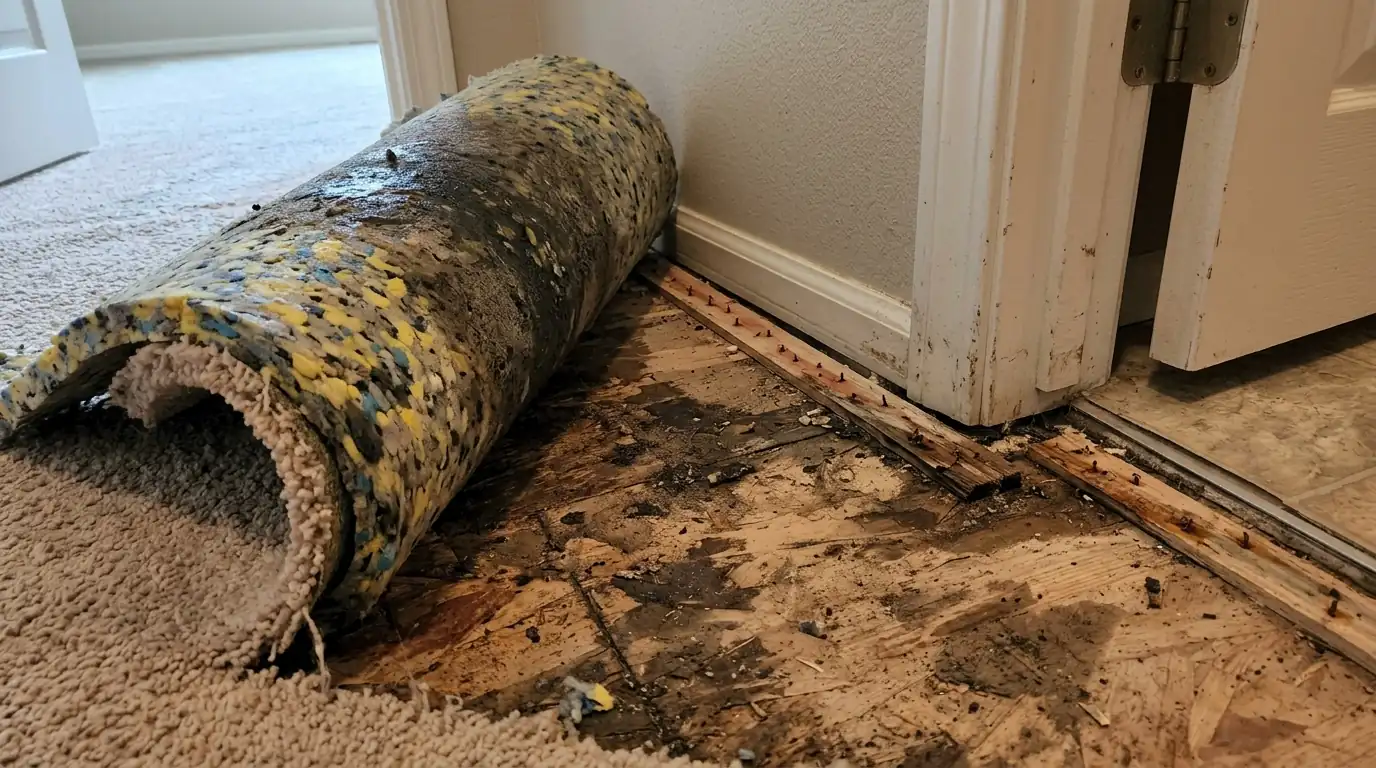
When the water reaches carpet, the pad underneath is removed and thrown out; it is too absorbent to sanitize reliably. The carpet itself is usually discarded too when the water sat in it, especially in a hallway or bathroom doorway.
Wet tack strip and baseboard come out, the subfloor is cleaned and treated, and new pad goes down only after the floor reads dry.
Repeat overflows
One overflow is an accident. Repeated ones usually mean a partial blockage in the drain line or a venting problem, and sometimes a main line backup that shows up first at the lowest toilet in the house.
We clean up and tell you what we saw, but the line itself needs a plumber with a camera. If water also came up from a floor drain or a tub, treat it as a sewage backup.
Older Spokane ceilings under upstairs bathrooms
Nearly a quarter of the City of Spokane's homes were built in 1939 or earlier, and houses of that age commonly have plaster on wood lath rather than drywall. Plaster holds contaminated water longer and gets heavy when it is soaked, so after an upstairs overflow in an older home we check the ceiling below for sag before anyone stands under it, and we plan to replace that section rather than patch it.
What to do yourself in the first few minutes
Safe to do yourself
- Close the valve behind the toilet by turning it clockwise
- Keep children and pets out of the area
- Bag bath mats and towels that got wet
- Turn off the breaker for a ceiling light below if water reached it, if the panel is dry
Better left to us
- Water that reached carpet, a hallway or a bedroom
- Any water through the ceiling below
- An overflow with visible waste
- A toilet that keeps overflowing
A small overflow onto tile, mopped up and disinfected within the hour, often needs nothing more. Anything that soaked into a porous material does.
Planning costs for overflow cleanup
Overflow water is priced as contaminated water. If the bowl held no waste, it may be classed as gray water rather than black water, which costs less per square foot.
- Whether it reached a ceiling belowOpening, drying and rebuilding a ceiling is the biggest single add.
- Carpet versus hard flooringCarpet and pad come out; tile and sheet vinyl usually clean in place.
- Time before cleanupThe longer it sits, the more material has to go.
- Area affectedPer-square-foot pricing scales with how far the water spread.
- RebuildCeiling, baseboard, pad and flooring are replaced once everything reads dry.