Quick answer
Attic mold remediation in Spokane Valley removes growth from the roof sheathing and rafters by HEPA vacuuming, scrubbing or abrasive cleaning, replaces insulation that is wet or contaminated, and corrects the moisture source: bath fans venting into the attic, blocked soffit vents or air leaks from the house. Without that fix, the mold usually returns the next cold season.
Why attics in this climate grow mold
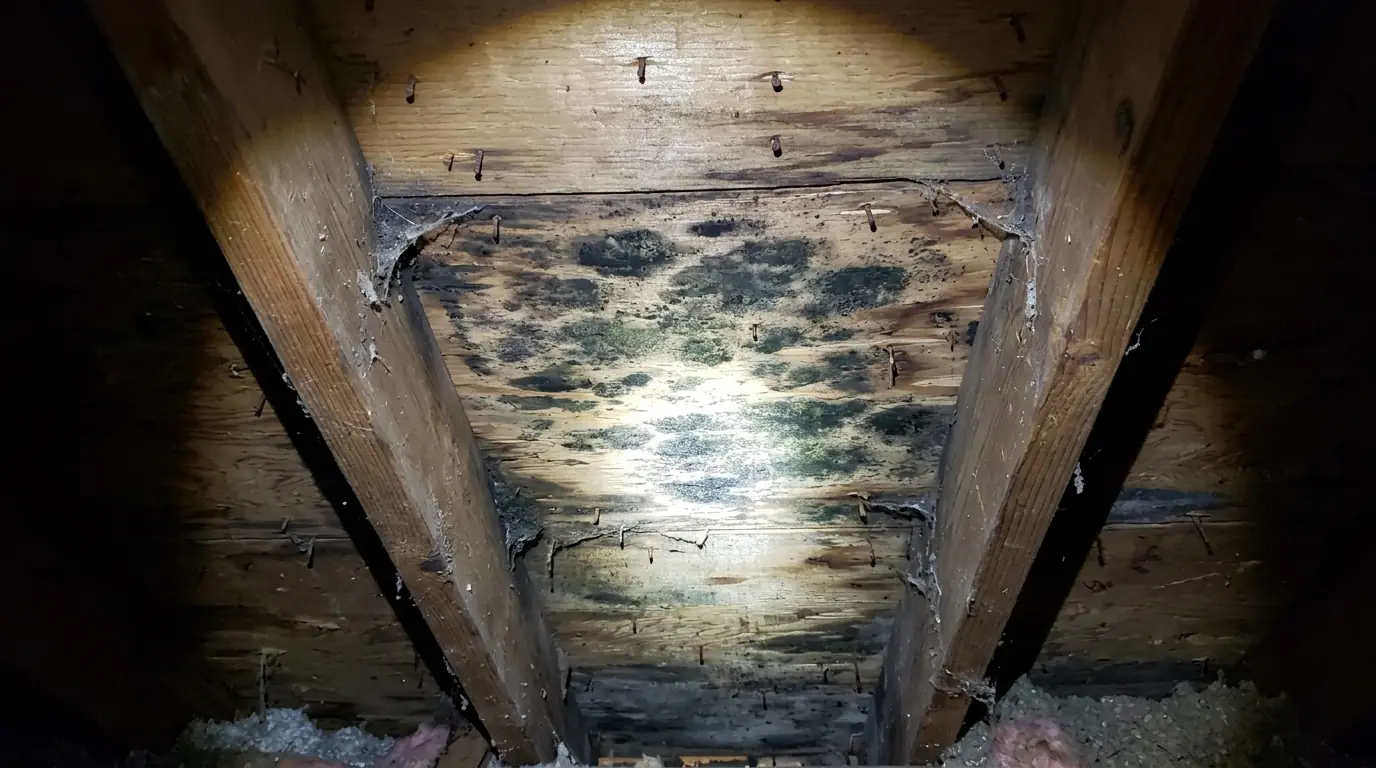
In winter, warm indoor air carries moisture. When it leaks into the attic through light fixtures, attic hatches, plumbing chases or a bath fan that vents into the attic, it meets the cold underside of the roof deck and condenses. On the coldest nights it shows up as frost on the nail tips.
When the frost melts, the sheathing gets wet again and again through the winter, and mold grows in dark patches between the rafters, usually on the north side and near the eaves where ventilation is weakest.
Roof leaks and ice dams can also cause attic mold, but the pattern is different: localized and below a leak point. For those, see ice dam water damage.
Planning costs for attic mold remediation
Attic jobs vary with access and how much of the deck is affected. This is the published national range; ventilation fixes are a separate line.
- Area with growthA few rafter bays cost less than a whole attic.
- AccessLow-pitch roofs and small hatches slow the work.
- InsulationWet or contaminated insulation is removed and replaced.
- Moisture sourceRerouting a bath fan or sealing air leaks is part of a lasting fix.
- Sheathing repairsDamaged decking is a roofing repair.
Ways to clean attic mold
The right method depends on how much growth there is and how the attic is laid out.
| Method | What it involves | When it fits |
|---|---|---|
| HEPA vacuum and wipe | Removes surface growth by hand | Light growth in a small area |
| Scrubbing | Cleaner and brushes on the wood | Moderate growth with good access |
| Abrasive cleaning | Media blasting the surface | Heavy growth across large areas |
| Sealing after cleaning | Encapsulating coating on the wood | Staining that remains after cleaning |
Roof sheathing mold
Mold on sheathing is usually surface growth on the wood. It is cleaned rather than replaced: HEPA vacuuming, scrubbing, or abrasive cleaning on heavy growth, followed by a final HEPA pass.
Sheathing that has softened or delaminated from long-term moisture is replaced as a roofing repair.
Bath fans venting into the attic
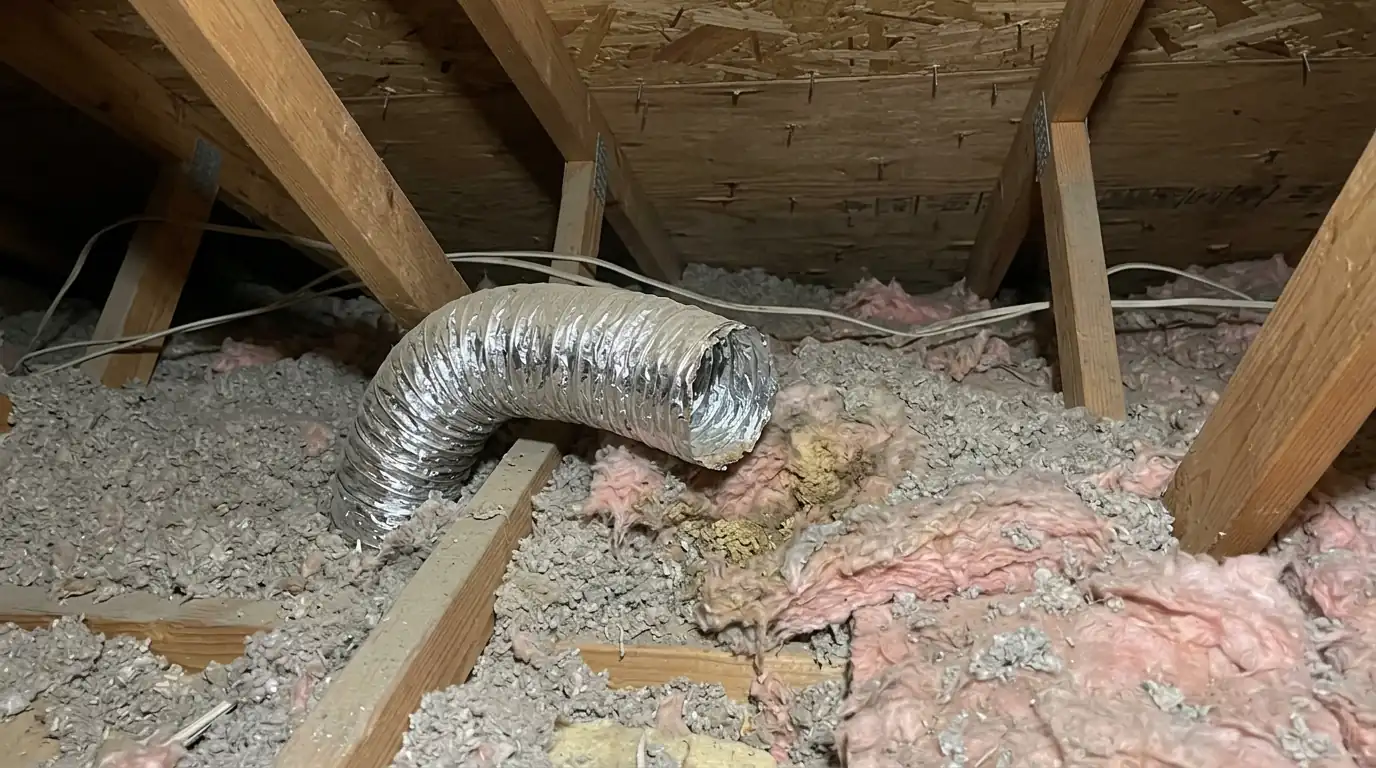
A bath fan that blows into the attic, or into a soffit right next to an intake vent, puts gallons of moist air into the attic every week. It is one of the most common causes of attic mold we find.
The fix is ducting the fan through the roof or a wall cap with an insulated duct. We point it out and coordinate the change as part of the job.
Attic ventilation fixes
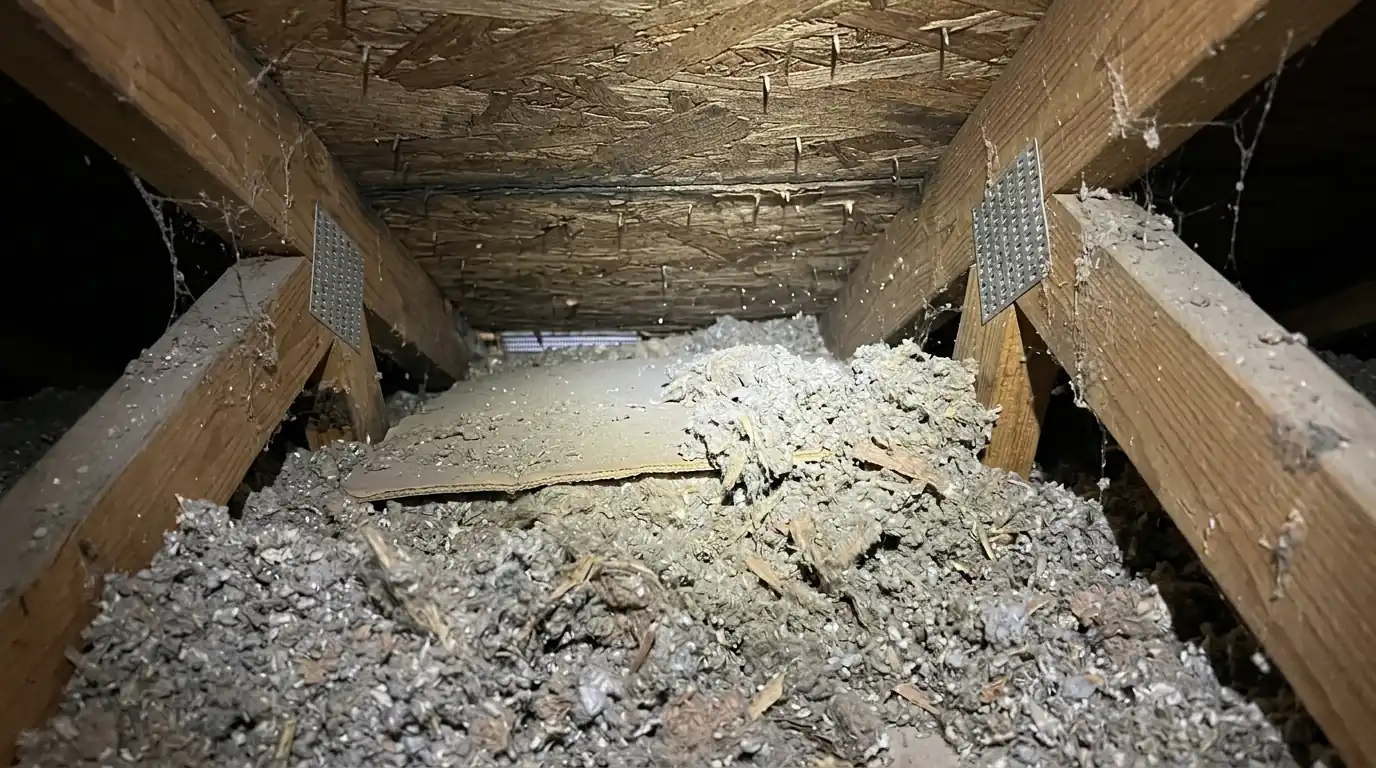
Soffit vents blocked by insulation, too few roof vents or a disconnected baffle all leave the attic air still and damp. We check intake and exhaust and recommend what to add or clear.
Sealing air leaks from the house below often matters more than adding vents. Wet or contaminated insulation is replaced through our insulation removal and replacement process.
Long winters and attic moisture in Spokane
Spokane's average winter brings under 50 inches of snow, but some years go far past it: the 2008-09 winter reached 93.6 inches at the airport. A long cold season keeps the roof deck cold for months, which is exactly when moist air leaking from the house condenses on the sheathing. The attics we treat for mold are rarely the snowiest roofs; they are the ones where warm air has been leaking up all winter.
How we remediate an attic
- 1
Inspect and find the cause
Readings, photos and a look at fans, vents and air leaks.
- 2
Contain and set negative air
Keeps spores and dust out of the living space.
- 3
Clean the deck and framing
HEPA vacuum, scrub or abrasive clean, then HEPA again.
- 4
Insulation
Wet or contaminated insulation removed and replaced.
- 5
Fix the source
Fan ducting, vent clearing and air sealing coordinated.
Signs of mold or moisture in the attic
Dark patches on the sheathing
Usually between rafters, often on the north side.
Frost on nail tips in winter
A clear sign of warm moist air reaching the roof deck.
A musty smell at the attic hatch
Odor is often the first thing people notice.
Damp or matted insulation
Insulation that is wet or compressed near the eaves.
Rusty nail heads
Repeated condensation rusts the nails in the deck.
A bath fan with no outside vent
If you cannot find where it exhausts, it may be into the attic.