Quick answer
Commercial water damage restoration in Spokane Valley follows the same drying science as a house, scaled up: extraction, moisture mapping, and drying equipment sized to the space, but planned around the business. We stage work so unaffected areas stay open, schedule noisy work after hours when needed, and document for owners, tenants and insurers separately.
What changes when the building is a business
In a commercial space the water often comes from the same sources as at home, such as a supply line, a water heater, a roof drain or a sprinkler head, but the stakes are different. Downtime costs money, customers and employees have to be kept safe, and there is usually more than one party involved.
Commercial buildings also hide water differently. Carpet tile over concrete, suspended ceilings, demountable walls and long runs of base cabinets each need their own approach to drying.
For sprinkler discharges in particular, see our fire sprinkler water damage page. Multi-family buildings are covered on our apartment page.
How a commercial water job runs
- 1
Stop and secure
Source stopped, hazards marked, areas closed off.
- 2
Plan around the business
Zones and hours agreed with you.
- 3
Extract and map
Water removed, moisture mapped across the space.
- 4
Dry in zones
Equipment staged so dry areas stay open.
- 5
Records and repair
Reports for owners, tenants and insurers; then repairs.
Offices and retail
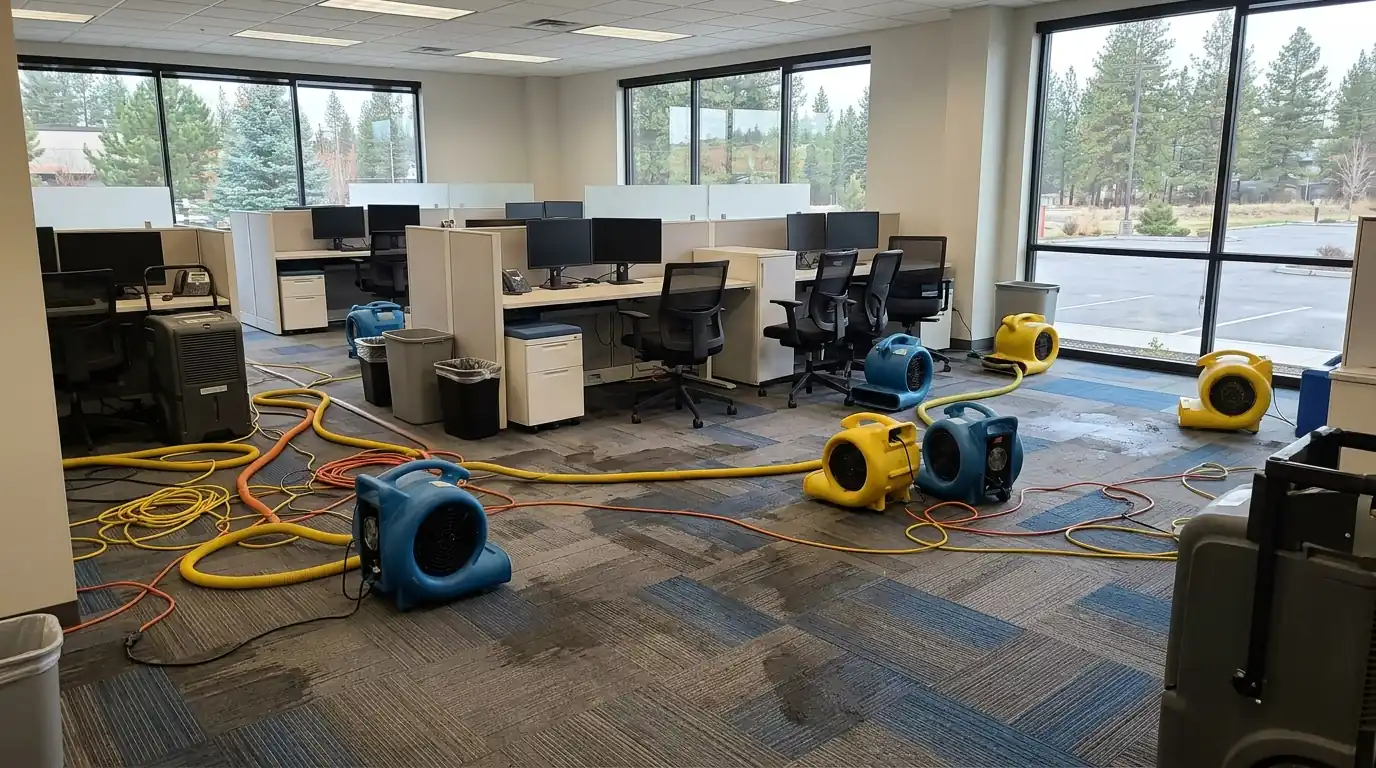
Offices usually have carpet tile, drywall partitions and ceiling tile. Carpet tile can often be lifted, dried and relaid; wet ceiling tiles are replaced. We work room by room so staff can keep using dry areas.
In retail spaces, stock is moved or protected first, then the floor and walls are dried.
Restaurants
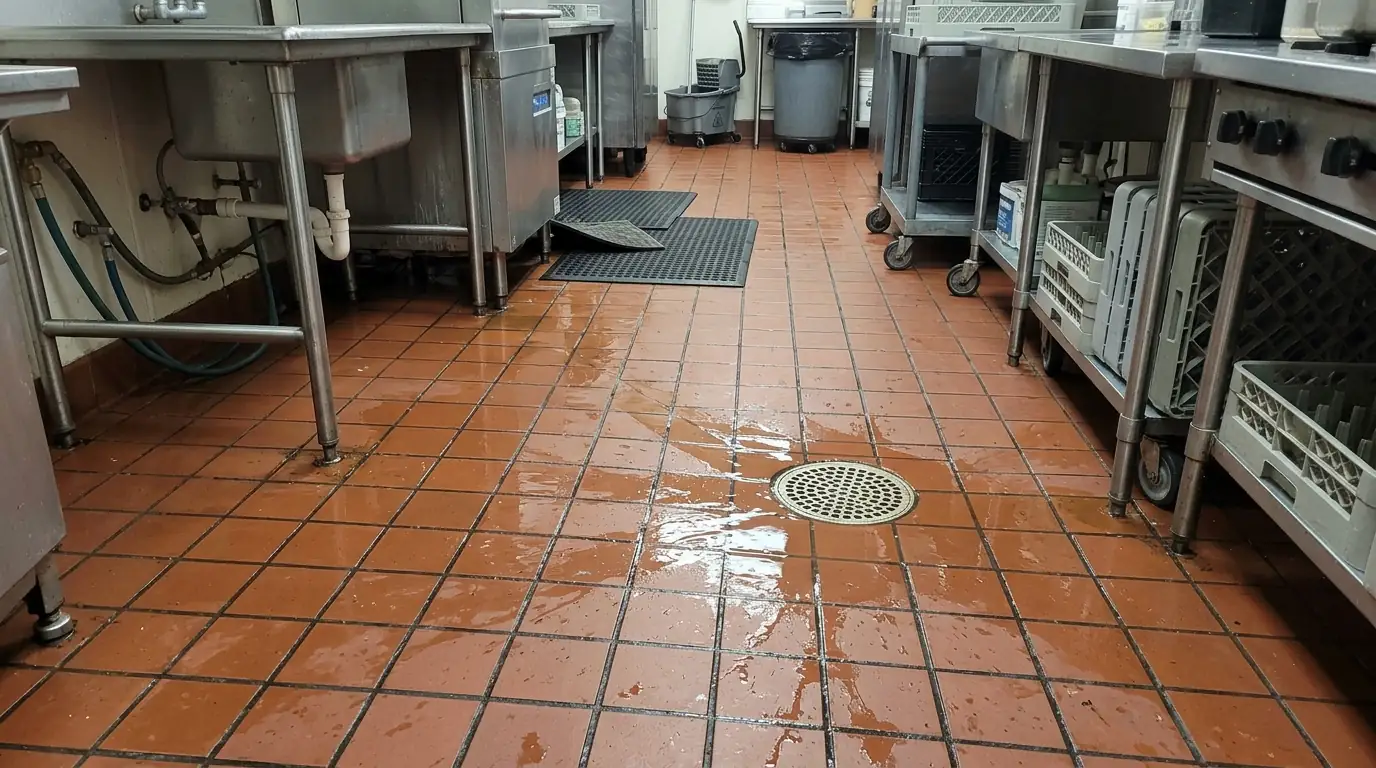
Kitchens have floor drains, heavy equipment and walk-in coolers, and water gets under all of it. Food safety rules mean contaminated water, such as a drain backup, is handled as black water.
We coordinate with you on what needs cleaning or inspection before the kitchen reopens.
Warehouses and shops
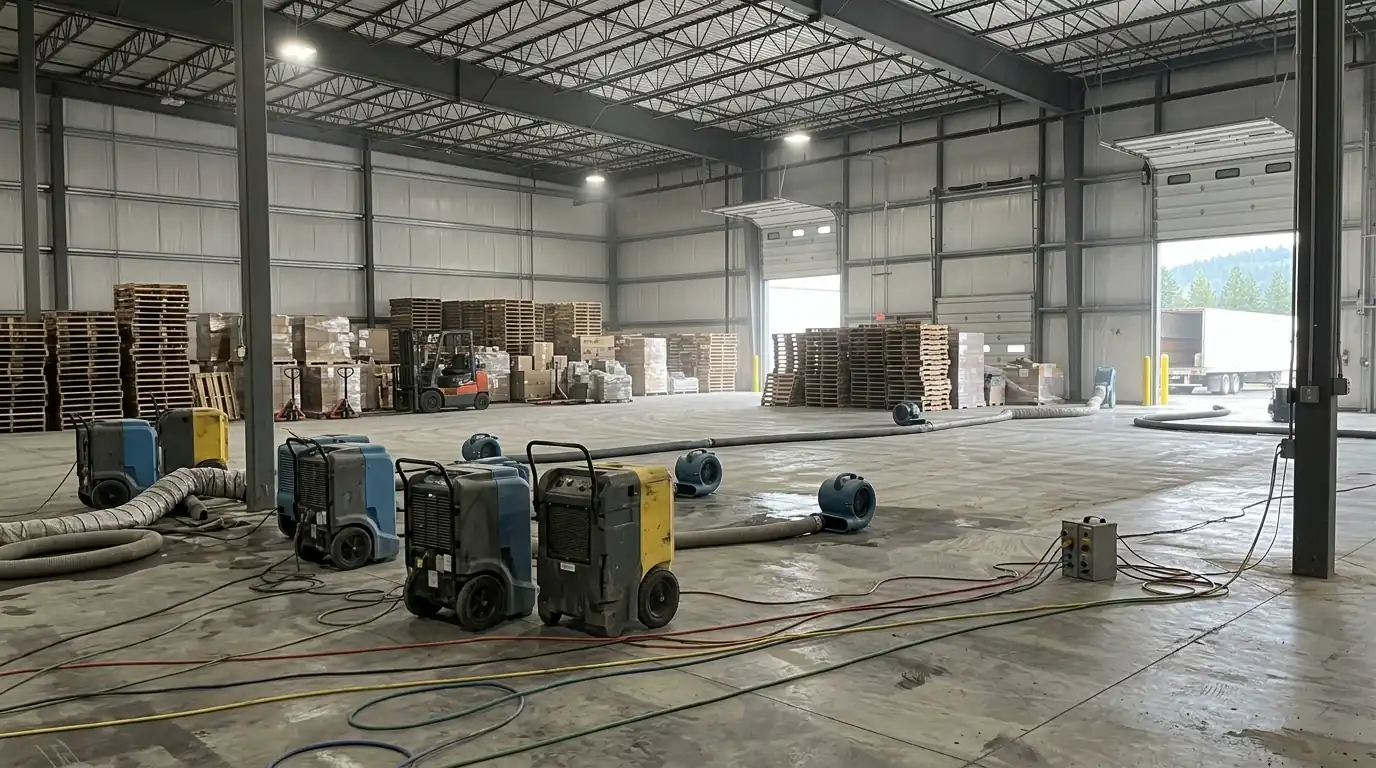
Large open spaces dry differently from houses: the concrete slab holds water, and the volume of air needs bigger dehumidifiers. Pallets, cardboard and stock are moved off wet areas first.
We can dry in zones so loading and shipping areas keep working.
How long commercial drying takes
Most commercial spaces dry in three to five days once the water is out, longer where it soaked into a slab or between floors. Staging the work in zones often lets parts of the business reopen sooner.
Regional storms and business interruption around Spokane
When the November 17, 2015 windstorm cut power to about 180,000 Avista customers across Spokane and Spokane Valley, businesses dealt with the same roofs, windows and power losses as homes, plus the clock of lost trading days. In an event like that, the commercial jobs that reopen fastest are the ones where the owner can show exactly what got wet, when, and what was done about it.
What managers can do while we are on the way
Do now, if it is safe
- Shut off the water at the source or the main
- Keep staff and customers away from wet floors and electrical equipment
- Move stock, files and electronics off the floor
- Notify the property manager or landlord
Leave for us
- Lifting carpet tile and ceiling tile
- Drying slabs and partition walls
- Handling drain or sewer water
- Reports for each party and insurer
Planning costs for commercial water damage
Commercial jobs are priced on area, water category and the materials involved. The national range below is for a typical water job; larger spaces scale from there.
- Area and ceiling heightLarge open spaces need more and bigger equipment.
- Water categoryDrain or sewer water changes what must be removed.
- MaterialsCarpet tile, ceiling tile and partitions each have their own costs.
- After-hours workWorking around business hours can affect scheduling.
- Contents and stockMoving and protecting stock adds labor.