Quick answer
Water damage insurance claim help in Spokane Valley means documenting the cause, the extent and the drying work well enough that an adjuster can decide without guessing. We record the failed part, photos of every room before removal, daily moisture readings and a line-item repair scope, and we walk the adjuster through it; the coverage decision stays with your insurer.
What a water damage claim usually turns on
Most water damage claims turn on two questions: what caused it, and how much of the damage comes from that cause. Sudden events, such as a burst pipe or a failed supply line, are commonly covered. Slow leaks, groundwater seepage and sewer backups often are not, unless the policy carries flood coverage or a sewer backup endorsement.
That makes documentation the thing that matters most in the first hours. Once wet drywall and carpet are in a dumpster, the only record of them is what someone photographed and measured before removal.
We are not public adjusters and we do not negotiate your settlement. We give you and your insurer an accurate record of the loss and the work, and we explain what each line of the scope is for.
What drives the size of a water claim
Your deductible and limits are set by your policy. What follows drives the size of the loss itself, with a national planning range for a typical water job.
- Water categoryClean, gray or black water changes what must be thrown out and how it is cleaned.
- Area and rooms affectedMore square footage means more removal, more equipment and more rebuild.
- Removed versus dried materialsMaterials that can be dried in place cost far less than ones that are replaced.
- ContentsFurniture and belongings that need cleaning, storage or replacement add a separate line.
- Rebuild scopeDrywall, flooring, cabinets and paint make up much of a larger claim.
Your part of the claim, and ours
What you handle
- Call your insurer or agent to open the claim
- Take your own photos or video before cleanup, if it is safe
- Keep receipts for hotel stays, meals and emergency purchases
- Write down when you found the water and what you did first
What we handle
- Moisture readings and drying logs
- Photos of materials before removal
- A repair scope for the rebuild
- Answering the adjuster's technical questions
Photo and moisture documentation
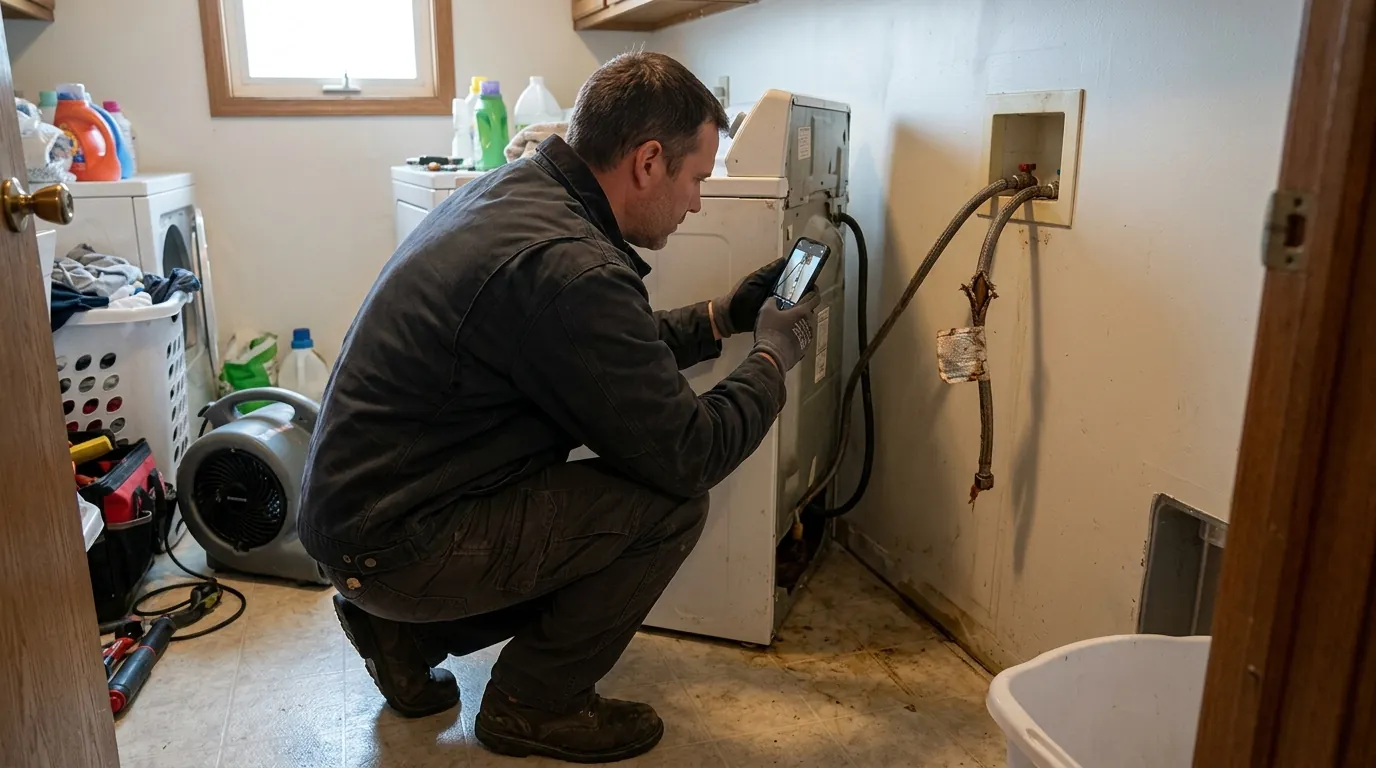
Before anything comes out, we photograph each room wide and close, the source of the water, and the failed part with its label so the make, model and age are on record. The part goes in a bag with your name on it; adjusters and manufacturers sometimes ask to see it.
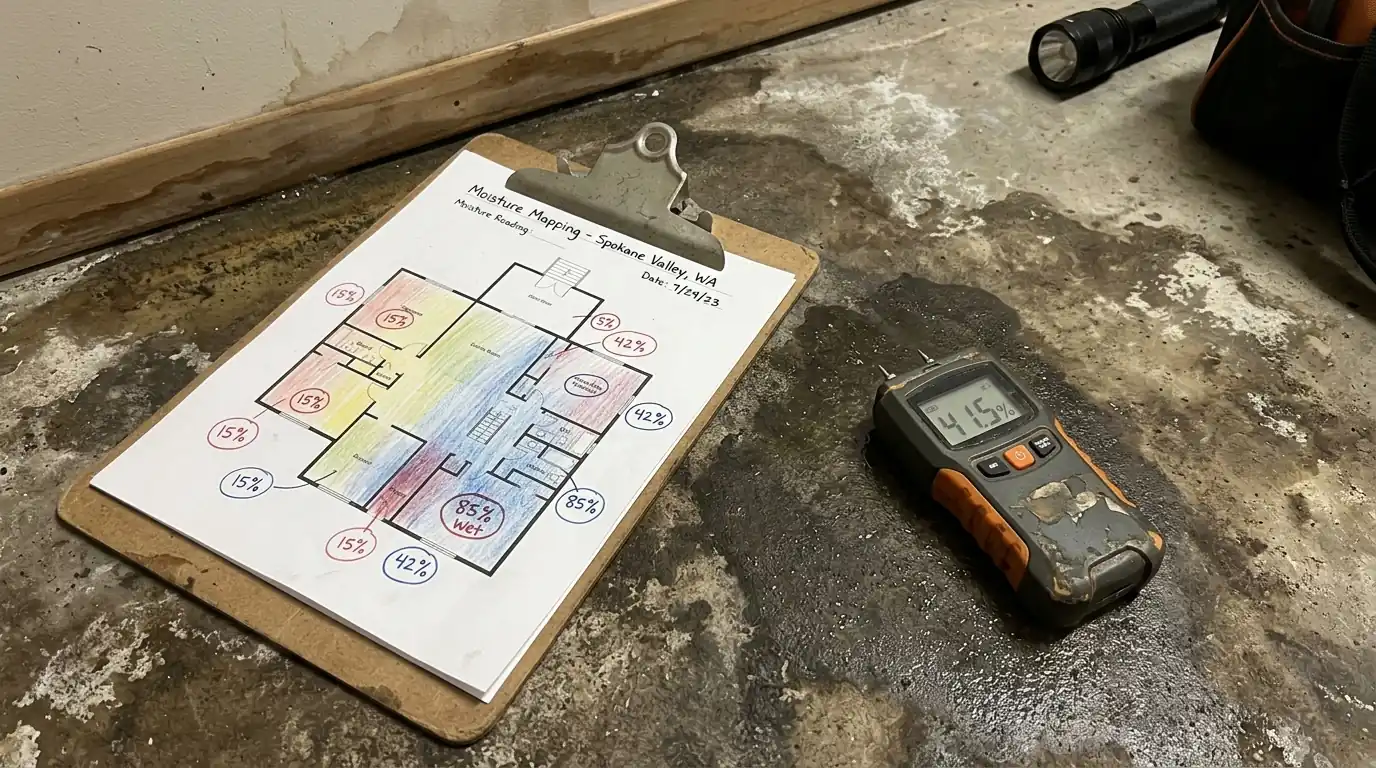
Moisture readings are logged by location on the first visit and every day after. The log shows how far the water spread and that drying was done properly, which is the same record our moisture inspections produce.
Working with the adjuster
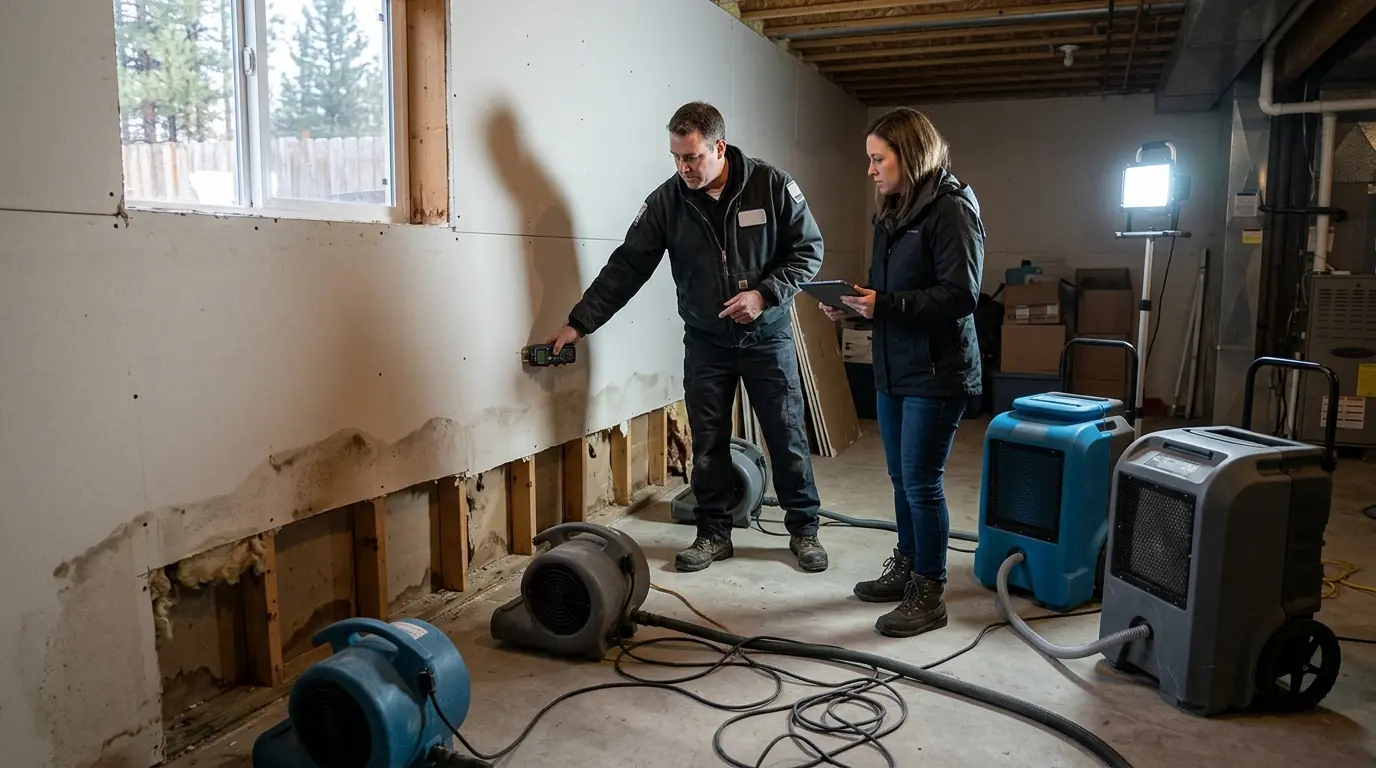
Some adjusters inspect in person within days; others work from photos. Either way, mitigation does not wait for them. Policies generally expect you to prevent further damage, so extraction and drying start right away.
We note what was removed and why, keep samples of cut material when they matter, and walk the adjuster through the readings if they visit while equipment is running.
Sewer backup and flood coverage gaps
The hardest calls are losses that came from outside or from the sewer. Groundwater seepage and surface flooding are usually excluded from standard homeowners policies and fall under separate flood insurance, and a sewer backup is often covered only with an endorsement.
We document these losses just as carefully, because flood policies have their own requirements and you may need the records for a dispute or your own budget. Our basement flooding page covers the cleanup side.
The records we keep for your claim
- Photos of every room before removal
- Close-ups of the source and the failed part
- The failed part bagged and labeled
- Moisture readings logged by location every day
- A list of removed materials and the reason for each
- A contents inventory when items are packed out
- An equipment and drying log
- A line-item scope for repairs
When claims arrive all at once around Spokane
Claims here tend to arrive in waves. After the November 2015 windstorm brought a 71 mph gust and cut power to about 180,000 Avista customers, a local nonprofit was handing out tarps for damaged roofs across Spokane and Spokane Valley. When an event hits a whole region at once, the claims that move most easily are usually the ones whose damage was photographed, measured and dried right away, before anyone has to argue about what happened first.
How we document a claim from day one
- 1
First-visit record
Photos of every room, the source and the failed part, before anything is removed.
- 2
You notify your insurer
You open the claim; we give you the facts and photos to report.
- 3
Daily drying logs
Readings and equipment counts are logged every day until dry.
- 4
Adjuster review
We walk the adjuster through readings and removed material, in person or by photo.
- 5
Scope and rebuild
A line-item scope for repairs, then the rebuild once approved.