Quick answer
Hardwood floor drying in Spokane Valley uses drying mats that pull moisture out through the boards under vacuum, plus dehumidification of the room and drying of the subfloor from below where it can be reached. Boards that cupped often flatten as they dry; whether they need sanding, refinishing or replacement is decided after the readings return to normal.
Signs your hardwood is still holding water
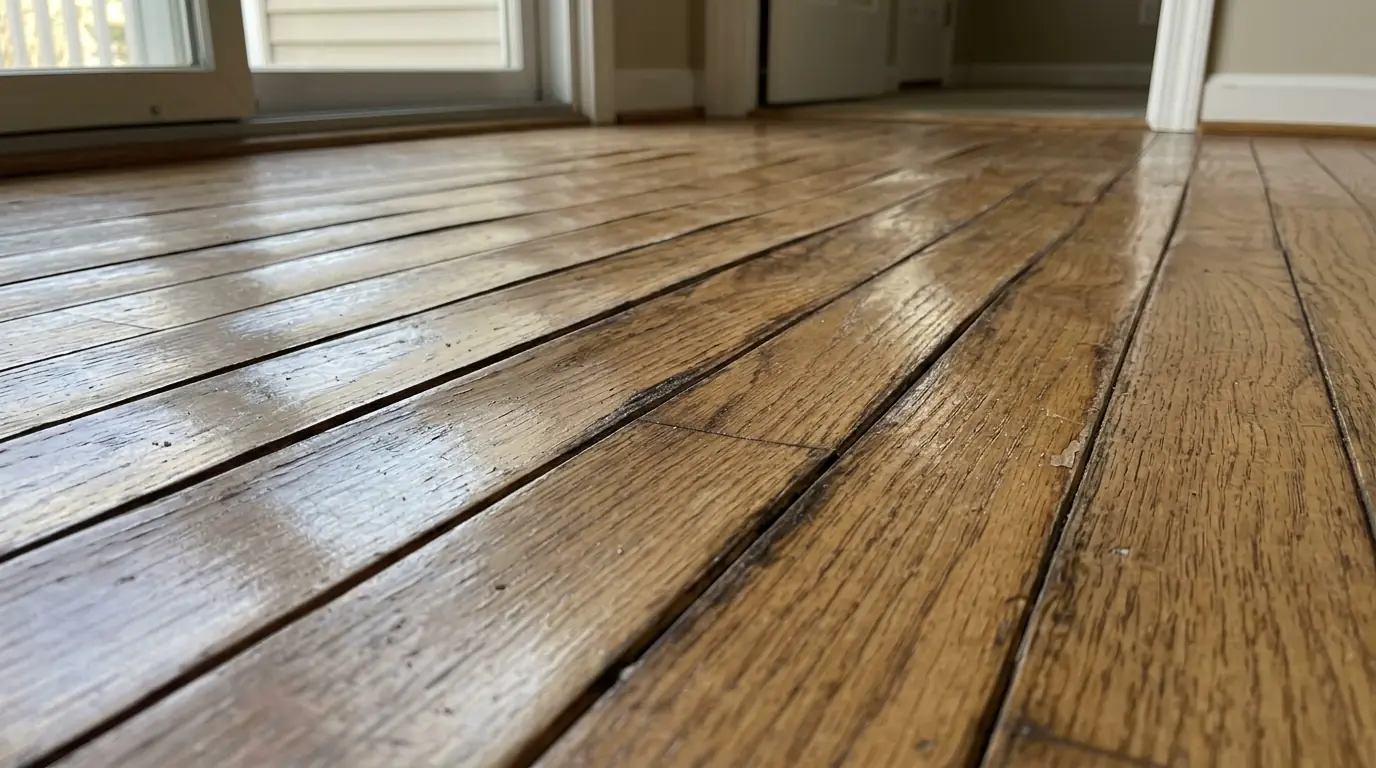
Cupped boards
Edges higher than centers mean the underside is still wet.
Gaps that closed up
Swelling boards push together and may buckle.
Dark staining at the seams
Water sitting between boards stains the edges.
A soft or bouncy spot
The subfloor below may be wet or damaged.
A musty smell near the floor
Moisture trapped under the wood.
Finish turning white or cloudy
Moisture under the finish.
Why hardwood needs its own drying approach
Hardwood absorbs water from below, through the subfloor, as well as from the top. The bottom of each board swells first, which pushes the edges up into a cup. Fans blowing across the surface dry the top and can make cupping worse.
Drying mats work from the top down: they seal against the floor and draw moisture up through the wood under suction, while dehumidifiers pull it out of the air. Where there is a basement or crawl space below, we dry the subfloor from underneath as well.
Not every floor comes back. If the boards split, delaminate or stay cupped once dry, they are replaced and the floor is refinished; that is covered on our flooring replacement page.
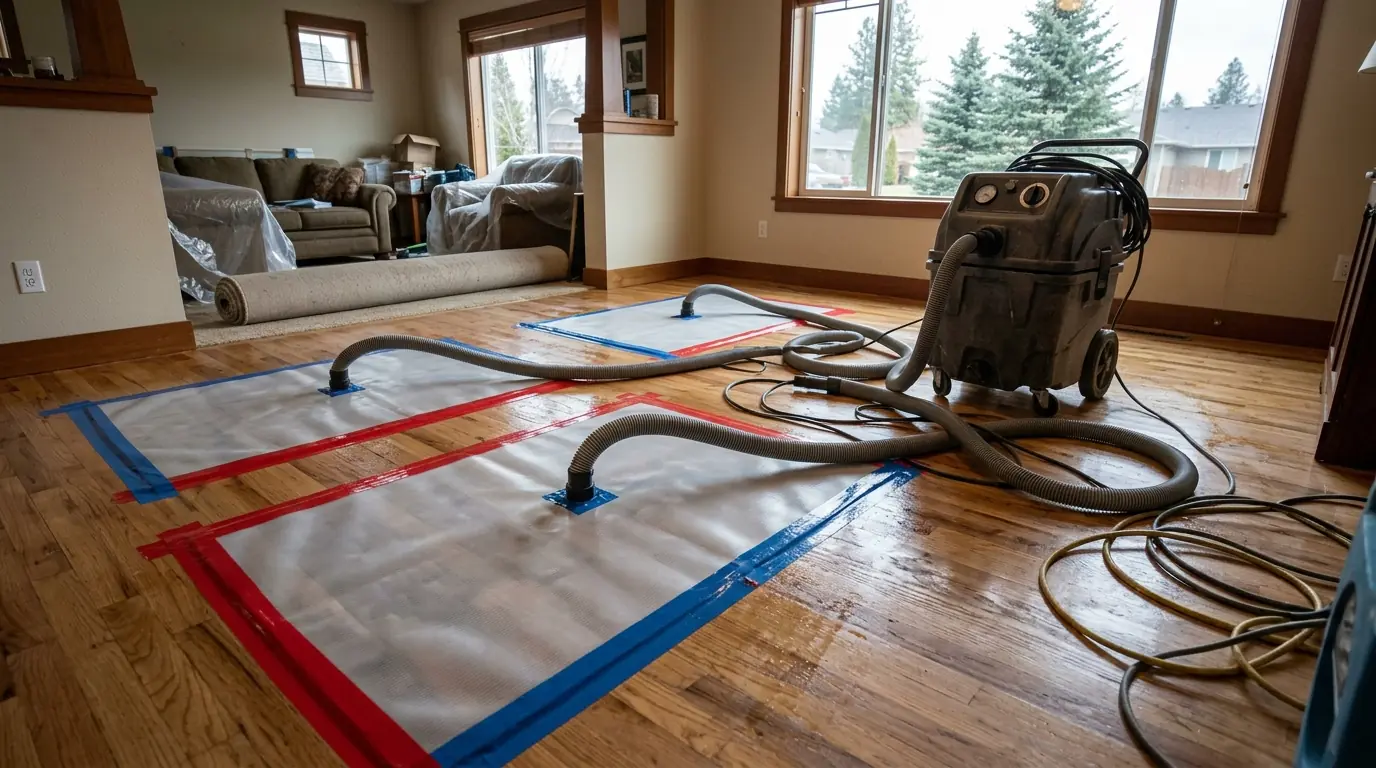
How we dry a hardwood floor
- 1
Extract
Surface water removed and baseboards pulled where needed.
- 2
Baseline readings
Moisture readings on wet and dry areas of the floor.
- 3
Mats and dehumidifiers
Mat system over wet areas; subfloor dried from below.
- 4
Daily readings
Same points read every day until they match dry areas.
- 5
Decide
Refinish, replace boards or leave as is once dry.
Cupping and crowning
Cupping, where board edges sit higher than the centers, means the bottom of the wood is wetter than the top. It often flattens as the floor dries. Crowning, where the centers are higher, usually comes from sanding a cupped floor too early.
We do not sand until readings are back to normal; sanding a floor that is still drying causes crowning later.
Floor mat drying systems
Mats are placed over the wettest areas and connected to a vacuum unit that draws air and moisture up through the boards. They run alongside dehumidifiers for several days.
Readings are taken in the same spots every day, so you can see the moisture coming down.
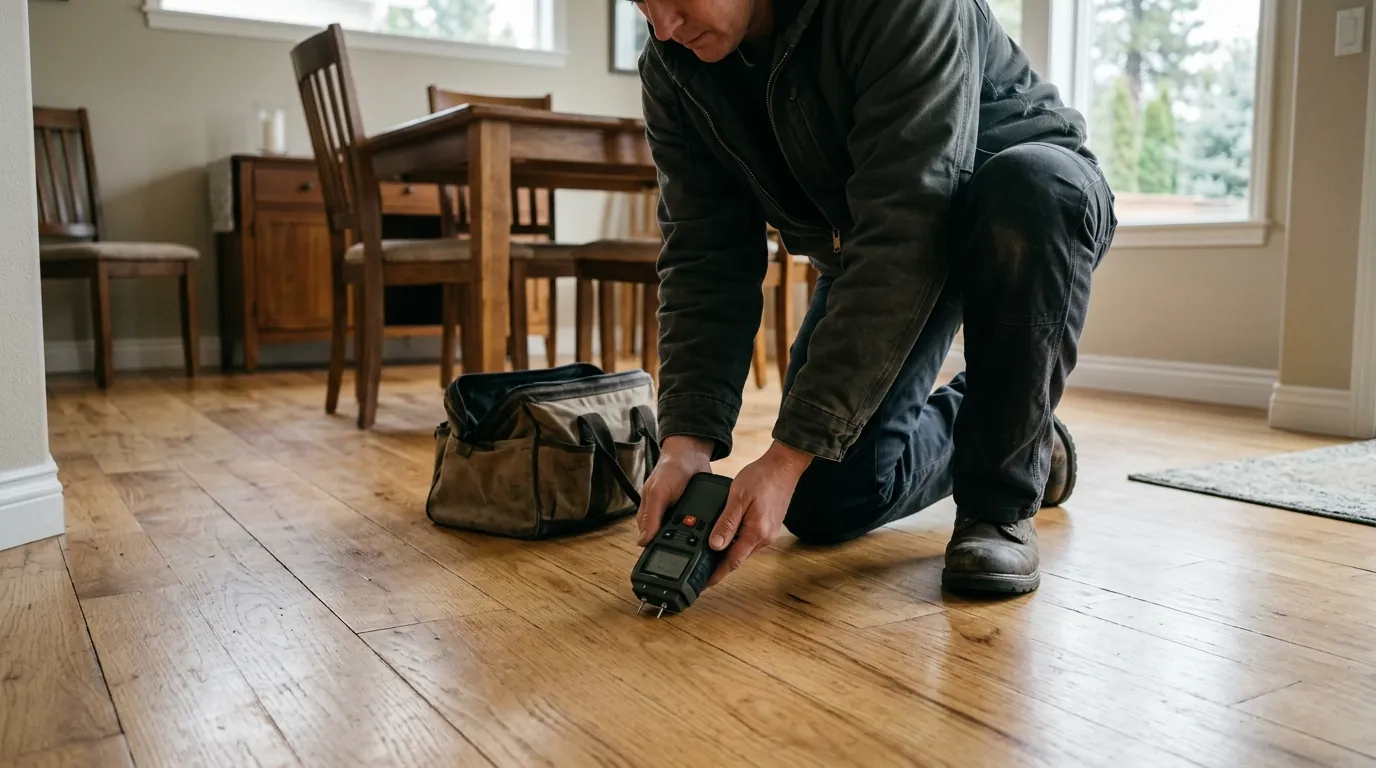
When boards have to come up
Boards that split, buckle off the subfloor or stay cupped after drying come out. Contaminated water, such as from a toilet or floodwater, also means the wood is removed rather than dried.
Engineered hardwood is more sensitive than solid wood because its layers can separate, so it is more often replaced.
How long hardwood takes to dry
Hardwood usually needs several days to a couple of weeks to dry, depending on how wet it got and whether the subfloor can be dried from below. Refinishing happens after that, once the readings are back to normal.
How long drying takes in Spokane-area homes
Typical residential drying in the Spokane area runs about three to five days once the water is out, followed by one to two weeks of restoration. Hardwood sits at the slow end of that range or past it, because the wood and the subfloor under it both have to come back to normal, and sanding or refinishing waits until they do.
Planning costs for wet hardwood
Drying a hardwood floor usually costs far less than replacing it. These published national figures cover both outcomes.
- Time before drying startsThe sooner mats go down, the more likely the floor flattens.
- Solid or engineeredEngineered floors are more often replaced.
- Water typeContaminated water means removal, not drying.
- Subfloor accessA basement or crawl space below lets us dry from both sides.
- RefinishingSanding and refinishing after drying is usually needed for a uniform look.