Quick answer
Subfloor and framing repair in Spokane Valley starts by opening the floor or working from the basement or crawl space to map the damage. Delaminated or rotted subfloor is cut back to sound wood and replaced, weakened joists are sistered or replaced, and rotted sill plates are repaired, all after the remaining framing reads dry.
When water damage becomes a structural repair
Most subfloor damage comes from slow leaks: a toilet wax ring, a shower pan, a dishwasher or a window that leaks a little at a time for months. The wood stays wet, the glue in plywood and OSB fails, and the floor goes soft.
Framing damage is usually found the same way, when flooring comes up or someone looks into the crawl space. Sill plates, the boards where the house sits on the foundation, rot where water runs down exterior walls or stands in a crawl space.
We repair the structure and then hand off to the finish work: flooring is covered on our flooring replacement page, and drying before repair on our structural drying page.
What decides the cost of subfloor and framing repair
We have not found a reliable published range for subfloor and framing repair, because the extent is only known once the floor is open. These are the things that set the cost.
- Extent of rotA few square feet around a toilet is very different from a whole room.
- AccessWorking from a basement or crawl space is easier than through a finished floor.
- Joists and sill platesSistering, replacing and shoring add labor and materials.
- Fixtures to remove and resetToilets, tubs and cabinets on the damaged area.
- Finished flooringNew flooring is a separate line once the structure is sound.
Repair or replace water-damaged framing?
What happens depends on how much strength the wood has lost.
| Condition | Usual repair | Why |
|---|---|---|
| Surface stain, wood still hard | Dry and leave in place | The wood is sound once dry |
| Swollen or delaminated subfloor | Cut out and replace | OSB and plywood do not recover |
| Softened joist ends | Sister a new joist alongside | Restores strength without removing the original |
| Rotted sill plate | Replace in sections with shoring | The wall must be supported while it is done |
Rotted subfloor around toilets and tubs
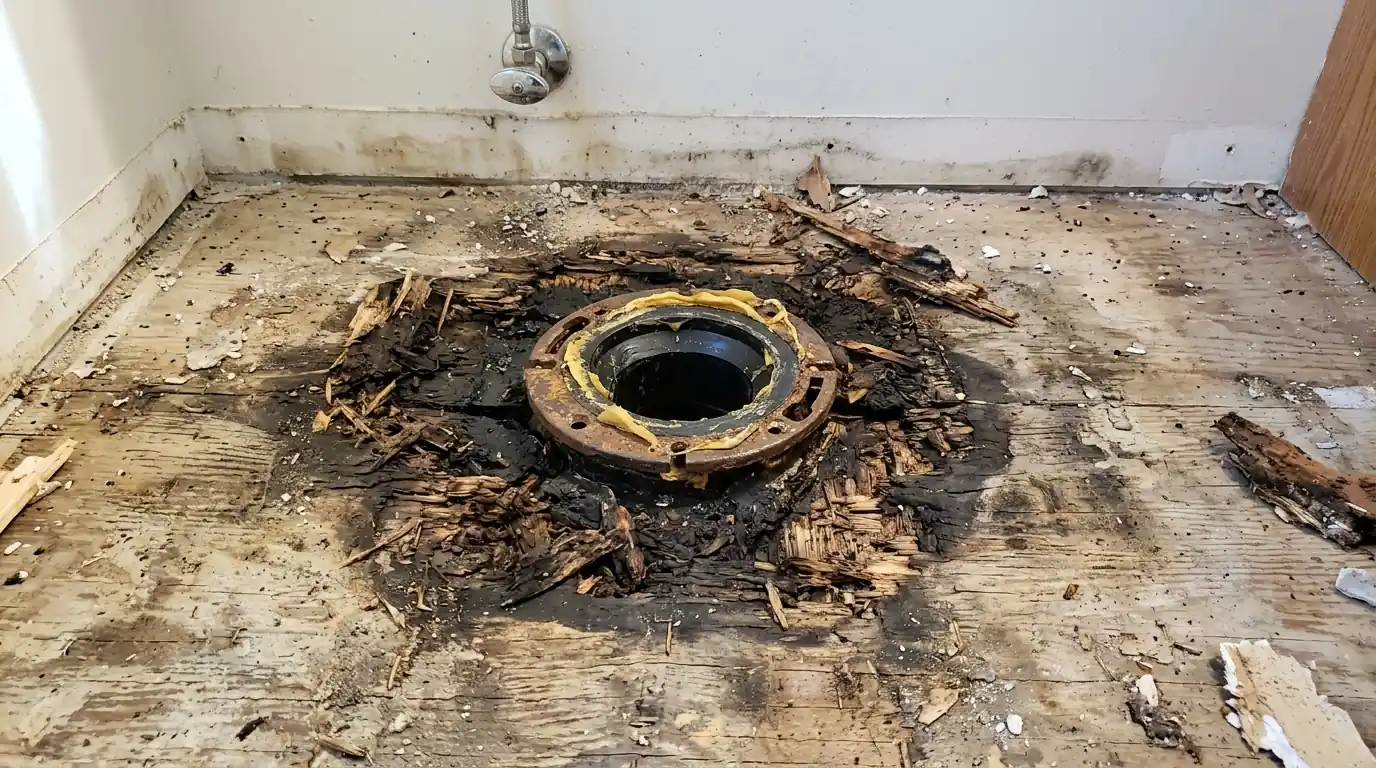
The floor around a toilet that has leaked at the wax ring for a long time often turns soft and dark. We pull the toilet and flooring, cut back to solid subfloor, and install new sheathing glued and screwed to the joists.
The toilet goes back on a new flange and wax ring once the floor is solid.
Sistering wet joists
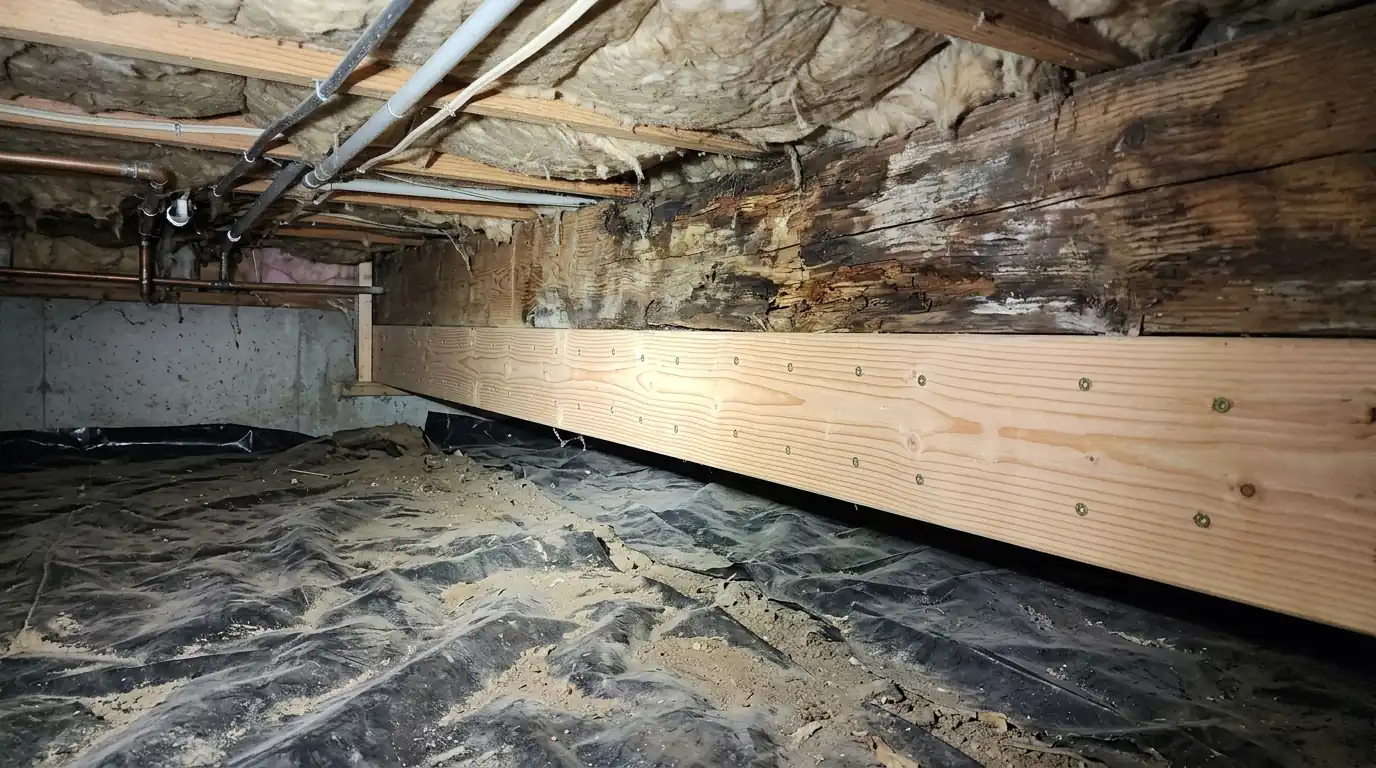
Joists that have softened at the ends or along the top from long-term wetting can often be reinforced by fastening a new joist alongside the old one, called sistering, rather than removing the original.
Joists that have lost too much strength are replaced, with temporary support while the work is done.
Sill plate repair
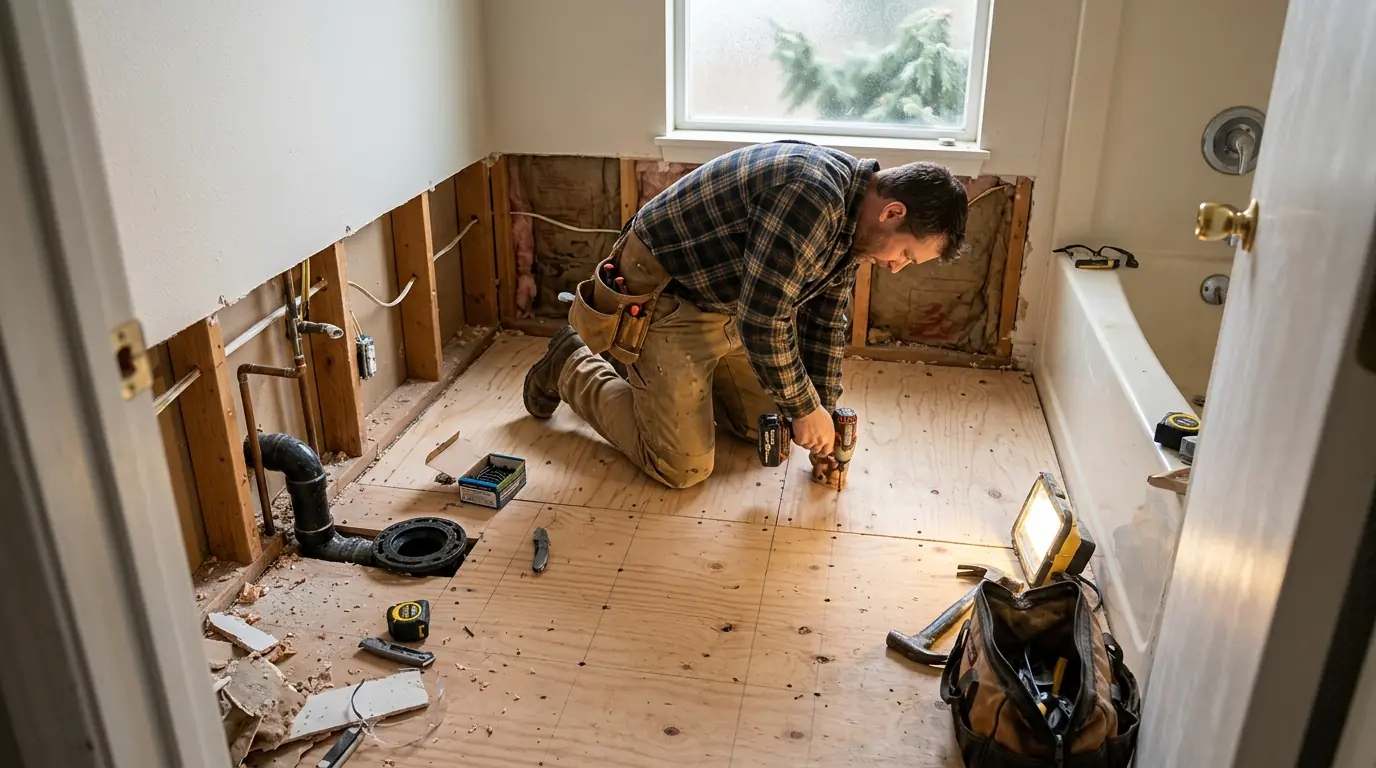
A rotted sill plate is repaired in sections, with the wall supported while the old wood comes out and new treated lumber goes in.
This is often found during crawl space or basement work; see crawl space water damage.
Subfloors in newer and older homes nearby
Housing age changes what we find under the floor. In Post Falls, where 45.3% of homes were built after 2000, subfloors are mostly OSB sheathing, which swells at the edges and loses strength when it stays wet. In Coeur d'Alene, where 9.9% of homes date from before 1940, older floors often sit on board subfloor laid across the joists, which handles occasional wetting better but rots at the joints where a leak runs for years.
How we repair water-damaged framing
- 1
Open and map
Flooring lifted or access from below; damage traced to sound wood.
- 2
Support
Temporary shoring where joists or plates are weakened.
- 3
Dry the rest
Remaining framing read and dried before new wood goes in.
- 4
Replace and reinforce
New subfloor, sistered or replaced joists, sill repairs.
- 5
Ready for finishes
Solid, flat base ready for flooring, tile or fixtures.
Signs of subfloor or framing damage
A soft spot in the floor
Especially near toilets, tubs, dishwashers and exterior doors.
A toilet that rocks
The flange may be sitting on soft subfloor.
Cracked or popping tile
Movement underneath cracks tile and grout.
Sagging or bouncy floors
Joists below may be weakened.
Dark, soft wood from below
Visible from the basement or crawl space.
Gaps under baseboards
The floor may be settling as wood breaks down.