Quick answer
Structural drying in Spokane Valley uses moisture meters and thermal imaging to find wet framing, subfloor and wall cavities, then air movers, dehumidifiers and directed airflow to dry them. Readings are taken at the same points every day and compared with unaffected materials in the same house; equipment comes out only when the wet materials match those dry references.
What drying the structure actually means
Water that runs into a house soaks the things you cannot see: the bottom plates of walls, the back of drywall, the subfloor, joists and insulation. Surfaces dry quickly; these materials do not, and they are where mold and rot start.
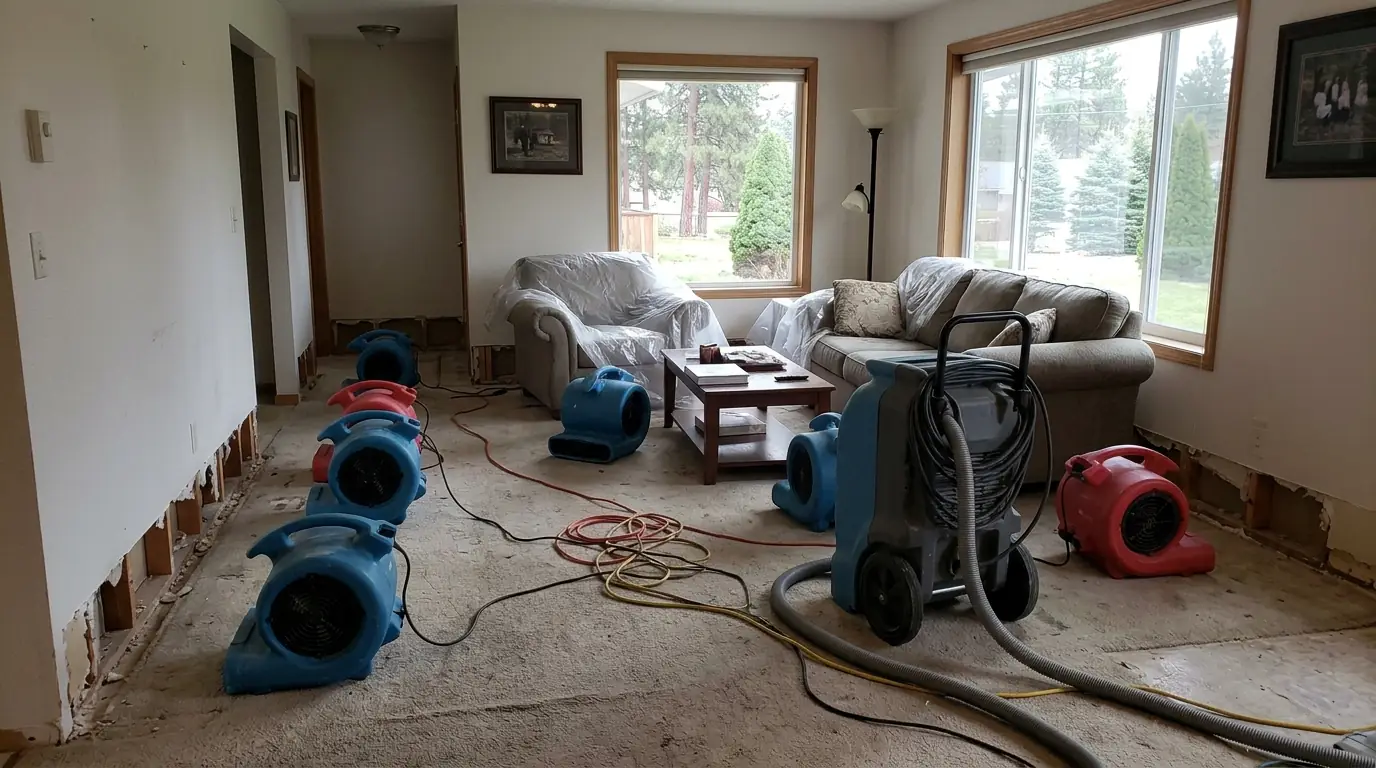
Drying is a balance between three things: moving air across wet surfaces so moisture evaporates, pulling that moisture out of the air with dehumidifiers so it does not settle back in, and keeping the space warm enough for evaporation to continue.
We pair drying with removal: materials that cannot be dried in a reasonable time, such as soaked pad or wet insulation, come out first. The first visit on most jobs is described on our emergency water damage page.
Planning costs for structural drying
Drying is priced by the equipment and days needed, which depends on how much got wet. Published national ranges below are a planning guide.
- Area and materialsMore wet square footage and denser materials mean more equipment and days.
- Water categoryGray or black water adds removal and cleaning.
- Wall cavitiesCavities that need directed air or opening add labor.
- Hardwood and plasterSlow-drying materials extend the timeline.
- Daily monitoringEach day of readings and equipment adjustment is part of the job.
Open drying or containment drying?
Most homes are dried one of two ways, sometimes both in different rooms.
| Method | How it works | When it fits |
|---|---|---|
| Open drying | Air movers and dehumidifiers across the whole affected area | Several rooms with moderate wetting |
| Containment drying | Plastic encloses the wet area so equipment works on a smaller air volume | One room or a small area with heavy wetting |
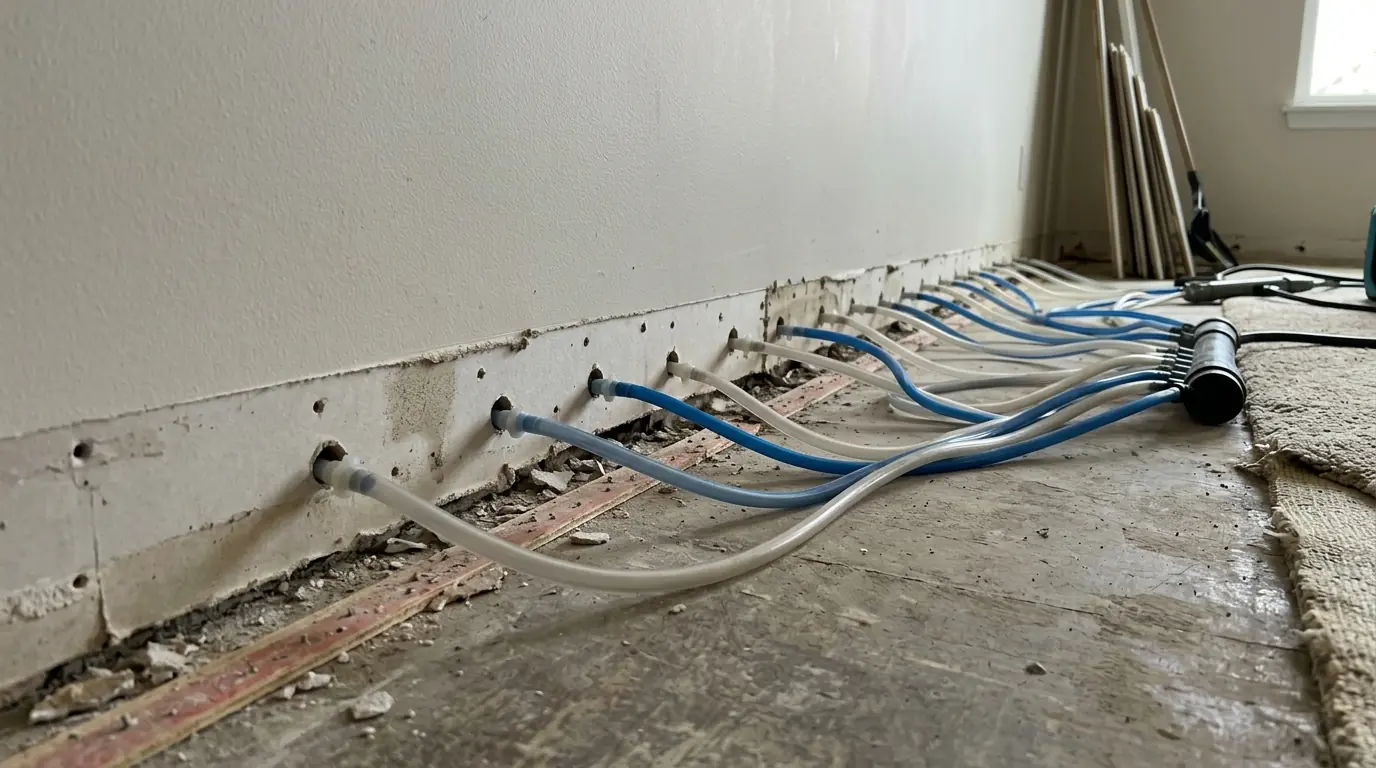
| Cavity drying | Air pushed into wall or floor cavities through small openings | Wet cavities behind sound drywall or flooring |
Wall cavity drying
Wet wall cavities dry slowly because air does not move inside them. Where readings are high but the drywall is sound, we drill small holes behind the baseboard and push air into the cavity. Where insulation is soaked, the bottom of the wall is opened.
Either way, the cavity is read again every day until the framing matches dry framing elsewhere.
Cabinet and toe-kick drying
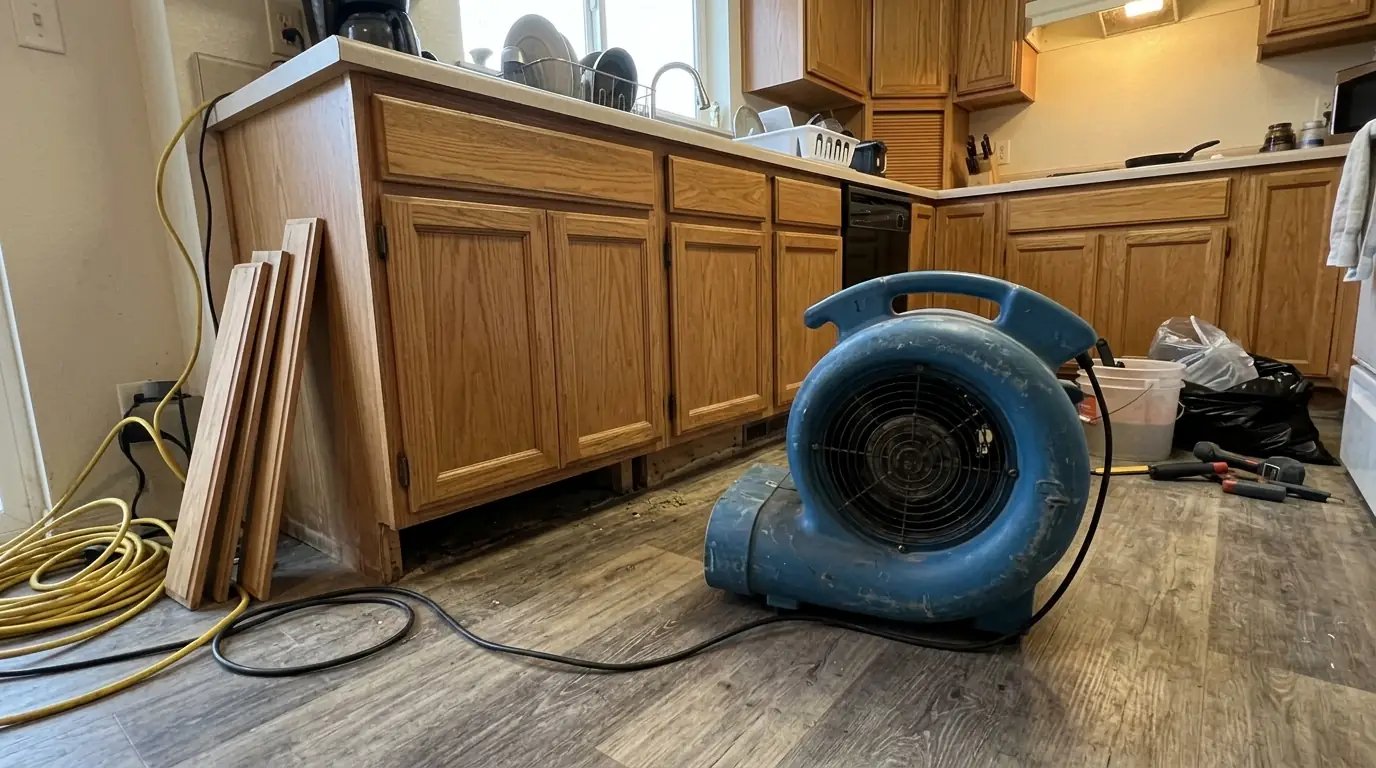
Water hides under kitchen and bathroom cabinets. Pulling the toe kicks and directing air underneath dries the subfloor without removing the cabinets in many cases.
If the cabinet floors have swollen, the repair is covered on our cabinet repair page.
Drying logs and moisture readings
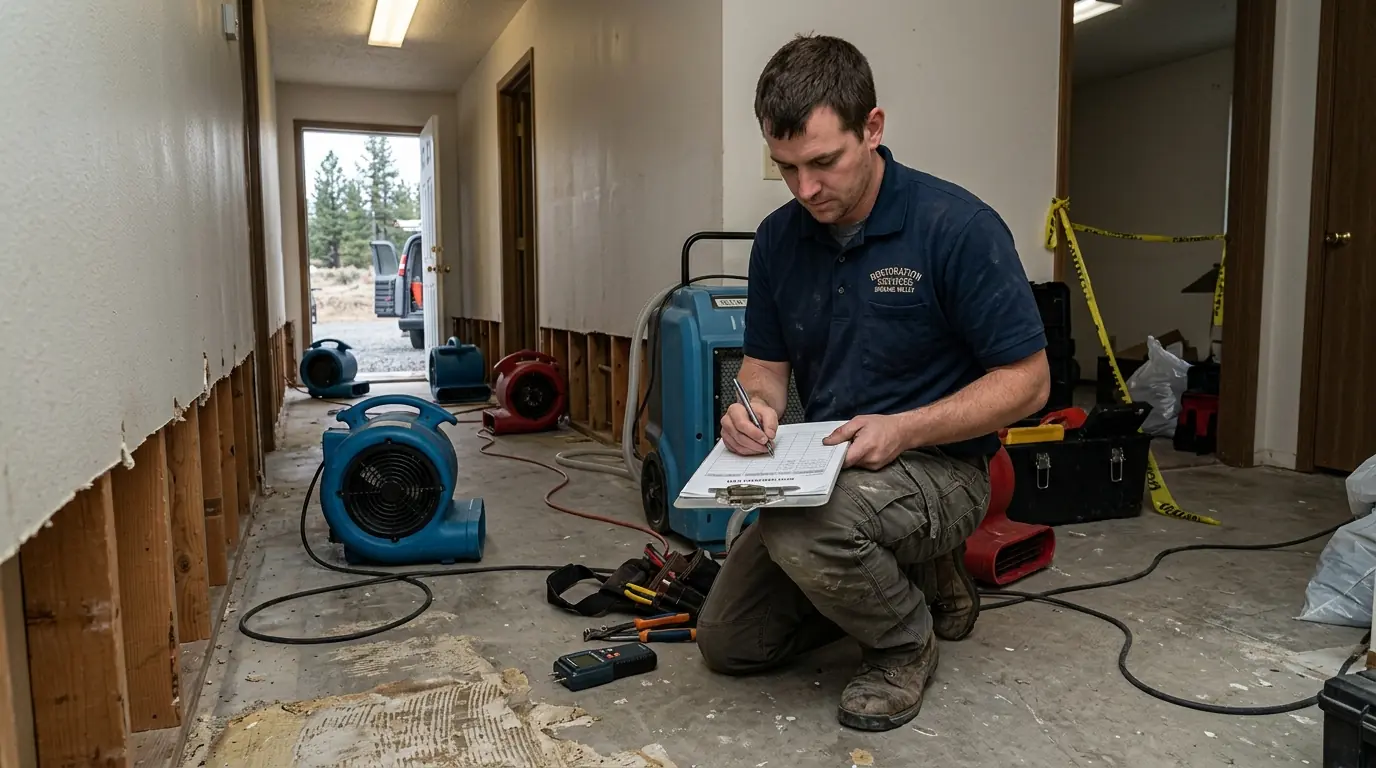
Every drying job has a log: the starting readings, the dry reference for each material, equipment placed, and each day's numbers. It shows when each area reached dry and why equipment stayed or moved.
The log is what insurers ask for, and it is yours to keep.
What a drying job includes
- Moisture map with readings and photos
- Dry reference readings for each material
- Removal of materials that cannot be dried
- Air movers and dehumidifiers sized to the space
- Cavity drying where needed
- Daily readings and equipment adjustments
- A drying log you keep
- Final readings before equipment is removed
Drying timelines in Spokane-area homes
Typical residential drying in the Spokane area runs about three to five days once the standing water is out, with one to two weeks of repairs after that. That is the timeline most adjusters expect, and it is why we send a short update after the first two days of readings: if a job is drying slower than that, you and the insurer should know early, along with the reason.
How a structural drying job runs
- 1
Map the moisture
Readings and thermal imaging set the wet areas and the dry references.
- 2
Remove what will not dry
Pad, soaked insulation and swollen trim come out.
- 3
Place equipment
Air movers, dehumidifiers and cavity drying where the map shows.
- 4
Read daily
Same points every day, equipment moved as areas dry.
- 5
Sign off
Final readings match dry references; the log is handed over.