Quick answer
Water damage odor removal in Spokane Valley starts with finding what is still wet, usually carpet pad, drywall, insulation or a subfloor, and drying or removing it. Deodorizing comes after the source is gone; treating the smell first only covers it for a few days, because the wet material keeps producing it.
Where water damage smells come from
The musty smell after a leak comes from mold and bacteria growing in materials that stayed damp. Carpet pad, the back of drywall, insulation and wood subfloors hold water long after the surface dries, and they keep smelling as long as they stay wet.
Sewage and floodwater leave a different, stronger odor that soaks into porous materials, which is why those materials are usually removed rather than cleaned. After a sewage backup, odor control is part of the cleanup itself.
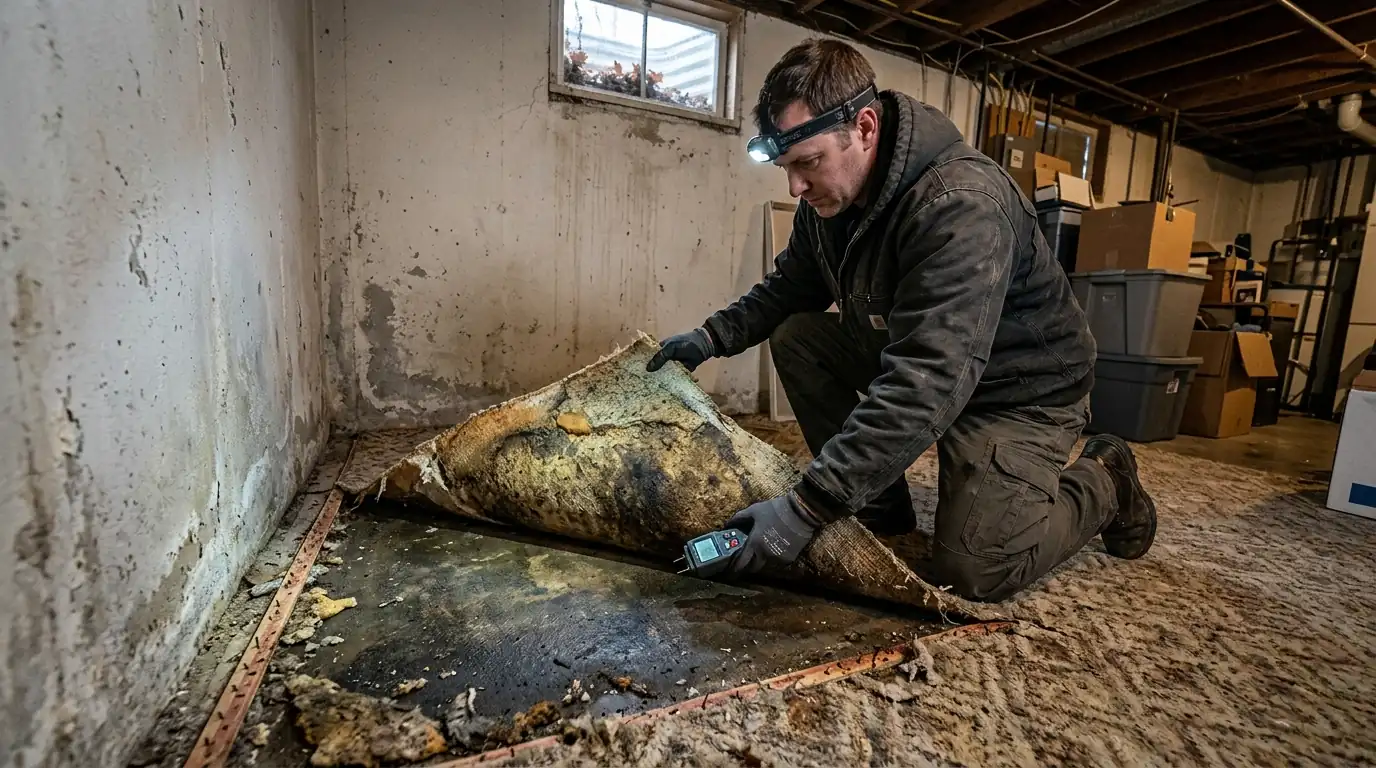
Our first step is a moisture search with meters and a thermal camera. The smell tells you there is a problem; the readings tell us where.
What decides the cost of odor removal
Odor jobs are priced on finding and fixing the source, which varies widely, so we price from a walk-through rather than quote a number in advance.
- Source locationOdor in carpet pad is quicker to fix than odor in a subfloor or wall cavity.
- Area affectedOne room or a whole basement.
- Material removalPad, drywall or insulation that must come out adds removal and replacement.
- Water typeSewage or floodwater odors need more removal and treatment.
- DeodorizationTreating air and surfaces after the source is gone is usually a smaller line.
Ways to treat water damage odor, and when each works
Deodorizing helps only after the source is fixed. These are the main methods and their limits.
| Method | What it does | When it works |
|---|---|---|
| Remove and dry the source | Takes away what is producing the smell | Always the first step |
| Cleaning and antimicrobial treatment | Removes residue on framing and slab | After wet material is removed |
| Air treatment | Breaks down odor molecules in the air and surfaces | After cleaning, for lingering odor |
| Sealing | Locks remaining odor into wood or concrete | When cleaning cannot remove it all |
Musty basement odor
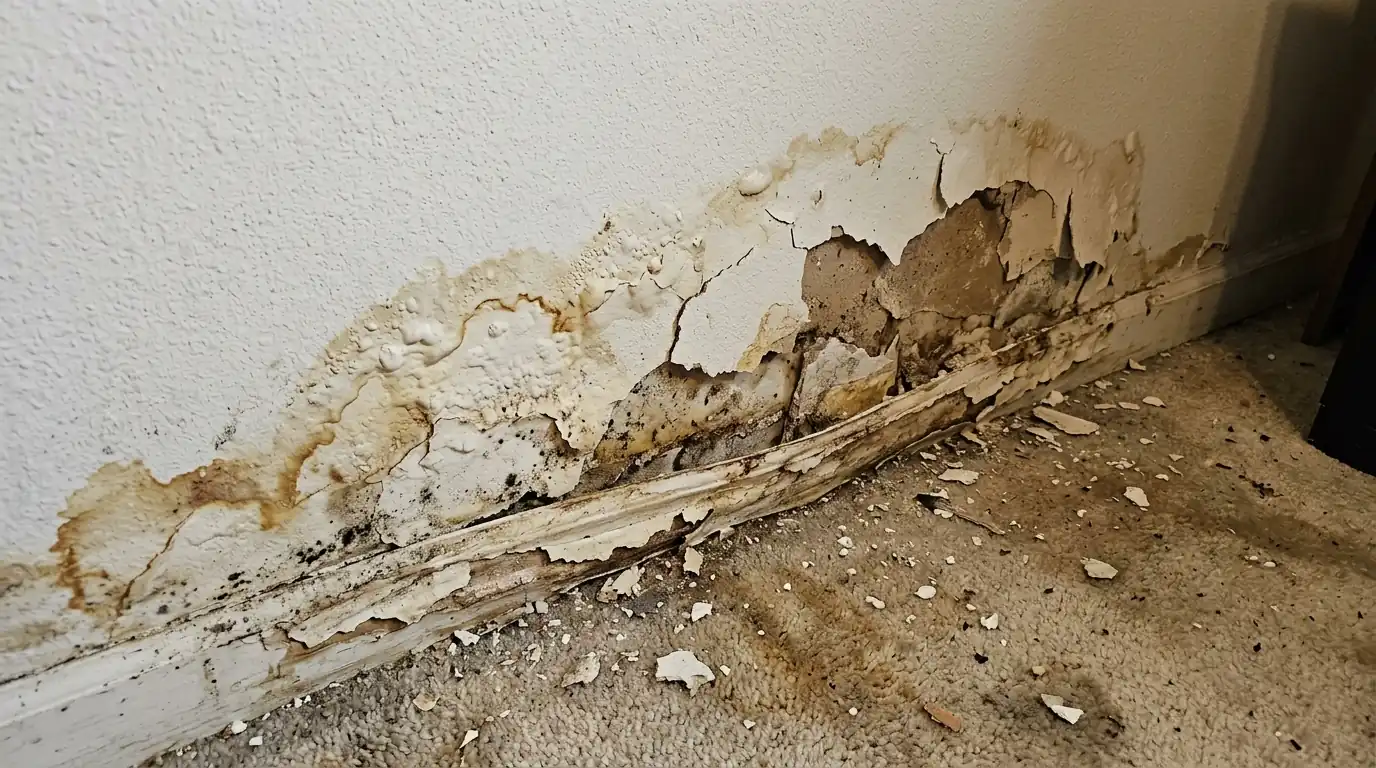
Basements smell musty when carpet pad, the bottom of finished walls or stored boxes hold moisture, often from slow seepage rather than one big event. We read the bottom of every wall and lift carpet edges to find the wet areas.
Removing wet pad and the bottom strip of drywall, then drying the slab and walls with dehumidifiers, removes most basement odors at the source.
Sewage odor after cleanup
If a sewage smell lingers after a cleanup, something porous that touched the water was left behind, or the drain line itself is venting gas through a dry trap or a broken seal.
We check the area that was cleaned, and pour water into floor drains to refill dry traps; a persistent sewer-gas smell needs a plumber to check vents and seals.
Odor trapped in subfloors
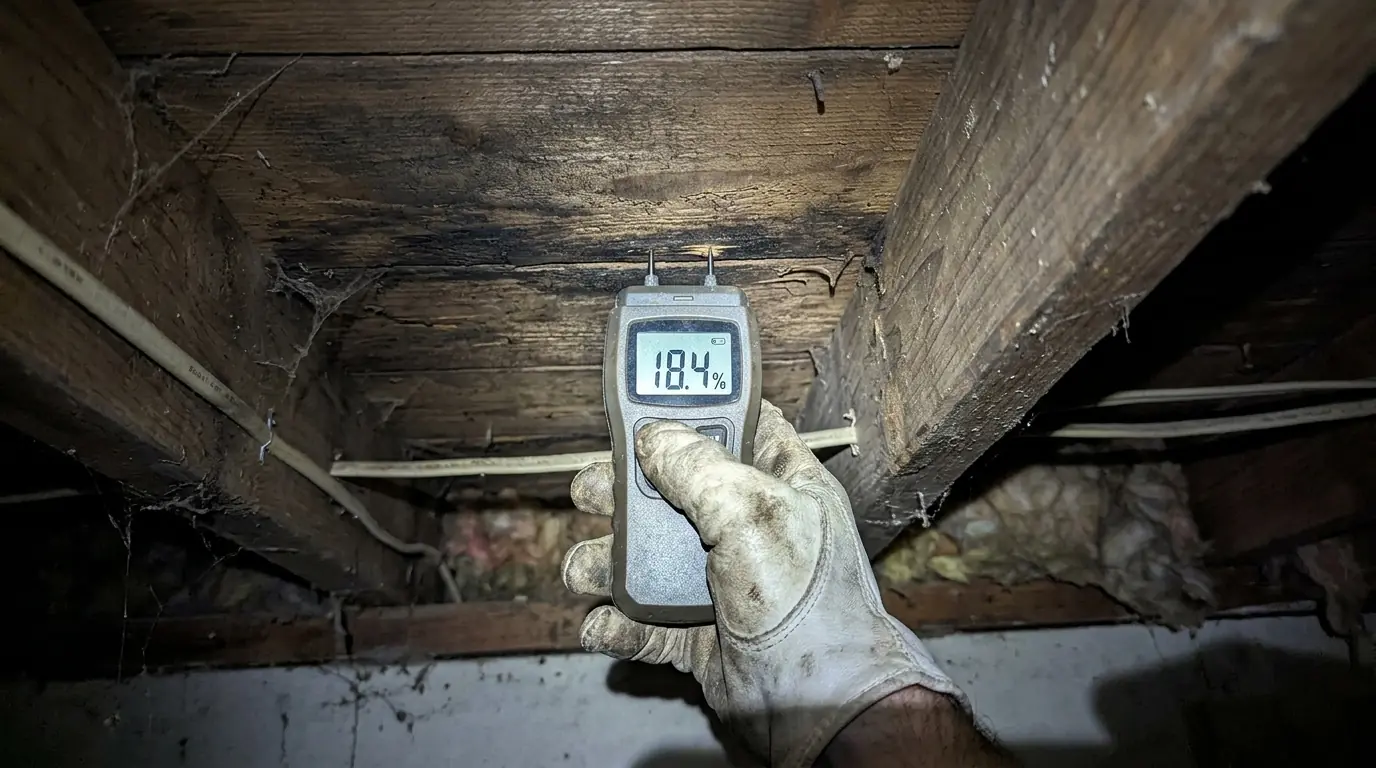
Water that runs under flooring soaks into the subfloor and the sill plate, where it can smell for months. The floor may look and feel fine.
We read the subfloor through the flooring or from below, open up where needed, and dry or replace the wet wood. Structural sections that have softened are handled through our subfloor and framing repair.
Snowmelt basements and lingering smells
In February 2017, snowmelt runoff from Little Deep Creek poured into a Colbert basement, and Spokane County reported basement and garage flooding from runoff across the area. Basements that took on water like that often dry on the surface within days but keep a musty smell into summer, because the carpet pad, the bottom of the walls and stored boxes were never fully dried. That lingering smell is one of the most common odor calls we get.
How we remove a water damage odor
- 1
Smell and moisture survey
We follow the odor with meters and thermal imaging to the wet material.
- 2
Remove or dry the source
Wet pad, drywall or insulation comes out; wood and slab are dried.
- 3
Clean surfaces
Affected framing and slab cleaned and treated.
- 4
Deodorize
Air and surface treatment after the source is gone.
- 5
Recheck
A follow-up visit after a few days to confirm the smell is gone.
Signs the smell has a wet source
Smell strongest near the floor
Odor that is worse at floor level points to pad, subfloor or slab.
Worse on humid days
A smell that comes back with rain or humidity means something is still absorbing moisture.
Smell when the furnace runs
Odor carried by the heating system can come from a damp crawl space or basement.
Stains at the base of walls
Tide marks or peeling paint low on a wall show past water.
Boxes that feel soft
Stored cardboard that softens or smells is absorbing moisture.
Smell after cleaning
If cleaning and airing out only help for a day, the source is still there.