Quick answer
Roof leak water damage repair in Spokane Valley covers everything under the roof: wet attic insulation is removed, the deck and rafters are dried, and stained or sagging ceilings and wet wall cavities are opened and dried before repair. The roof itself is fixed by a roofer; we coordinate so the interior is rebuilt only after the leak is stopped.
Signs your roof has been leaking
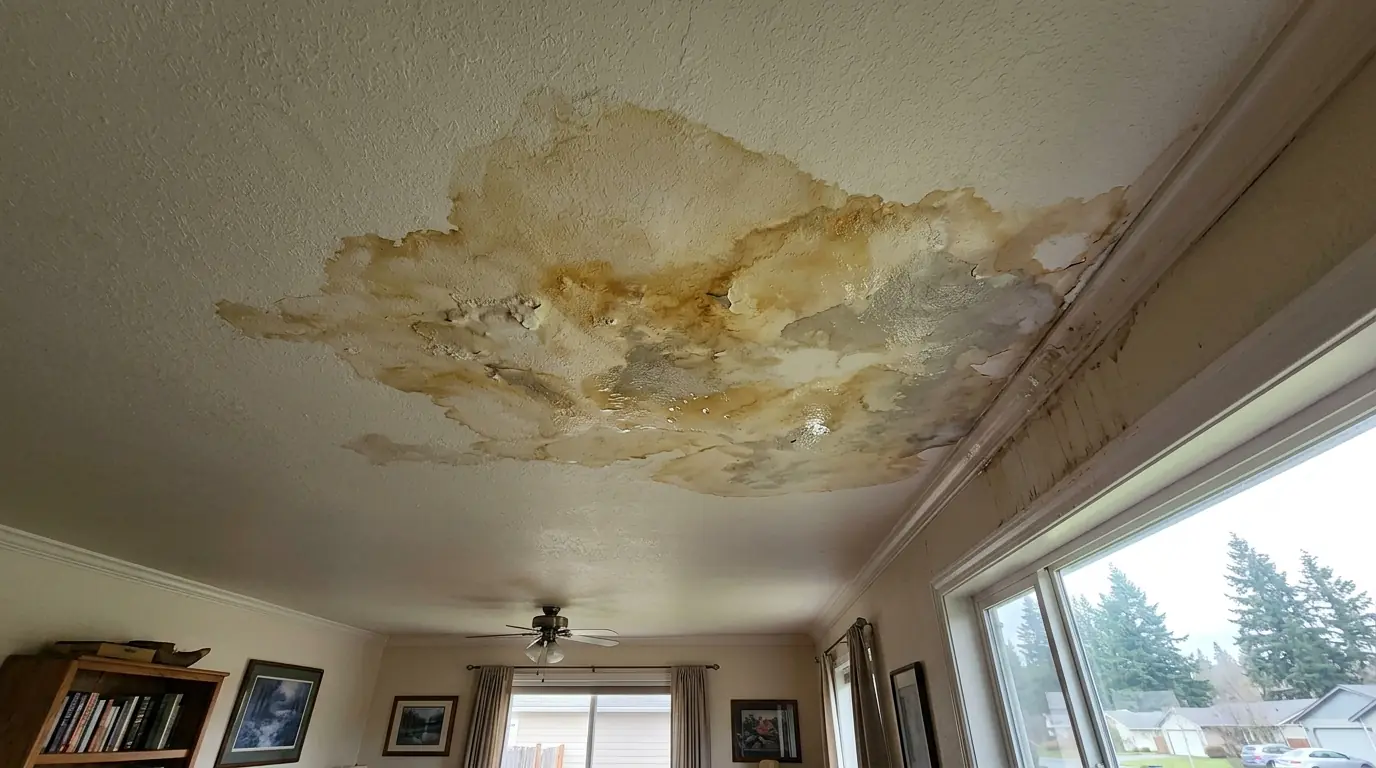
A ceiling stain that grows after rain
An active leak, even if it dries between storms.
Drips in the attic
Water on insulation or the deck after a rain.
Stains around chimneys or skylights
Flashing failures leak at roof penetrations.
Peeling paint at the top of walls
Water running inside the wall below the roof edge.
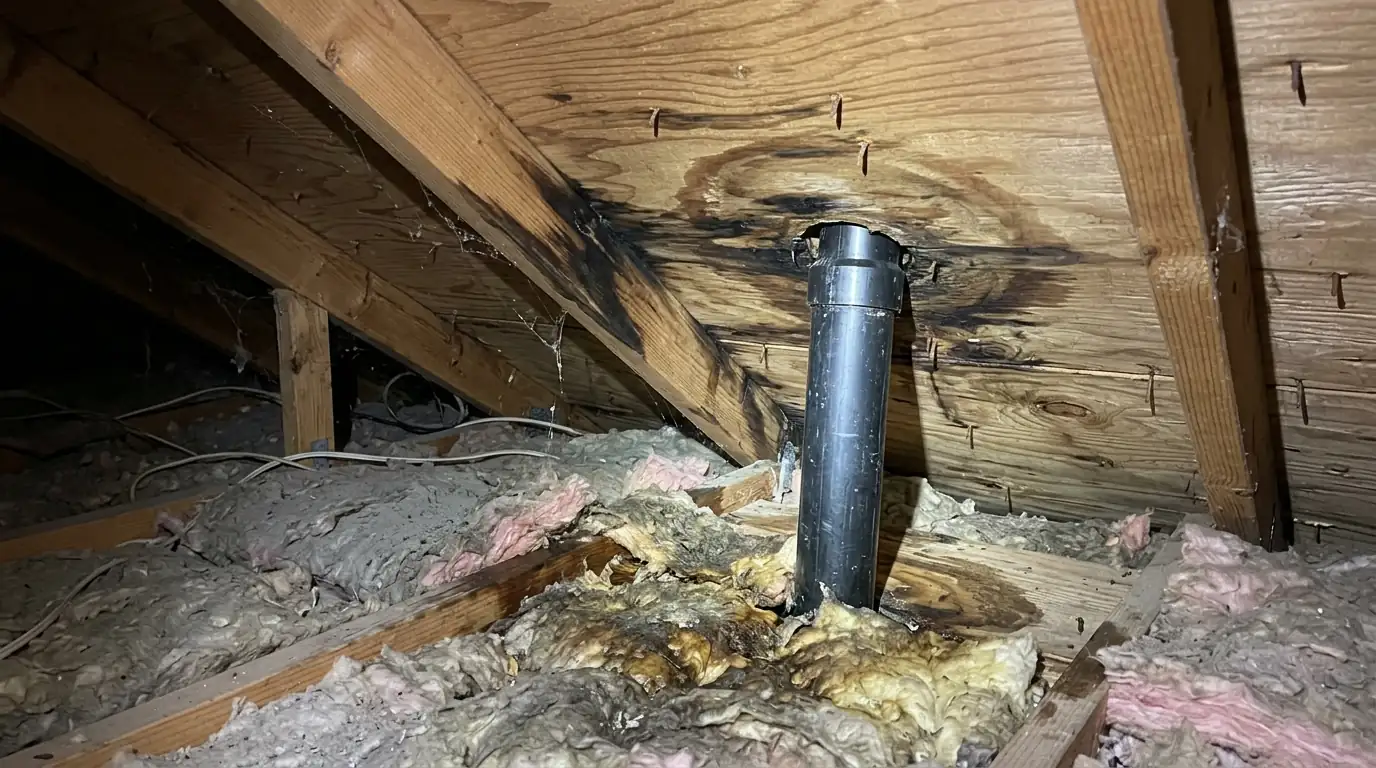
Dark spots on attic sheathing
Repeated wetting and possible mold.
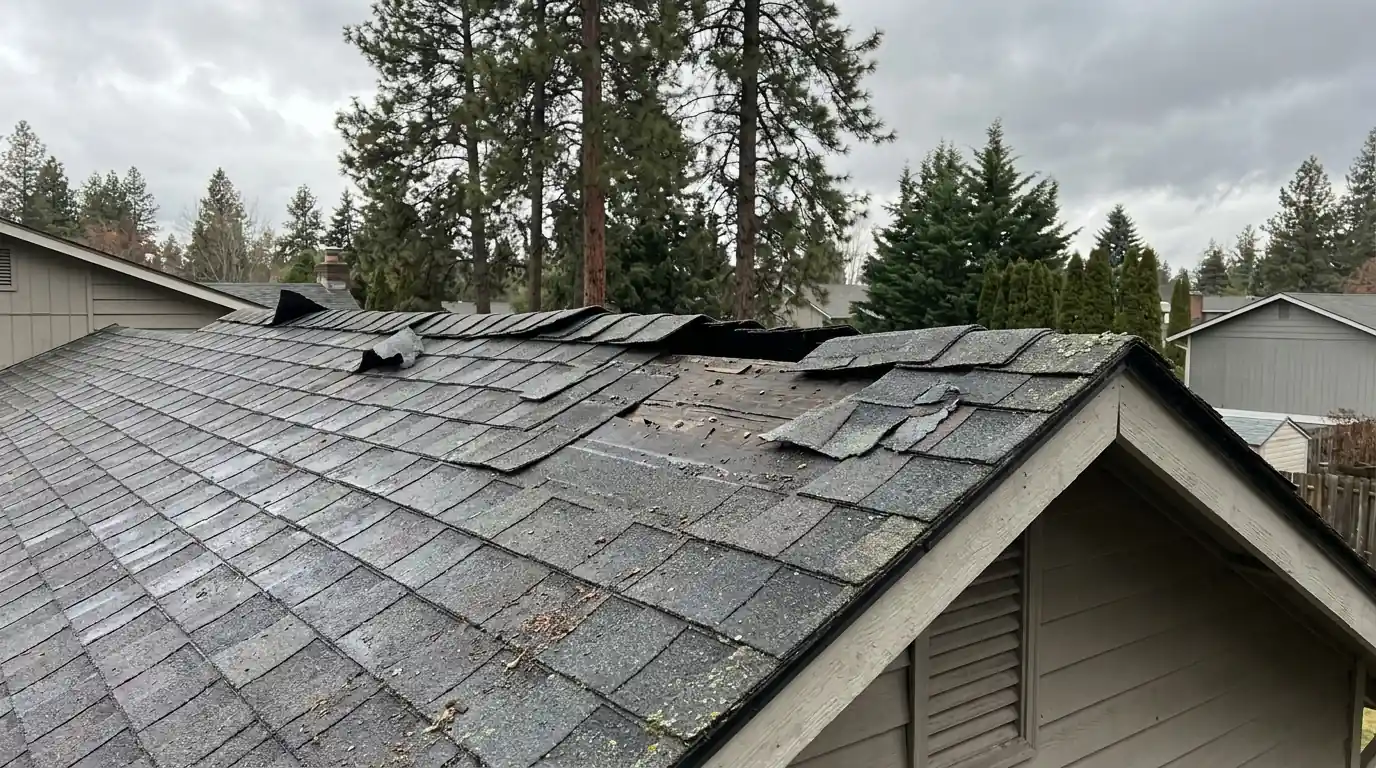
Missing or lifted shingles
Visible from the ground after a windstorm.
What a roof leak does inside the house
Water that gets through a roof rarely drips straight down. It runs along the underside of the deck, down rafters and onto the top of the ceiling, often a few feet from where it came in, then soaks insulation before it shows as a stain.
That means the visible stain understates the damage. Insulation above it is often saturated, and water may have run down inside an exterior wall.
Leaks from winter ice dams have their own causes and patterns; see ice dam water damage. If a storm opened the roof, temporary cover comes first through our storm tarping and board-up service.
How we handle a roof leak inside the house
- 1
Stop the inflow
Temporary cover if the roof is still open; roofer coordinated.
- 2
Trace and map
Readings from the attic down to the ceiling and walls.
- 3
Remove wet material
Soaked insulation and sagging drywall removed.
- 4
Dry
Deck, rafters, ceiling joists and walls dried with daily readings.
- 5
Repair
Insulation, drywall and paint after the roof is fixed.
Windstorm roof damage
Wind lifts and tears shingles, especially along edges and ridges, and drives rain under the ones that stay. The leak may start days after the storm, with the next rain.
We check the attic under every area of missing or lifted shingles, not just under the stain, and dry what we find.
Flashing and vent boot leaks
Most non-storm roof leaks come from flashing around chimneys, walls and skylights, or from cracked rubber boots around plumbing vents. They leak a little with every rain, so the damage builds slowly.
We trace the water back from the stain to the roof penetration, dry the framing and insulation, and give your roofer the exact location.
Skylight leaks
Skylights leak at the flashing, the seal between glass and frame, or from condensation running down the shaft. Water stains the shaft drywall and the ceiling around it.
We dry and repair the shaft and ceiling; the skylight or its flashing is a roofer's repair.
Heavy snow loads and roofs in Spokane
During Spokane's record winter of 2008-09, the National Weather Service put snow loads around 25 pounds per square foot on roofs, and ice covering storm drains kept meltwater from draining away. Weight and standing meltwater are hard on flashing and old shingles, which is why we see roof leaks show up in the weeks after a heavy snow melts, not only during rain.
What you can do about a roof leak today
Safe to do yourself
- Put buckets under drips and move belongings
- Poke a small hole in a bulging ceiling over a bucket to drain it, if it is safe
- Photograph the stain and any roof damage visible from the ground
- Call your roofer and your insurer
Better left to us
- Getting on a wet or damaged roof
- Drying wet attic insulation
- Opening and replacing ceilings
- Records for the insurance claim
Stay out from under a ceiling that is sagging badly; it can come down without warning.
Planning costs for roof leak water damage
The interior repair is usually clean-water drying plus drywall. These published national ranges are a planning guide; the roof repair is separate.
- How long it leakedSlow leaks reach further into insulation and framing.
- Attic insulationWet blown-in insulation is removed and replaced in the affected area.
- Ceilings and wallsStained, sagging or soft drywall adds removal and repair.
- MoldA long-running leak can add a remediation scope.
- Roof repairThe roofer's work is priced separately.