Quick answer
Water extraction in Spokane Valley removes standing water mechanically: weighted or wand extraction for carpet and pad, squeegees and pumps for hard floors and basements. Removing the bulk water first shortens drying time and limits how high water wicks into drywall, so extraction starts on the first visit, before any drying equipment is placed.
Why extraction comes first
Air movers and dehumidifiers remove water by evaporation, which is slow. Extraction removes it as liquid, which is fast. A soaked carpet and pad hold far more water than any dehumidifier can pull out in a day, so getting the bulk out mechanically matters more than anything else in the first hours.
Extraction also stops water from spreading. While it sits, it wicks up drywall, runs under flooring and seeps into cabinets and the floor below.
Once the water is out, drying takes over; see structural drying. Contaminated water from sewage or flooding is extracted the same way but handled with protective equipment and disposal rules.
How extraction is done
- 1
Safety first
Power off to wet areas; source stopped.
- 2
Pump
Submersible pumps for standing water.
- 3
Extract
Wands and weighted tools on carpet; squeegees on hard floors.
- 4
Remove pad and debris
Soaked pad and wet items lifted out.
- 5
Read and set drying
Moisture readings guide where drying equipment goes.
Carpet and pad extraction
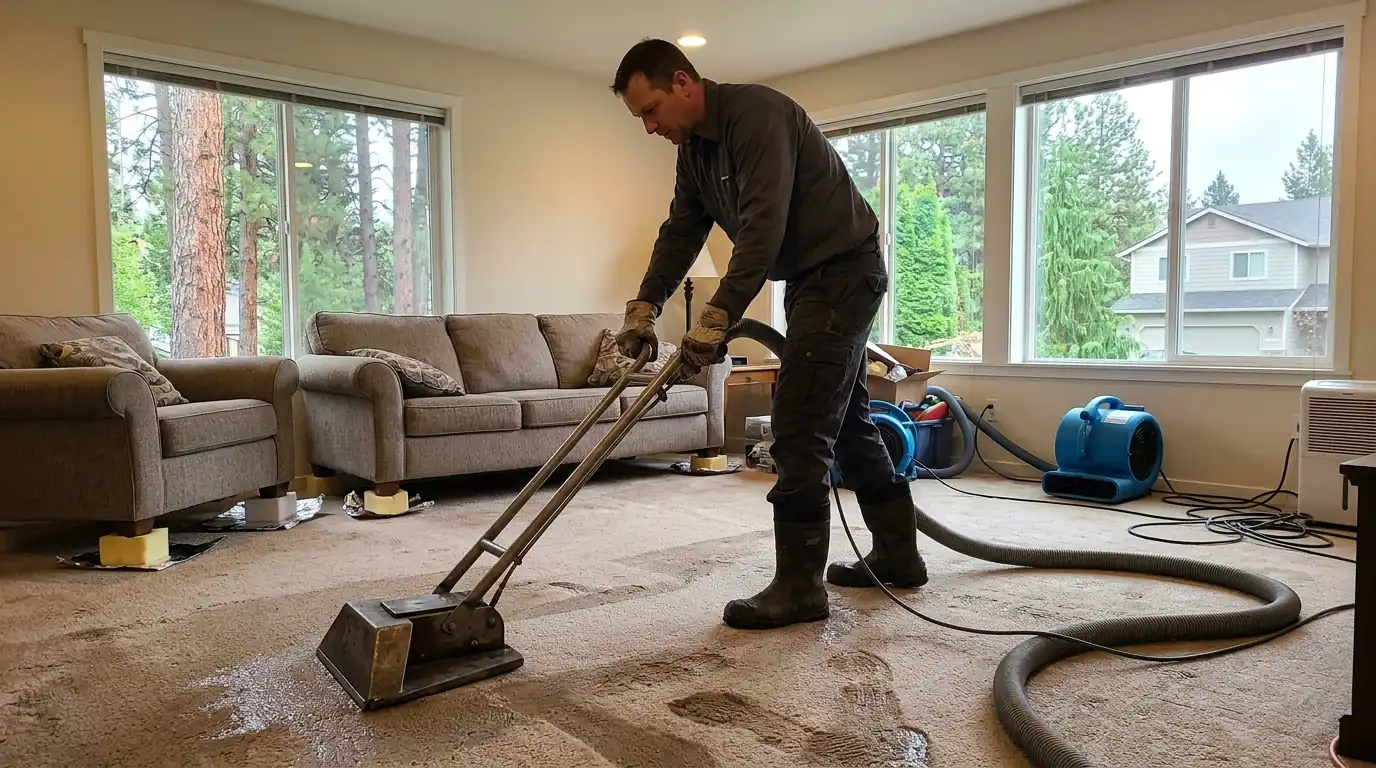
On carpet, we use extraction wands and weighted tools that press the carpet and pad down while pulling water up. Repeated passes remove far more water than a shop vac.
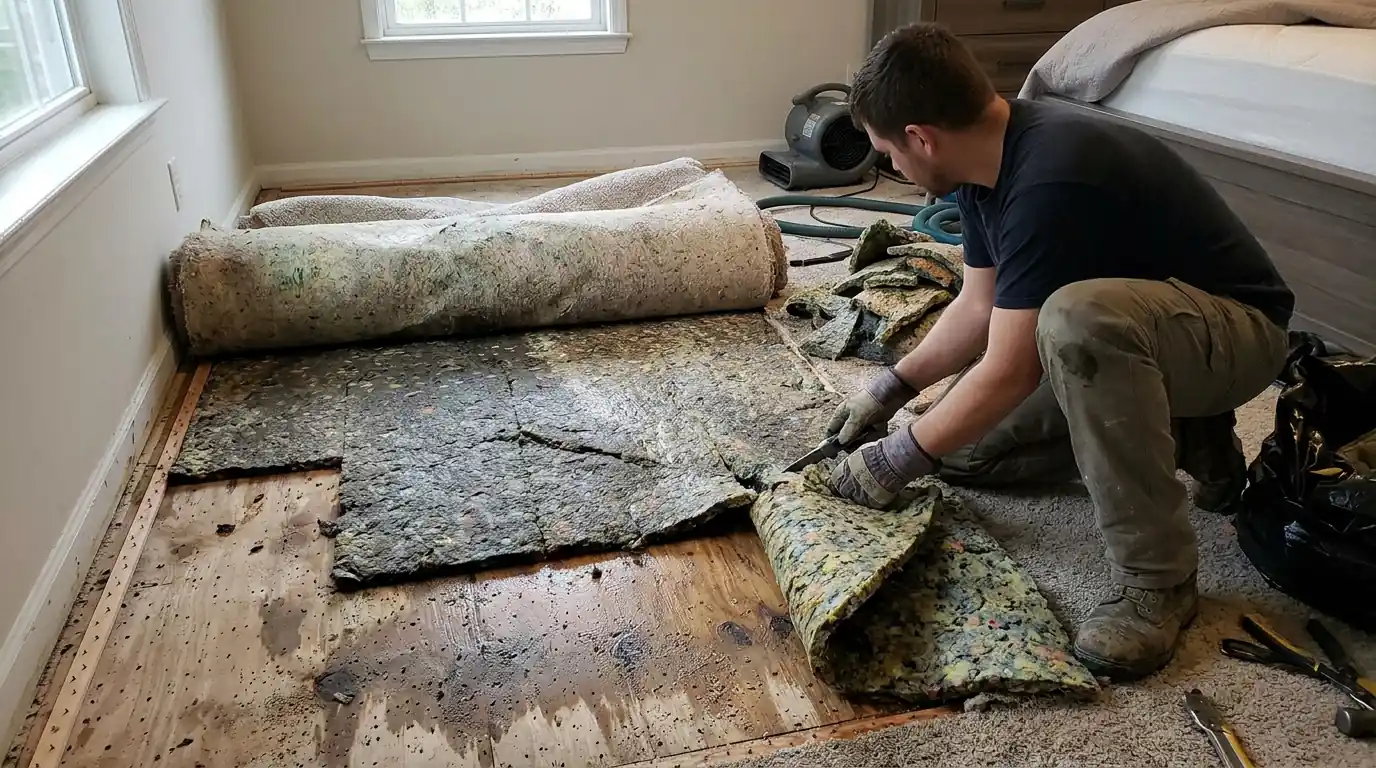
If the pad is soaked through, it usually comes out after extraction, because it dries slowly and is cheap to replace. Carpet decisions are on our carpet water damage page.
Hard-floor water removal
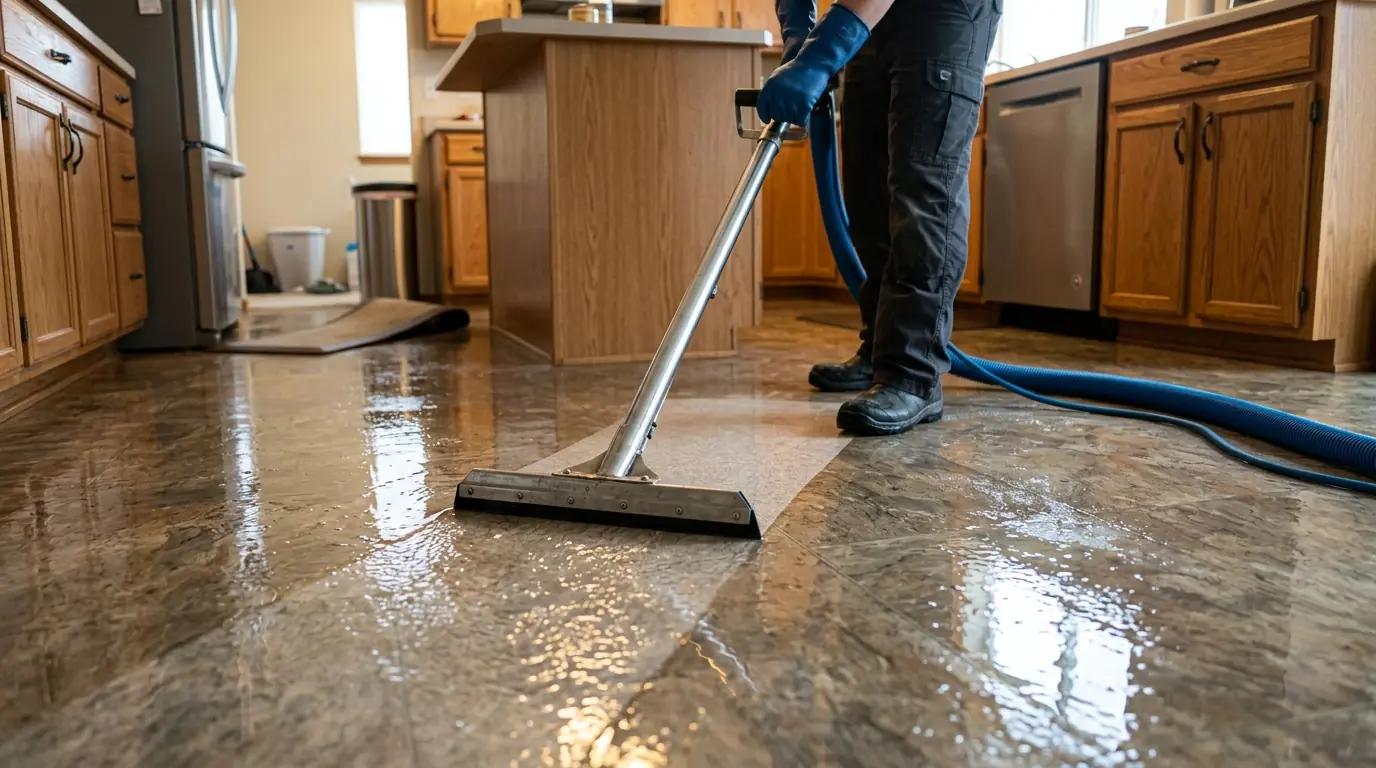
On tile, vinyl, laminate and hardwood, water is squeegeed and extracted from the surface and the gaps. Laminate and engineered flooring may already be absorbing water at the joints, so speed matters most here.
We check under floating floors with a moisture meter after the surface is clear.
Standing water pump-out
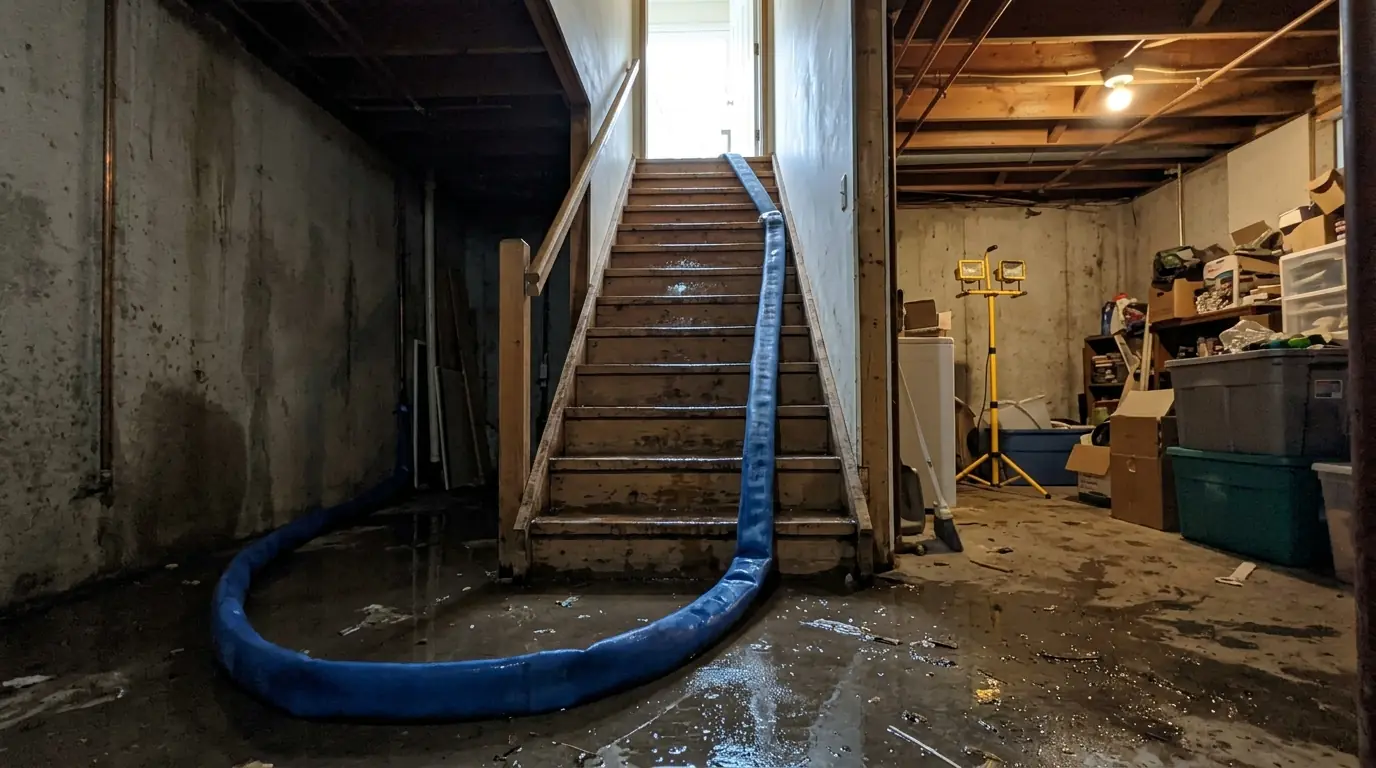
When there are inches of water in a basement or crawl space, submersible pumps move it out first, then extraction tools take up what the pumps leave.
Power to the area is shut off before anyone works in standing water.
How long extraction takes
Most extraction takes an hour or two on a typical room, longer for a basement with standing water. Drying starts right after and usually runs three to five days.
Burst pipes, thaws and the first hour in Spokane
Most of the extraction calls we take in winter come from frozen pipes that split and start running on the warm-up. During one January 2024 cold stretch, a Spokane plumbing company's calls rose from about 20 a day to about 100, nearly all frozen or burst pipes. Spokane water meters sit in pits in the parking strip that are often snowed in, so closing the inside shutoff quickly is what limits how much water there is to extract.
What you can do while you wait
Safe to do yourself
- Close the water shutoff and turn off power to wet rooms from a dry spot
- Lift rugs, cushions and electronics off wet floors
- Use towels to stop water spreading to dry rooms
- Photograph the water before cleanup starts
Better left to us
- Extracting water from carpet and pad
- Pumping standing water out of a basement
- Handling contaminated water
- Measuring what is still wet afterward
A wet-dry vacuum helps with small spills on hard floors. It does not pull water out of carpet pad, and it should never be used on sewage.
Planning costs for water extraction
Extraction is part of the overall water job. These published national ranges give a sense of the first-visit cost range.
- Volume of waterInches of standing water take longer than a wet carpet.
- Floor typesCarpet and pad take more passes than tile.
- Water categoryContaminated water needs protective handling and disposal.
- AccessBasements and crawl spaces may need pumps and hoses run outside.
- Time of callExtraction happens as soon as we arrive, day or night.