Quick answer
Appliance leak water damage cleanup in Spokane Valley starts by shutting off the supply valve, pulling the appliance out and extracting the water from the floor, then drying under the cabinets, flooring and the wall behind. The water is usually clean when it starts, so fast drying keeps most of these jobs out of replacement work.
Signs an appliance has been leaking
Warped flooring in front of the fridge
A slow ice maker leak usually shows here first.
Swollen toe kicks by the dishwasher
Water has been running under the cabinets.
A musty smell from the laundry
Moisture behind or under the washer.
Stains on the ceiling below the laundry
An upstairs washer leak.
Bulging washer hoses
A hose about to fail.
A soft floor near an appliance
The subfloor may already be damaged.
Why appliance leaks spread further than they look
Dishwashers, washing machines and refrigerators sit on the floor against a wall, often next to cabinets. When they leak, the water goes under them, under the cabinets beside them and into the wall cavity behind, where nobody sees it until the floor buckles or the cabinet toe kick swells.
Most failures are hoses and connections rather than the appliance itself: a rubber washer hose that splits, a dishwasher supply or drain line that loosens, a plastic ice maker line that cracks.
We dry the room and the cabinets; the appliance repair goes to an appliance technician and the cabinets, if needed, to our cabinet repair work. We photograph the make, model and serial label before anything is moved.
How an appliance leak cleanup runs
- 1
Shut off and photograph
Valve closed; appliance label and failed part photographed.
- 2
Pull the appliance
Move it to reach the water underneath and behind.
- 3
Extract and map
Water out; readings under cabinets, flooring and the wall.
- 4
Dry
Air directed under toe kicks and into wall cavities; daily readings.
- 5
Repair
Cabinets, flooring and drywall restored once dry.
Dishwasher leaks
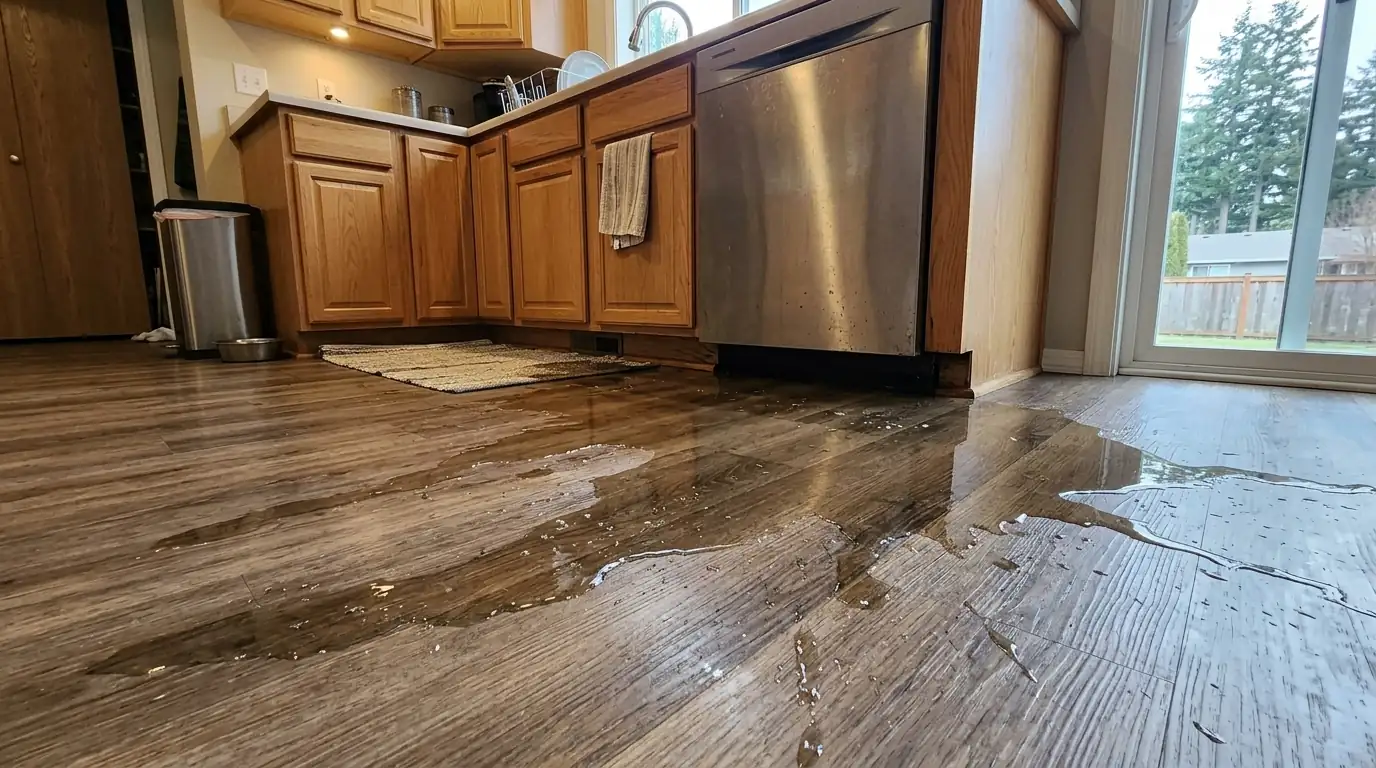
Dishwashers leak from the door seal, the supply line, the drain hose or the pump. The water runs under the dishwasher into the sink base and along the cabinet run, and under vinyl or laminate flooring.
We pull the dishwasher, read the floor under the cabinet run and the wall behind, and dry with air directed under the toe kicks.
Washing machine hose failures
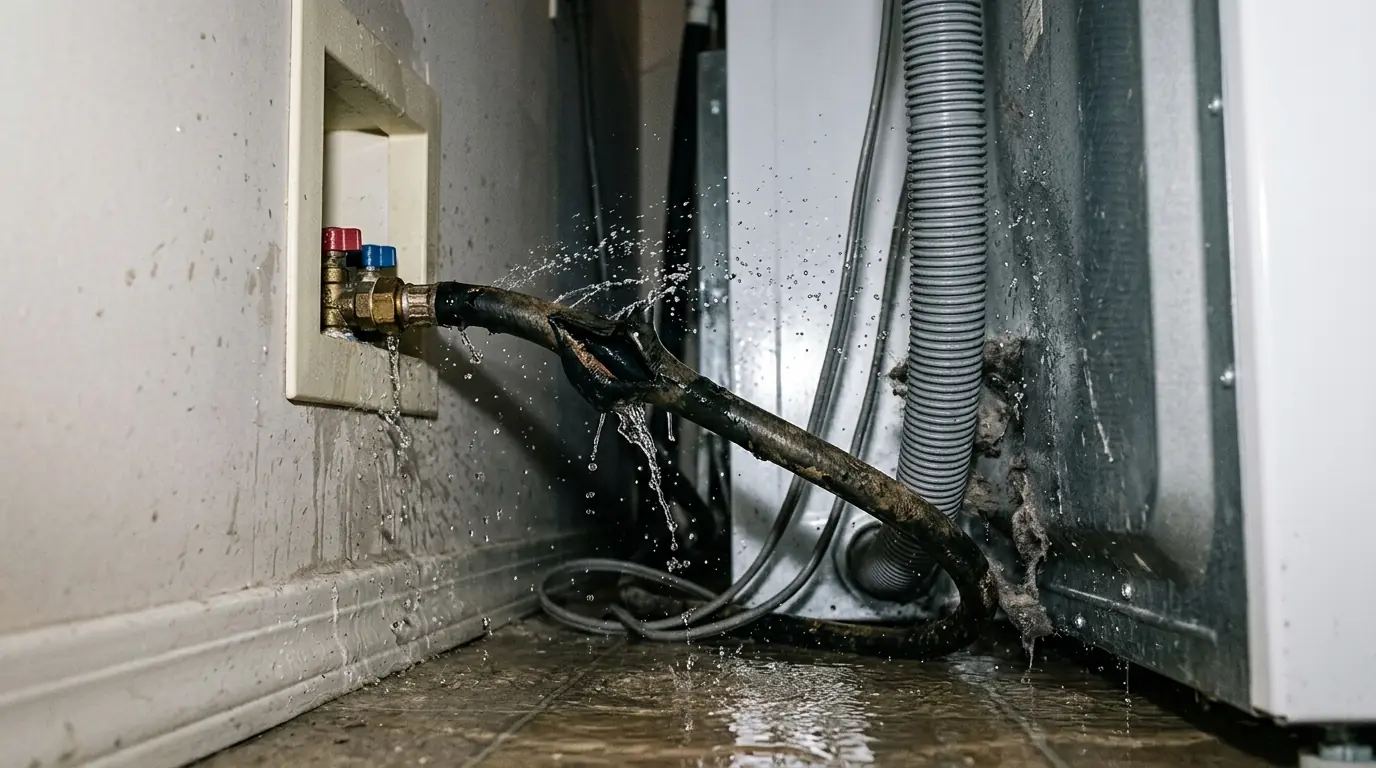
Rubber washer fill hoses age and burst, often while no one is home, and they leak at full pressure until the valve is closed. In an upstairs laundry, that water goes straight through to the ceiling below.
Braided stainless hoses and a leak-detection valve are worth considering when the washer goes back in.
Refrigerator ice maker lines
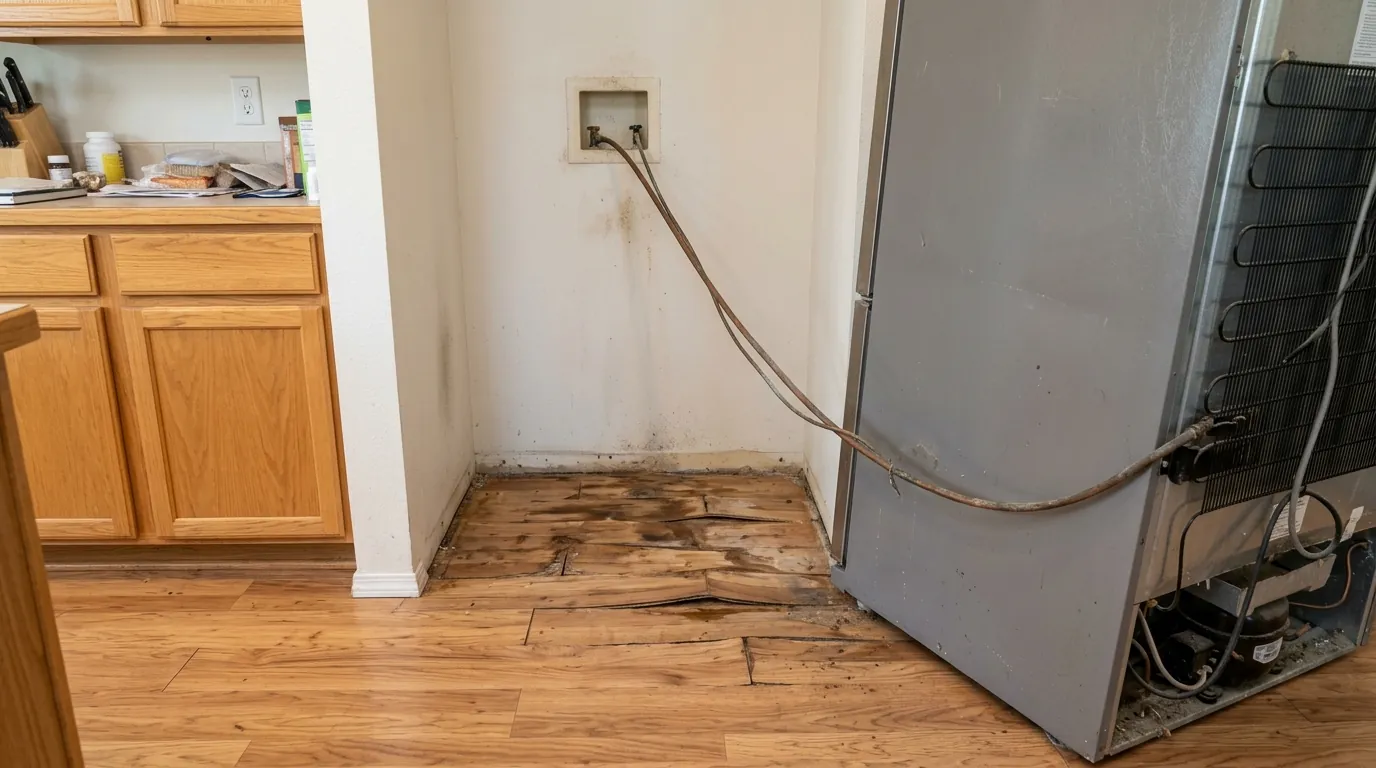
Ice maker and water dispenser lines, especially thin plastic ones, crack and drip behind the fridge for weeks. The first sign is often warped flooring in front of the refrigerator or a soft spot near it.
We pull the fridge, dry the floor and wall behind it, and check for mold where the leak was slow.
Upstairs laundry rooms and multi-unit buildings
Detached single-family homes make up about 59.7% of Spokane Valley's housing, so roughly 40% of units sit in attached or multi-unit buildings. In those buildings a failed washer hose or dishwasher line does not stop at your floor: it reaches the unit below, and the cleanup has to cover two homes and two sets of records. That is why on every multi-unit appliance leak we read the ceiling below before we leave.
What to do right after an appliance leak
Safe to do yourself
- Close the supply valve behind the appliance
- Unplug the appliance if you can do it from a dry spot
- Mop up surface water and move rugs
- Photograph the appliance label and the leak
Better left to us
- Pulling heavy appliances out of tight spaces
- Drying under cabinets and flooring
- Opening a ceiling below an upstairs laundry
- Records for the insurance claim
Leave the failed hose or part in place or in a bag; your insurer or the manufacturer may want to see it.
Planning costs for appliance leak cleanup
Appliance water starts out clean, so fast drying keeps costs in the clean-water range. National planning ranges are below.
- How long it leakedA burst hose found right away is very different from a fridge line that dripped for weeks.
- Cabinets and flooringSwollen cabinets and floating floors often need replacement.
- Floor belowUpstairs laundry leaks reach the ceiling of the room below.
- MoldSlow leaks behind appliances often need a small remediation.
- RebuildCabinets, flooring and drywall are priced once dry.