By Bonnie Kincaid, Water Damage Guides Editor
Updated
Quick answer
When a pipe bursts, close the main water shutoff first, then turn off power to any wet room at the panel, move electronics and valuables off the floor, and photograph the water before cleanup starts. In Spokane-area homes the main shutoff is usually inside, where the line comes through the foundation, because the meter pit in the parking strip is often buried in snow.
Minute one: close the main shutoff
Everything else waits until the water stops. In most Spokane Valley and Spokane houses the main shutoff is on the wall where the water line comes through the foundation: in the basement, in a utility room, or just inside a crawl space hatch. Slab homes and many newer houses put it in the garage or a closet near the water heater.
Older valves have a round handle you turn clockwise until it stops. Newer ones have a lever that closes with a quarter turn, so the lever ends up across the pipe. If a wheel valve will not move, firm pressure with both hands is fine; a long wrench and a lot of force can snap an old valve stem and make things worse.
Do not count on the meter. Spokane water meters sit in pits in the parking strip, and in winter the lid is often under snow and frozen in place. The best time to find and test the inside valve is a dry afternoon in October.
Minute two: make the house safe
Water and electricity are the real danger in the first hour. If water is near outlets, cords, a power strip or a light fixture, turn off those circuits at the panel from a dry spot. Never walk through standing water to reach a breaker; if the panel is in a flooded basement, call the utility or wait for us.
If water reached a gas furnace or water heater, leave it off and have it checked before you relight it. If a ceiling is bulging with water, keep people out from under it, set a bucket underneath and, only if you can reach it safely, poke a small hole at the lowest point so the water drains where you choose.
Minutes three to ten: move, mop and photograph
With the water off and the power safe, the goal is to stop the damage from spreading and to record what happened before anything is moved too far.
- Lift rugs, electronics, papers, photos and anything irreplaceable off the floor
- Pull furniture off wet carpet, or put foil or plastic lids under the legs so stain and rust do not transfer
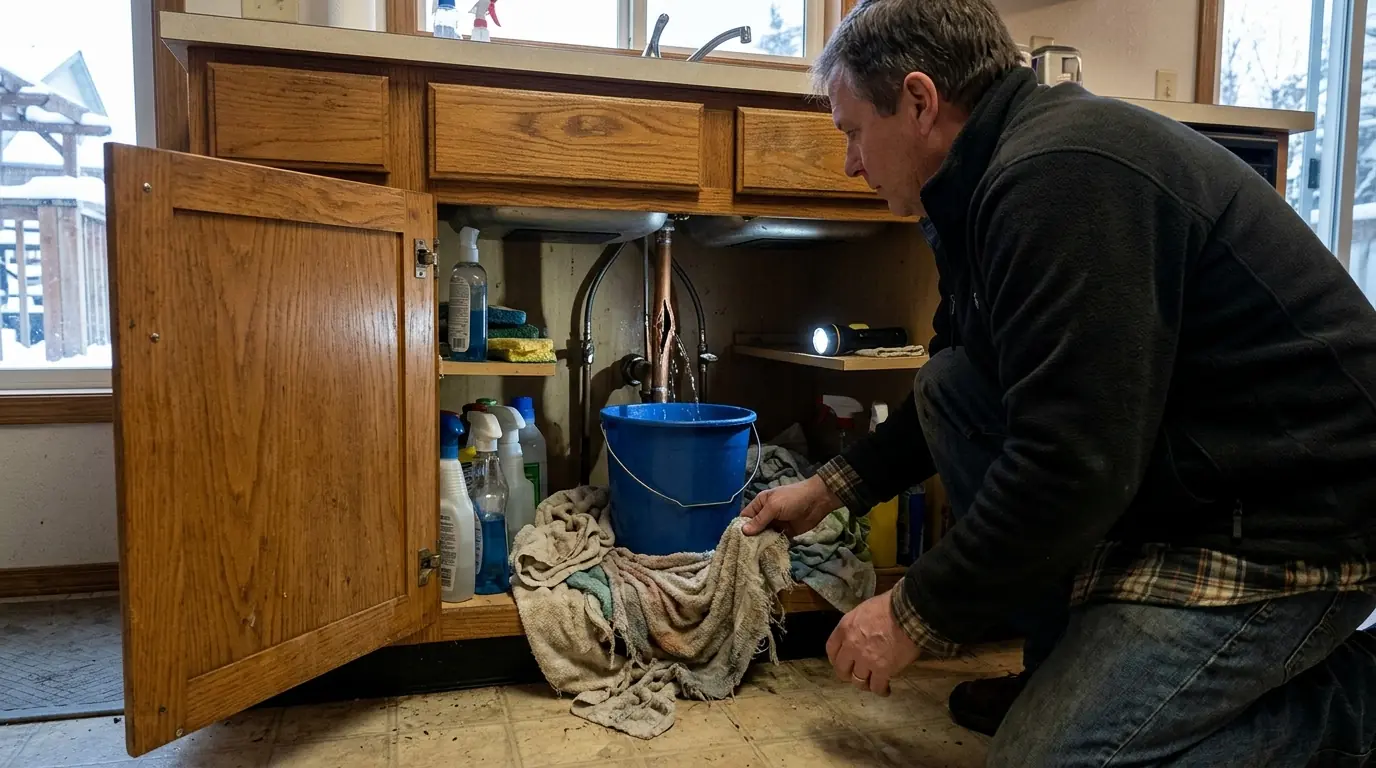
- Open the cabinet doors under any sink that is wet so air can reach the cabinet floor
- Mop or towel standing water on hard floors before it runs under baseboards
- Photograph the split pipe, the standing water and every room it reached, with a wide shot and a close shot of each
Why pipes split here, and why on the thaw
Ice expands as it forms. When a section of pipe freezes, the ice plug pushes water toward the closed faucet beyond it, and the pressure in that trapped stretch is what splits the pipe. That is why the split is often a few feet from the frozen spot, and why nobody notices until the weather warms and the ice melts.
Cold snaps here produce a lot of these at once. In January 2024 the Spokane Valley Fire Department answered 179 alarm calls tied to frozen or burst pipes. Spokane Valley's median home was built in 1979, and houses of that age commonly have supply lines in exterior walls and crawl spaces, which are the first places to freeze.
What not to do
A few common first reactions make a burst pipe job bigger or more dangerous.
- Do not thaw a frozen pipe with a torch or any open flame; use gentle heat such as a hair dryer, and only on a pipe you can see
- Do not use a household vacuum on water; even a wet-dry vacuum cannot pull water out of carpet pad
- Do not start cutting drywall or pulling carpet before you have photographed everything
- Do not paint over a water stain once things look dry; the wall may still be wet behind it
- Do not turn the main back on until the broken section has been repaired or capped
When to call, and what happens next
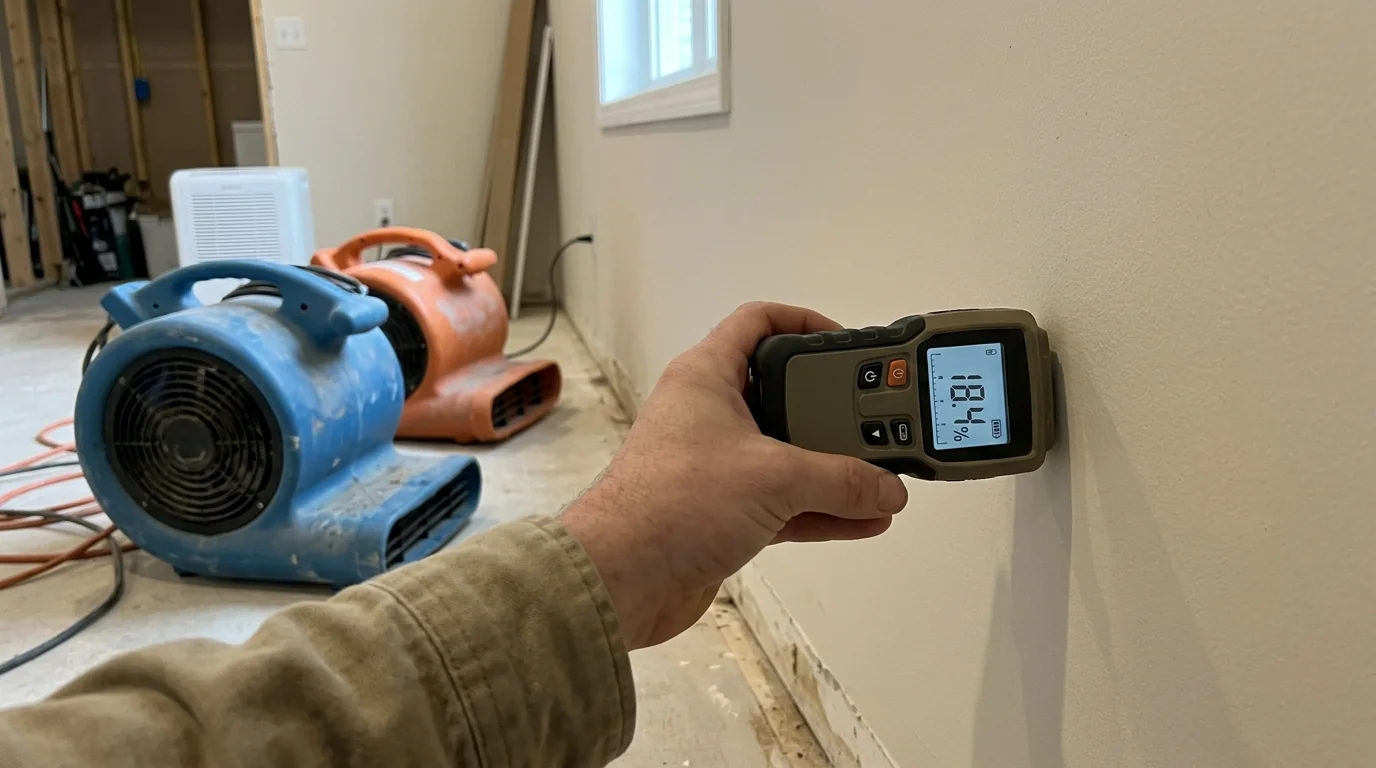
Call as soon as the water is off if it reached carpet, drywall, a ceiling or more than one room, or straight away if you cannot find or close the shutoff. We answer 24/7 and start on the phone with the steps above. The first visit covers the source, extraction, a moisture map and drying equipment; the details are on our burst pipe water damage and water extraction pages.
Typical residential drying in the Spokane area runs about three to five days once the water is out, then one to two weeks of repairs. If you plan to claim it, our insurance claim help page explains how the photos and daily readings are used.
Preventing the next one
Most burst pipes are preventable with a little work before the first hard freeze.
- Find and test the main shutoff, and show everyone in the house where it is
- Disconnect garden hoses before the first freeze so the outside faucet can drain
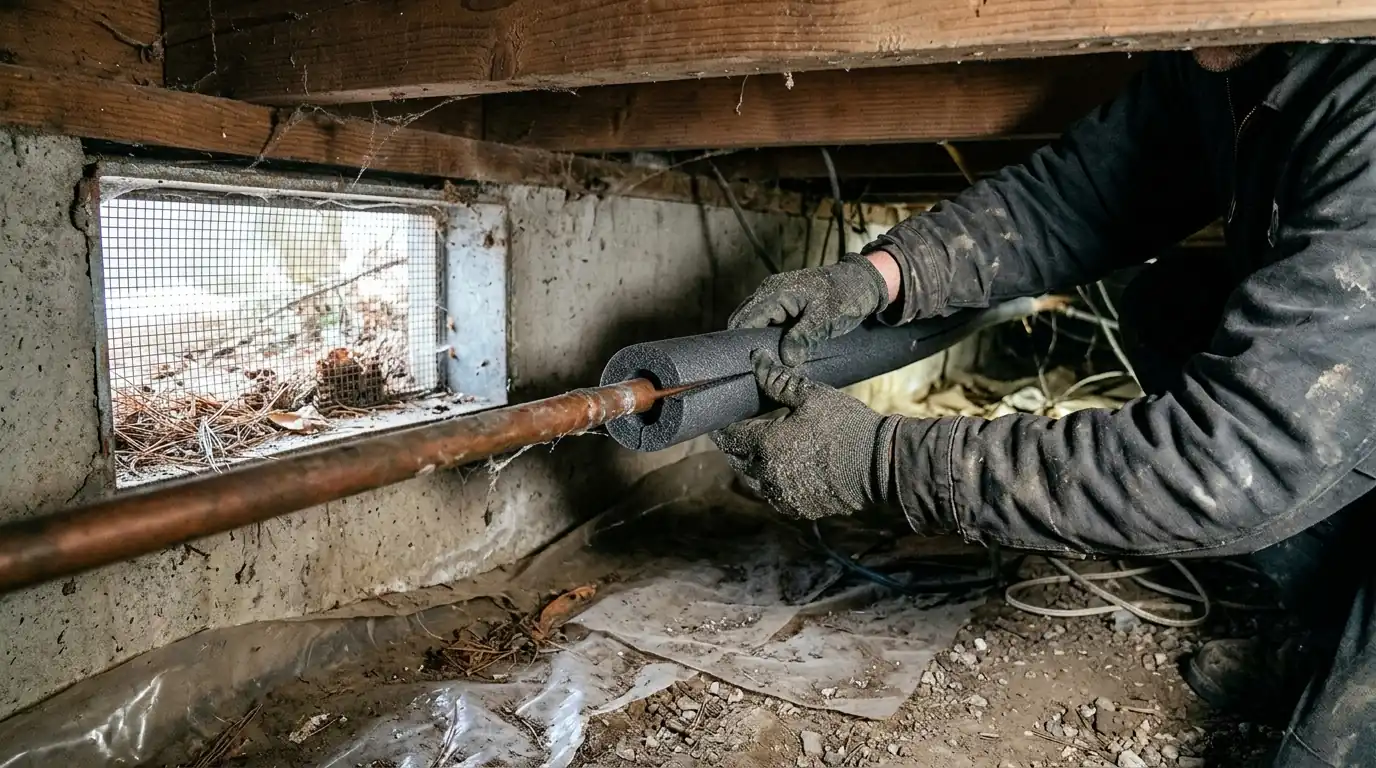
- Insulate exposed supply lines in crawl spaces, garages and unheated rooms
- On subzero nights, open sink cabinets on exterior walls and let a faucet drip
- If you leave in winter, keep the heat on and ask someone to check the house