By Bonnie Kincaid, Water Damage Guides Editor
Updated
Quick answer
To prevent frozen pipes before a Spokane cold snap, disconnect garden hoses, insulate pipes in crawl spaces, garages and outside walls, seal drafts near plumbing, keep the heat on when you are away, open sink cabinet doors on outside walls and let a faucet drip on the coldest nights. Know where your main shutoff is before you need it.
Why cold snaps are when the calls come
Spokane winters are not always brutal, but a few days below zero can split pipes all over the county at once. In January 2024, during one of those stretches, the Spokane Valley Fire Department answered 179 alarm calls tied to frozen or burst pipes, and one Spokane plumbing company said its daily calls jumped from about 20 to about 100, almost all of them frozen or burst lines.
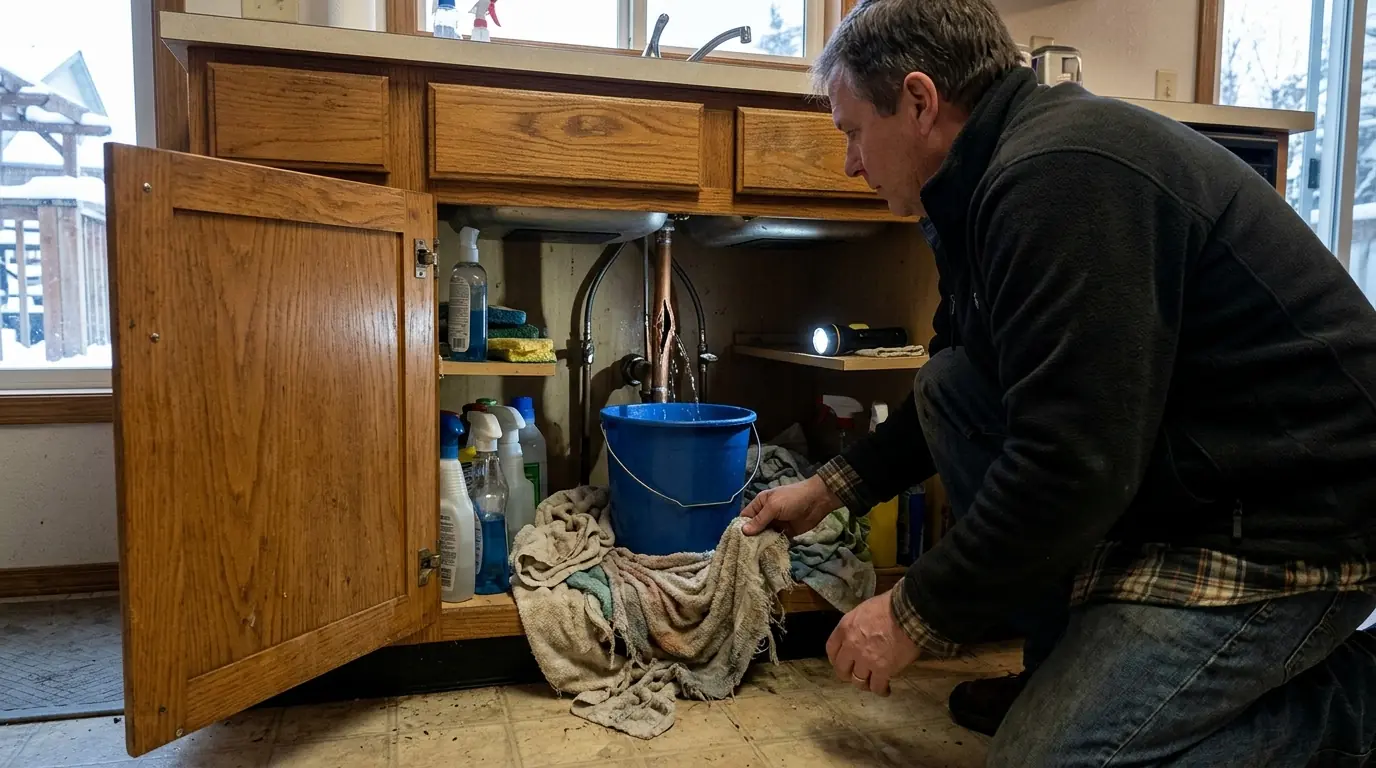
Pipes freeze where cold air reaches them: in crawl spaces, garages and outside walls, and under sinks on outside walls. And most of them do not start leaking while they are frozen. The ice expands, the pipe splits, and the water runs when it thaws, often the next afternoon, when nobody is watching.
Where pipes freeze in Spokane-area homes
If you know where your vulnerable lines are, you know where to spend your time.
- Crawl spaces, especially near open foundation vents and the rim joist
- Garages, including lines to a washer, a utility sink or a water heater
- Outside walls, especially kitchen and bathroom sinks on exterior walls
- Hose bibs with a hose still attached, which traps water in the valve
- Lines to shops, barns and well houses on rural lots
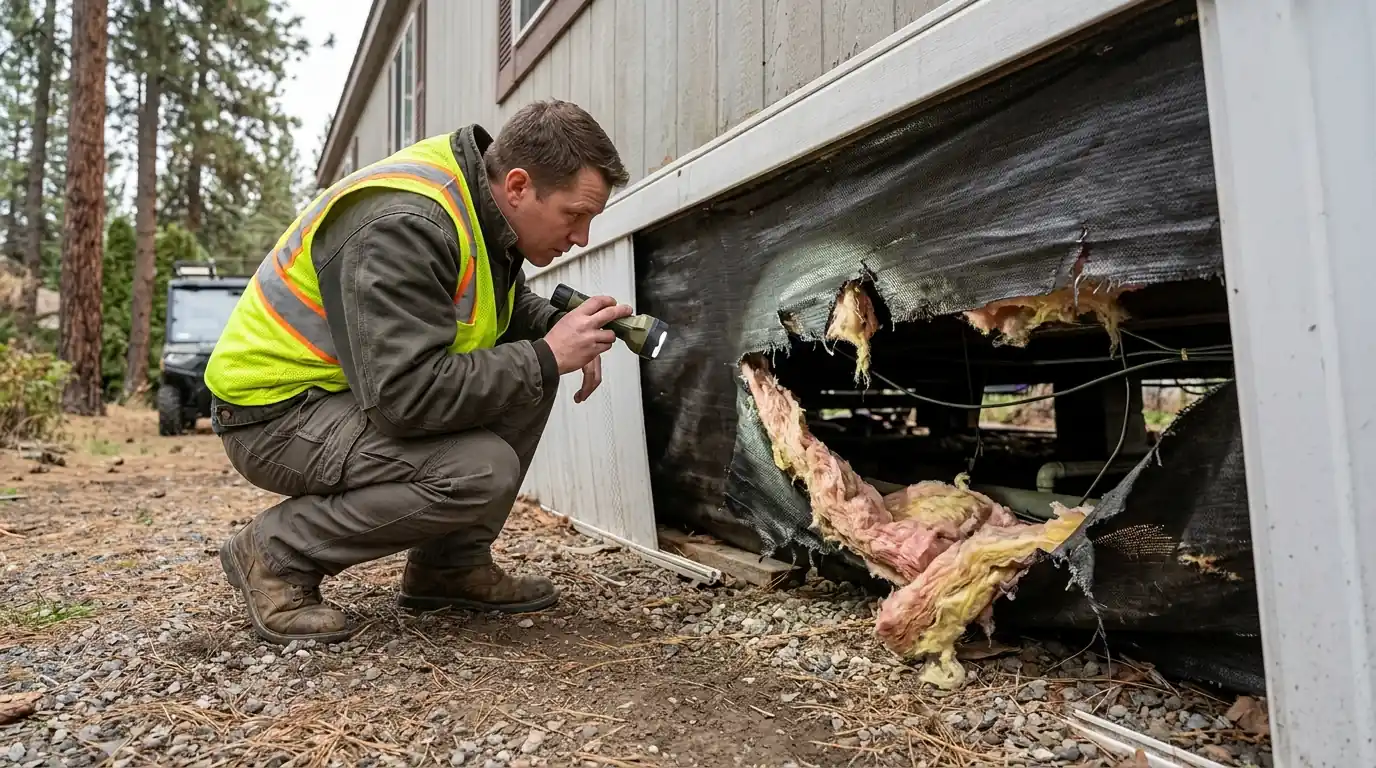
- Manufactured home bellies where heat tape or skirting has failed
In the fall, before the first hard freeze
A couple of hours in October or November prevents most winter calls.
- 1
Disconnect hoses
Remove garden hoses so hose bibs can drain; frost-free bibs only work without a hose attached.
- 2
Insulate exposed lines
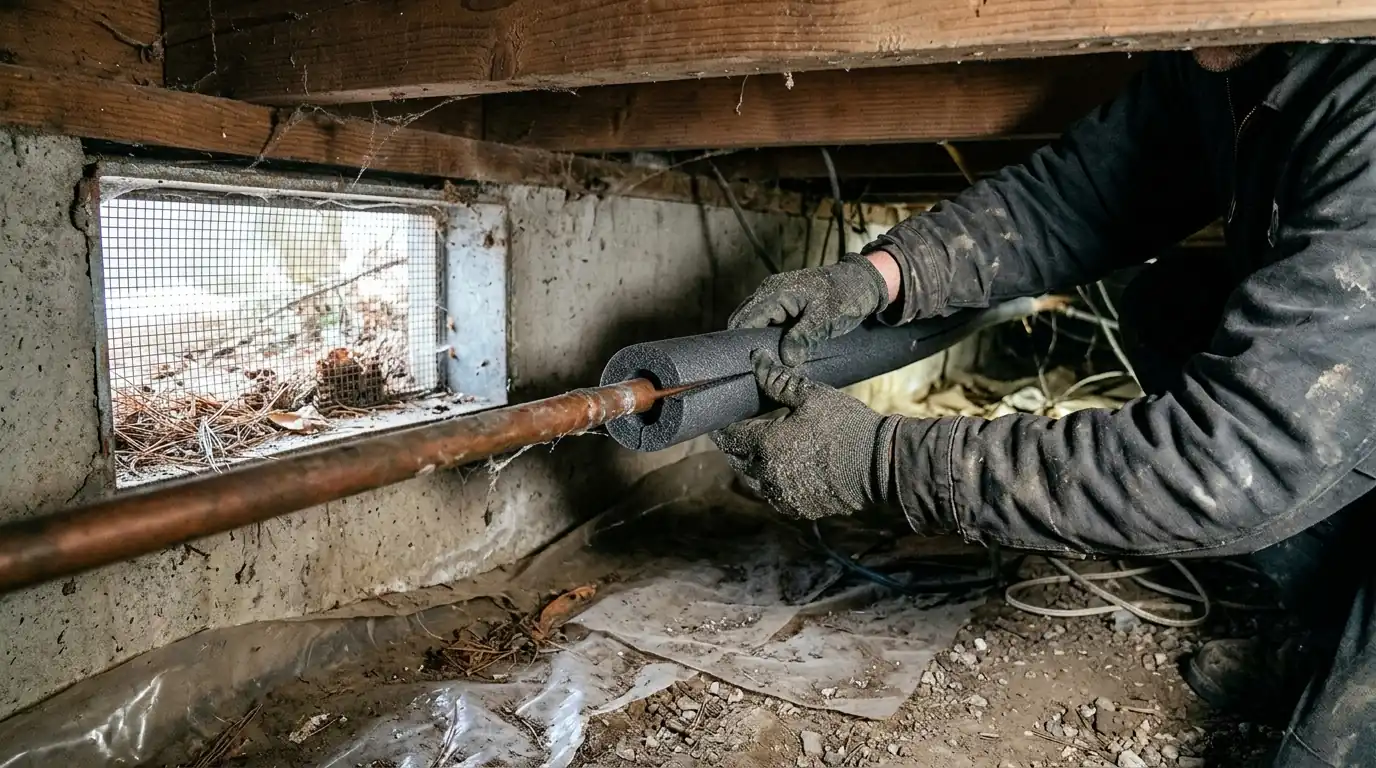
Foam pipe insulation on lines in crawl spaces, garages and unheated spaces.
- 3
Seal drafts
Close gaps around pipes where they pass through walls, and seal the rim joist where cold air gets in.
- 4
Check heat tape
Plug in and check heat tape on manufactured homes, well lines and other exposed runs.
- 5
Find your main shutoff
Locate the inside valve and make sure it turns, and know where the well pump breaker is if you are on a well.
The night a cold snap arrives
When the forecast drops well below freezing for more than a night, a few small things help a lot.
- Open cabinet doors under sinks on outside walls so warm room air reaches the pipes
- Let a faucet on an outside wall drip slightly, hot and cold; moving water is slower to freeze
- Keep the garage door closed if water lines run through the garage
- Keep the thermostat steady day and night rather than turning it down
- Close foundation vents if your crawl space still has open ones
If you are leaving for a few days or more
Empty houses and cabins are where the worst frozen pipe damage happens, because a split line can run for days. Keep the heat on and set no lower than about 55 degrees, and ask someone to check the house during a cold stretch. For longer trips, or for a cabin that sits empty all winter, shutting off the main and draining the lines is the safest choice. Our burst pipe water damage page shows what we see when a line runs unnoticed.
Rural homes, wells and outbuildings
Homes on acreage have more pipe in more cold places: a line from the well house, a pressure tank in a garage or shop, and runs to barns and outbuildings. Insulate the well house and keep a small, safe heat source in it if it has frozen before. Put heat tape on exposed runs and check it every fall. Drain and shut off lines to buildings you do not use in winter. And know that on a well, the shutoff is the pump breaker and the valve after the pressure tank, not a meter.
If a pipe is already frozen
If a faucet only trickles or nothing comes out on a cold morning, a pipe is likely frozen somewhere along the line. Leave the faucet open, and warm the area slowly with a space heater kept at a safe distance or a hair dryer. Never use an open flame or a torch. Check along the line for bulges or cracks, and keep the main shutoff in mind: when the ice melts, a split pipe will start running.
The meter pit and the main shutoff
In Spokane, many water meters sit in pits out in the parking strip, and in winter the lid is often under snow and frozen in place. That is why the shutoff inside the house matters so much: it is the valve you will actually be able to reach in a hurry. Find it now, tag it, and make sure everyone in the house knows where it is. Our burst pipe guide covers the first ten minutes if a line does split.
Insurance and frozen pipes
A sudden burst from a frozen pipe is commonly covered by homeowners insurance. Many policies, though, expect you to keep the heat on or drain the system when a house is vacant, and damage from a pipe that froze in an unheated, unattended house may be treated differently. Check the vacancy and freezing language in your policy before you leave in winter. Our insurance guide has more on what is usually covered.