By Bonnie Kincaid, Water Damage Guides Editor
Updated
Quick answer
A manufactured home belly leak happens when a supply or drain line under the floor leaks into the bottom board, the fabric or plastic wrap that holds the floor insulation. The wrap holds the water like a hammock, soaking insulation and floor decking. Signs include a sagging belly, soft floors near plumbing and a musty smell. The fix is draining the belly, removing wet insulation, drying, replacing soft decking and resealing the wrap.
What the belly is and why it holds water
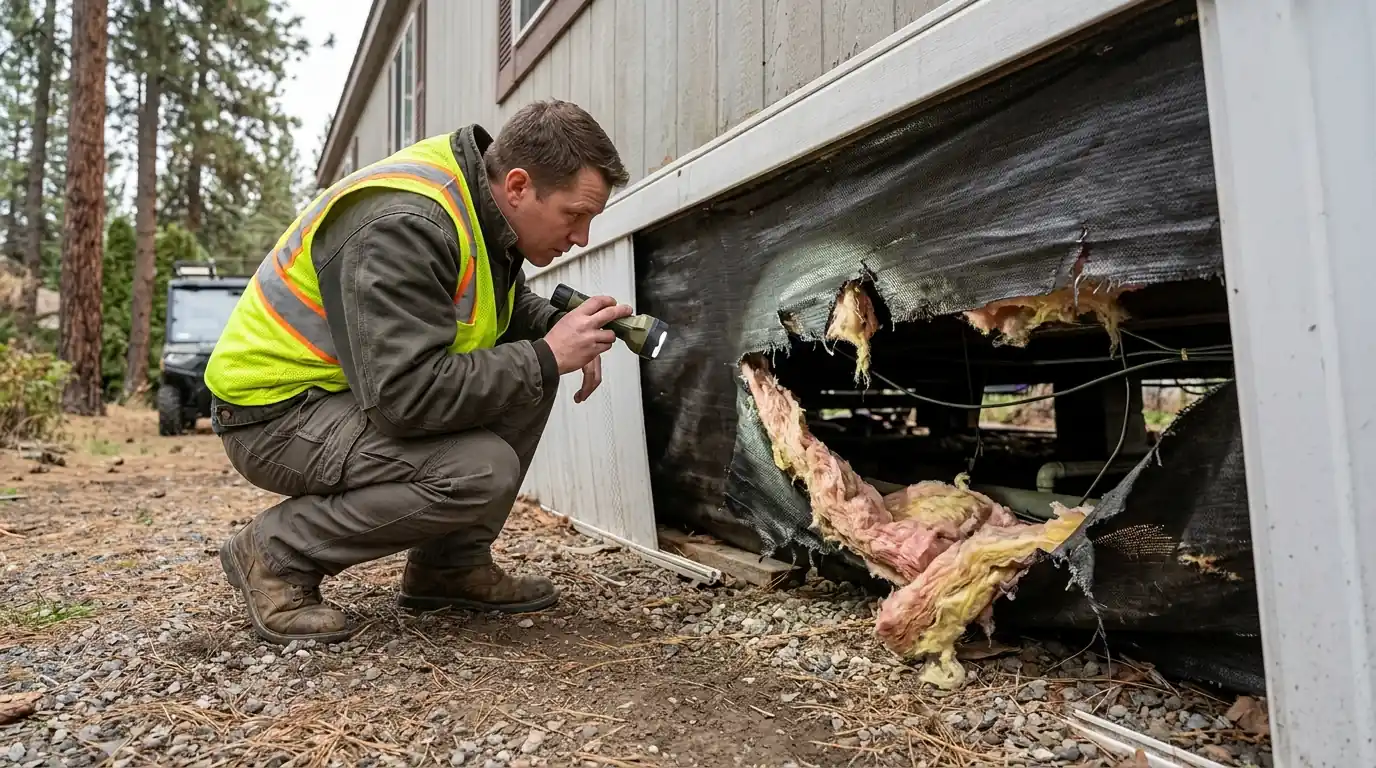
Under the floor of a manufactured home is a layer called the bottom board or belly wrap: a sheet of woven fabric or plastic stretched across the underside of the floor framing. Inside it sits the floor insulation, and usually the water supply lines, drain lines and heating ducts.
The wrap is there to keep out cold air, moisture from the ground and rodents. It is not built to drain. When a line leaks inside it, the water collects in the lowest point and the wrap sags under the weight, soaking the insulation and holding water against the floor decking above.
Why winter is when most belly leaks start
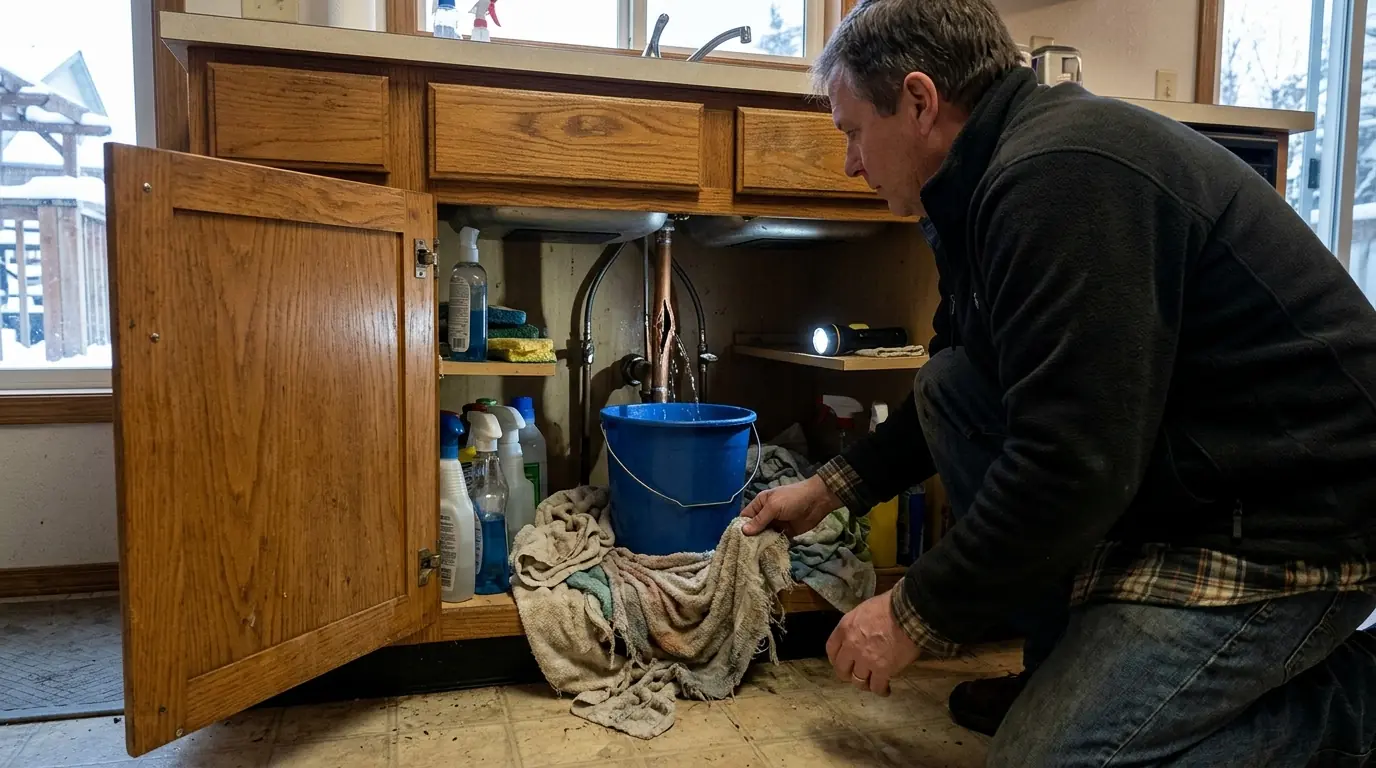
Supply lines in the belly sit just above the cold air under the home. They are protected by insulation, heat tape and the skirting around the home, and when any of those fail in a hard freeze, the lines can freeze and split. Like most frozen pipes, they usually start leaking on the thaw. Long cold stretches are hard on them: in January 2024 the Spokane Valley Fire Department answered 179 alarm calls tied to frozen or burst pipes in Spokane Valley. See our burst pipe guide for the first ten minutes.
Signs your belly is holding water
Most belly leaks are found by noticing something odd inside or by looking underneath.
- A bulge or sag in the belly wrap, visible from the skirting access
- Soft or bouncy floors, especially near the bathroom, kitchen, laundry or water heater
- A musty smell inside, or a damp, sour smell near floor registers
- A higher water bill with no change in use
- Water dripping from the underside of the home, or ice under it in winter
- The sound of running water when every faucet is off
What to do first
If you suspect a belly leak, the first steps are about stopping the water and protecting the floor.
- 1
Shut off the water
Close the main shutoff, often near the water heater or where the line enters under the home.
- 2
Check the heat tape
Make sure heat tape on exposed lines is plugged in and working before the next freeze.
- 3
Look, do not cut
Look at the belly through the skirting access, but do not cut into a sagging section yourself.
- 4
Stay off soft spots
Keep heavy furniture and foot traffic off soft floor areas until the decking is checked.
- 5
Call for help
Draining and drying a belly properly takes equipment and the right repair materials.
Cutting into a sagging belly releases the water all at once and leaves a hole that has to be patched and sealed correctly, or cold air and rodents get in.
How a belly leak is fixed
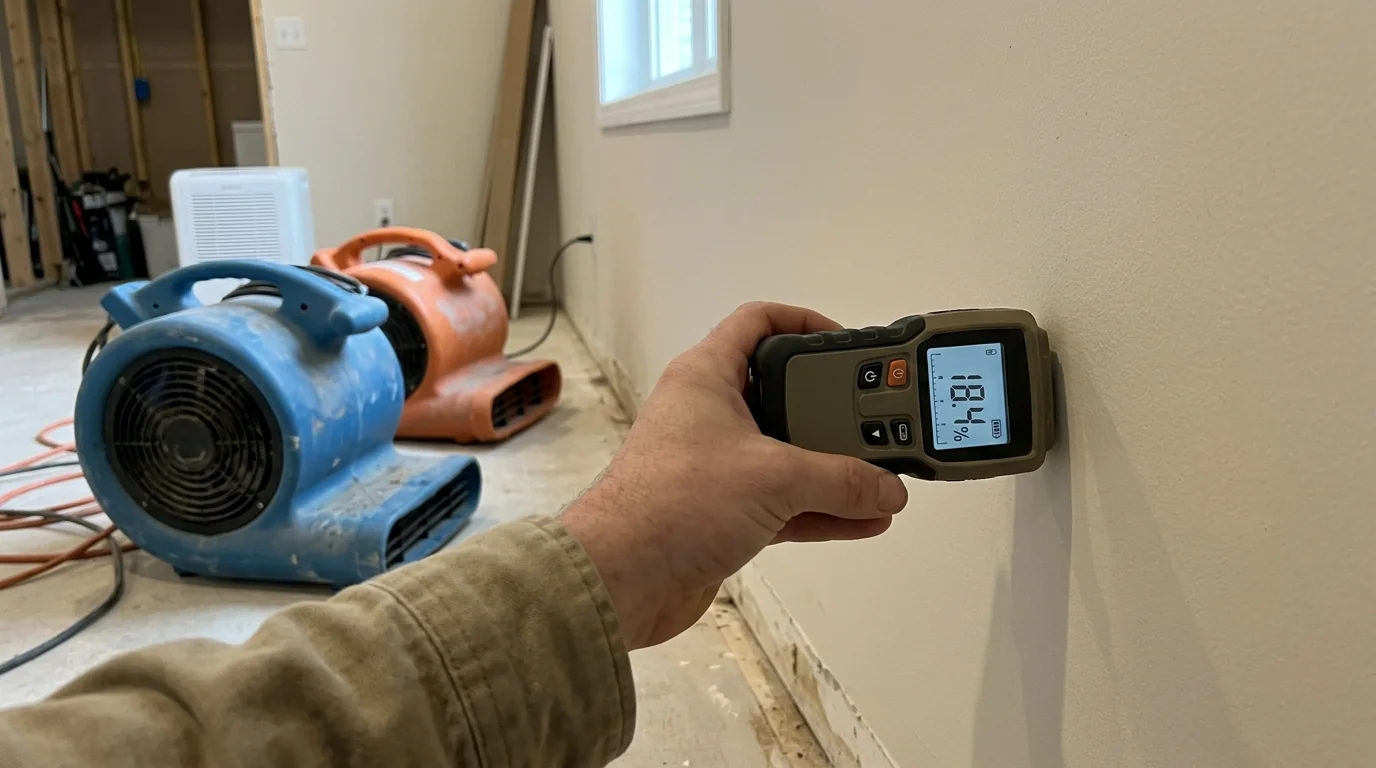
The repair follows the water. Controlled openings are cut at the low point to drain the belly, wet insulation is pulled out and bagged, and the leaking line is repaired by a plumber. The cavity and the floor decking are dried with directed air and dehumidifiers and read every day. Many manufactured homes use particleboard or OSB decking, which swells and weakens when it stays wet, so soft sections are cut out between the floor joists and replaced. Finally, new insulation goes back in and the belly is patched with proper bottom board material and sealed. Our manufactured home water damage page describes the job in more detail.
If your home is in a park
Many manufactured homes in the Spokane area sit in parks, where responsibility for water lines can be split. The line from the park's main to your home's connection may belong to the park, while everything under and inside the home is yours. Before the plumber starts, ask the park office where your responsibility begins, and tell them about the leak; a break on their side of the connection is usually theirs to fix. Parks also often have rules about skirting and how work under homes is done, so check before anything is removed.
Floors, mold and smell
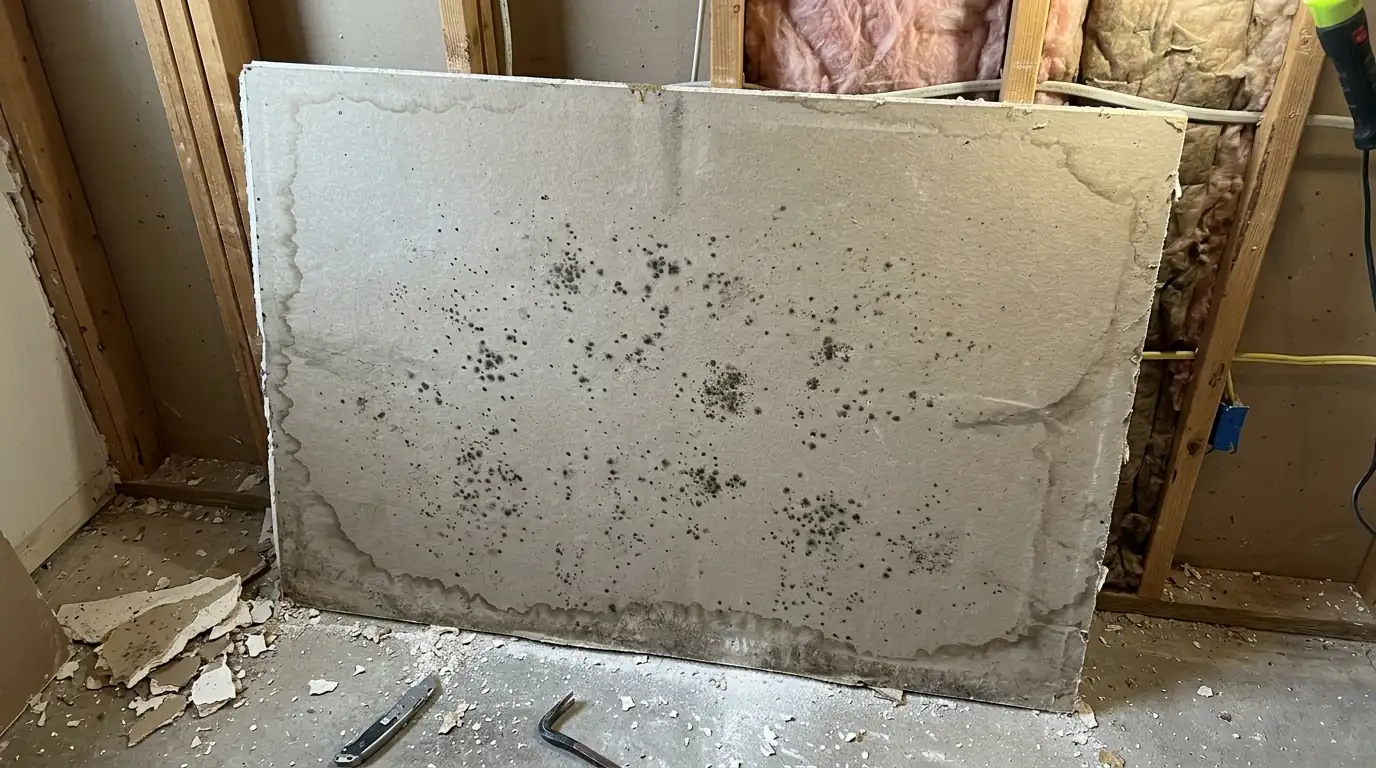
A belly that held water for weeks often brings mold on the underside of the decking and a smell inside the home. Drying the cavity and replacing wet insulation usually ends the smell; decking with mold or softening is replaced rather than cleaned. Vinyl flooring over replaced decking may need to come up and go back down, or be replaced if it was glued.
Preventing the next one
Most belly leaks come back to the same few causes, and most are cheap to prevent.
- Check heat tape every fall and replace any that is damaged or not warming
- Keep skirting intact and vents closed in winter so cold air stays out
- Keep the home heated when you are away in winter
- Repair tears in the belly wrap promptly, before rodents or water get in
- Know where your main shutoff is and make sure it turns