By Bonnie Kincaid, Water Damage Guides Editor
Updated
Quick answer
Mold can begin to grow on damp building materials within 24 to 48 hours, which is why the EPA advises drying water-damaged areas and items within that window. It grows where moisture lingers out of sight: carpet pad, the back of drywall, wall cavities, under cabinets and in crawl spaces. Fast extraction and drying prevent most of it.
Why the first 48 hours matter
Mold spores are already in every house, floating in the air and settled in dust. They do nothing until they land on something damp that they can feed on. Wet drywall paper, wood, carpet backing and the dust in a wall cavity are all food. Give them moisture for a day or two at normal indoor temperatures and growth can start.
That is the reason behind the EPA's advice to dry water-damaged areas and items within 24 to 48 hours. It is also why the first visit on any water job is about speed: getting water out and air moving before the clock runs out.
Where mold hides after a leak
The places that grow mold are the places that stay wet after the room looks dry.
- The underside of carpet pad and the subfloor beneath it
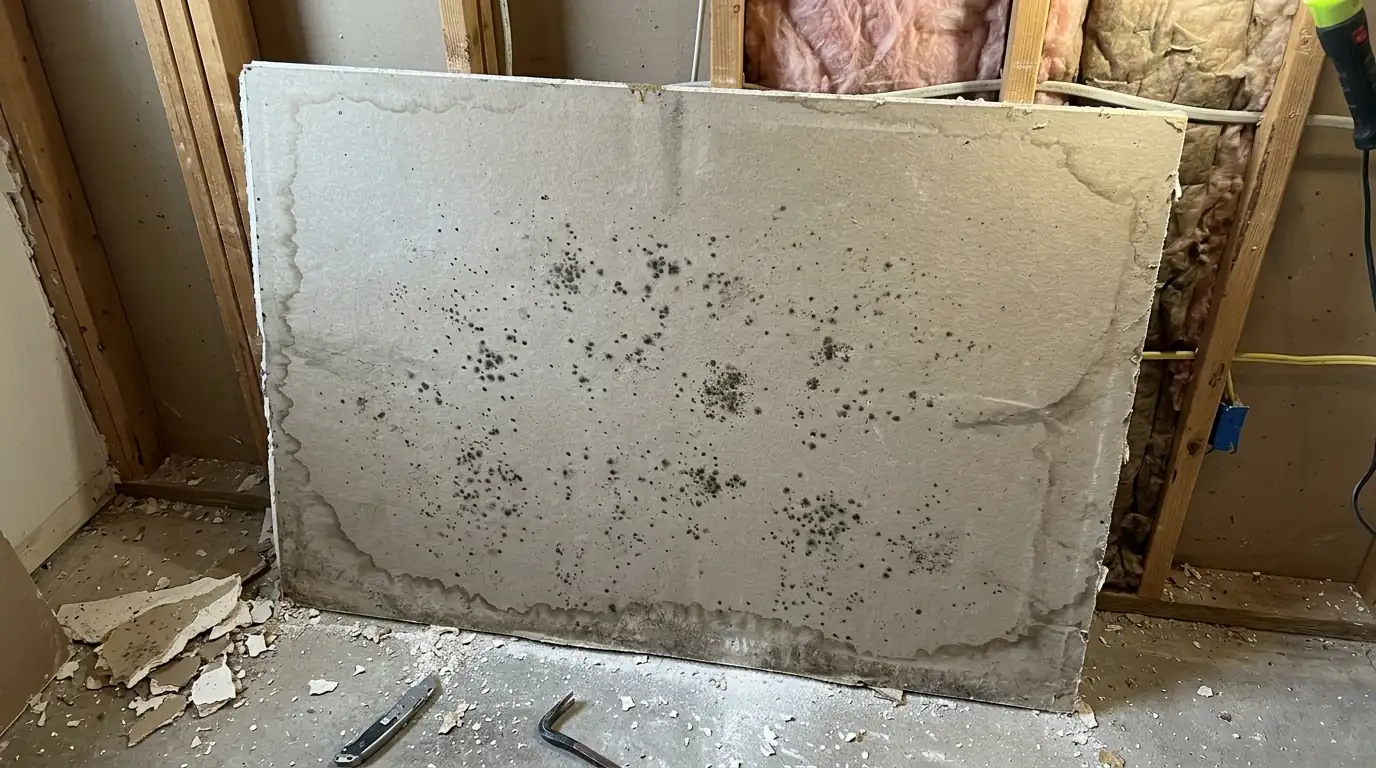
- The back of drywall and the bottom of wall cavities, where insulation holds water
- Under kitchen and bathroom cabinets, behind the toe kick
- Inside ceilings below a bathroom or an ice dam leak
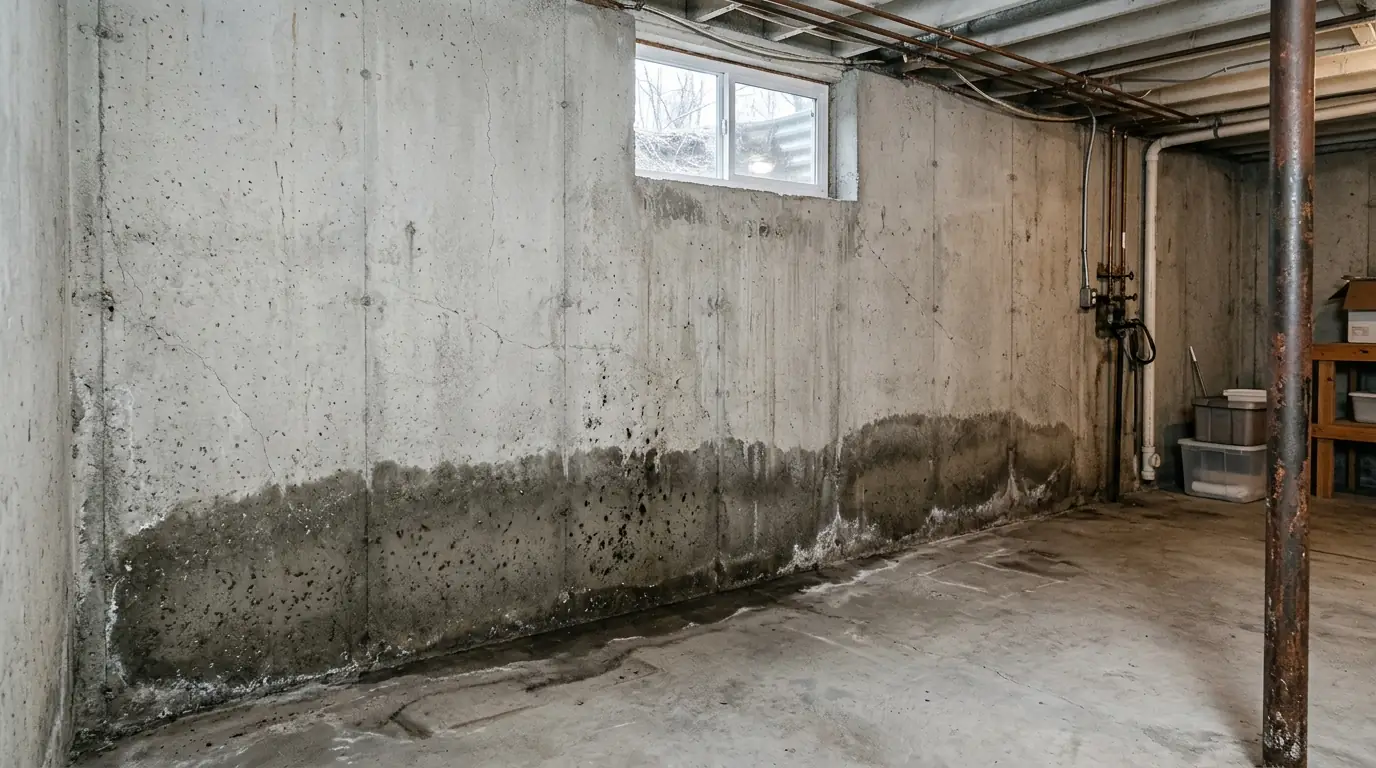
- Crawl spaces and basements where the air stays humid
- Stored cardboard boxes and anything left in a wet closet
Signs it has already started
A musty, earthy smell is usually the first sign, often before anything is visible. After that come stains that spread or come back after cleaning, paint that bubbles or peels, drywall that softens or warps, and dark spotting on baseboards, the back of cabinets or the underside of carpet. If a smell returns every time the weather turns humid, something nearby is still damp.
What to do in the first two days
Most mold after a leak is prevented by what happens right after the leak.
- 1
Stop the water
Close the shutoff and fix or cap the source.
- 2
Get the water out
Extract standing water and pull up soaked carpet pad.
- 3
Open wet spaces
Open cabinet doors, pull toe kicks and remove wet baseboard so air reaches hidden areas.
- 4
Dehumidify
Run dehumidifiers with the room closed; household fans alone mostly move damp air around.
- 5
Measure
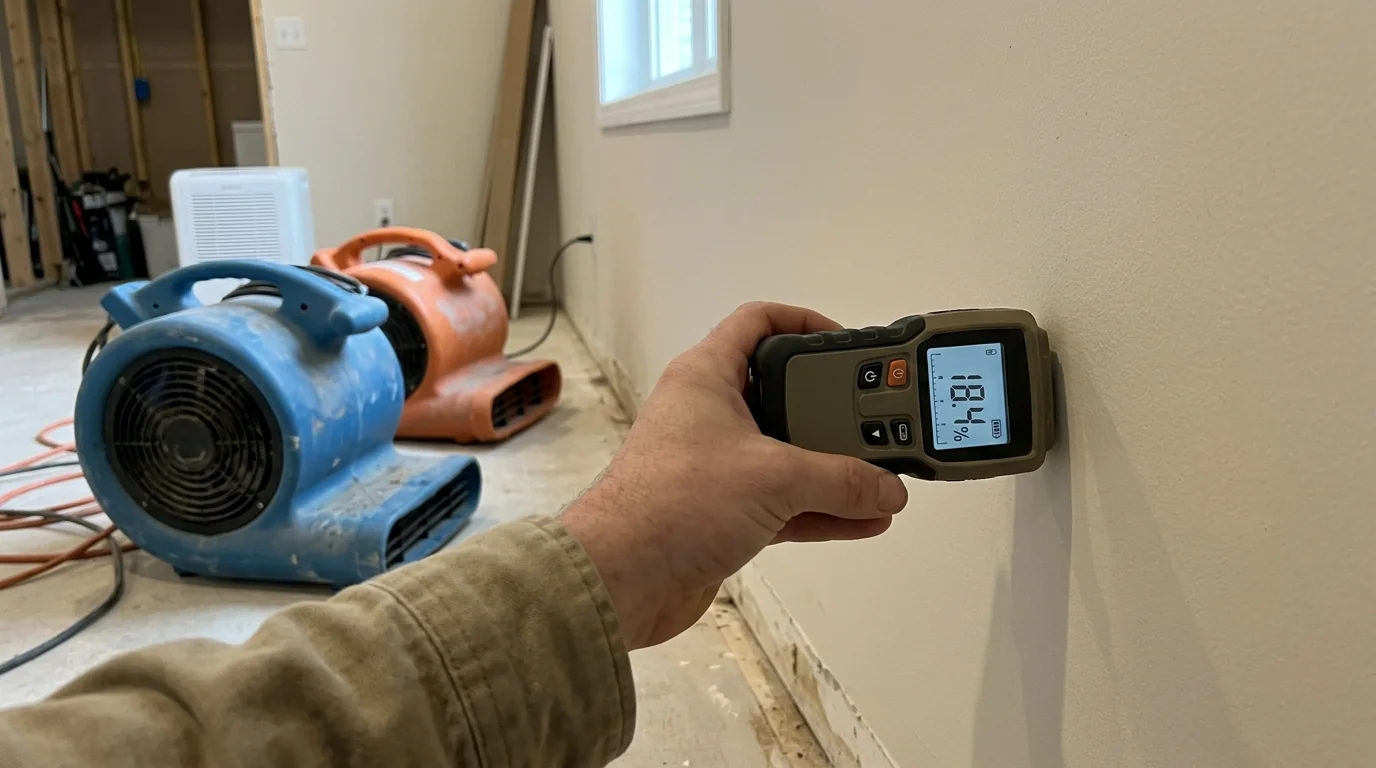
Check walls and floors with a moisture meter, not by touch, before calling anything dry.
If you find mold
The EPA's guidance is that a homeowner can usually clean a small area, roughly 10 square feet or less, on hard surfaces, using protective gloves and eye protection and a mask rated for particles. Larger areas, mold inside walls or ceilings, mold on porous materials such as drywall and carpet, and any mold after sewage or floodwater call for professional removal with containment, so spores are not spread through the house. Our mold remediation page explains how that works.
Do not sand, scrape or dry-brush mold, and do not run fans across it; all three put spores in the air. Painting over mold hides it but does not stop it, and it will come back through the paint while the moisture is still there.
Does mold need to be tested?
Not always. If you can see it and you know why it is there, testing usually adds little; the fix is the same. Testing helps when you smell mold but cannot find it, when someone in the house has health concerns, or when you want proof that an area is clean after removal. Our mold inspection and testing page covers when sampling earns its cost.
Where we see it most in Spokane-area homes
Mold after a leak follows the seasons here. In winter it shows up in attics, where bath fans vent into the attic or warm air leaks up and condenses on the cold roof deck, and behind ceilings stained by ice dams. In spring it shows up in basements, on the back of finished walls and under carpet pad that took snowmelt seepage. Crawl spaces with torn vapor barriers grow it year round.
Older homes add their own spots: plaster walls that held water for weeks after a slow leak, and closets on cold outside walls where condensation collects behind stored clothes.
Keeping it from coming back
Once a leak is fixed and the area is dry, mold stays away as long as the moisture does. The EPA recommends keeping indoor humidity below 60 percent, ideally between 30 and 50 percent. Run bath and kitchen fans that vent outdoors, keep gutters and downspouts working, fix drips under sinks the day you find them, and check the places that flooded once more after the next big rain or thaw. A musty smell is the early warning; follow it before it becomes a stain.
A note on health
Mold affects people differently. Some notice nothing; people with allergies, asthma or weakened immune systems can react more strongly. If anyone in the house has symptoms they think are related, talk to a doctor; this guide is about the building, not medical advice. During removal, sensitive people are better off away from the work area.