By Bonnie Kincaid, Water Damage Guides Editor
Updated
Quick answer
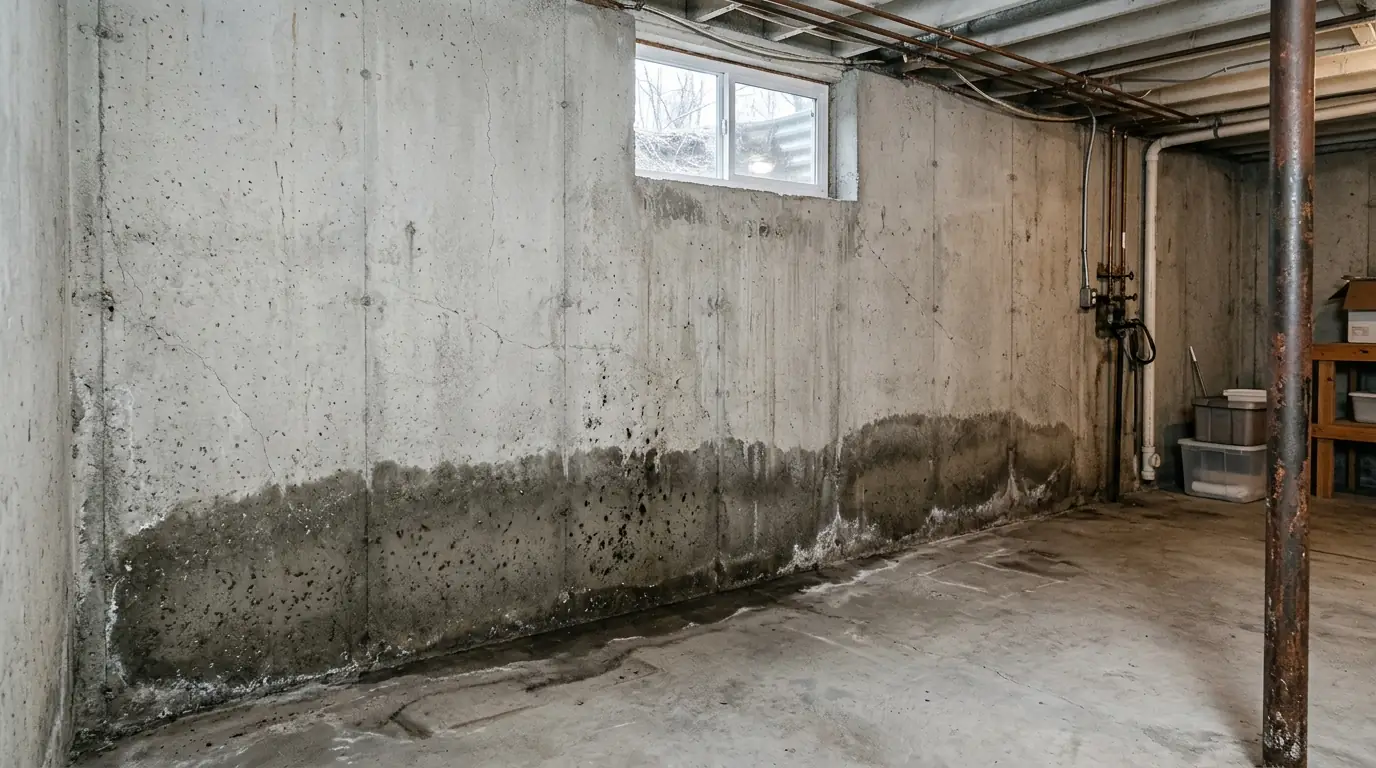
Spring basement seepage happens when snowmelt and rain saturate the soil and push groundwater against foundation walls and up under the slab. It shows up as damp lines at the base of walls, wet carpet edges and a musty smell. Pump out standing water, pull wet pad and dry the slab; grading, gutters, downspout extensions and sometimes drainage work stop it coming back.
Why spring is basement season here
Our snow does not run off all at once. It melts over weeks, into soil that is often still frozen a little way down, and the water has nowhere to go but sideways toward the nearest open space, which is often your basement. The worst weeks are usually late winter and early spring, when daytime thaws melt the snowpack faster than the ground can take it, and a warm rain on top of snow speeds everything up.
The pattern shows up in local records. In 2017 Spokane County officials blamed groundwater fed by rain and snowmelt for repeat basement flooding on one South Hill street, where the catch basin sits on clay and rock. That February, snowmelt runoff from Little Deep Creek poured into a Colbert basement, and in March the Spokane River rose past 27.5 feet for the first time since 2012.
Seepage or a plumbing leak? How to tell
The fix is completely different, so it is worth five minutes to find out which one you have.
| Clue | Usually seepage | Usually a plumbing leak |
|---|---|---|
| When it shows up | After a thaw or a few days of rain | Any time, including dry weeks |
| Where it shows up | Along the base of outside walls or through slab cracks | Near a fixture, a water line or the water heater |
| The water meter test | Meter stays still with every tap off | Meter moves with every tap off |
| Other signs | White mineral crust on concrete, musty smell | Higher water bill, sound of running water |
What to do this week
Seepage rarely stops by itself while the ground is saturated, so the first job is keeping it from soaking into everything.
- 1
Get the water out
Pump or extract standing water and keep floor drains clear.
- 2
Lift the carpet edge
Check the pad along outside walls; wet pad has to come out to dry the slab.
- 3
Move stored items
Get boxes and furniture off the floor and away from the walls.
- 4
Run a dehumidifier
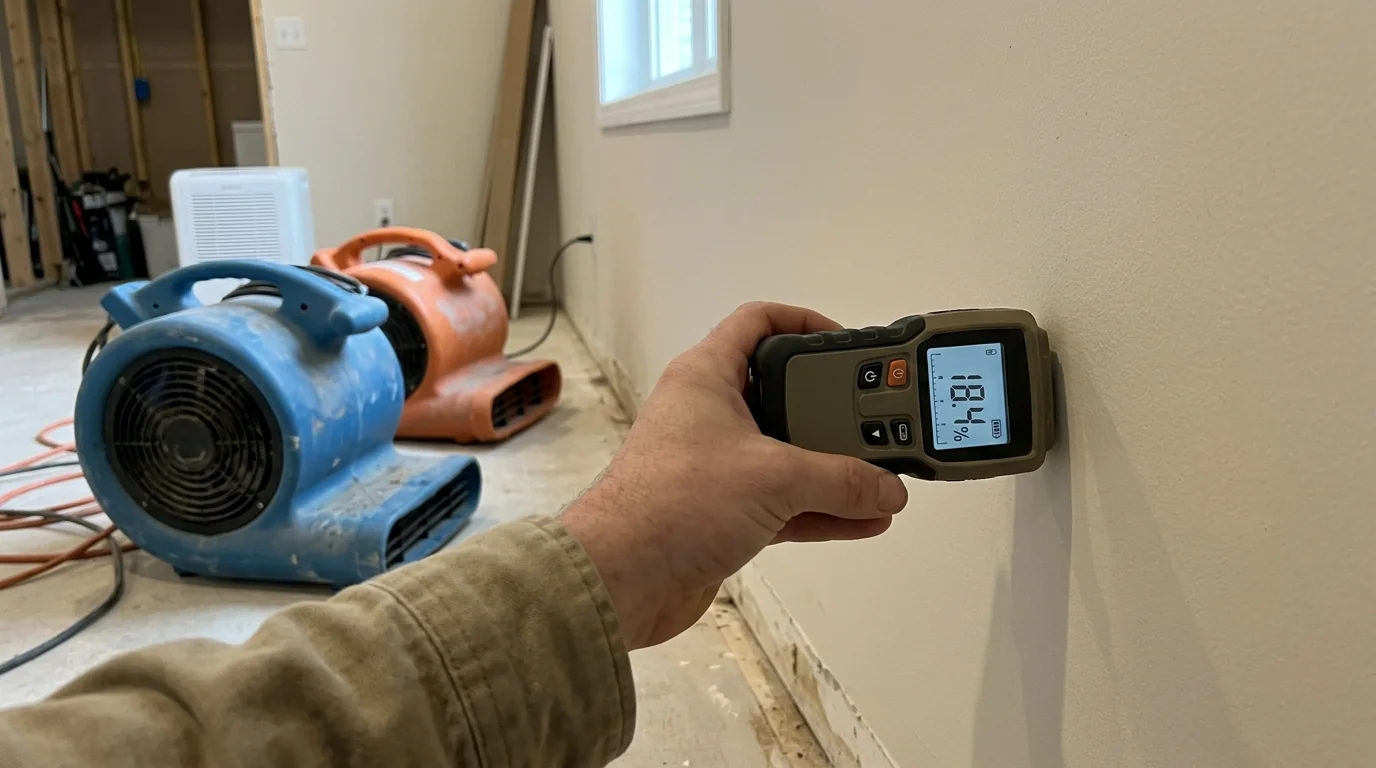
Keep the basement closed and the dehumidifier running, emptying it often.
- 5
Check outside
Clear gutters and make sure every downspout discharges well away from the house.
Why some houses get it worse
Two houses on the same street can behave very differently in spring. The usual reasons are the ground and the roof. Clay and rock hold water against a foundation instead of letting it drain away. Backfill around a foundation settles over the years until the soil slopes toward the house instead of away from it. Downspouts that dump right at the corner of the house put the whole roof's meltwater against one wall. And lots at the bottom of a slope collect the runoff from everything above them.
Window wells are the other common culprit. A well without a cover or with a clogged drain fills like a bucket, and the water finds its way through or under the window.
Why carpet and drywall are the real problem
Concrete tolerates a little water. Carpet pad, the bottom of finished drywall and the insulation behind it do not; they hold moisture for weeks and are where the musty smell and the mold come from. If the basement is finished, the cleanup usually means pulling pad and cutting the bottom of the walls so the slab and studs can dry. Our basement flooding cleanup page covers that work, and odor removal covers the smell that lingers.
When seepage turns into a mold problem
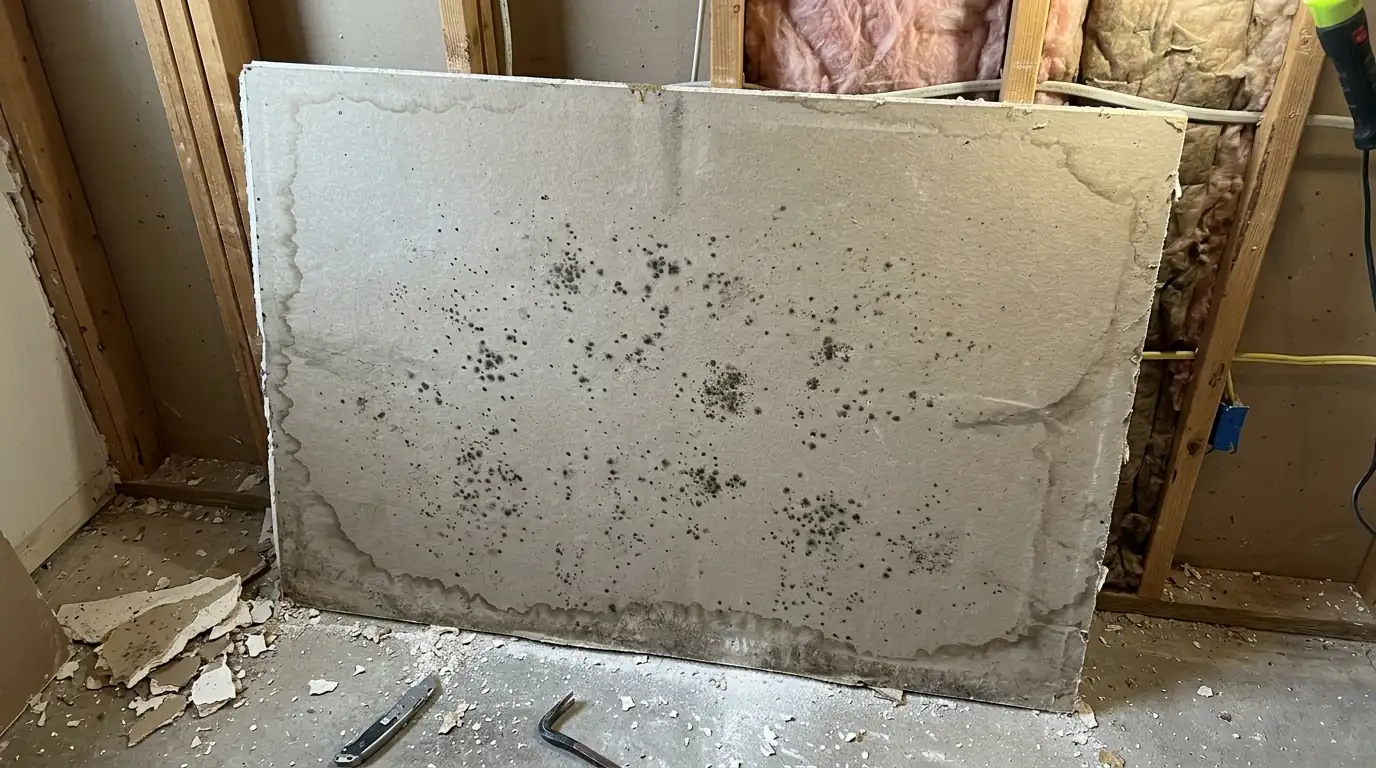
A basement that gets damp every spring and dries out every summer often looks fine in July. The problem is behind and under the finishes: the back of drywall, the bottom plate of the wall and the carpet pad stay damp long enough each year for mold to start. A musty smell that returns every spring, or tide marks at the bottom of walls, are the signs. Our guide to mold after a leak explains how quickly it can start and where it hides.
Fixes that stop it coming back
Most seepage is solved outside the house, and the cheapest fixes come first.
- Regrade soil so it slopes away from the foundation for several feet
- Clean gutters and extend downspouts well away from the walls
- Add covers and working drains to window wells
- Install a sump pump with a battery backup and an alarm where groundwater is high
- For persistent cases, ask a drainage or waterproofing contractor about interior or exterior drainage
If the basement is going to be finished again, materials that tolerate occasional moisture, such as tile or vinyl over a proper barrier instead of carpet, are worth considering.
The insurance part
This is the part nobody likes. Standard homeowners policies commonly exclude groundwater seepage and surface flooding, which are generally a flood insurance matter, and sump pump overflow often needs a separate endorsement. Water from a burst pipe in the same basement is treated differently. Our insurance guide explains the difference and what to document either way.