By Bonnie Kincaid, Water Damage Guides Editor
Updated
Quick answer
Published 2026 national figures put a typical water damage restoration job at about $1,270 to $5,376, with an average near $3,250, or roughly $3.15 to $7.40 per square foot. Clean water sits at the low end and sewage or floodwater at the high end. The biggest swings come from how long the water sat and how much has to be removed and rebuilt.
What the published ranges say
These are national planning figures from published 2026 cost guides, not quotes. They are useful for knowing whether an estimate is in the right neighborhood, and for seeing which parts of a job cost the most.
| Job | Published range | Source |
|---|---|---|
| Water damage restoration, typical job | $1,270 to $5,376 (national average $3,250); $3.15 to $7.40 per sq ft | lawnstarter.com |
| Category 1 clean water | $3.30 to $4.10 per sq ft | lawnstarter.com |
| Category 2 gray water | $4.10 to $7 per sq ft | lawnstarter.com |
| Category 3 black water | $7 to $7.50 per sq ft | lawnstarter.com |
| Drywall replacement after water damage | $300 to $850, or $1.50 to $3 per sq ft | lawnstarter.com |
| Carpet replacement | $2 to $8 per sq ft | homeserve.com |
| Hardwood flooring replacement install | $9 to $25 per sq ft | homeserve.com |
| Mold remediation | $1,223 to $3,753 (national average $2,368) | servpro.com |
| Sewage cleanup, minor backup | $3,000 to $7,000 | puroclean.com |
Square-foot figures apply to the affected area, not the whole house. A 300-square-foot clean-water job and a 300-square-foot sewage job can differ by thousands of dollars, mostly because of what has to be thrown out.
Why the type of water moves the price most
Clean water from a supply line can usually be dried in place: extract it, set equipment, read it every day. Gray water, such as a washing machine drain or water that sat for a day or two, means more cleaning and often new pad. Black water from a sewer line or a flood means carpet, pad, drywall and insulation come out, every worker wears protective gear, and waste has to be disposed of properly. Our guide to clean, gray and black water covers the categories in detail.
Time is the second biggest factor
Water keeps moving while it sits. It wicks up drywall, soaks into the subfloor and runs under cabinets, and clean water left for a day or two starts to be treated as gray water. A burst pipe caught in an hour is often a drying job; the same pipe found three days later is often a tear-out and rebuild.
What is on a typical invoice
Restoration invoices are usually line items rather than one number. Knowing the lines makes an estimate easier to read.
- The emergency visit and extraction of standing water
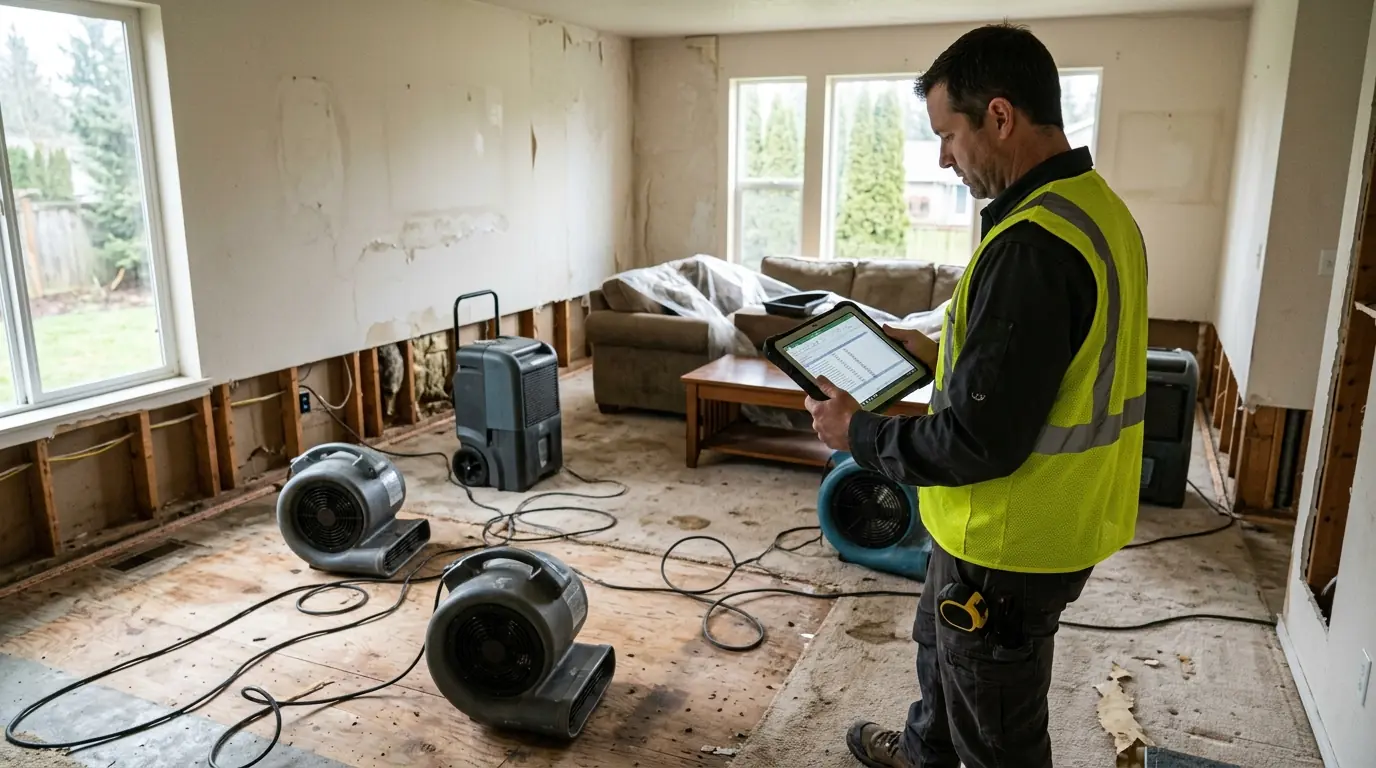
- Equipment days: dehumidifiers and air movers, billed per unit per day
- Removal and disposal of materials that cannot be dried, such as pad and wet drywall
- Cleaning and antimicrobial treatment where needed
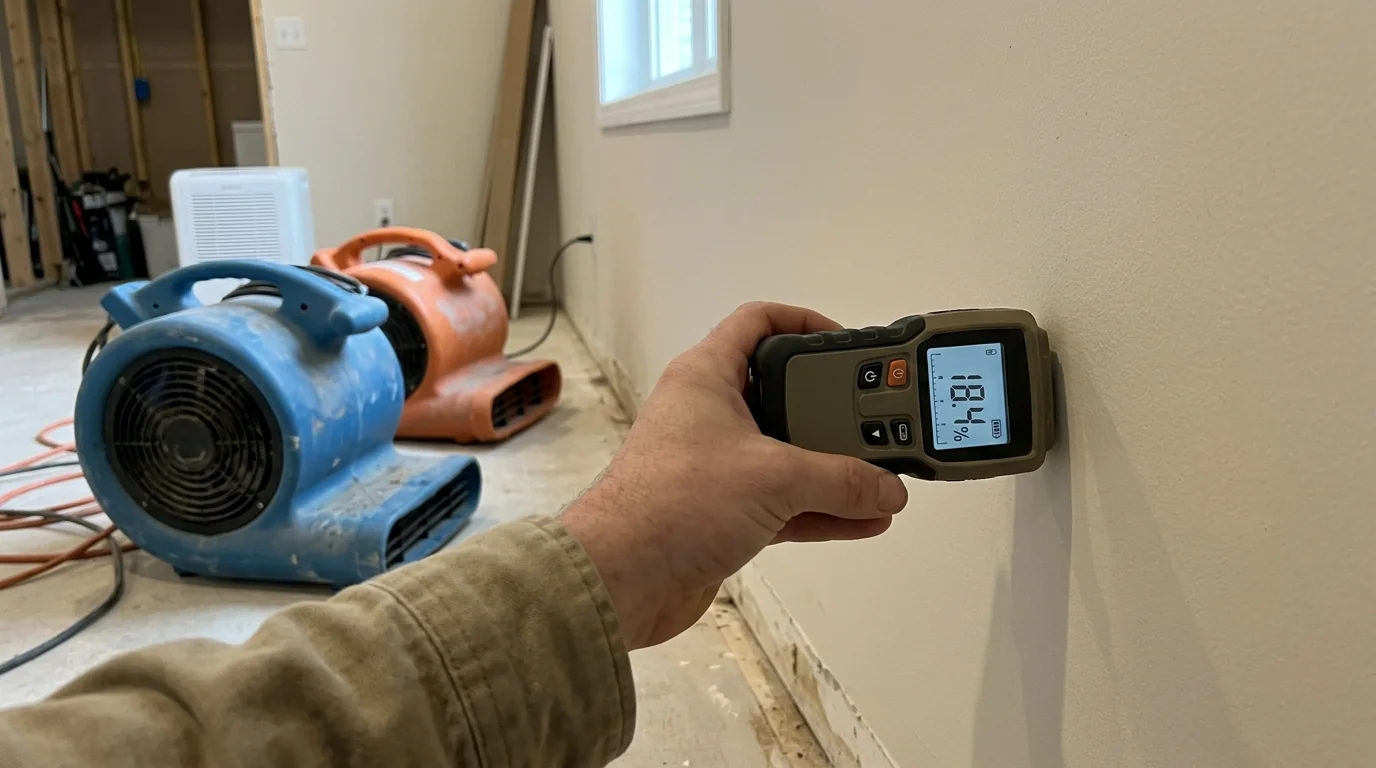
- Daily moisture readings and the drying log
- Repairs, which are often a separate estimate once the house reads dry
Mitigation and rebuild are two different jobs
Most water losses have two phases. Mitigation is the emergency part: stop, extract, remove, dry. Rebuild is putting the house back: drywall, flooring, cabinets and paint. Insurers often handle them as separate estimates, and the rebuild cannot be priced accurately until the drying is done and everyone can see what had to come out. See water damage reconstruction for how that part runs.
How Spokane-area conditions change the picture
Local conditions affect cost in a few predictable ways. In a hard cold snap, demand jumps: during a January 2024 subzero stretch one Spokane plumbing company's calls went from about 20 a day to about 100. Older Spokane homes with plaster walls cost more to repair than drywall. Finished basements put carpet, pad and drywall right where spring water arrives. And groundwater seepage is often excluded by standard homeowners policies, so the homeowner may be paying for that one directly.
What a fair estimate looks like
A fair water damage estimate is built from what was measured, not from a guess. It names the rooms and the square footage affected, the water category and why, the materials that will be removed and the reason each one cannot be dried, the drying equipment and how many days it is expected to run, and the repairs that will follow. It should match the photos and the moisture map.
Be wary of an estimate that is one lump sum with no line items, one that lists equipment for far longer than the readings justify, or one that writes in full replacement of materials that were never wet.
Questions worth asking before work starts
A few questions at the start make the rest of the job easier to follow.
- What water category is this, and what does that mean for my carpet and walls?
- Which materials have to come out, and why can they not be dried?
- How will I see the daily moisture readings?
- Is the rebuild part of this estimate, or a separate one later?
- What do you need from me for the insurance claim?
How to keep the bill down
Most of the savings come from the first hour.
- Close the shutoff fast and call early, before water wicks into walls
- Move furniture, rugs and boxes off wet floors
- Photograph everything before cleanup, so nothing is disputed later
- Do not tear out materials yourself if the water may be contaminated
- Ask for daily readings, so equipment comes off as soon as each area is dry