By Bonnie Kincaid, Water Damage Guides Editor
Updated
Quick answer
Choose a water damage company that answers right away, asks where the water came from and when, tells you how to stop it before they arrive, and on the first visit measures moisture, explains the water category, removes only what cannot be dried and leaves you a written scope and daily readings. Be wary of pressure to sign broad paperwork on the spot, demands for full payment upfront and mold claims without readings.
Start with the phone call
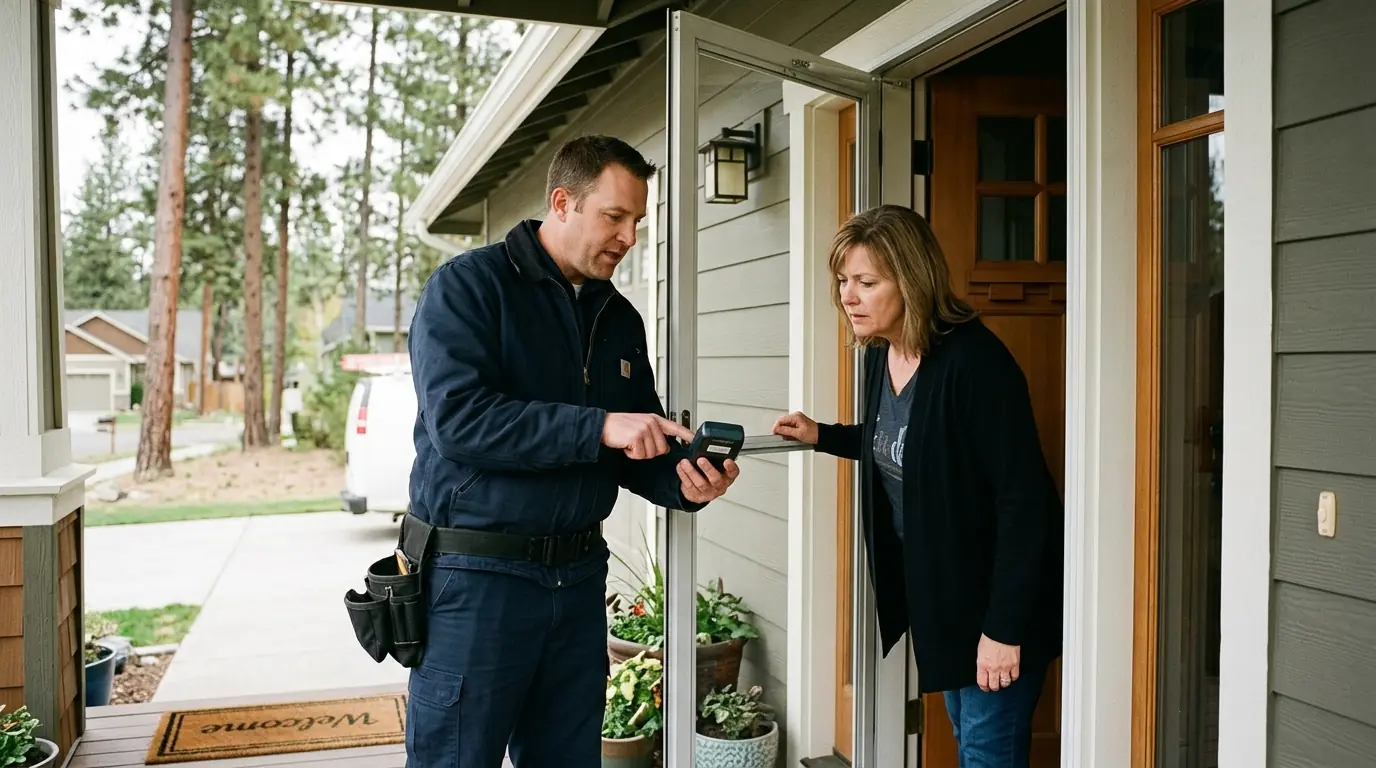
The first call tells you a lot. A good company answers at any hour, and the person on the line asks useful questions before talking about price: where the water is coming from, when it started, how far it has spread and whether it is clean, gray or contaminated. Then they tell you how to stop it, what to move and what to leave alone until the crew arrives.
Be cautious with a company that cannot tell you roughly when someone will arrive, or that quotes a firm price without knowing what got wet. A realistic arrival window and an honest explanation that price depends on what the moisture map shows are both good signs.
Questions worth asking on that call
You do not need a long interview. A few questions show quickly whether a company works methodically.
- Who answers this number, and who will come out?
- What will you do on the first visit, and how long will it take?
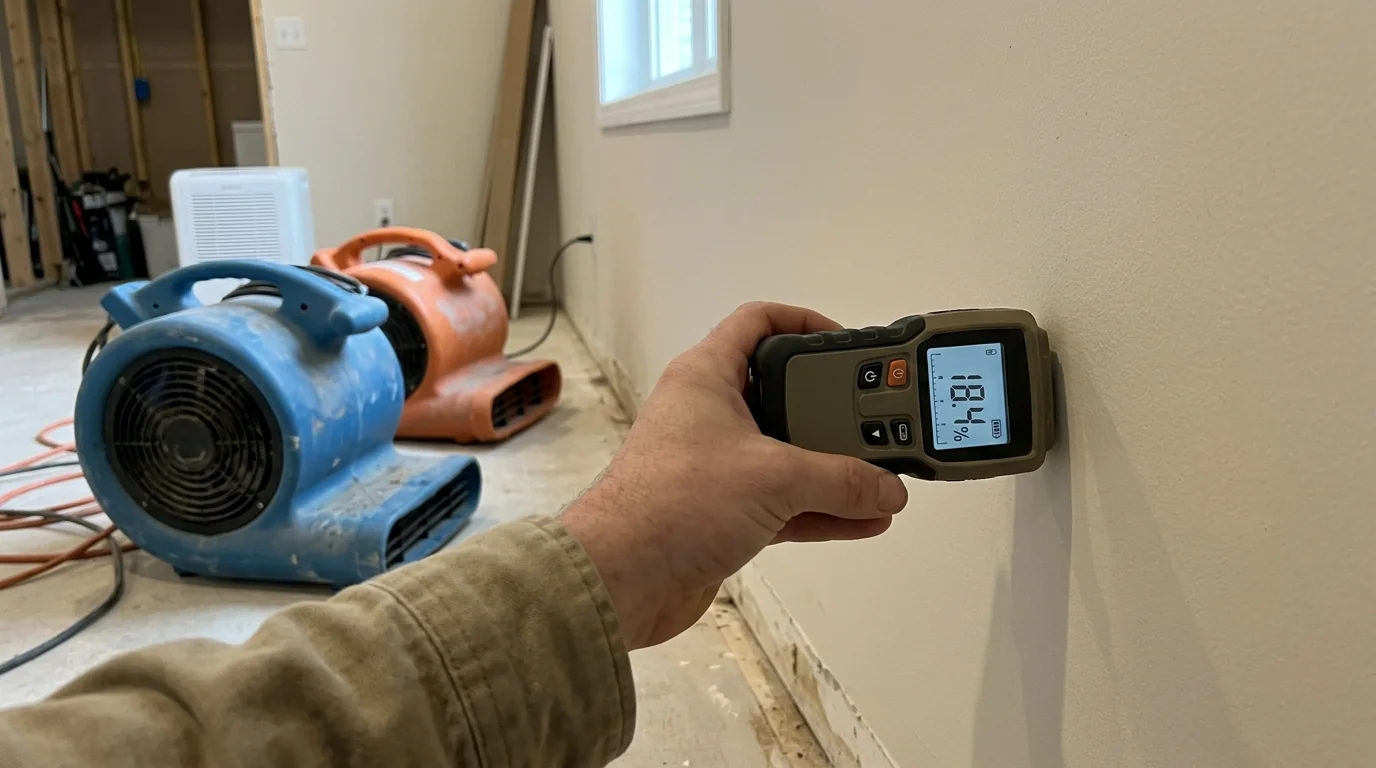
- Will you measure moisture and show me the readings?
- Do you handle the repairs after drying, or only the drying?
- How do you work with insurance companies and adjusters?
What a good first visit includes
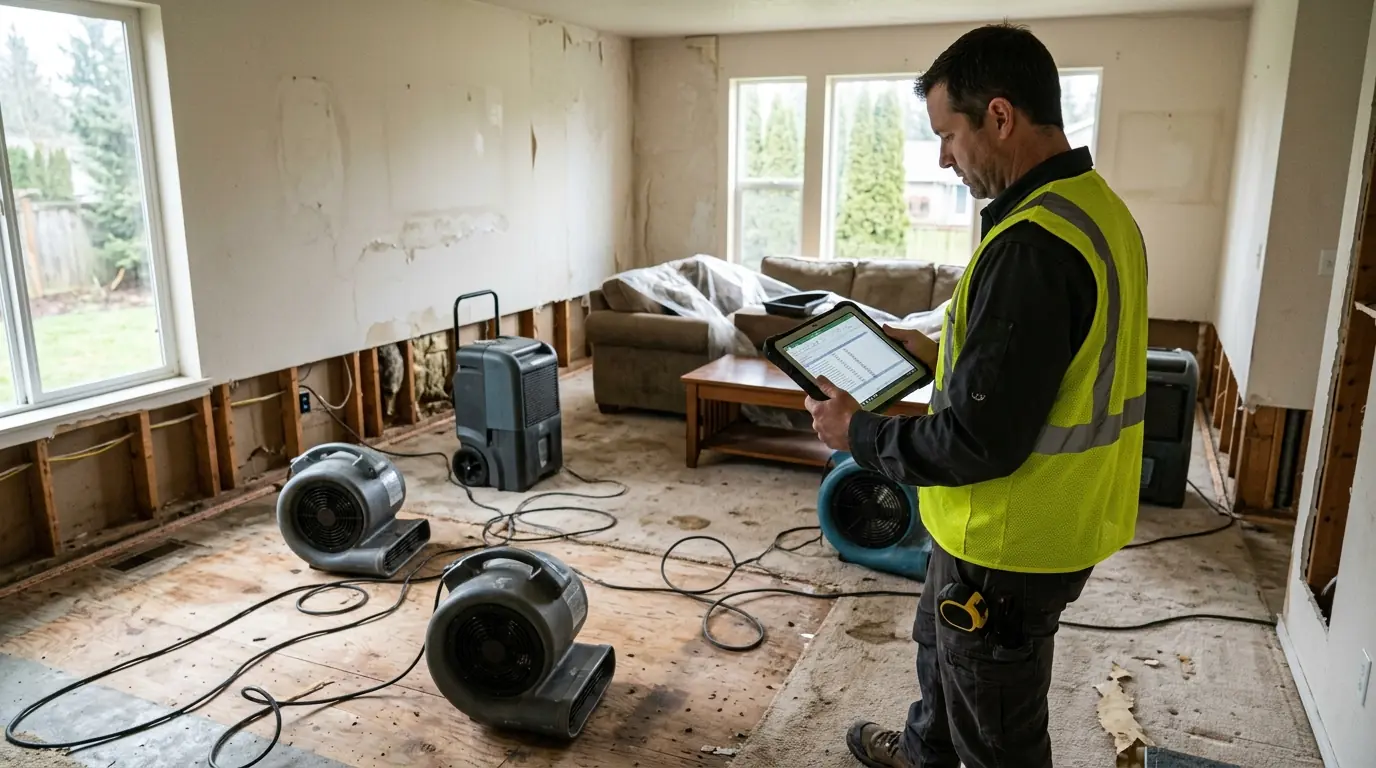
The first visit should start with the source and safety, then measurement before anything is torn out. Expect the crew to stop the water if it is still running, check electrical safety, extract standing water, and map the moisture with meters and usually a thermal camera. They should explain the water category, show you which materials can be dried and which cannot, photograph every room and leave drying equipment placed according to the readings. Our emergency water damage restoration page describes the visit step by step.
Paperwork you should get
A professional job leaves a paper trail you can follow and your insurer can check.
- Photos of each affected room before and after removal
- A moisture map and a daily drying log with readings
- A written scope or estimate with line items, not a single lump sum
- A clear list of what was removed and why it could not be dried
- Final readings showing each area matched the dry standard before repairs
Warning signs worth noticing
Most restoration companies are honest. A few patterns are worth pausing on, even in a hurry.
- Pressure to sign broad paperwork on the spot, especially anything that hands over your insurance payments, before you have read it
- A demand for full payment upfront for emergency work
- Tearing out drywall, cabinets or flooring before any moisture readings are taken
- Claims of dangerous mold with no readings, photos or testing to back them up
- Equipment left running for many days with no readings to show why
- A company that cannot give you a local address or a straight answer about who does the work
Local or from out of town?
After a big regional event, like a hard freeze that splits pipes across the county or a windstorm, crews from outside the area sometimes arrive to help with demand. Many do good work, but there are practical reasons to prefer a company based nearby. A local company knows the housing here, from plaster in older Spokane homes to manufactured homes and crawl spaces in the valley, and it will still be reachable months later if a floor squeaks or a stain reappears. Ask where the company is based and where its equipment comes from; a straight answer is a good sign.
Drying and rebuild: one company or two?
Some companies only dry; others also handle the repairs. Using one company for both keeps one set of photos, readings and scope, so nothing gets missed between the drying and the rebuild, and the readings that release a room for repair are the same readings the insurer sees. Using two can work well too, as long as the drying records are handed over before anything is closed. Our water damage reconstruction page explains how the rebuild side runs.
Insurance and your choice
In most cases you choose who works on your home, even when an insurer suggests a company. Check your policy and ask your adjuster if you are unsure. Whoever you choose, ask them to document the loss in a way your adjuster can use: photos, readings, the source and a line-item scope. Our insurance guide covers the documentation side.
After the job
Before the crew leaves for the last time, walk the rooms with them. Ask to see the final readings, confirm what was replaced, keep every photo and invoice, and make a note of anything that still smells or looks wrong. A company that welcomes that walk-through is usually one that did the job carefully.