By Bonnie Kincaid, Water Damage Guides Editor
Updated
Quick answer
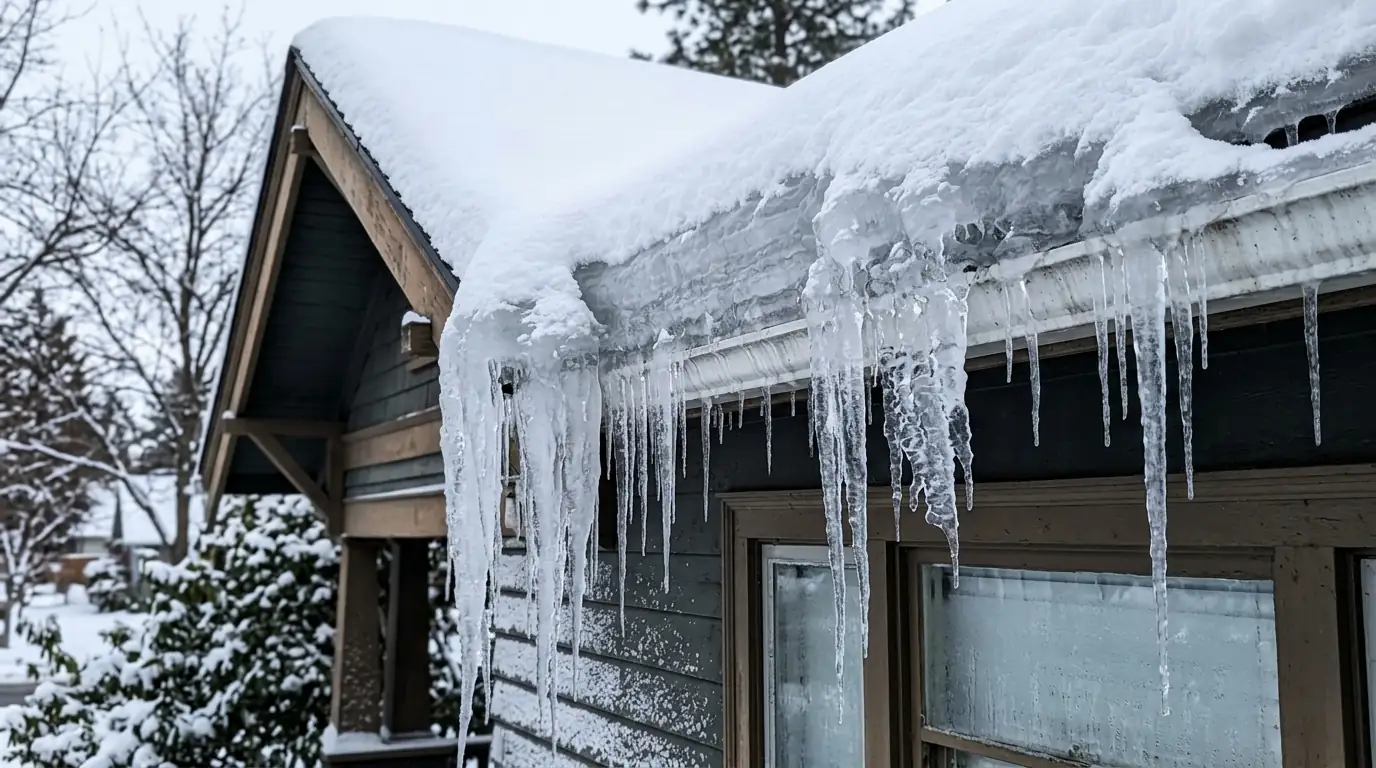
Ice dams form when heat escaping into the attic melts roof snow, and the meltwater refreezes at the cold eaves. The ridge of ice holds back more meltwater, which backs up under the shingles and leaks into attic insulation, ceilings and exterior walls. Raking snow off the lower roof helps in the moment; air sealing, insulation and ventilation stop them.
How an ice dam forms
Snow on a roof is an insulating blanket. When warm air from the house leaks into the attic, it warms the underside of the roof deck and melts the bottom of the snow, even on a day well below freezing. That meltwater runs down the roof until it reaches the overhang at the eave, which sits over the cold outdoors instead of the warm house, and there it freezes.
Each warm spell adds another layer. The ice ridge grows, meltwater pools behind it, and shingles, which are designed to shed water running downhill, cannot hold back standing water. It finds the nail holes and seams and runs into the attic.
Signs you have one before it leaks
Most ice dams can be spotted from the ground a few days before they leak, which gives you time to rake the roof and move things away from outside walls.
- A thick ridge of ice along the gutters or roof edge, with icicles hanging from it
- Snow melting high on the roof while the eaves stay frozen
- Icicles that keep growing on sunny afternoons
- Water stains or peeling paint where the ceiling meets an outside wall
- Frost on the underside of the roof deck or on nail tips in the attic
Why our winters produce so many
Spokane's average winter brings less than 50 inches of snow, but the heavy years go far past that: December 2008 alone set a monthly record of 61.5 inches, and the 2008-09 winter reached 93.6 inches at the airport. During that stretch the National Weather Service estimated snow loads of about 25 pounds per square foot on roofs, and ice over storm drains kept meltwater from draining.
What matters most is the pattern: deep snow followed by a series of freeze and thaw days. That is exactly when ice dam calls start, often several days after the snow, on the first sunny afternoons.
Where the water goes once it gets in
Meltwater soaks the attic insulation at the outside edge first, then the top plate of the exterior wall, then the ceiling drywall and the wall cavity below. Stains usually appear where the ceiling meets an outside wall, around window heads on the top floor and at ceiling corners. The insulation and framing are usually wetter than the stain suggests, and wet attic insulation left in place can grow mold; see attic mold remediation.
What to do when it is dripping
The goal is to limit the damage inside without anyone getting hurt outside.
- Put buckets and towels under drips and move furniture and belongings away
- Turn off any light fixture with water near it at the panel
- From the ground, use a roof rake to pull snow off the lower few feet of the roof
- Photograph the stains and the ice from the ground for your insurer
- Call a roofer for ice removal; steaming is the safe method
Do not climb onto an icy roof and do not chip at the ice with a hammer, shovel or axe. Both damage shingles, and falls from icy roofs are a real winter injury.
What does not work
Heat cables along the eaves can keep a channel open in one trouble spot, but they do not fix the cause, they use power all winter, and ice often forms just above them. Spreading rock salt on the roof damages shingles and gutters and can harm plants below. Adding more vents without sealing the air leaks first often moves the problem rather than solving it. And waiting it out is the most expensive option of all: every thaw sends more water into the same insulation and the same wall cavity, so a stain that showed up in January can mean a full ceiling and wall repair by March.
Fixing the cause
Ice dams stop when the roof deck stays cold. That comes down to keeping warm air out of the attic and keeping the attic ventilated.
- Seal air leaks in the attic floor: light fixtures, the attic hatch, plumbing and wiring chases, chimneys
- Duct bath fans and kitchen fans to the outside, never into the attic
- Bring attic insulation up to a full, even depth, especially near the eaves
- Make sure soffit vents are clear and baffles keep insulation from blocking them
- Ask a roofer or energy auditor to check the attic before next winter
After the thaw: checking for hidden damage
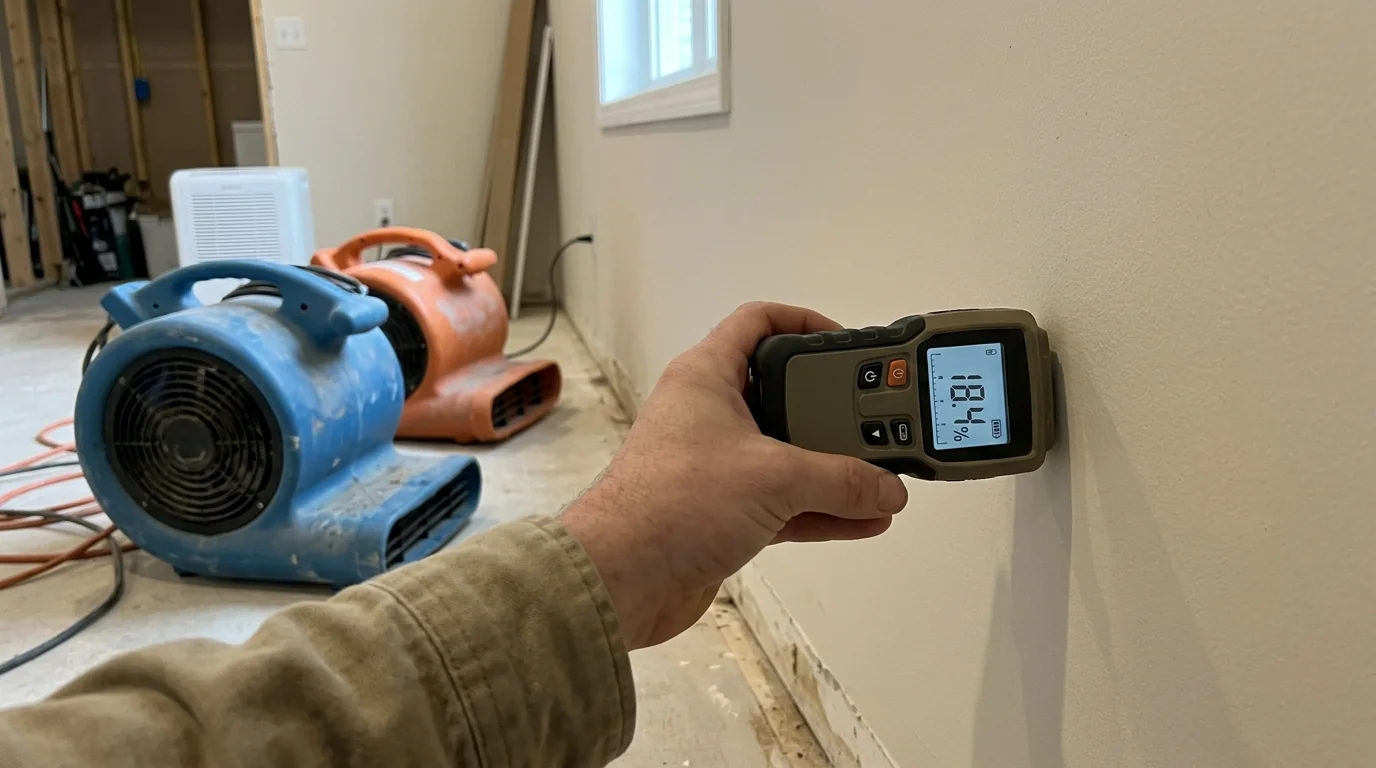
Once the dripping stops, the water is still inside. Moisture readings on the ceiling, the walls below the eaves and the attic insulation show how far it went. Wet insulation is usually replaced, wet drywall may be dried or cut back, and wall cavities that stay wet are opened. Our ice dam water damage page explains how we dry and repair it, and insulation removal and replacement covers the attic side.