By Bonnie Kincaid, Water Damage Guides Editor
Updated
Quick answer
Wildfire smoke and ash cleanup starts outside and works in: protect yourself with gloves, eye protection and an N95 mask, dampen ash gently before removing it, never use a leaf blower or an ordinary shop vacuum, change the furnace filter, then clean hard surfaces top down and launder soft goods. Odor that returns after cleaning usually means residue in the attic insulation or ductwork.
Why the smoke gets in even when the fire stays away
Wildfire smoke is a mix of fine particles and gases, and it travels a long way. During the August 2023 Gray Fire, which destroyed an estimated 259 structures near Medical Lake, ash and airborne particulates fell around Medical Lake, Cheney, Four Lakes and Tyler, and the regional clean air agency told residents to limit their exposure.
Ash and smoke enter a house through attic and soffit vents, gaps around windows and doors, bathroom and kitchen fans, and above all the heating and cooling system, which pulls outdoor air in and spreads it through every room. That is why homes miles from the fire line can smell of smoke for weeks.
Protect yourself first
Wildfire ash is fine and irritating, and it can carry residue from burned plastics, treated wood and chemicals. Public health agencies advise taking simple precautions before cleaning.
- Wear an N95 or better mask, gloves and eye protection; a cloth or paper dust mask does not stop fine particles
- Keep children, pets and anyone with asthma, heart or lung problems away while you clean
- Wear long sleeves and wash work clothes separately afterward
- Do not clean on the day the air quality is still poor; wait until the smoke has cleared
While the smoke is still in the air
The cleanup works better if less gets in to begin with. On smoky days, keep windows and doors closed, set the heating or cooling system to recirculate rather than draw in outside air, and turn off bath and kitchen fans that pull outdoor air through gaps. If your system can handle it, the EPA suggests a filter rated MERV 13 or higher during smoke events. A portable HEPA air purifier in one bedroom gives you at least one cleaner room to sleep in. Wait for the air to clear before you start cleaning; ash stirred up during a smoke event just settles again.
Start outside
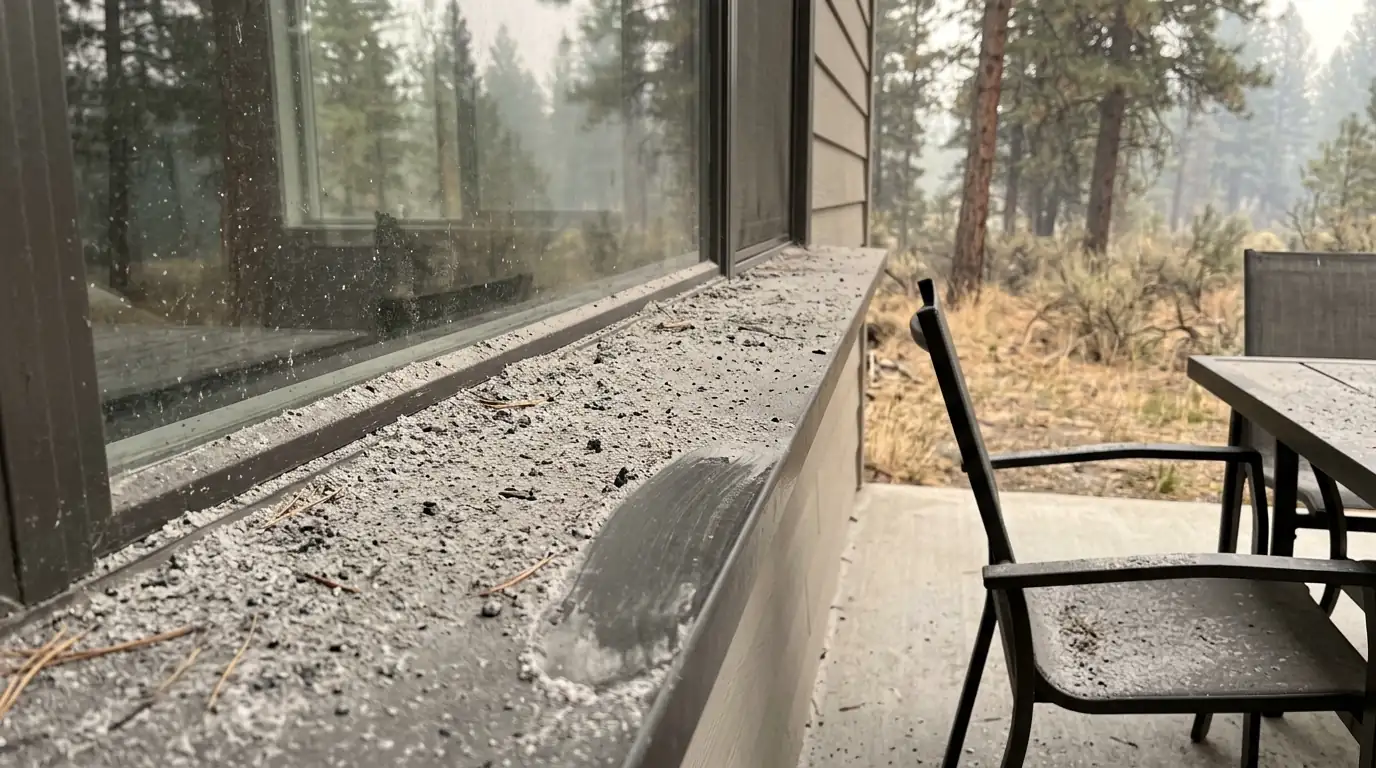
Clean outside before inside, or the ash will keep tracking back in. Gently mist ash with a hose before you sweep or scoop it, so it does not lift into the air, and bag it rather than washing large amounts into storm drains. Rinse decks, patio furniture and children's play equipment, and wipe window sills and door thresholds.
Do not use a leaf blower or an ordinary shop vacuum. Both throw the finest particles back into the air, and a shop vacuum without a HEPA filter blows them straight through its exhaust.
Then the air system
The furnace or heat pump filter catches a lot of ash during a smoke event, and it will keep releasing odor once it is loaded. Replace it as soon as the air clears, then again a few weeks later. If the system ran through heavy smoke, the ductwork and the blower can hold residue too, and cleaning them is often what finally ends a lingering smell.
Inside, top down
Inside, the order matters: work from the ceiling down so you are not dirtying what you already cleaned.
- 1
Vacuum with HEPA
Vacuum floors, upholstery, curtains and vents with a HEPA-filter vacuum before any wiping.
- 2
Dry before wet
Use a dry chemical sponge on walls and ceilings first; wet cloths smear soot into the paint.
- 3
Wash hard surfaces
Wipe walls, cabinets, counters and fixtures with a mild detergent solution, changing the water often.
- 4
Launder soft goods
Wash bedding, clothing and curtains; some need several washes or dry cleaning to lose the smell.
- 5
Check closed spaces
Open closets, drawers and cabinets and clean them too; they hold odor long after the room airs out.
When the smell will not go away
If the smoke smell comes back every warm or humid day, residue is still in the house, usually in the attic insulation, the ductwork, or inside closets and soft furniture. Air fresheners and candles only cover it. Removing the residue is what fixes it, which often means cleaning or replacing ash-covered attic insulation and cleaning the duct system. Our wildfire smoke odor removal and insulation replacement pages explain that work.
Electronics, food and medicine
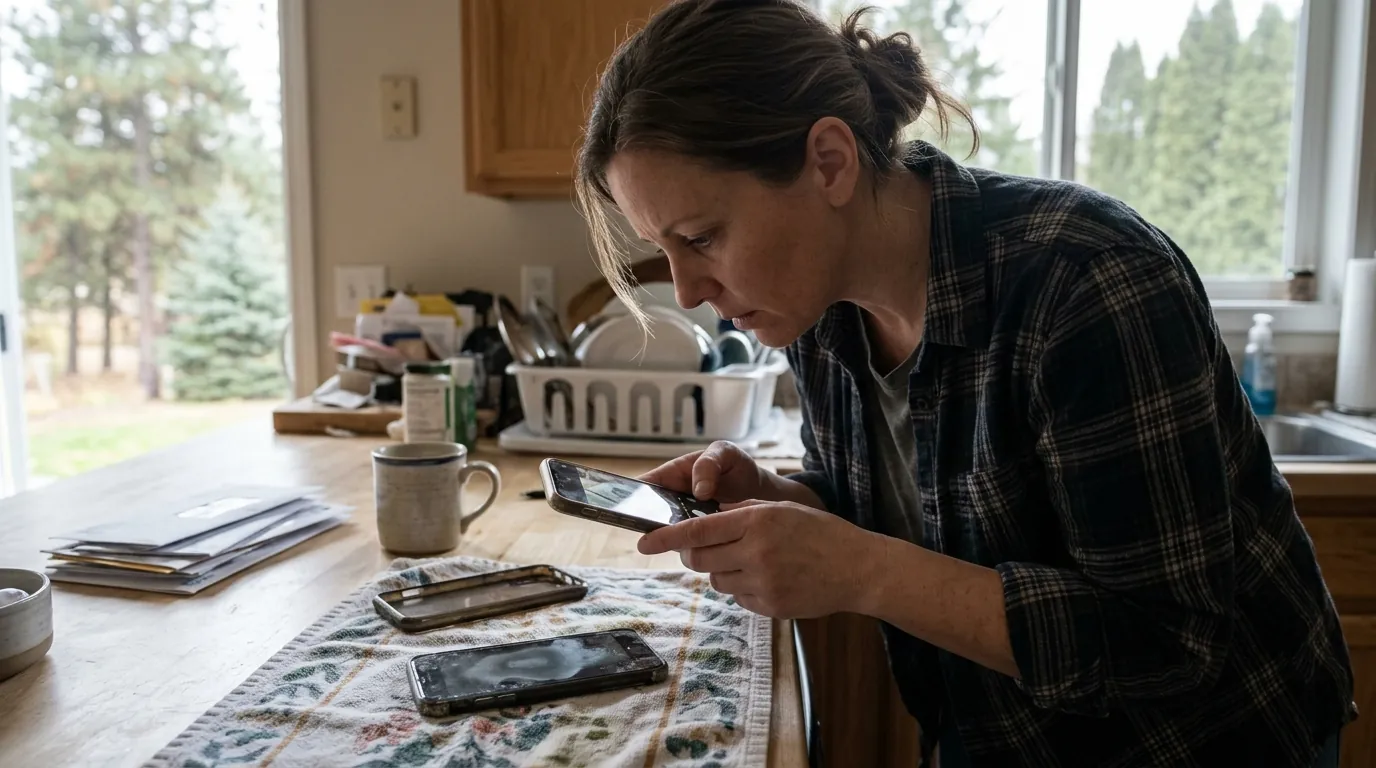
Electronics that were running in heavy smoke can carry soot inside them; wipe the outside and have anything expensive checked before relying on it. Throw out food that was left open, produce stored outside the refrigerator, and medicine that was exposed to heavy smoke or ash. When in doubt about something you eat or take, replace it.
Insurance after a wildfire
Smoke and ash damage from a wildfire is commonly covered under the same part of a homeowners policy as fire, even when the house did not burn. Photograph the ash outside and inside before cleaning, keep receipts for filters, cleaning supplies and any professional work, and report the claim early. After the 2023 fires, Washington's insurance commissioner reminded insurers that they must acknowledge claims within 10 business days. Our insurance guide covers documentation in more detail.