By Bonnie Kincaid, Water Damage Guides Editor
Updated
Quick answer
The main warning signs that a tank water heater is close to leaking are age (most tanks are near the end after about a decade), rust or corrosion at the fittings or base, moisture or small puddles under the tank, rusty or discolored hot water, popping or rumbling noises, and a relief valve that drips. If it fails, close the cold water valve on top and turn off the gas or power.
Why water heaters cause so much damage
A tank water heater holds 40 to 80 gallons and stays connected to the water supply. When the tank itself fails, it does not just empty; it keeps refilling until someone closes a valve. In a garage that may mean a wet floor. In a basement or a closet next to finished rooms, it means wet carpet, drywall and cabinets.
Most tanks give some warning first. The trouble is that they sit in garages, basements and closets where nobody looks until there is water on the floor.
How to tell how old your tank is
Age is the single best predictor. Most tank water heaters are near the end of their life after about a decade, sooner with hard water or if they have never been flushed.
The manufacture date is on the label on the side of the tank, often coded into the serial number. Many brands use a letter for the month and two digits for the year, or the year and week at the start of the serial number. If you cannot decode it, search the brand and the serial number format, or photograph the label and ask when you call.
Warning signs to look for
A quick look every few months catches most of these early.
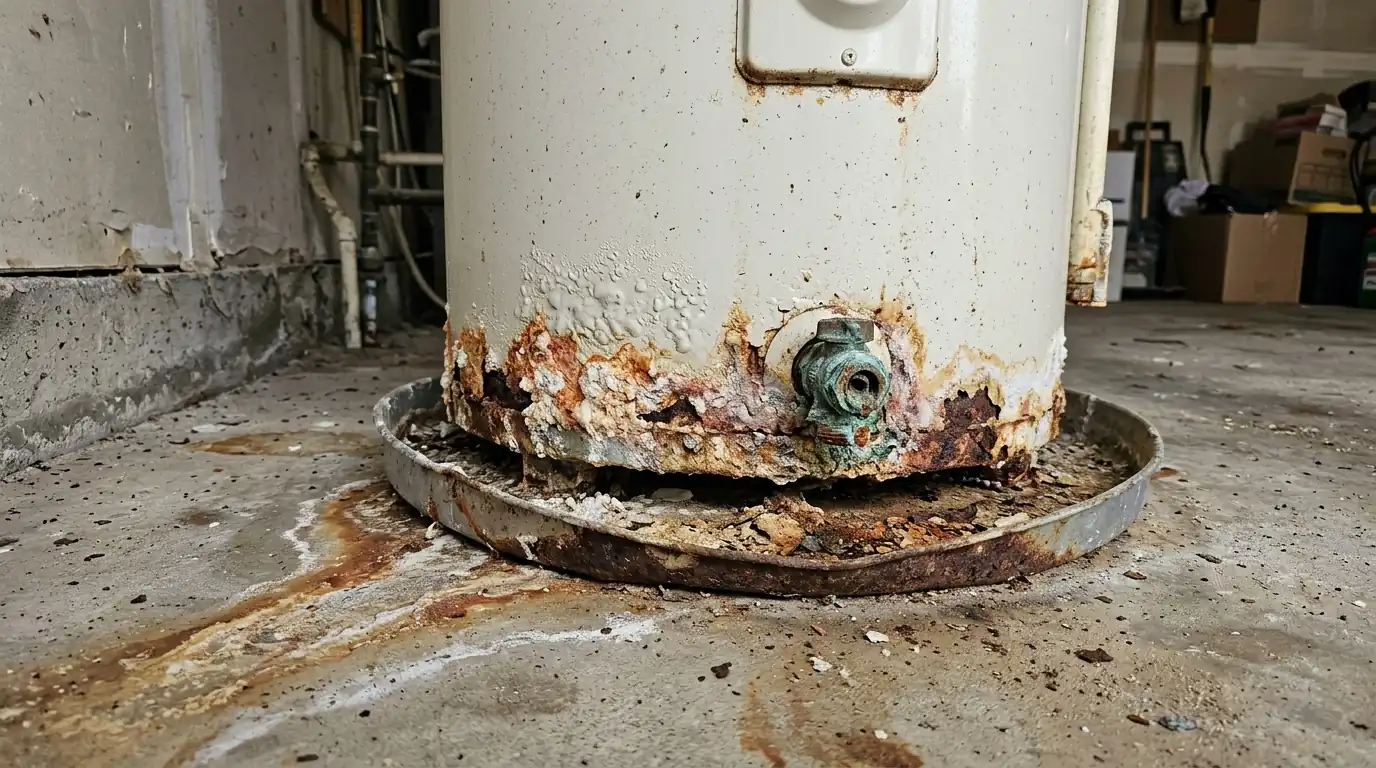
- Moisture, small puddles or mineral crust on the floor under the tank
- Rust or corrosion at the inlet and outlet fittings on top of the tank
- Rust streaks or flaking on the outside of the tank or at its base
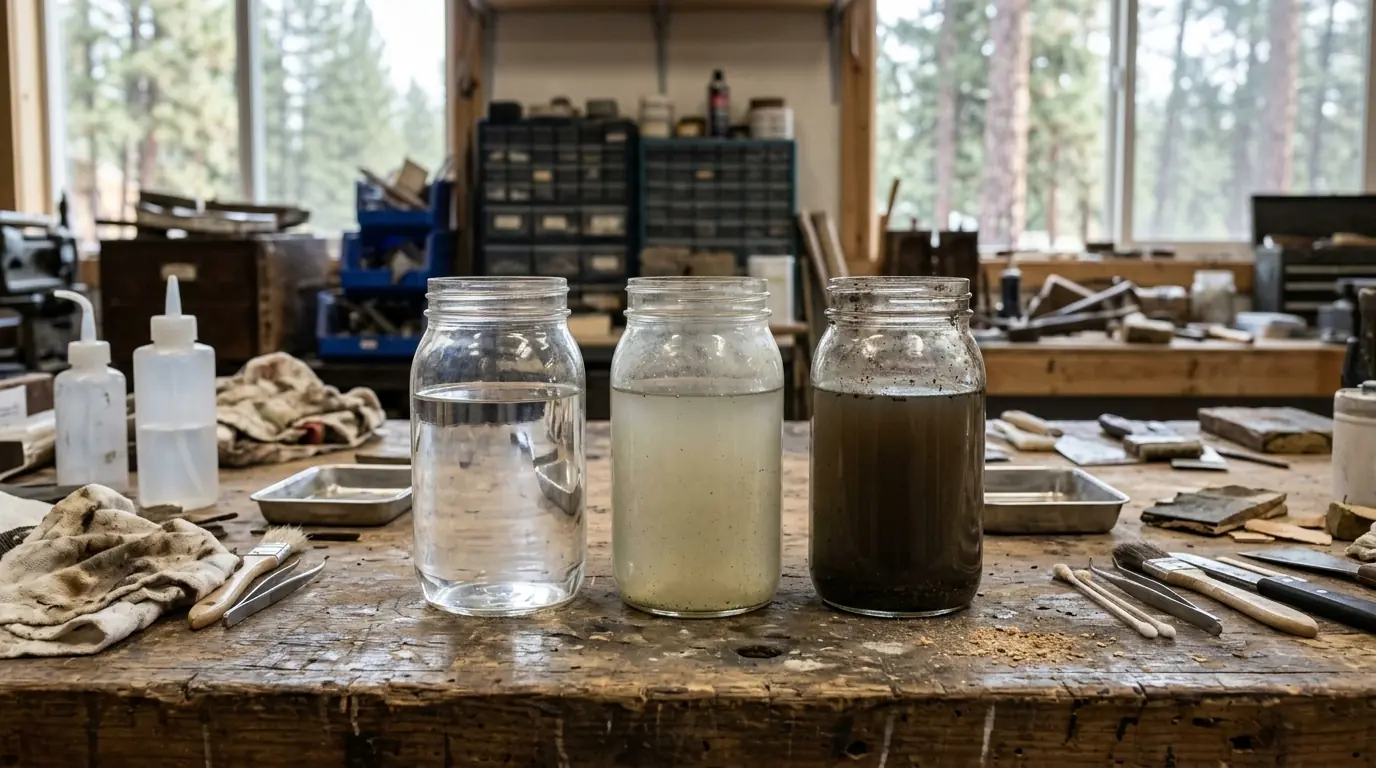
- Rusty or discolored hot water, especially after the heater sits overnight
- Popping, rumbling or banging noises while it heats, often from sediment
- A temperature and pressure relief valve that drips or has run
- Hot water that runs out faster than it used to
What the warning signs usually mean
Not every sign means the tank is about to fail. A dripping fitting on top can often be tightened or replaced. A relief valve that drips can mean the water pressure is too high or the expansion tank has failed, both of which a plumber can fix. Rumbling usually means sediment, which flushing can help on a younger tank.
Water at the base of the tank, rust on the tank itself or rusty hot water from an older heater are different. Those usually mean the tank is corroding from the inside, and a corroding tank is not repaired; it is replaced, ideally before it lets go.
Gas, electric and tankless heaters
Gas and electric tank heaters fail the same way, by corroding from the inside, but they shut off differently: a gas heater has a control knob near the bottom, and an electric one is shut off at its breaker. Find out which you have before there is water on the floor.
Tankless heaters do not hold a tank of water, so they do not fail with a flood, but their connections and relief valves can still leak, and they need periodic descaling. If you are replacing an old tank anyway, it is worth asking a plumber whether tankless suits your house and your water.
Simple things that help
A few habits reduce the damage when a tank does fail.
- Put the heater in a drain pan with a line to a floor drain or outside
- Keep stored boxes and anything you value away from the tank
- Know where the cold water valve on top of the tank is, and test that it turns
- Consider a leak sensor on the floor next to the tank that alerts your phone
- Have the tank flushed and checked periodically, especially as it ages
If it lets go
If you find water pouring from the tank or spreading from its base, act in this order.
- 1
Close the cold water valve
It is on the pipe going into the top of the tank. If it will not turn, close the main shutoff.
- 2
Turn off the energy
For gas, turn the gas control to off or pilot; for electric, switch off the heater's breaker.
- 3
Stay safe
Keep away from wet outlets and cords, and do not touch the tank; the water may be scalding.
- 4
Move what you can
Lift boxes, rugs and furniture out of the water and off the floor.
- 5
Call
We extract the water and dry the floor and any finished rooms next to the heater.
Our water heater leak cleanup page explains what happens next, from extraction to drying and repairs.
Insurance and water heater failures
Sudden water damage from a tank that fails is commonly covered by homeowners insurance. The heater itself usually is not, since replacing an old appliance is treated as maintenance. A slow leak that went on for weeks may be treated differently than a sudden failure, so photograph the tank, its label and the damage before cleanup starts. Our insurance guide has more on documentation.